
Acero para herramientas S7 frente a A2: ¿Resistencia al impacto o resistencia al desgaste?
Tanto el S7 como el A2 son aceros para herramientas de endurecimiento al aire, pero se utilizan para diferentes problemas de utillaje.
La S7 es la mejor opción para impactos, astillamientos o grietas. La A2 es preferible para desgaste abrasivo, redondeo de bordes o pérdida de precisión de corte.
Acero para herramientas S7 y A2 disponible en Aobo Steel.
Aobo Steel suministra acero para herramientas S7 resistente a los impactos y acero para herramientas A2 de trabajo en frío con endurecimiento al aire, para diferentes modos de fallo en el servicio de herramientas.

S7 | 1.2355
Acero para herramientas resistente a los golpes, destinado a punzones, cinceles, remachadoras, puntas de destornillador y herramientas sometidas a cargas de impacto y propensas a agrietarse o romperse.
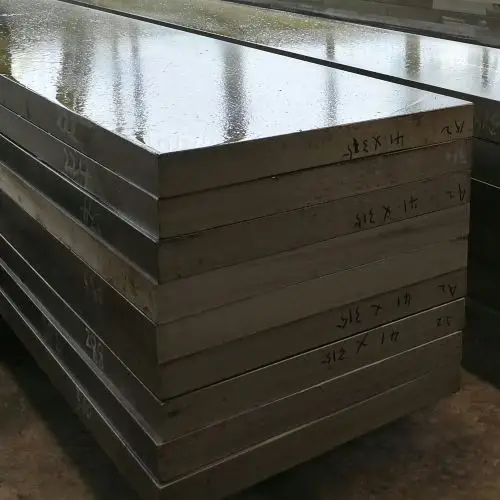
A2 | 1.2363 | SKD12
Acero para herramientas de trabajo en frío con endurecimiento al aire para una mayor resistencia al desgaste, estabilidad dimensional, retención del filo, matrices, calibres y herramientas de precisión.
En términos prácticos, S7 es la opción más segura en cuanto a resistencia a la rotura. A2 es la opción más resistente al desgaste y al control dimensional.
Comparación rápida de los aceros para herramientas S7 y A2.
| Punto de comparación | Acero para herramientas S7 | Acero para herramientas A2 |
|---|---|---|
| tipo de acero para herramientas | Acero para herramientas resistente a los golpes | Acero para herramientas de trabajo en frío con endurecimiento al aire |
| Ventaja principal | Alta resistencia y durabilidad | Mayor resistencia al desgaste y estabilidad dimensional. |
| Dureza de trabajo típica | Aproximadamente 56-58 HRC | Aproximadamente 58-60 HRC |
| Resistencia al desgaste | Más bajo | Más alto |
| Dureza | Más alto | Moderado |
| Mejor para | Desconchado, agrietamiento, rotura | Desgaste, pérdida de bordes, cambio dimensional |
| Principal compensación | Se desgasta más rápido en servicio abrasivo. | Puede astillarse bajo un fuerte impacto |
Diferencia en la composición química
| Elemento | Acero para herramientas S7 / UNS T41907 | Acero para herramientas A2 / UNS T30102 |
|---|---|---|
| Carbono | 0.45-0.55% | 0.95-1.05% |
| Cromo | 3.00-3.50% | 4.75-5.50% |
| Molibdeno | 1.30-1.80% | 0.90-1.40% |
| Manganeso | 0.20-0.90% | Máx. 1,00% |
| Silicio | 0.20-1.00% | Máx. 0,50% |
| Vanadio | 0,20-0,30%, cuando se especifique | 0.15-0.50% |
| Níquel | Normalmente no se especifica | Máx. 0,30% |
La composición explica la diferencia en el comportamiento del servicio.
El acero A2 contiene mucho más carbono y cromo. Esto crea un soporte de carburo más resistente, por lo que el acero mantiene mejor el filo en aplicaciones abrasivas de trabajo en frío.
El acero inoxidable S7 utiliza un diseño con menor contenido de carbono y cromo. Si bien sacrifica parte de la resistencia al desgaste del acero inoxidable A2, gana en tenacidad. Por ello, se utiliza en aplicaciones donde el riesgo de fractura es mayor que el desgaste gradual.
El mayor contenido de molibdeno en el S7 también favorece su templabilidad y una resistencia moderada al calor. Soporta mejor la exposición limitada al calor que el A2, pero no debe considerarse un acero para herramientas de trabajo en caliente.
Diferencia de rendimiento en el uso
La elección principal no se basa simplemente en la dureza, sino en el equilibrio entre tenacidad, resistencia al desgaste y estabilidad dimensional.
| Factor de rendimiento | Mejor calificación | Significado práctico |
|---|---|---|
| Resistencia a los golpes | S7 | Mejor para impactos repetidos y cargas repentinas. |
| Resistencia al astillado | S7 | Reduce la rotura de los bordes en herramientas de uso intensivo. |
| Resistencia al desgaste abrasivo | A2 | Mantiene el filo durante más tiempo. |
| Estabilidad dimensional | A2 | Mejor para herramientas de trabajo en frío de precisión. |
| retención de bordes | A2 | Más adecuado para herramientas de corte, conformado y sometidas principalmente a desgaste. |
| Exposición moderada al calor | S7 | Ofrece un mejor rendimiento que el A2 en condiciones de calor limitado. |
El acero S7 se suele utilizar con una dureza de 56-58 HRC para mantener una tenacidad suficiente para aplicaciones de impacto. Aumentar demasiado la dureza puede reducir la principal razón para elegir el acero S7. Para obtener más información sobre la dureza del acero S7, consulte Dureza del acero para herramientas S7: Rango HRC, dureza HB recocida y dureza de trabajo..
El A2 se usa comúnmente a 58-60 HRC porque enfatiza la resistencia al desgaste, la estabilidad del filo y el control dimensional. Para obtener más información sobre la dureza A2, consulte Dureza del acero para herramientas A2: Tabla HRC, datos de revenido y dureza de trabajo..
Ambos aceros son de endurecimiento al aire. El A2 suele ser más predecible para herramientas de precisión que requieren dureza uniforme y control dimensional. El S7 también se endurece de forma segura, pero las secciones gruesas requieren un control más preciso del tratamiento térmico para evitar variaciones de dureza.
Selección S7 vs A2 por aplicación
| Problema de aplicación o de herramientas | Mejor opción | Razón principal |
|---|---|---|
| cinceles de mano | S7 | Impacto repetido |
| Cinceles neumáticos | S7 | Carga de choque elevada |
| Juegos de remaches y puntas de destornillador | S7 | Fuerza de ataque |
| Punzones de alta resistencia | S7 | Resistencia al astillamiento y al agrietamiento |
| Herramientas de conformado en frío | S7 | Esfuerzo de impacto y compresión |
| Cuchillas de corte pesadas | S7 | Carga de choque durante el corte |
| Punzonado o corte en caliente moderado | S7 | Mejor resistencia al calor moderado que A2 |
| Matrices de corte | A2 | Mayor resistencia al desgaste |
| Matrices de conformación | A2 | Resistencia al desgaste y estabilidad dimensional |
| Troqueles de recorte | A2 | retención de bordes |
| Peines de laminado de roscas | A2 | Resistencia al desgaste superficial |
| Herramientas de acuñación | A2 | Estabilidad de la superficie de trabajo |
| Calibres y bujes | A2 | Resistencia al desgaste y control de tamaño |
| Herramientas de precisión para trabajo en frío | A2 | Mayor estabilidad dimensional |
| Astillos o grietas de la herramienta antes de desgastarse | S7 | Se necesita mayor resistencia |
| La herramienta permanece intacta pero se desgasta demasiado rápido. | A2 | Se necesita mayor resistencia al desgaste |
Calificaciones equivalentes para compras
Una vez definida la elección del material, el siguiente paso es la especificación. La norma A2 suele ser más fácil de identificar en los estándares internacionales. La norma S7 requiere mayor atención, ya que algunas referencias equivalentes se utilizan de forma inconsistente en los distintos mercados.
| Estándar / Sistema | Acero para herramientas A2 | Acero para herramientas S7 |
|---|---|---|
| AISI / SAE | A2 | S7 |
| ONU | T30102 | T41907 |
| DIN / N.º de serie. | 1.2363 | A menudo se hace referencia cruzada como 1.2355 / 50CrMoV13-15 |
| JIS | SKD12 | No existe un equivalente directo JIS de uso común. |
| BS | BA2 | No existe un equivalente directo de uso generalizado en BS. |
| AFNOR | Z100CDV5 | No existe un equivalente directo de AFNOR ampliamente utilizado. |
| SS / Suecia | 2260 | No existe un equivalente directo de SS ampliamente utilizado. |
S7 corresponde a AISI S7 y UNS T41907. A menudo se hace referencia cruzada a DIN 50CrMoV13-15 (aproximadamente 1.2355), pero no existe un equivalente directo ampliamente utilizado en JIS, BS o AFNOR. Para la compra, especifique AISI S7 / UNS T41907 y confirme la composición química en el certificado de fábrica.
Consejos para la selección final
Elija S7 para riesgo de rotura
El acero S7 suele ser más adecuado para herramientas sometidas a cargas de impacto, punzones, cinceles, remachadoras y herramientas propensas a agrietarse o romperse.
Elija A2 para mayor resistencia al desgaste y precisión.
El acero A2 se elige para matrices de troquelado, matrices de recorte, herramientas de conformado, calibres, casquillos y herramientas de precisión donde la resistencia al desgaste y el control dimensional son de suma importancia.
En casos límite, céntrese en qué fallo tiene mayor coste: rotura o desgaste. Decida en función de qué riesgo sea más relevante para su aplicación.
¿Necesita acero para herramientas S7 o A2 para su aplicación de utillaje?
Aobo Steel suministra acero para herramientas S7 resistente a los impactos y acero para herramientas A2 de trabajo en frío con endurecimiento al aire para aplicaciones de herramientas de precisión, resistentes a impactos y al desgaste.