

Acero inoxidable 9Cr18Mo |102Cr17Mo | 440C | Proveedor de SUS440C en China
Para cuchillas, rodamientos y piezas de precisión | MOQ 5 toneladas | Suministro a granel
9Cr18Mo y 102Cr17Mo son el mismo tipo de acero. 9Cr18Mo es la designación antigua utilizada en la norma nacional china GB/T 1220-1992. 102Cr17Mo es la nueva designación adoptada en las normas nacionales chinas revisadas GB/T 1220-2007 y GB/T 20878-2007.
9Cr18Mo(102Cr17Mo) es un acero inoxidable martensítico de alto carbono y alto cromo, desarrollado a partir del grado 95Cr18 (9Cr18) mediante la adición de molibdeno (Mo). En consecuencia, presenta una dureza superior, resistencia al desgaste, resistencia a alta temperatura, resistencia al revenido y resistencia a la corrosión en comparación con el acero 95Cr18 (9Cr18). Este acero también posee una buena estabilidad dimensional a alta temperatura, lo que lo hace adecuado para la fabricación de moldes de plástico, rodamientos, instrumentos quirúrgicos y herramientas de medición que operan bajo altas cargas, alto desgaste y condiciones corrosivas. Como acero ledeburítico, es propenso a la segregación no uniforme de carburos, lo que puede afectar negativamente la vida útil de los componentes. Por lo tanto, es imperativo controlar los parámetros de procesamiento y seleccionar una relación de procesamiento adecuada durante el trabajo en caliente.
Descripción general del suministro de acero 9Cr18Mo
| Grado | GB 9Cr18Mo / 440C / SUS440C |
| Condiciones de entrega | Totalmente recocido (estado blando para el mecanizado) |
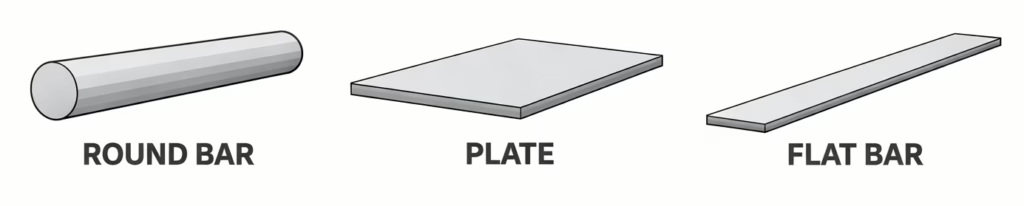
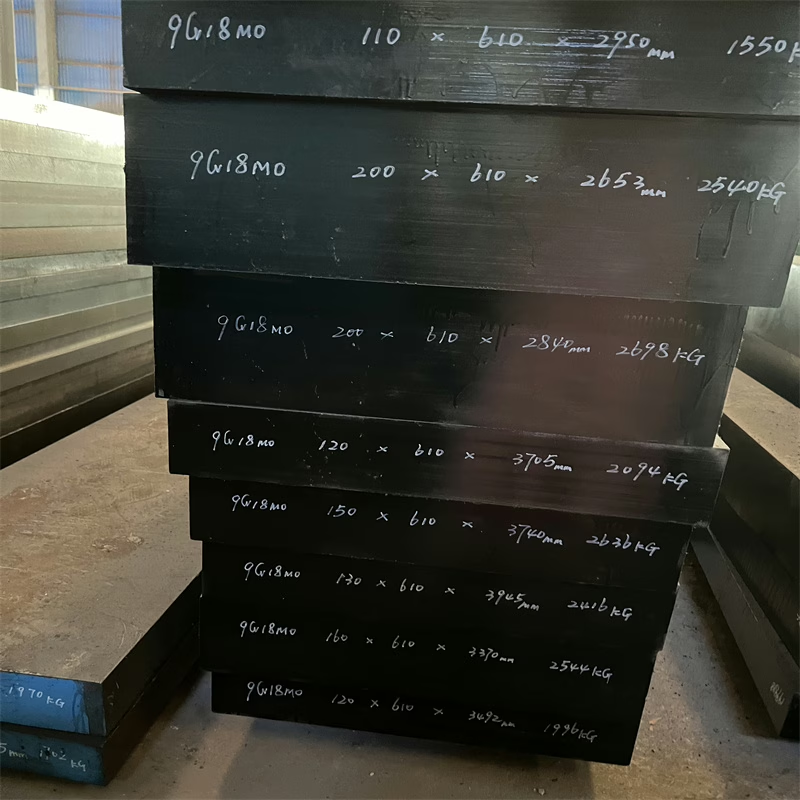
| Formularios disponibles | Barra redonda / Barra plana / Placa / Bloque forjado |
| Capacidad de producción mensual | Aproximadamente 1000 toneladas métricas |
| Cantidad de exportación recomendada | Contenedor completo de 20GP (~26 toneladas) |
| Cantidad mínima de pedido | 5 toneladas |
| Plazo de entrega (con existencias de lingotes) | Aproximadamente 20 días |
| Plazo de entrega (fundición reciente) | 30–45 días |
| Plazo de entrega (Grado ESR) | Aproximadamente 60 días |
| Inspección | Equipo interno de pruebas ultrasónicas + Inspección por terceros disponible |
| Documentación | MTC (EN 10204 3.1) + Informe UT |
Por qué los distribuidores globales compran 9Cr18Mo de Aobo Steel
- Suministro mensual continuo de alrededor de 1000 toneladas
- Cantidad mínima de pedido (MOQ) a partir de 5 toneladas para pedidos al por mayor.
- Longitudes de barras y placas optimizadas para contenedores
- Se admiten tamaños mixtos para la carga de exportación.
- Entrega recocida para mecanizado posterior
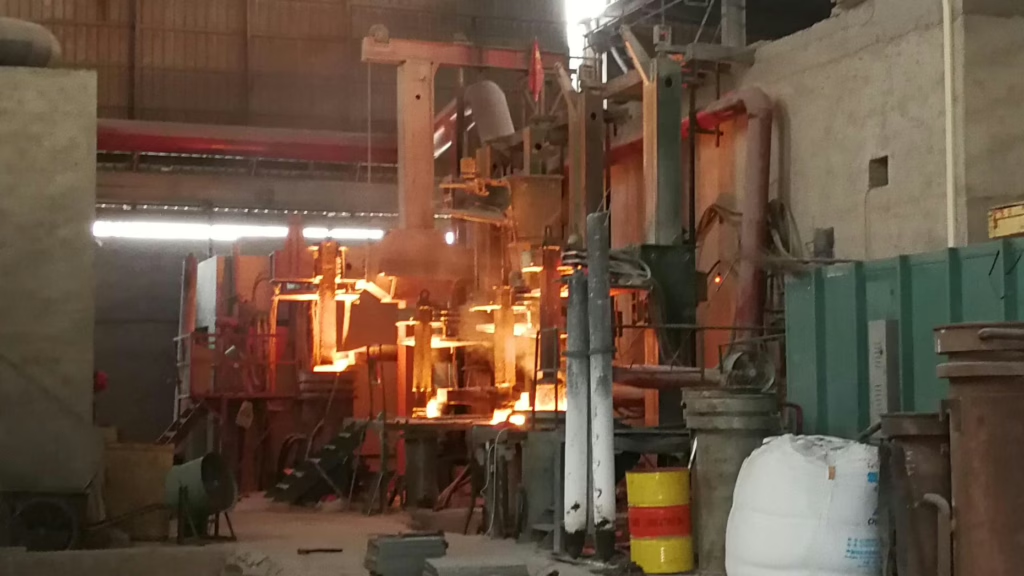
- Abastecimiento estable a través de socios de cadena de suministro integrados
- Inspección UT disponible para SEP 1921-82 D/d o E/e
- Trazabilidad del MTC y del lote con cada envío
- Seguimiento del número de lote para el control de pedidos
- Opciones de superficie negra, torneada y pulida
- Embalaje a granel para exportación marítima
- Ruta de conversión clara a la página dedicada al suministro a granel.
Producción estable para un suministro a granel a largo plazo
- Producción mensual continua de alrededor de 1000 toneladas.
- Ciclos de producción continuos para la reposición de inventario.
- El proceso ESR (refundición por electroescoria) está disponible bajo petición.
- Suministro estable de aleaciones para reducir el riesgo de interrupción del suministro.
- Trazabilidad completa del lote vinculada al número de colada original.
Formas disponibles de acero 9Cr18Mo
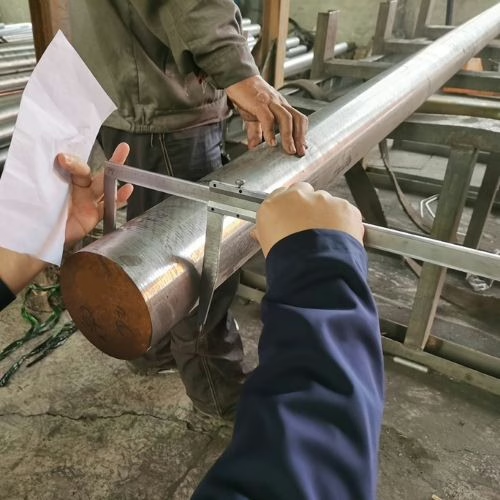
Control de calidad para pedidos al por mayor
Cada lote de acero para herramientas suministrado por Aobo Steel se verifica antes del envío para garantizar la precisión del grado, la integridad interna y la trazabilidad de los pedidos a granel.
- Composición química verificada mediante un espectrómetro.
- Pruebas ultrasónicas disponibles (SEP 1921-82)
- Entregado en estado recocido esferoidizado
- Certificado de prueba de fábrica (EN 10204 3.1) con número de colada
- Inspección dimensional y superficial antes del envío.
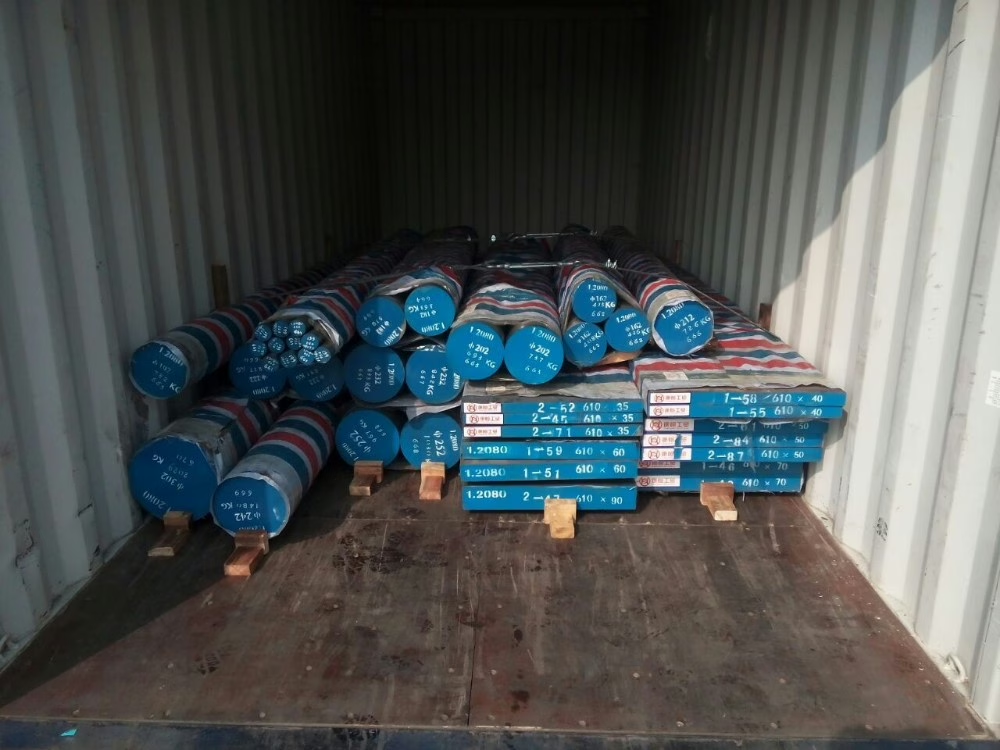
Embalaje para exportación y carga de contenedores
- Embalaje profesional apto para exportación marítima
- Carga de 20GP optimizada hasta ~26 toneladas
- Se admiten grados y tamaños mixtos.
- Protección anticorrosión para largos tránsitos marítimos
Para envíos internacionales, se recomienda encarecidamente la carga de contenedores completos para garantizar la rentabilidad y una tramitación aduanera más ágil.
Composición (GB/T 20878-2007)
| C | Cr | Mo | Ni | Si (≤) | Mn (≤) | P (≤) | S (≤) |
| 0.95 – 1.10 | 16.00 – 18.00 | 0.40 – 0.70 | -0.6 | 0.8 | 0.8 | 0.04 | 0.03 |
Grados equivalentes y composiciones
| Estándar | Grado de acero | C | Cr | Mo | Ni | Si (≤) | Mn (≤) | P (≤) | S (≤) |
| Japón JIS | SUS440 | 0.95 – 1.20 | 16.00 – 18.00 | ≤(0.75) | -0.6 | 1 | 1 | 0.04 | 0.03 |
| EE. UU. ASTM | 440C / S4400C | 0.95 – 1.20 | 16.0 – 18.0 | ≤0.75 | — | 1 | 1 | 0.04 | 0.03 |
| Internacional ISO | X105CrMo17 | 0.95 – 1.20 | 16.0 – 18.0 | 0.40 – 0.80 | — | 1 | 1 | 0.04 | 0.015 |
| Europa EN | X105CrMo17 / 1.4125 | 0.95 – 1.20 | 16.0 – 18.0 | 0.40 – 0.80 | — | 1 | 1 | 0.04 | 0.015 |
Puntos críticos del 9Cr18Mo(102Cr17Mo)
- C.A1≈815∼865℃: Esta es la temperatura crítica inferior al calentar. Representa el rango de temperatura en el que la austenita comienza a formarse a partir de la matriz de ferrita-carburo.
- Arkansas1≈665∼765℃: Esta es la temperatura crítica inferior al enfriar. Representa el rango de temperatura en el que se completa la transformación de austenita a ferrita o perlita.
- Ms≈145℃: Esta es la temperatura de inicio de la martensita. Es la temperatura a la que comienza la transformación de austenita a martensita durante el enfriamiento rápido (temple).
Complete el siguiente formulario de contacto para la consulta sobre 9Cr18Mo.
Proceso de forja en caliente del 9Cr18Mo(102Cr17Mo)
| Artículo | Temperatura de calentamiento/°C | Temperatura inicial de forja/°C | Temperatura final de forja/°C | Método de enfriamiento |
| Lingote de acero | 1130 ~ 1150 | 1080 ~ 1100 | 850 ~ 900 | Enfriamiento en arena |
| Lingote de acero | 1100 ~ 1120 | 1050 ~ 1080 | 850 ~ 900 | Enfriamiento en arena |
Se debe prestar especial atención al proceso de trabajo en caliente del acero 9Cr18Mo (102Cr17Mo). Se recomienda utilizar un horno de carga en frío para el calentamiento, y la velocidad de calentamiento no debe ser demasiado rápida, especialmente por debajo de 700 °C. Al mismo tiempo, la temperatura final de forja debe controlarse a un nivel más alto, y se debe prestar estricta atención a las condiciones de enfriamiento.
Tratamiento térmico del 9Cr18Mo(102Cr17Mo)
Los procesos para el tratamiento térmico preliminar son los siguientes:
- Recocido de recristalización: Calentar a 730∼- 750 °C, luego enfriar al aire.
- Recocido: Calentar a 850∼- 870 °C y mantener durante 4-6 horas. Posteriormente, el horno se enfría a menos de 600 °C, luego se enfría al aire. La dureza después del recocido debe ser ≤ 255 HBW.
- Temple: Calentar a 1050∼- 1100∘°C, luego templar en aceite. La dureza después del temple debe ser ≥ 58 HRC.
- Revenido: Calentar a 160∼- 180∘°C y mantener durante 3-5 horas. La dureza final después del revenido debe ser ≥ 58 HRC.
El efecto de la temperatura de temple y el tratamiento en frío sobre la dureza
| Temperatura de temple (°C) | 1020 | 1040 | 1060 | 1080 | 1100 |
| Dureza después del temple convencional (HRC) | 58.5 | 58 | 61.5 | 61 | 61 |
| Dureza después del tratamiento en frío (HRC) | 60 | 60.5 | 62 | 63 | 64 |
Relación entre la dureza y la temperatura de revenido
| Temperatura de revenido (°C) | Sin templar | 100 | 200 | 300 | 400 | 500 | 600 | 700 | |
| 950 °C Enfriamiento al aire | Dureza (HRC) / Temple | 50 | 47 | 48 | 48 | 47 | 47 | 38 | 25 |
| 1000 °C Enfriamiento al aire | 56 | 51.5 | 52 | 50 | 49 | 49 | 40.5 | 27 | |
| 1050 °C Enfriamiento al aire | 58 | 56 | 56 | 53 | 52 | 52 | 43 | 29 | |
| 1100 °C Enfriamiento al aire | 60.5 | 57 | 58 | 56 | 54 | 55 | 47 | 32 |
Propiedades mecánicas
Influencia de la temperatura de temple y el tratamiento criogénico en las propiedades mecánicas
| Temperatura de temple /°C | Sin tratamiento criogénico | Después del tratamiento criogénico a -75 °C (mantenido durante 1 h) | ||
| σcama y desayuno/MPa | aK / J・cm⁻² | σcama y desayuno/MPa | aK / J・cm⁻² | |
| 1020 | 3250 | 30 | 30 | 30 |
| 1040 | 3000 | 37 | 37 | 11 |
| 1060 | 3500 | 40 | 40 | 6 |
| 1080 | 2750 | 25 | 25 | 3 |
| 1100 | 2500 | 3 | 3 | 2.5 |
Resistencia a la corrosión
Resistencia a la corrosión del acero 102Cr17Mo (9Cr18Mo)
| Proceso de tratamiento térmico | Dureza HRC | Condiciones del medio | Velocidad de corrosión /g·(m²·h)⁻¹ | ||
| Medio | Fracción de masa (%) | Temperatura/°C | |||
| Temple en aceite a 1050 °C | 61 | Ácido sulfúrico | 2 | Ebullición | 575.6 |
| Ácido sulfúrico | 5 | 1003.9 | |||
| Ácido nítrico | 40 | 1.15 | |||
| Temple en aceite a 1050 °C, revenido a 150 °C durante 1 h | 60 | Ácido sulfúrico | 2 | 502 | |
| Ácido sulfúrico | 5 | 968.3 | |||
| Ácido nítrico | 40 | 1.04 | |||