
Acero para herramientas de temple en aceite: grados, propiedades, tratamiento térmico y aplicaciones
El acero para herramientas de temple en aceite es una familia de aceros para herramientas de trabajo en frío que se templan mediante temple en aceite después de la austenización. En la clasificación AISI, estos aceros pertenecen a la serie del Grupo O. Los principales grados de acero para herramientas de temple en aceite son O1, O2, O6 y O7.
Grados de acero para herramientas de temple en aceite disponibles en Aobo Steel
Aobo Steel suministra acero para herramientas de temple en aceite en barra redonda y barra plana a granel para matrices de trabajo en frío, punzones, gauges, herramientas de corte y aplicaciones de herramientas de precisión.
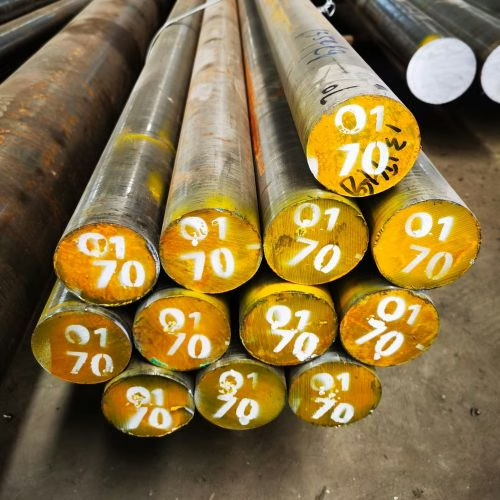
O1 | 1.2510 | SKS3
Acero para herramientas de temple en aceite de uso general para matrices de trabajo en frío, punzones, calibradores y herramientas de corte.
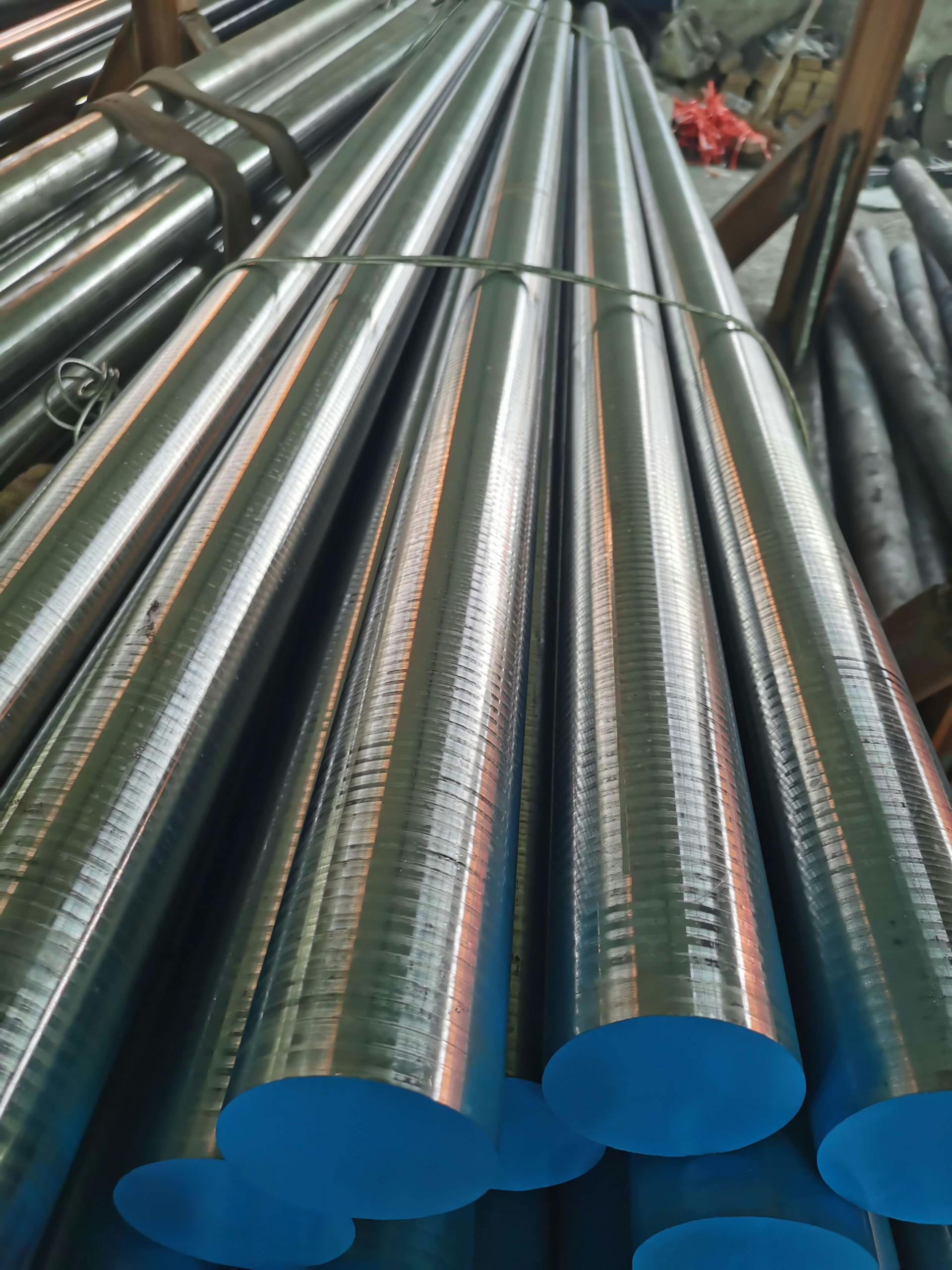
O2 | 1.2842 | 90MnCrV8
Acero para herramientas de temple en aceite utilizado donde el control dimensional y la seguridad del tratamiento térmico son importantes.
Estos aceros suelen contener aproximadamente de 0,85% a 1,55% de carbono, con adiciones moderadas de manganeso, cromo, tungsteno, molibdeno o silicio. Este diseño de aleación les confiere mayor templabilidad que los aceros para herramientas de temple en agua. Como resultado, pueden alcanzar mayor dureza con temple en aceite en lugar de temple en agua.
Los aceros para herramientas de temple en aceite se sitúan entre los aceros de temple en agua y los aceros de temple al aire. Son más seguros de templar que los aceros de temple en agua porque el temple en aceite reduce el agrietamiento y la distorsión. En comparación con los aceros de temple al aire, suelen ser más fáciles de mecanizar y más económicos, pero normalmente ofrecen menor estabilidad dimensional y resistencia al desgaste en condiciones severas de herramientas.
Su mejor uso es en herramientas de trabajo en frío que requieren un equilibrio entre dureza, resistencia al desgaste, maquinabilidad, seguridad del tratamiento térmico y rentabilidad. Su principal limitación es la escasa resistencia al ablandamiento a temperaturas elevadas. Para matrices de trabajo en caliente, herramientas de fundición a presión o herramientas de corte de alta velocidad, son más adecuados los aceros de trabajo en caliente o los aceros rápidos.
Acero para herramientas de temple en aceite frente a acero de temple en agua y temple al aire
El acero para herramientas de temple en aceite se entiende mejor comparándolo con los dos grupos vecinos de aceros para herramientas de trabajo en frío: los aceros de temple en agua y los de temple al aire.
| Artículo | Acero para herramientas de temple en agua | Acero para herramientas de temple en aceite | Acero para herramientas de temple al aire |
|---|---|---|---|
| Grados típicos | W1, W2 | O1, O2, O6, O7 | A2, A6, A7, A10 |
| Método de enfriamiento | Agua o salmuera | Aceite | Aire o enfriamiento controlado |
| Contenido de aleación | Bajo | Moderado | Más alto |
| templabilidad | Bajo | Medio | Alto |
| Riesgo de distorsión | Alto | Medio | Bajo |
| Riesgo de agrietamiento | Alto | Menor que la serie W | Normalmente el más bajo entre estos grupos |
| Maquinabilidad | Muy bien | Bien | Generalmente más bajo |
| Resistencia al desgaste | Moderado | Bien | Generalmente más alto |
| Costo | Normalmente el más bajo | Económico | Generalmente más alto |
| Mejor uso | Herramientas simples y aplicaciones de bajo costo | Herramientas generales de trabajo en frío que requieren un temple más seguro | Herramientas complejas, producciones largas y control dimensional más estricto |
Aceros templables al agua son simples y de bajo costo, pero su temple severo las hace riesgosas para herramientas intrincadas. Los aceros de temple en aceite reducen ese riesgo manteniendo buena maquinabilidad y un costo razonable.
Los aceros de temple al aire ofrecen mejor estabilidad dimensional porque se enfrían más lentamente y contienen más elementos de aleación. Son más adecuados para matrices complejas, secciones grandes y producciones largas, pero normalmente cuestan más y son más difíciles de mecanizar.
Principales grados de acero para herramientas de temple en aceite
La serie O no es una familia grande. Los grados más importantes son O1, O2, O6 y O7. Cada grado tiene una función diferente en las herramientas de trabajo en frío.
| Grado | Dirección principal de aleación | Característica clave | Aplicaciones típicas |
|---|---|---|---|
| O1 | Manganeso, cromo, tungsteno | Acero para herramientas de temple en aceite de uso general con equilibrio entre dureza, tenacidad, maquinabilidad y resistencia al desgaste | Matrices de corte, matrices de conformado, punzones, machos de roscar, escariadores, brochas, calibres |
| O2 | Principalmente manganeso | Menor temperatura de temple y buen control dimensional durante el tratamiento térmico | Matrices intrincadas, matrices de laminación de roscas, calibres fijos, bujes, herramientas de precisión |
| O6 | Silicio, manganeso, molibdeno, grafito libre | Acero grafítico de temple en aceite con excelente maquinabilidad y comportamiento antiagarrotamiento | Matrices de embutición profunda, rodillos de conformado, placas de desgaste, guías de máquina, mangos de herramienta |
| O7 | Mayor carbono y tungsteno | Mayor resistencia al desgaste y retención de filo de la serie O | Cuchillas para papel, herramientas para trabajar madera, filos de corte, herramientas de trabajo en frío críticas para el desgaste |
Propiedades clave del acero para herramientas de temple en aceite
Los aceros para herramientas de temple en aceite se valoran por su rendimiento equilibrado en aplicaciones de trabajo en frío. No ofrecen la mayor resistencia al desgaste ni la mejor estabilidad dimensional entre todos los aceros para herramientas, pero brindan una combinación práctica de propiedades a un costo razonable.
| Propiedad | Significado práctico |
|---|---|
| templabilidad | Mejor que los aceros de temple en agua porque la aleación moderada favorece un temple más profundo |
| Dureza de trabajo | Comúnmente alrededor de 57 a 62 HRC después del temple y el revenido |
| Rango de dureza posible | Aproximadamente 56 a 64 HRC según el grado, el tamaño de sección y la temperatura de revenido |
| Resistencia al desgaste | Bueno para utillaje general de trabajo en frío, pero generalmente inferior a D2 en abrasión severa |
| estabilidad dimensional | Mejor que los aceros de temple en agua, pero generalmente inferior a los aceros de temple al aire |
| Toughness | Moderada; adecuada para muchas herramientas de trabajo en frío, pero no ideal para cargas de impacto severas |
| Maquinabilidad | Generalmente buena; el O6 es especialmente maquinable debido al grafito libre |
| Dureza en caliente | Baja; no adecuado para servicio repetido a alta temperatura |
Los aceros de temple en aceite pueden templar a mayor profundidad que los aceros de temple en agua. Esto ayuda a las herramientas que necesitan rectificado o reafilado repetidos, porque la dureza no se limita solo a una capa exterior superficial.
Su resistencia al desgaste proviene principalmente del alto carbono y de la estructura martensítica endurecida. El O7 mejora aún más la resistencia al desgaste mediante un mayor contenido de carbono y tungsteno. Sin embargo, los aceros de la serie O no contienen el gran volumen de carburos que se encuentra en los aceros de trabajo en frío de la serie D o en los aceros rápidos.
O6 es el grado especial de este grupo. Durante el recocido, parte de su carbono forma grafito nodular libre. Este grafito mejora la maquinabilidad y reduce el gripado durante el contacto deslizante, lo que hace que O6 sea útil para matrices de embutición, rodillos de conformado y componentes de máquinas con riesgo de fricción.
La principal debilidad es la resistencia al calor. Los aceros para herramientas de temple en aceite se reblandecen si se exponen a temperaturas elevadas durante períodos prolongados. Normalmente deben permanecer en servicio de trabajo en frío, especialmente donde las temperaturas de operación no superen repetidamente aproximadamente 205 a 260 °C (400 a 500 °F).
Aplicaciones comunes del acero para herramientas de temple en aceite
Los aceros para herramientas de temple en aceite se utilizan principalmente para herramientas que operan a temperatura ambiente o a temperaturas relativamente bajas. Son adecuados para herramientas de producción de series cortas a medias, herramientas de precisión y utillaje general de trabajo en frío.
| Área de aplicación | Herramientas típicas | Grados adecuados |
|---|---|---|
| Troquelado y recortado | Matrices de troquelado, matrices de recortado, punzones | O1, O2, O7 |
| Formación y dibujo | Matrices de conformado, matrices de embutición, matrices de rebordeado, matrices de acuñado | O1, O2, O6 |
| Corte y perforación | Machos de roscar, escariadores, brochas, brocas, cuchillas de corte longitudinal, herramientas de perforación | O1, O7 |
| Medición de precisión | Calibres de tapón, calibres de anillo, calibres de herradura, plantillas, herramientas patrón | Se prefiere O2, O1 |
| Piezas de máquinas deslizantes | Bujes, mandriles, guías, pinzas, mordazas de portabrocas, rodillos de alimentación | O1, O6 |
| Herramientas para moldeo de plástico | Moldes de baja temperatura y moldes de series cortas a medias | O1, O2 |
Los aceros de la serie O no son aceros de corte rápido. Pueden funcionar en herramientas de corte de baja a media velocidad, pero los aceros rápidos son mejores cuando el calor de corte se convierte en un problema importante.
Fundamentos del tratamiento térmico del acero para herramientas de temple en aceite
Los aceros para herramientas de temple en aceite generalmente se suministran en condición recocida para el maquinado. Después del maquinado, la herramienta se endurece mediante calentamiento, temple en aceite y revenido.
| Paso | Objetivo | Rango típico o nota |
|---|---|---|
| Precalentamiento | Reduzca el choque térmico antes del endurecimiento. | A menudo alrededor de 650 °C, o 1200 °F, especialmente para herramientas más grandes o más complejas |
| Austenización | Preparar el acero para el endurecimiento. | Comúnmente alrededor de 790 a 885 °C, o 1450 a 1625 °F, según el grado |
| enfriamiento con aceite | Formar la estructura endurecida | Comúnmente se usa aceite tibio, a menudo alrededor de 32 a 70 °C, o 90 a 160 °F |
| Extracción del aceite | Reducir la tensión de temple antes del revenido | A menudo se extrae a aproximadamente 50 a 66 °C, o 120 a 150 °F |
| Templado | Reducir la fragilidad y ajustar la dureza | Comúnmente alrededor de 150 a 260 °C, o 300 a 500 °F, para herramientas de trabajo en frío de alta dureza |
| Revenido más alto | Mejorar la tenacidad cuando sea necesario | Puede usarse aproximadamente 288 a 315 °C, o 550 a 600 °F, cuando la resistencia al impacto es más importante |
O1 comúnmente utiliza un rango de austenización más alto que O2. O2 puede endurecerse a una temperatura relativamente baja, lo que ayuda a reducir el movimiento por tratamiento térmico. O7 necesita un control de temple más estricto porque su mayor contenido de carbono y tungsteno mejora la resistencia al desgaste pero reduce la templabilidad en secciones más gruesas. En herramientas O7 más gruesas, la temperatura del aceite, la agitación y el tiempo de transferencia se vuelven más críticos.
La agitación del aceite es importante durante el temple. Sin suficiente movimiento del aceite, puede formarse vapor alrededor de la herramienta caliente, y el enfriamiento puede volverse lento y desigual. Esto puede causar puntos blandos o dureza desigual.
El revenido debe seguir al temple con prontitud. El acero recién templado es duro pero frágil, y el revenido aporta tenacidad utilizable a la herramienta. Para muchas herramientas de trabajo en frío de la serie O, la dureza final suele ser de aproximadamente 58 a 62 HRC, pero la dureza requerida debe determinarse según el diseño de la herramienta y las condiciones de servicio.
Cómo elegir el grado correcto de acero para herramientas de temple en aceite
La selección del grado debe comenzar por el principal problema de trabajo de la herramienta’s.
| Requisito principal | Grado recomendado | Razón |
|---|---|---|
| Herramental de trabajo en frío de uso general | O1 | Propiedades equilibradas y amplia disponibilidad comercial |
| Distorsión mínima durante el temple | O2 | Una temperatura de austenización más baja reduce la tensión del tratamiento térmico |
| Alta maquinabilidad y resistencia al agarrotamiento | O6 | El grafito libre actúa como lubricante sólido, mejorando el corte y previniendo el agarrotamiento |
| Máxima resistencia al desgaste y retención del filo | O7 | Un mayor contenido de carbono y tungsteno forma carburos duros y resistentes a la abrasión |
| Herramientas de tolerancia estricta y calibres de precisión | O2 | Mejor control dimensional para diseños de tolerancia ajustada |
Para la mayoría del herramental general, O1 es el punto de partida. Para herramientas de precisión o baja distorsión, O2 es más adecuado. Para aplicaciones de embutición, conformado o desgaste por deslizamiento con riesgo de agarrotamiento, O6 tiene una ventaja clara. Para filos de corte y herramientas críticas al desgaste, O7 es la opción de temple en aceite más resistente.
Si la herramienta estará expuesta a altas temperaturas, use acero para trabajo en caliente o acero rápido en su lugar. Si la herramienta enfrentará impactos fuertes, considere acero resistente al impacto. Si la herramienta necesita muy alta resistencia a la abrasión, D2 u otro acero de alto carbono y alto cromo puede ser más adecuado. Si la herramienta necesita máxima estabilidad dimensional en una forma grande o compleja, el acero de temple al aire suele ser una mejor opción.
¿Necesita suministro al por mayor de acero para herramientas de temple en aceite?
Aobo Steel suministra O1, O2 y otras barras redondas y barras planas de acero para herramientas para pedidos industriales al por mayor. Envíe el grado, tamaño, cantidad y aplicación requeridos.