
Aço ferramenta S7 versus A2: resistência ao impacto ou resistência ao desgaste?
S7 e A2 são ambos aços para ferramentas de endurecimento ao ar, mas são usados para problemas de ferramentaria diferentes.
S7 é melhor para impacto, lascamento de arestas ou trincamento. A2 é preferível para desgaste abrasivo, arredondamento de aresta ou perda de precisão de corte.
Aço ferramenta S7 e A2 disponível na Aobo Steel.
Suprimentos de aço Aobo Aço para ferramentas resistente a choque S7 e aço para ferramentas de trabalho a frio de endurecimento ao ar A2 para diferentes modos de falha em serviço de ferramentaria.

S7 | 1.2355
Aço ferramenta resistente a impactos para punções, cinzéis, conjuntos de rebites, pontas de chave de fenda e ferramentas propensas a rachaduras ou quebras.
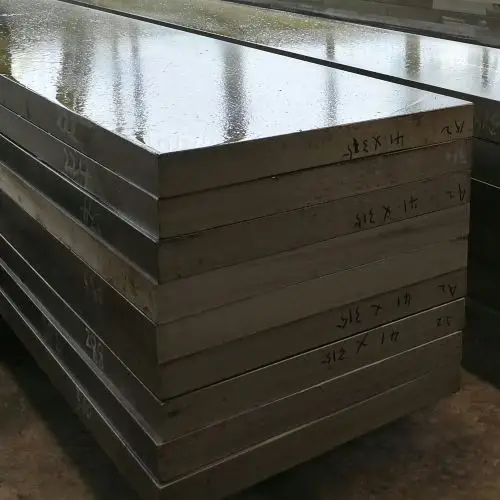
A2 | 1.2363 | SKD12
Aço ferramenta para trabalho a frio com têmpera ao ar, para melhor resistência ao desgaste, estabilidade dimensional, retenção de fio, matrizes, calibradores e ferramentas de precisão.
Em termos práticos, o aço S7 é a opção mais segura em termos de resistência à quebra. Já o aço A2 é a opção mais robusta em termos de resistência ao desgaste e controle dimensional.
Comparação rápida entre os aços ferramenta S7 e A2.
| Ponto de comparação | Aço ferramenta S7 | Aço para ferramentas A2 |
|---|---|---|
| tipo aço ferramenta | Aço ferramenta resistente a choques | Aço ferramenta para trabalho a frio com endurecimento ao ar |
| Principal vantagem | Alta resistência e durabilidade | Melhor resistência ao desgaste e estabilidade dimensional. |
| Dureza de trabalho típica | Aproximadamente 56-58 HRC | Aproximadamente 58-60 HRC |
| Resistência ao desgaste | Inferior | Mais alto |
| Toughness | Mais alto | Moderado |
| Melhor para | Lascas, rachaduras, quebras | Desgaste, perda de borda, alteração dimensional |
| Principal compensação | Desgasta-se mais rapidamente em ambientes abrasivos. | Pode lascar sob forte impacto. |
Diferença na composição química
| Elemento | Aço ferramenta S7 / UNS T41907 | Aço ferramenta A2 / UNS T30102 |
|---|---|---|
| Carbono | 0.45-0.55% | 0.95-1.05% |
| Chromium | 3.00-3.50% | 4.75-5.50% |
| Molibdênio | 1.30-1.80% | 0.90-1.40% |
| Manganese | 0.20-0.90% | Máx. 1,00% |
| Silicon | 0.20-1.00% | Máx. 0,50% |
| Vanadium | 0,20-0,30%, quando especificado | 0.15-0.50% |
| Níquel | Geralmente não especificado | Máx. 0,30% |
A composição explica a diferença no comportamento do serviço.
A2 contém muito mais carbono e cromo. Isso cria suporte de carboneto mais forte, então o aço mantém melhor o fio em aplicações abrasivas de trabalho a frio.
O aço S7 utiliza uma estrutura com menor teor de carbono e cromo. Ele sacrifica parte da resistência ao desgaste do aço A2, mas ganha em tenacidade. É por isso que o S7 é usado em aplicações onde a fratura representa um risco maior do que o desgaste gradual.
O maior teor de molibdênio no S7 também ajuda temperabilidade e resistência moderada ao calor. Ele suporta exposição limitada ao calor melhor que o A2, mas não deve ser tratado como um aço para ferramentas de trabalho a quente.
Diferença de desempenho em uso
A principal escolha não é simplesmente a dureza. Trata-se do equilíbrio entre tenacidade, resistência ao desgaste e estabilidade dimensional.
| Fator de desempenho | Nota melhor | Significado prático |
|---|---|---|
| Resistência a choques | S7 | Melhor para impactos repetidos e cargas repentinas. |
| Resistência a lascas | S7 | Reduz a fratura das bordas em ferramentas de uso pesado. |
| resistência ao desgaste abrasivo | A2 | Mantém a lâmina afiada por mais tempo. |
| Estabilidade dimensional | A2 | Melhor opção para ferramentas de trabalho a frio de precisão. |
| retenção de borda | A2 | Melhor opção para ferramentas de corte, conformação e desgaste. |
| Exposição moderada ao calor | S7 | Apresenta melhor desempenho que o A2 em condições de calor limitado. |
O aço S7 geralmente é usado com dureza entre 56 e 58 HRC para manter a tenacidade necessária para aplicações de impacto. Aumentar demais a dureza pode comprometer a principal vantagem da escolha do aço S7. Para mais informações sobre a dureza do aço S7, consulte [link para a documentação]. Dureza do aço ferramenta S7: Faixa HRC, dureza HB recozida e dureza de trabalho..
A2 é comumente usado a 58-60 HRC porque enfatiza resistência ao desgaste, estabilidade de aresta e controle dimensional. Para mais informações sobre dureza do A2, consulte Dureza do aço ferramenta A2: Tabela HRC, dados de revenimento e dureza de trabalho.
Ambos os aços são graus de endurecimento ao ar. A2 é geralmente mais previsível para ferramentas de precisão que precisam de dureza uniforme e controle dimensional. S7 também endurece com segurança, mas seções espessas precisam de mais controle cuidadoso do tratamento térmico para evitar variação de dureza.
Seleção S7 vs A2 por aplicação
| Problema de aplicação ou ferramental | Melhor escolha | Motivo principal |
|---|---|---|
| cinzéis de mão | S7 | impacto repetido |
| Cinzéis pneumáticos | S7 | Carga de choque elevada |
| Conjuntos de rebites e pontas de chave de fenda | S7 | Força de ataque |
| punções para serviço pesado | S7 | Resistência a lascas e rachaduras |
| Ferramentas de recalque a frio | S7 | Tensão de impacto e compressão |
| lâminas de cisalhamento pesadas | S7 | Carga de choque durante o corte |
| Soqueamento a quente moderado ou tosquia a quente | S7 | Melhor resistência ao calor moderado do que o A2. |
| Matrizes de corte | A2 | Melhor resistência ao desgaste |
| Matrizes de conformação | A2 | Resistência ao desgaste e estabilidade dimensional |
| Matrizes de corte | A2 | retenção de borda |
| Matrizes de laminação de roscas | A2 | resistência ao desgaste superficial |
| Ferramentas de cunhagem | A2 | Estabilidade da superfície de trabalho |
| Manômetros e buchas | A2 | Resistência ao desgaste e controle de tamanho |
| Ferramentas de precisão para trabalho a frio | A2 | Melhor estabilidade dimensional |
| A ferramenta lasca ou racha antes de se desgastar. | S7 | É preciso mais resistência. |
| A ferramenta permanece intacta, mas se desgasta muito rapidamente. | A2 | É necessária maior resistência ao desgaste. |
Graus equivalentes para compras
Após a escolha do material, a próxima questão é a especificação. A especificação A2 geralmente é mais fácil de identificar em diferentes normas internacionais. A especificação S7 requer mais atenção, pois algumas referências equivalentes são usadas de forma inconsistente em diferentes mercados.
| Padrão/Sistema | Aço para ferramentas A2 | Aço ferramenta S7 |
|---|---|---|
| AISI / SAE | A2 | S7 |
| UNS | T30102 | T41907 |
| DIN / W.Nr. | 1.2363 | Frequentemente referenciado como 1.2355 / 50CrMoV13-15 |
| JIS | SKD12 | Não existe um equivalente direto em JIS de uso comum. |
| BS | BA2 | Não existe um equivalente direto amplamente utilizado na norma BS. |
| AFNOR | Z100CDV5 | Não existe um equivalente direto amplamente utilizado para a norma AFNOR. |
| SS / Suécia | 2260 | Não existe um equivalente direto em aço inoxidável amplamente utilizado. |
S7 corresponde a AISI S7 e UNS T41907. É frequentemente referenciado como DIN 50CrMoV13-15 (cerca de 1.2355), mas não há equivalente direto amplamente usado em JIS, BS ou AFNOR. Para compra, especifique AISI S7 / UNS T41907 e confirme a composição química no certificado de fábrica.
Recomendações finais de seleção
Escolha S7 para risco de quebra
O aço S7 costuma ser mais adequado para ferramentas de impacto, punções, cinzéis, conjuntos de rebites e ferramentas propensas a rachaduras ou quebras.
Escolha A2 para maior durabilidade e precisão.
O aço A2 é escolhido para matrizes de corte, matrizes de rebarbação, ferramentas de conformação, calibradores, buchas e ferramentas de precisão, onde a resistência ao desgaste e o controle dimensional são fundamentais.
Em casos limítrofes, concentre-se em qual falha tem o maior custo: quebra ou desgaste. Decida com base em qual risco é mais relevante para a sua aplicação.
Precisa de aço ferramenta S7 ou A2 para sua aplicação de ferramentas?
A Aobo Steel fornece aço ferramenta S7 resistente a choques e aço ferramenta A2 para trabalho a frio com têmpera ao ar, para requisitos de impacto, desgaste e ferramentas de precisão.
E-mail: [email protected] · Tel. e WhatsApp: +86 180 6294 5370
Páginas relacionadas
Comparações entre S7 e A2: S7 vs 4140 · S7 vs D2 · D2 vs A2 · H13 vs A2
Páginas de referência: Guia de tratamento térmico A2 · Tabela de revenimento de aço para ferramentas
Famílias de séries: graus de aço ferramenta · Aços para ferramentas da série S · Localizador de materiais de aço ferramenta
Composição, dureza e dados de tratamento térmico são valores típicos publicados para S7 / 1.2355 e A2 / 1.2363 / SKD12. Confirme a faixa exata no certificado do fabricante para o lote entregue.