
Aço D2 vs D3: Qual aço ferramenta você deve escolher?
Aço ferramenta D2 e D3 são aços de alto carbono e alto cromo aços para ferramentas de trabalho a frio utilizados para matrizes, facas, punções, peças de desgaste e ferramentas de trabalho a frio que exigem alta resistência ao desgaste.
Para a maioria das ferramentas de trabalho a frio, o aço D2 é a opção inicial mais segura, pois oferece um melhor equilíbrio entre resistência ao desgaste, tenacidade, estabilidade ao tratamento térmico e confiabilidade do processo. O aço D3 é mais comum quando o desgaste abrasivo é severo e o impacto é baixo.
Aço ferramenta D2 e D3 disponível na Aobo Steel.
A Aobo Steel fornece aços-ferramenta para trabalho a frio D2 e D3 para matrizes de alto desgaste, facas, punções, peças de desgaste e aplicações de ferramentas abrasivas.
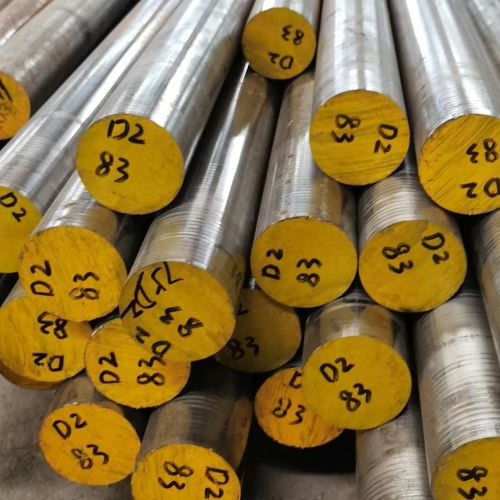
D2 | 1.2379 | SKD11
Aço ferramenta balanceado para trabalho a frio de alta resistência ao desgaste, ideal para matrizes em geral, facas, ferramentas de conformação, ferramentas de precisão e aplicações que exigem maior confiabilidade de processamento.
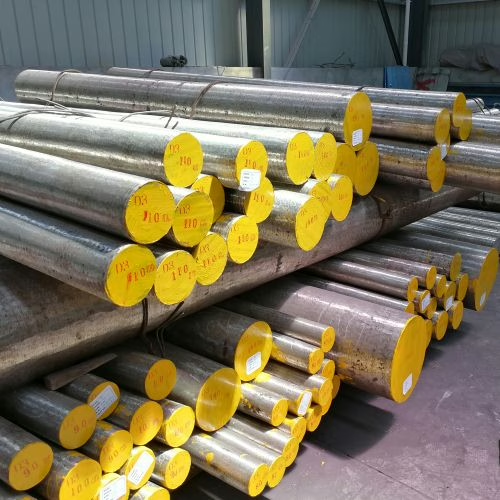
D3 | 1.2080 | SKD1
Aço ferramenta para trabalho a frio com altíssimo teor de carbono e cromo, indicado para desgaste abrasivo severo, matrizes simples, peças sujeitas a desgaste e ferramentas de baixo impacto.
Comparação rápida
| Fator | Aço ferramenta D2 | Aço ferramenta D3 |
|---|---|---|
| Steel type | Aço para ferramentas de trabalho a frio com alto teor de carbono e alto teor de cromo | Aço para ferramentas de trabalho a frio com alto teor de carbono e alto teor de cromo |
| Design da liga | Aço para trabalho a frio Cr-Mo-V | Aço para trabalho a frio com alto teor de carbono e cromo |
| Teor de carbono | 1.40-1.60% | 2.00-2.35% |
| Resistência ao desgaste | Alto | Muito alto |
| Toughness | Melhorar | Inferior |
| Estabilidade dimensional | Melhorar | Inferior |
| Método de têmpera | Endurecimento ao ar | Têmpera em óleo |
| Dificuldade de usinagem | Alto | Mais alto |
| Dificuldade de retificação | Alto | Mais alto |
| Direção típica | Matrizes gerais para trabalho a frio, facas, ferramentas de conformação, ferramentas de precisão | Ferramentas abrasivas de desgaste, matrizes simples, peças de desgaste |
Diferença entre composição química e desempenho
| Grau AISI | Nº UNS | C (%) | Mn (%) | Si (%) | Cr (%) | Mo (%) | V (%) |
|---|---|---|---|---|---|---|---|
| D2 | T30402 | 1.40-1.60 | 0,60 máx. | 0,60 máx. | 11.00-13.00 | 0.70-1.20 | 1,10 máx. |
| D3 | T30403 | 2.00-2.35 | 0,60 máx. | 0,60 máx. | 11.00-13.50 | – | – |
O D3 contém teor de carbono significativamente maior, mantendo nível de cromo semelhante. Isso aumenta a quantidade de carbonetos de cromo, melhorando a resistência ao desgaste abrasivo, mas tornando o aço mais frágil e difícil de retificar.
O D2 apresenta menor teor de carbono e inclui molibdênio e vanádio adicionados. O molibdênio melhora a temperabilidade e a resposta ao revenimento. O vanádio aumenta a resistência ao desgaste e refina os carbonetos. Portanto, o D2 é menos extremo que o D3 e mais fácil de controlar durante a fabricação de ferramentas.
Resistência ao desgaste, falhas na borda e formato da ferramenta
O aço D3 apresenta bom desempenho em ferramentas sujeitas principalmente a desgaste abrasivo e gradual. É adequado para peças de desgaste simples, matrizes e ferramentas que operam contra materiais abrasivos.
O D2 geralmente é preferido para ferramentas com arestas finas, geometria complexa, tolerâncias apertadas ou solicitação mecânica repetida. Em ferramentas de corte a frio, estampagem, conformação, cisalhamento, corte longitudinal e cunhagem, o desgaste puro raramente causa falha; em vez disso, lascas, estalando, o colapso de arestas, a distorção e a perda por reafiagem frequentemente determinam a vida útil real da ferramenta.
O aço D3 não deve ser escolhido apenas por sua maior resistência ao desgaste, conforme indicado nas fichas técnicas. É preciso também considerar o formato da ferramenta, o suporte da aresta de corte, a carga de impacto e o risco de tratamento térmico.
graus equivalentes
D2 e D3 são frequentemente especificados sob diferentes nomes de normas em compras internacionais.
| Padrão | Equivalente a D2 | Equivalente a D3 |
|---|---|---|
| AISI | D2 | D3 |
| UNS | T30402 | T30403 |
| DIN / EN | 1,2379 / X155CrMoV12-1 | 1.2080 / X210Cr12 |
| JIS | SKD11 | SKD1 |
| GB | Cr12Mo1V1 | Cr12 |
Comportamento do tratamento térmico
| Item | Aço ferramenta D2 | Aço ferramenta D3 |
|---|---|---|
| Tipo de têmpera | Endurecimento ao ar | Têmpera em óleo |
| temperatura de austenitização | 995-1030 C | 925-980 C |
| Dureza de trabalho típica | 58-62 HRC | 60-64 HRC |
| Risco de distorção | Inferior | Mais alto |
| risco de rachaduras | Inferior | Mais alto |
| Comportamento moderador | Possibilidade de têmpera em alta temperatura | Têmpera a baixa temperatura típica |
O D2 é mais fácil de controlar em ferramentas de precisão porque é um aço endurecido ao ar, ou seja, endurece quando resfriado em ar parado, o que reduz as tensões de têmpera. O D3, um aço para ferramentas endurecível em óleo, exige maior cautela quando usado em ferramentas com cantos vivos, seções irregulares ou requisitos dimensionais rigorosos.
Usinagem, retificação e custo total
D3 é mais difícil de usinar e retificar. Seu maior volume de carbonetos aumenta o desgaste da ferramenta, a resistência à retificação, o tempo de acabamento e os custos de reafiagem.
O preço das matérias-primas por si só pode ser enganoso. Uma barra de D3 mais barata pode ficar mais cara depois de contabilizados os custos de usinagem, tratamento térmico, retificação e reparo de ferramentas. O D2 costuma ser mais previsível para produção em lotes, pois é mais fácil de obter e processar do que o D3, além de ser mais amplamente aceito por fabricantes de ferramentas e empresas de tratamento térmico.
Conselhos práticos de seleção
Escolha D2 para um ponto de partida mais seguro.
Quando as condições de trabalho não são claras, escolha o D2 por sua margem de segurança mais ampla em tenacidade, controle dimensional, tratamento térmico e processamento.
Escolha D3 somente para abrasão severa de baixo impacto.
Selecione D3 somente quando as falhas forem definitivamente devidas ao desgaste abrasivo, o formato da ferramenta for simples e a aplicação tiver impacto mínimo ou choque na borda.
Para compradores estrangeiros, o D2 oferece uma opção de aquisição confiável e de menor risco. Opte pelo D3 somente se tiver verificado que sua solicitação atende aos requisitos específicos impostos por ele.
Precisa de aço ferramenta D2 ou D3 para ferramentas de trabalho a frio de alto desgaste?
A Aobo Steel fornece aços ferramenta D2 e D3 para matrizes, facas, punções, peças de desgaste e ferramentas abrasivas para trabalho a frio. Compartilhe sua especificação, tamanho, quantidade e aplicação para uma sugestão de fornecimento prática.
E-mail: [email protected] · Tel. e WhatsApp: +86 180 6294 5370
Páginas relacionadas
Comparações D2: D2 vs M2 · D2 vs 4140 · D2 vs O1 · D2 vs A2 · D2 vs DC53 · D2 vs 440C · D2 vs S7
Páginas de referência: guia de tratamento térmico de aço para ferramentas · Tratamento térmico de aço ferramenta D3 · trincas de têmpera em aço ferramenta
Famílias de séries: graus de aço ferramenta · Aços ferramenta da série D · Localizador de materiais de aço ferramenta
Faixas de composição, valores de dureza e temperaturas de tratamento térmico são valores típicos publicados para D2 / 1.2379 / SKD11 e D3 / 1.2080. Confirme a faixa exata no certificado do fabricante para o lote entregue.