
Guia de tratamento térmico do aço ferramenta M2
O aço para ferramentas M2 é tratado termicamente por pré-aquecimento duplo, austenitização a 1190–1230°C, têmpera em óleo, ar ou banho de sal, seguido de revenimento duplo ou triplo a 538–595°C. Revenido corretamente, o M2 atinge cerca de 60–65 HRC, com a alta dureza, resistência ao desgaste e dureza a quente esperadas de um aço rápido. Os valores de dureza por temperatura de revenimento, juntamente com a faixa de dureza recozida e a quente, são apresentados no gráfico em Dureza do aço para ferramentas M2 página.
Uma sequência típica consiste em um primeiro pré-aquecimento a 540–650 °C e um segundo a 845–870 °C. Após a homogeneização da temperatura, mantenha-se nessa temperatura por um curto período — cerca de 2 a 5 minutos. Resfrie rapidamente a cerca de 66–93 °C. Faça o revenimento imediatamente. A janela de processamento é estreita. Os controles abaixo são mais importantes do que o tempo de forno.
O M2 é um aço rápido para ferramentas, composto por molibdênio e tungstênio. Problemas como diminuição da dureza, crescimento de grãos, austenita retida persistente, fissuras, descarbonetação superficial ou instabilidade dimensional podem resultar de permanência excessiva na têmpera, superaquecimento, controle inadequado da atmosfera ou revenido tardio e insuficiente.
Aço rápido M2 da Aobo Steel
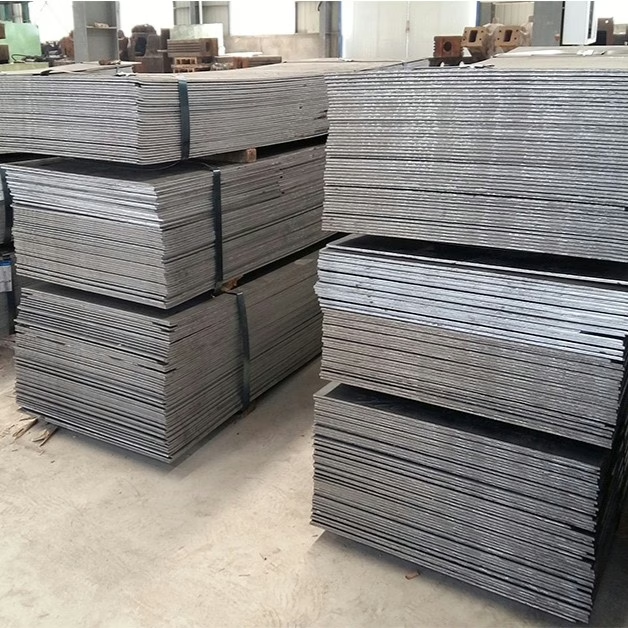
A Aobo Steel fornece M2 na condição recozida para pedidos em grande quantidade, MOQ 5 toneladas. Envie seus tamanhos e quantidades para um orçamento, ou abra a página do produto para composição química, graus equivalentes, tamanhos disponíveis, tolerância e detalhes de inspeção. Faixa de tamanho, tolerâncias, pedido mínimo e prazos de entrega estão definidos em nosso página sobre capacidade de fornecimento de aço ferramenta.
Tabela de temperaturas de tratamento térmico do aço ferramenta M2
O gráfico abaixo resume os principais dados de tratamento térmico do aço ferramenta M2. A sequência completa do processo é explicada passo a passo na seção a seguir.
| Etapa do processo | Temperatura/Condição | Controle de teclas |
|---|---|---|
| Recozimento | 870–900 °C / 1600–1650 °F | Mantenha a temperatura por cerca de 1 hora por polegada de espessura. Resfrie lentamente no forno até 650 °C e, em seguida, resfrie ao ar. A dureza após o recozimento é tipicamente de cerca de 241 HB, até um máximo especificado de aproximadamente 248 HB. |
| Alívio do estresse | 650–675 °C / 1200–1245 °F | Utilizado após usinagem pesada. Manter de 1 a 2 horas por polegada de seção transversal e, em seguida, resfriar lentamente. |
| Primeiro pré-aquecimento | 540–650 °C / 1000–1200 °F | Reduz o choque térmico inicial. |
| Segundo pré-aquecimento | 845–870 °C / 1555–1600 °F | Equaliza a ferramenta antes da austenitização. |
| Austenitização | 1190–1230 °C / 2175–2245 °F | Faixa inferior para tenacidade; faixa superior para dureza, resistência ao desgaste e dureza a quente. |
| Tempo de imersão | Geralmente, de 2 a 5 minutos após a equalização. | Evite deixar de molho por muito tempo. |
| Têmpera | Banho de óleo, ar ou sal | Resfrie rapidamente a uma temperatura entre 66 e 93 °C / 150 e 200 °F. |
| Dureza após têmpera | Aproximadamente 64–66 HRC | Revenimento imediato. Não deixe M2 no estado em que foi temperado. |
| Tratamento opcional para temperaturas abaixo de zero | -100 a -195 °C / -150 a -320 °F | Utilizado quando a estabilidade dimensional é crítica. |
| Revenimento | 538–595 °C / 1000–1105 °F | É necessário um processo de têmpera dupla. A têmpera tripla é frequentemente utilizada para ferramentas de alta exigência. |
| dureza final típica | Cerca de 60 a 65 HRC | Depende da temperatura de austenitização, do método de têmpera, da temperatura de revenido e do tamanho da seção transversal. |
O aço M2 deve ser aquecido em forno a vácuo, em atmosfera neutra controlada ou, quando possível, em banho de sal neutro. Nas temperaturas de têmpera do M2, pode ocorrer descarbonetação superficial. Isso resulta em uma camada externa macia e reduz a resistência ao desgaste.
Como realizar o tratamento térmico do aço ferramenta M2 passo a passo
O tratamento térmico M2 deve ser gerenciado como um processo metalúrgico contínuo; cada etapa se inter-relaciona e influencia as demais. O pré-aquecimento inadequado aumenta a probabilidade de choque térmico e fissuração. A austenitização subótima interrompe a dissolução de carbonetos e aumenta a austenita retida. O resfriamento inadequado prejudica a dureza alcançável e causa distorção. O revenido em múltiplos estágios insuficiente deixa a microestrutura metaestável.
Passo 1: Alívio do estresse antes do endurecimento
Recomenda-se o alívio de tensões quando uma ferramenta M2 tiver sido submetida a usinagem intensa antes da têmpera. Quando uma grande quantidade de material é removida, as tensões internas de usinagem podem causar movimentação ou fissuras durante o tratamento térmico final.
Aqueça a ferramenta lentamente a 650–675 °C (1200–1245 °F) e mantenha nessa temperatura por cerca de 1 a 2 horas por polegada de seção transversal. Resfrie a ferramenta lentamente até a temperatura ambiente. Esta etapa não endurece o aço. Ela alivia a tensão interna antes do ciclo de têmpera em alta temperatura. Conclua o desbaste antes do alívio de tensões. Deixe uma margem suficiente para a retificação final após a têmpera e o revenimento.
Etapa 2: Pré-aquecimento duplo para aço ferramenta M2
O aço M2 não deve ser colocado diretamente na faixa de austenitização. Devido ao seu alto teor de liga e alta temperatura de endurecimento, o aquecimento direto em alta temperatura pode causar choque térmico significativo e aumentar o risco de fissuração.
| Etapa de pré-aquecimento | Faixa de temperatura | Finalidade |
|---|---|---|
| Primeiro pré-aquecimento | 540–650 °C / 1000–1200 °F | Reduz o choque térmico inicial e inicia um aquecimento uniforme. |
| Segundo pré-aquecimento | 845–870 °C / 1555–1600 °F | Equaliza a ferramenta antes do aquecimento rápido até a faixa de austenitização. |
O objetivo do pré-aquecimento é equalizar as temperaturas, não mantê-las aquecidas por muito tempo. Uma vez aquecidas uniformemente, austenitize a ferramenta imediatamente. Manter a ferramenta aquecida por tempo excessivo é desnecessário e pode aumentar a descarbonetação se a atmosfera for mal protegida.
Algumas referências indicam uma faixa geral de pré-aquecimento M2 de 730–845 °C, ou um ciclo elevado de dois estágios a 843 °C e 1010 °C. Para um processo claro e dividido em etapas, as sequências de 540–650 °C e 845–870 °C são mais fáceis de seguir e explicam diretamente a ordem de aquecimento antes do endurecimento.
Etapa 3: Temperatura de austenitização e tempo de permanência
A liga M2 é tipicamente austenitizada a 1190–1230 °C (2175–2245 °F). Esta é a etapa mais crítica. A temperatura deve ser suficiente para dissolver os carbonetos de liga necessários, mas permanecer abaixo dos limites que causam crescimento de grão, excesso de austenita retida ou danos térmicos.
| Alvo de austenitização | Faixa de temperatura | Lógica de aplicação |
|---|---|---|
| Prioridade de resistência | 1175–1190 °C / 2150–2175 °F | Utilizado quando a resistência e a durabilidade, especialmente em relação à resistência a rachaduras, são mais importantes do que a dureza máxima. |
| Faixa de têmpera padrão M2 | 1190–1230 °C / 2175–2245 °F | Gama geral de ferramentas de corte M2 e ferramentas resistentes ao desgaste. |
| Dureza e resistência ao desgaste máximas | Aproximadamente 1230°C / 2245°F | Utilizado quando são necessárias alta dureza, resistência ao desgaste e dureza a vermelho. |
| Ajuste do banho de sal | Cerca de 14°C / 25°F mais baixo | Utilizado para endurecer tecidos após banho de sal. |
| Ajuste M2 de alto carbono | Cerca de 14°C / 25°F mais baixo | Ajuda a reduzir o risco de sobreaquecimento e retenção de austenita. |
O tempo de permanência na temperatura de austenitização deve ser curto. Após a ferramenta atingir a temperatura, mantenha o M2 nessa temperatura por apenas 2 a 5 minutos. Este é o tempo após a equalização da temperatura na seção, e não o tempo total do ciclo do forno. O tempo gasto no aquecimento não é contabilizado como tempo de permanência na temperatura. Seções muito grandes podem necessitar de 5 a 7 minutos. Não mantenha o M2 nessa temperatura como faria com um aço de baixa liga.
O tempo excessivo de imersão é uma das causas mais comuns de falha no tratamento térmico M2. Muito tempo em alta temperatura dissolve muito carbono e liga na austenita. Isso aumenta a austenita retida, grosseira os grãos e reduz a tenacidade. O aquecimento insuficiente tem o efeito oposto. Causa dissolução insuficiente de carbonetos, menor dureza e endurecimento secundário mais fraco durante o revenido. O objetivo é uma dissolução controlada de carbonetos dentro de uma faixa estreita, e não o tempo máximo no forno.
Etapa 4: Métodos de têmpera: banho de óleo, ar e sal
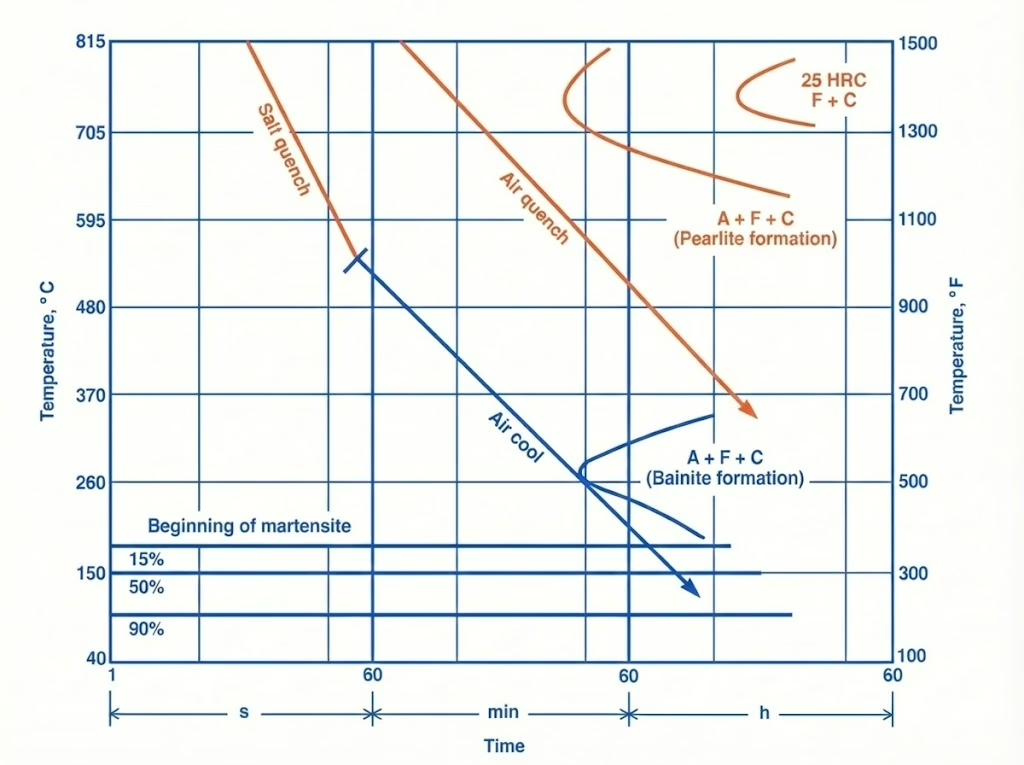
Após a austenitização, resfrie a amostra M2 em óleo, ar ou banho de sal quente. O melhor método depende do tamanho da ferramenta, da dureza desejada, da tolerância à distorção e dos equipamentos disponíveis.
| Método de resfriamento | Melhor uso | Limitação principal |
|---|---|---|
| têmpera de óleo | Resposta de maior dureza | Maior risco de distorção e fissuras do que o resfriamento a ar. |
| têmpera por ar | Melhor estabilidade dimensional | A dureza pode ser menor em seções maiores ou com resfriamento mais lento. |
| banho de sal quente refrescante | Boa equalização de temperatura e redução do choque térmico. | Requer equipamento adequado para banho de sal e controle rigoroso. |
A têmpera em óleo é frequentemente escolhida quando se exige a máxima resposta de dureza, resfriando a ferramenta da austenitização até 66–93 °C (150–200 °F). A têmpera ao ar é mais suave e reduz o risco de distorção, sendo adequada para seções menores ou ferramentas onde a estabilidade dimensional é mais importante do que um resfriamento agressivo. A têmpera em banho de sal quente proporciona melhor controle da equalização da temperatura: a ferramenta é mantida nessa temperatura até que a seção transversal se equalize, sendo então resfriada ainda mais antes do revenimento, o que reduz o choque térmico e a distorção quando controlado adequadamente.
Independentemente do meio de têmpera, o revenido deve começar assim que a ferramenta esfriar até 66–93 °C. A permanência prolongada no estado martensítico após a têmpera aumenta o risco de fissuração tardia ou distorção dimensional devido à austenita retida não revenida e à tensão residual.
Etapa 5: Tratamento opcional para temperaturas abaixo de zero
O tratamento subzero é opcional. É utilizado principalmente quando a estabilidade dimensional é crítica, como em ferramentas complexas, componentes de precisão ou peças onde a austenita retida precisa ser ainda mais reduzida.
Uma faixa típica de temperatura abaixo de zero é de -100 a -195 °C (-150 a -320 °F). Após a peça retornar à temperatura ambiente, o revenimento deve começar imediatamente. Para formatos complexos, um breve revenimento de alívio de tensões em baixa temperatura pode ser aplicado antes do congelamento para reduzir o risco de trincas. O tratamento abaixo de zero não substitui a austenitização, a têmpera e os múltiplos revenimentos adequados. Trata-se apenas de uma etapa adicional de estabilização quando o projeto da ferramenta e as condições de serviço o exigem.
Etapa 6: Têmpera dupla ou tripla
O revenimento deve começar imediatamente após a têmpera. Se for utilizado um ciclo subzero, o revenimento deve ser iniciado assim que a peça retornar à temperatura ambiente. O processo M2 depende do endurecimento secundário. O revenimento faz mais do que aliviar tensões; ele controla a transformação da austenita retida, a precipitação de carbonetos, a dureza final e a tenacidade.
A faixa de têmpera comum para o aço M2 é de 538–595 °C (1000–1105 °F). A têmpera dupla é o requisito mínimo prático. A têmpera tripla é frequentemente utilizada para ferramentas de corte, ferramentas de precisão e condições de serviço exigentes.
Cada ciclo de revenido deve ser seguido por um resfriamento à temperatura ambiente antes do início do próximo. Essa etapa de resfriamento é importante porque a austenita retida pode se transformar em martensita fresca durante o resfriamento, e o próximo revenido alivia a tensão nessa martensita recém-formada. Não confie em um único revenido para a liga M2. Um ciclo geralmente não é suficiente para estabilizar a estrutura.
Tabela de temperatura de revenido e dureza M2
O aço M2 apresenta uma forte resposta de endurecimento secundário. Sua dureza não diminui simplesmente com o aumento da temperatura de revenido. Na faixa de alta temperatura de revenido, ocorre a precipitação de carbonetos finos de liga, e a dureza pode aumentar novamente.
O gráfico abaixo mostra a dureza típica após revenimento duplo quando o aço M2 é austenitizado em torno de 1230°C / 2250°F.
| Temperatura de revenimento | Dureza temperada em óleo | Dureza após têmpera ao ar |
|---|---|---|
| Após a têmpera | 64,0–66,0 HRC | 64,0–66,0 HRC |
| 400°F / 204°C | 63,0 HRC | 63,0 HRC |
| 500°F / 260°C | 62,5 HRC | 62,5 HRC |
| 600°F / 316°C | 62,5 HRC | 62,5 HRC |
| 700°F / 371°C | 62,5 HRC | 62,5 HRC |
| 800°F / 427°C | 63,5 HRC | 63,5 HRC |
| 900°F / 482°C | 64,0 HRC | 64,0 HRC |
| 1000°F / 540°C | 64,5–65,5 HRC | 62,0 HRC |
| 1025°F / 550°C | 65,0 HRC | 63,0 HRC |
| 1050°F / 565°C | 63,5–65,5 HRC | 64,0 HRC |
| 1100°F / 595°C | 61,5–64,0 HRC | 63,0 HRC |
| 1150°F / 620°C | 60,0–62,0 HRC | 60,0 HRC |
| 1200°F / 650°C | 53,0–53,5 HRC | 53,0 HRC |
Para muitas aplicações de corte e usinagem em aço M2, o revenimento em torno de 540–565 °C é comum, pois situa-se próximo à faixa de endurecimento secundário e equilibra dureza, desempenho de corte, tenacidade e estabilidade.
O aço M2 não deve ser subtemperado. Uma temperatura de revenido baixa ou um número insuficiente de ciclos pode levar a tensões internas elevadas e austenita retida instável. O revenido duplo é o mínimo, e o revenido triplo é frequentemente utilizado para ferramentas mais exigentes.
Efeito da temperatura de austenitização na dureza M2 revenida
A temperatura de austenitização afeta a resposta final de dureza. Uma temperatura de têmpera mais alta dissolve mais carbono e elementos de liga, fortalecendo o endurecimento secundário durante o revenido, mas também aumenta a austenita retida e o risco de superaquecimento.
A tabela abaixo utiliza um conjunto de dados separado, reportado em °C, portanto seus valores de pico diferem ligeiramente do gráfico de revenido duplo em °F acima. Os dois não são contraditórios. Eles provêm de diferentes lotes de aço, condições de austenitização e configurações de teste, e ambos mostram a mesma tendência: um pico de endurecimento secundário próximo a 525–550 °C, seguido por uma queda acima de 575 °C.
| Temperatura de revenimento | Endurecido a 1180°C | Endurecido a 1200°C | Endurecido a 1220°C | Endurecido a 1240°C |
|---|---|---|---|---|
| Após a têmpera | 66,0 HRC | 64,0 HRC | 65,0 HRC | 64,0 HRC |
| 200°C | 63,0 HRC | 61,5 HRC | 62,5 HRC | 61,5 HRC |
| 300°C | 62,7 HRC | 61,5 HRC | 62,5 HRC | 61,5 HRC |
| 400°C | 63,0 HRC | 62,0 HRC | 62,5 HRC | 62,0 HRC |
| 500°C | 63,5 HRC | 64,0 HRC | 64,5 HRC | 64,5 HRC |
| 525°C | 64,5 HRC | 65,0 HRC | 65,5 HRC | 66,0 HRC |
| 550°C | 64,5 HRC | 65,5 HRC | 66,0 HRC | 66,5 HRC |
| 575°C | 64,0 HRC | 63,5 HRC | 64,5 HRC | 66,0 HRC |
| 600°C | 62,0 HRC | 62,5 HRC | 62,5 HRC | 63,0 HRC |
Por isso, o aço M2 não deve ser tratado termicamente apenas para atingir o maior valor de dureza. Uma temperatura de têmpera mais alta pode produzir um endurecimento secundário mais forte, mas a margem de segurança do processamento torna-se menor. Na produção, o objetivo mais importante é obter dureza estável com tenacidade aceitável, austenita retida controlada e vida útil da ferramenta confiável.
Problemas de tratamento térmico M2
A maioria das falhas no tratamento térmico M2 decorre de cinco áreas: austenitização incorreta, permanência excessiva na atmosfera, proteção atmosférica inadequada, têmpera incorreta e revenimento insuficiente.
| Problema | Causa principal | Resultado |
|---|---|---|
| Baixa dureza | Subaquecimento, dissolução insuficiente de carbonetos, têmpera inadequada ou excesso de austenita retida. | A ferramenta não consegue atingir a dureza de trabalho necessária. |
| Grossamento de grãos | Superaquecimento ou imersão excessiva | Menor resistência e maior risco de fissuras. |
| Excesso de austenita retida | Alta temperatura de austenitização, longo tempo de permanência na atmosfera ou revenimento insuficiente. | Alteração dimensional e dureza instável. |
| Rachaduras por têmpera | Choque térmico, estresse severo de têmpera ou revenido retardado. | Rachaduras durante ou após o endurecimento. |
| Descarbonetação | Aquecimento sem proteção atmosférica | Superfície macia e baixa resistência ao desgaste. |
| Subtemperagem | Temperatura de têmpera baixa ou número insuficiente de ciclos de têmpera. | Fragilidade e estrutura instável. |
O superaquecimento e o tempo de imersão excessivo são problemas sérios, pois o aço M2 é processado próximo ao seu limite de alta temperatura. Temperaturas ou tempos excessivos causam o crescimento de grãos grosseiros, aumentam a austenita retida, reduzem a tenacidade e diminuem a confiabilidade da ferramenta. O aquecimento insuficiente impede a dissolução suficiente dos carbonetos da liga, reduzindo a dureza após a têmpera e enfraquecendo o endurecimento secundário durante o revenido.
A presença de austenita retida é esperada no aço M2, mas o excesso de austenita retida causa problemas. Ela pode se transformar posteriormente durante o serviço, formando martensita fresca, causando crescimento dimensional e tensões internas, além de aumentar o risco de trincas. A descarbonetação é outra importante causa de falhas: quando aquecida sem vácuo, em atmosfera neutra ou sem proteção de banho de sal, a superfície perde carbono e permanece macia após o endurecimento.
Erros de revenimento são especialmente dispendiosos. O aço M2 requer múltiplos ciclos de revenimento, pois a transformação da austenita retida e o revenimento da martensita fresca não podem ser concluídos em um único ciclo. Para um desempenho estável, a ferramenta deve resfriar até a temperatura ambiente entre os revenimentos.
A Aobo Steel fornece aço rápido M2 / DIN 1.3343 / JIS SKH51 na condição recozida e não oferece serviços de tratamento térmico final, como têmpera, revenimento, tratamento subzero ou revenimento.
Os parâmetros de tratamento térmico, os dados de dureza e as recomendações de processo neste guia são fornecidos como referências gerais de suporte técnico para os clientes. Os resultados reais podem variar de acordo com a capacidade do forno, o tamanho da seção, a geometria da ferramenta, a condição do aço, a prática de têmpera, o controle da atmosfera e a aplicação final. Os procedimentos finais de tratamento térmico devem ser confirmados e validados pelo fornecedor de tratamento térmico do cliente antes da produção.
Precisa de aço rápido M2 recozido para encomendas em grande quantidade?
A Aobo Steel fornece barras redondas e chapas M2 / DIN 1.3343 / JIS SKH51 com certificados de fábrica e inspeção dimensional antes do envio.