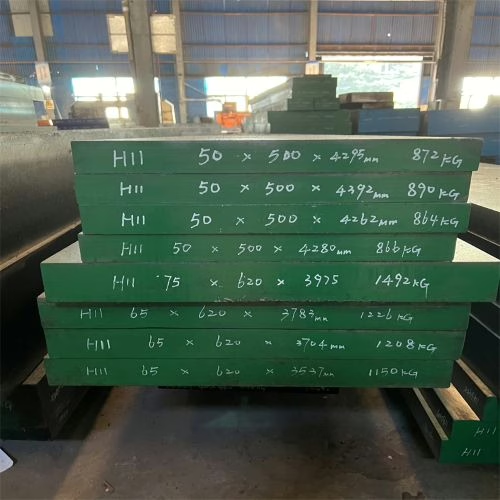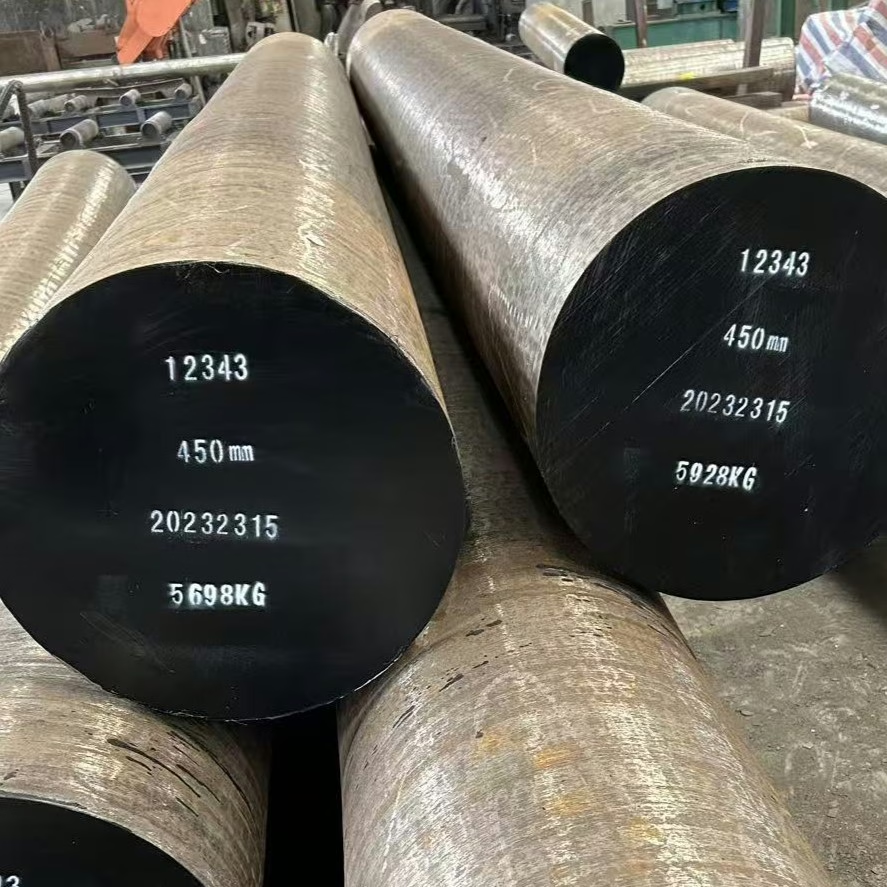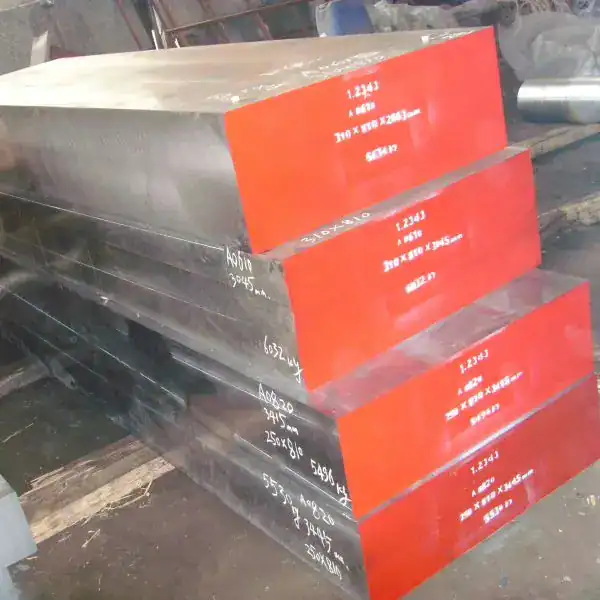

Início > catálogo de aços para ferramentas Aço ferramenta H11
Aobo Steel | Fornecedor global de aço para ferramentas na China
Aço ferramenta AISI H11 | 1.2343 | Aço para trabalho a quente com cromo SKD6
✓100% Garantia de Qualidade Testada por Ultrassom
✓SET 1921-82 Classe D/d Garantida
✓Entrega no estado recozido
✓Superfície: Escama preta, torneada, acabamento bruto ou polida
O aço ferramenta H11 é um aço para trabalho a quente com têmpera ao ar, conhecido por sua excelente tenacidade, resistência térmica e resistência à fadiga térmica. Oferece boa resistência ao desgaste em temperaturas médias, baixa distorção por tratamento térmico e forte resistência à corrosão por alumínio fundido. O H11 é amplamente utilizado em fundição sob pressão, forjamento, extrusão e moldagem de plásticos. É designado como H11 (ASTM A681), com graus equivalentes incluindo 1.2343 (DIN) e SKD6 (JIS).
Visão geral do fornecimento de aço ferramenta H11
| Grau | AISI H11/DIN 1.2343/JIS SKD6 |
| Condições de entrega | Totalmente recozido (condição macia para usinagem) |
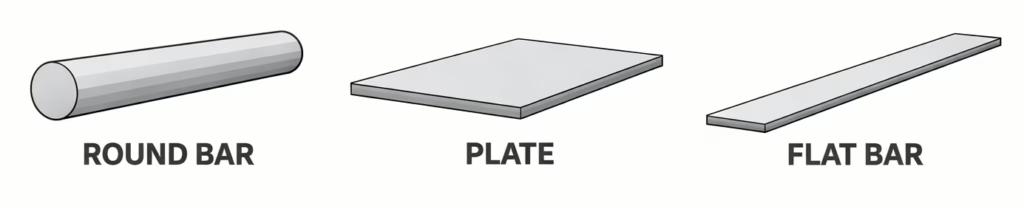
| Formulários disponíveis | Barra redonda / Barra plana / Chapa / Bloco forjado |
| Capacidade de produção mensal | Aproximadamente 1000 toneladas métricas |
| Quantidade recomendada para exportação | Contêiner 20GP completo (aproximadamente 26 toneladas) |
| MOQ | 5 toneladas |
| Prazo de entrega (com estoque de lingotes) | Aproximadamente 20 dias |
| Prazo de entrega (derretido) | 30 a 45 dias |
| Prazo de entrega (nível ESR) | Aproximadamente 60 dias |
| Inspeção | Equipe interna de ultrassom + Inspeção por terceiros disponível |
| Documentação | MTC (EN 10204 3.1) + Relatório UT |
Por que os distribuidores globais adquirem o aço H11 da Aobo Steel?
- Fornecimento mensal contínuo de cerca de 1000 toneladas
- Quantidade mínima de encomenda a partir de 5 toneladas para pedidos por atacado.
- Comprimentos de barras e pratos otimizados para contêineres
- São permitidos carregamentos de tamanhos mistos para exportação.
- Entrega de material recozido para usinagem subsequente.
- Fornecimento estável por meio de parceiros integrados na cadeia de suprimentos.
- Inspeção UT disponível para SEP 1921-82 D/d ou E/e
- Rastreabilidade MTC e de lote para cada remessa.
- Rastreamento do número de lote para controle de pedidos
- Opções de superfície preta, torneada e polida
- Embalagem a granel para exportação marítima.
- Caminho de conversão claro para a página dedicada ao fornecimento em massa.
Produção estável para fornecimento em larga escala a longo prazo
- Produção mensal contínua de cerca de 1000 toneladas
- Ciclos de produção contínuos para reposição de estoque
- A tecnologia ESR (Refusão por Eletroescória) está disponível mediante solicitação.
- Fornecimento estável de ligas metálicas para reduzir o risco de interrupção no fornecimento
- Rastreabilidade completa do lote, vinculada ao número de lote original.
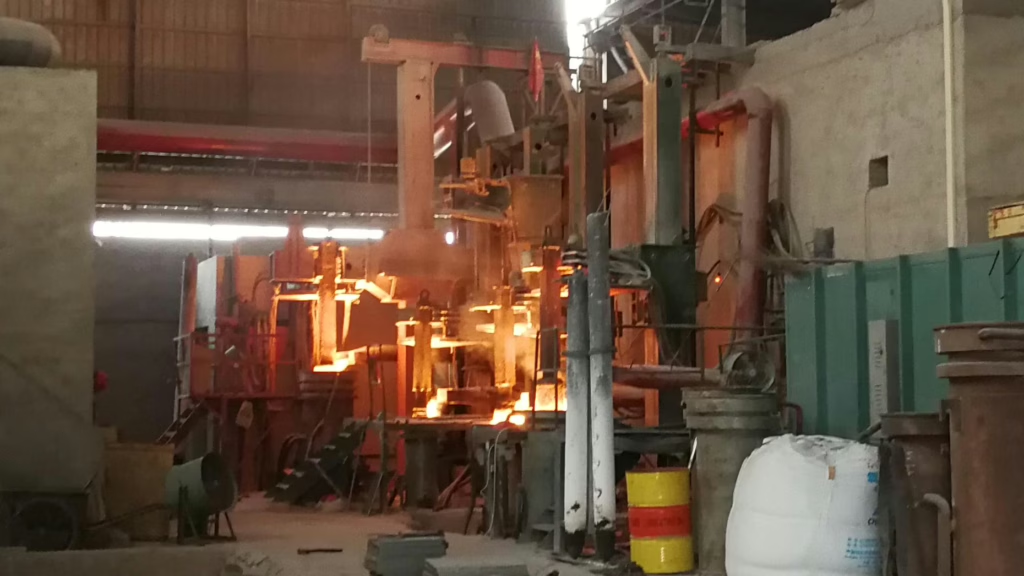
Formas disponíveis em aço ferramenta H11
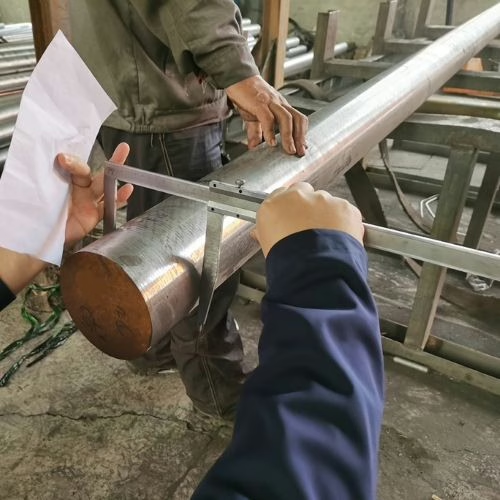
Controle de Qualidade para Encomendas em Grande Quantidade
Cada lote de aço ferramenta fornecido pela Aobo Steel é verificado antes do envio para garantir a precisão da classificação, a integridade interna e a rastreabilidade de pedidos em grande quantidade.
- Composição química verificada por espectrômetro
- Teste ultrassônico disponível (SET 1921-82)
- Entregue em condição esferoidizada e recozida
- Certificado de Ensaio de Fábrica (EN 10204 3.1) com número de lote
- Inspeção dimensional e de superfície antes do envio.
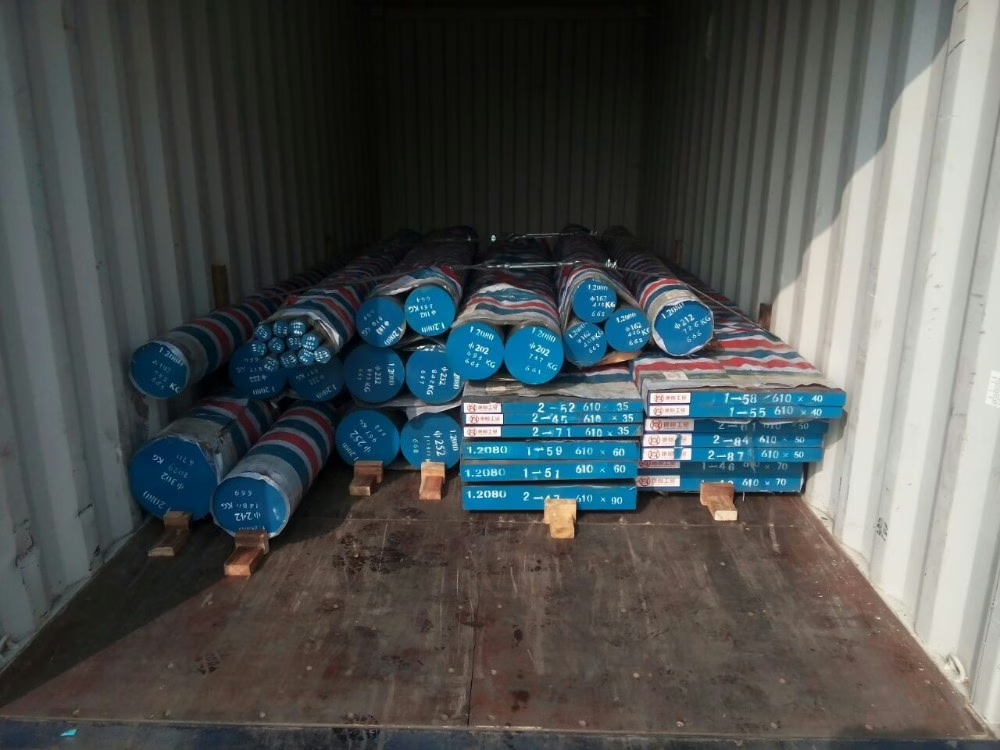
Embalagem para exportação e carregamento de contêineres
- Embalagem profissional para exportação marítima
- Carregamento otimizado para contêineres de 20 pés (20GP) até aproximadamente 26 toneladas.
- Suporte para diferentes graus e tamanhos
- Proteção anticorrosiva para longos transportes marítimos.
Para remessas internacionais, recomenda-se fortemente o carregamento de contêineres completos para garantir a eficiência de custos e um processamento alfandegário mais ágil.
Composição química
| C | Mn | Si | Cr | Mo | V |
| 0,33 – 0,43% | 0,20 – 0,60% | 0,80 – 1,25% | 4,75 – 5,50% | 1.10 – 1.60% | 0,30 – 0,60% |
Graus equivalentes de aço para ferramentas H11 e suas composições
| Graus | C | Si | Mn | P | S | Cr | Mo | V |
| DIN 1.2343 | 0,33 – 0,43% | 0,80 – 1,25% | 0,20 – 0,60% | ≤ 0,030% | ≤ 0,030% | 4,75 – 5,50% | 1.10 – 1.60% | 0,30 – 0,60% |
| JIS SKD6 | 0,32 – 0,42% | 0,80 – 1,20% | 0,20 – 0,50% | ≤ 0,030% | ≤ 0,030% | 4,50 – 5,50% | 1,00 – 1,50% | 0,30 – 0,60% |
| GB 4Cr5MoSiV | 0,33 – 0,43% | 0,80 – 1,20% | 0,20 – 0,50% | ≤ 0,030% | ≤ 0,030% | 4,75 – 5,50% | 1.10 – 1.60% | 0,30 – 0,60% |
Propriedades
O aço para ferramentas H11 possui uma combinação excepcional de dureza alcançável, dureza a quente (dureza ao rubro), tenacidade e resistência ao desgaste. Cada propriedade, e o modo de falha que ela controla, é examinado no Guia de propriedades e desempenho do H11.
- Resistência: Pode ser tratado termicamente para atingir limites de resistência de 0,2% bem acima de 1380 MPa (200 ksi) e resistências à tração superiores a 2070 MPa (300 ksi).
- Dureza: As durezas de trabalho normais variam tipicamente de 40 a 55 HRC. Para aplicações como fundição sob pressão de alumínio, uma dureza preferida de 47 HRC é indicada. Na fundição sob pressão, matrizes de H11 podem ser temperadas a 42–52 HRC; insertos e machos a 46–52 HRC; êmbolos a 46–50 HRC; slides a 46–52 HRC; camisas de injeção a 44–48 HRC; e bicos a 32–42 HRC. Para punções e matrizes de forjamento a quente, a dureza varia tipicamente de 44–48 HRC. Cilindros de laminação a quente (para corridas curtas e baixas temperaturas) são feitos de H11 a 40–48 HRC. Matrizes de estampagem a quente são tipicamente 48–52 HRC.
- Dureza a Quente/Dureza a Vermelho: Boa resistência à têmpera, mantendo alta dureza e resistência em temperaturas elevadas. Resiste ao amolecimento durante a exposição contínua a temperaturas de até 540 °C (1000 °F). Embora sua dureza a quente seja menor do que a de alguns outros aços para trabalho a quente, como o H19 ou o H21, ainda retém a dureza melhor do que outros aços de média liga em temperaturas mais altas. A dureza a quente/dureza a vermelho é uma propriedade muito importante para aços-ferramenta para trabalho a quente.
- Tenacidade e Ductilidade: Boa ductilidade e resistência ao impacto. Apresenta melhor resistência à fratura frágil do que aços com maior teor de liga, como H14, H19 e H21. Os processos de refusão por eletroescória (ESR) ou refusão por arco a vácuo (VAR) podem melhorar significativamente a ductilidade e a tenacidade.
- Resistência à fadiga: Este material oferece alta resistência à fadiga e estabilidade térmica em uma faixa de temperatura de 75 a 540 °C (167 a 1000 °F). Comparado ao aço 4340 submetido ao mesmo tratamento térmico de alta intensidade, o H11 apresenta melhor resistência à fadiga.
- Resistência ao desgaste: Sua resistência ao desgaste é menor que a do H13.
- Soldabilidade: É facilmente soldável, mesmo em seções espessas.
- Usinabilidade: Boa usinabilidade, classificada em torno de 70% de um aço carbono padrão 1%.
- Propriedades térmicas: Possui um coeficiente de expansão térmica relativamente baixo e uma condutividade térmica de 26 W/m·K.
- Resistência à corrosão: Resistência à oxidação e à corrosão acima da média.
- Resistência ao trincamento térmico: Boa resistência à fadiga térmica (trincamento térmico).
Tratamento térmico do aço ferramenta H11
Preciso Tratamento térmico O processo de fabricação do aço ferramenta H11 é crucial para alcançar o desempenho ideal como um aço para matrizes de trabalho a quente com cromo 5% e um aço de ultra-alta resistência, similar ao H11 Modificado e ao H13. Esse processo ajusta a microestrutura para atender às exigências das ferramentas de fábrica.
Forjamento
Este aço é facilmente forjado, com uma faixa de temperatura adequada de 1120 a 1150 °C (2050 a 2100 °F). Recomendamos pré-aquecer o tarugo a 790-815 °C (1450-1500 °F) e, em seguida, aquecê-lo uniformemente até a temperatura de forjamento. A temperatura de forjamento NÃO deve ser inferior a 925 °C (1700 °F). Se a temperatura cair para perto desse nível, o tarugo deve ser reaquecido antes de continuar o processo de forjamento.
Austenitização
A austenitização, etapa primária de endurecimento, envolve o aquecimento para transformar sua estrutura em austenita. Isso permite a conversão e dissolução uniformes dos elementos de liga e dos carbonetos.
- Pré-aquecimento: Pré-aqueça o H11 a 760-815 °C (1400-1500 °F) antes da austenitização para minimizar o choque térmico e o surgimento de trincas, especialmente para este material de alta liga.
- Temperaturas e tempos de austenitização: A temperatura de austenitização é de 995-1025 °C (1825-1875 °F). O tempo de austenitização é de 20 minutos + 5 minutos por cada 25 mm (1 polegada) de espessura.
Manter a temperatura de austenitização garante transformação e dissolução uniformes.
Têmpera
Após a austenitização, o aço H11 é resfriado rapidamente para formar martensita dura. O H11 é um aço de endurecimento ao ar que proporciona endurecimento uniforme em grandes seções com mínimas tensões residuais e alterações dimensionais. O resfriamento ao ar é o método padrão e preferido para o aço ferramenta H11. Embora o resfriamento ao ar seja o padrão, a têmpera em óleo a partir de 995 °C (1825 °F) é uma alternativa possível. O H11 e outros aços ferramenta para trabalho a quente nunca devem ser temperados em água, pois isso pode levar ao surgimento de trincas.
Revenimento
Após o endurecimento, o revenimento do aço ferramenta H11 por meio de reaquecimento a uma temperatura mais baixa é crucial para melhorar a tenacidade, aliviar tensões e estabilizar as propriedades. O aço H11 é um aço de têmpera secundária. Ele atinge seu melhor desempenho quando revenido a temperaturas acima de 510 °C (950 °F). Recomendamos a realização de múltiplos tratamentos de revenimento para obter tenacidade ideal e prolongar a vida útil da ferramenta. Deixe as peças esfriarem até a temperatura ambiente entre os ciclos de revenimento para minimizar a austenita residual.
Tabela de Dureza e Temperatura de Revenimento para Aço H11
| Temperatura de revenimento | Rockwell C |
| Após a têmpera | 56 |
| 700°F/370°C | 54 |
| 800°F/425°C | 55 |
| 900°F/480°C | 57 |
| 1000°F/540°C | 56 |
| 1100°F/595°C | 46 |
| 1200°F/650°C | 36 |
Recozimento
A temperatura de recozimento varia de 845 a 900 °C (1550 a 1650 °F). A taxa de resfriamento é de 22 a 40 °C/h (40 a 75 °F/h). A dureza após o recozimento é de 192 a 229 HB.
Outras considerações importantes sobre o tratamento térmico H11
- Normalização: Este processo geralmente não é recomendado para aços ferramenta H11 ou H13 devido ao alto risco de fissuras, principalmente quando ocorre descarbonetação superficial.
- Alívio de tensões: Após o processamento do aço H11, como retificação, soldagem ou eletroerosão (EDM), recomendamos fortemente um tratamento de alívio de tensões a 650 °C. Este tratamento deve ser realizado a uma temperatura de 14 a 28 °C (25 a 50 °F) inferior à temperatura de revenimento anterior. Após o alívio de tensões, o resfriamento deve ser lento, a uma taxa máxima de 300 °C/h, para evitar a formação de novas tensões.
- Tratamento criogênico: O tratamento a temperaturas abaixo de zero (por exemplo, -73°C / -100°F) pode reduzir a austenita retida; no entanto, as altas temperaturas de revenido do H11 geralmente tornam esse tratamento desnecessário para atingir o endurecimento secundário máximo.
- Proteção da superfície: Proteger as superfícies contra oxidação e descarbonetação durante tratamentos em altas temperaturas, como austenitização e recozimento, é fundamental. Isso geralmente é obtido utilizando atmosferas controladas, fornos a vácuo ou banhos de sal.
Aplicações
- Matrizes de fundição sob pressão
- Matrizes de forjamento
- Ferramentas de extrusão
- Lâminas de corte a quente:
- Componentes aeroespaciais