
Aplicações do Aço para Ferramentas H13
O aço ferramenta H13 é utilizado para ferramentas de trabalho a quente: matrizes de fundição de alumínio, matrizes de extrusão, matrizes de forjamento a quente, lâminas de corte a quente, insertos de matrizes, pinos de núcleo, pinos extratores, guias, núcleos móveis e componentes de moldes.
É selecionado quando as ferramentas precisam resistir a aquecimento e resfriamento repetidos, cargas de impacto, desgaste a quente, fissuras superficiais e tensões dimensionais. O aço H13 raramente é escolhido por uma única propriedade; ele é utilizado porque equilibra tenacidade, dureza a quente, resistência à fadiga térmica e resistência ao choque térmico.
Aço ferramenta H13 disponível na Aobo Steel.
A Aobo Steel fornece aço H13 (1.2344 / SKD61 / 4Cr5MoSiV1) forjado e laminado, recozido, em barras redondas, barras chatas e blocos forjados. O H13 ESR está disponível para fundição sob pressão de alta qualidade, ferramentas de alto ciclo e moldes de alto polimento.
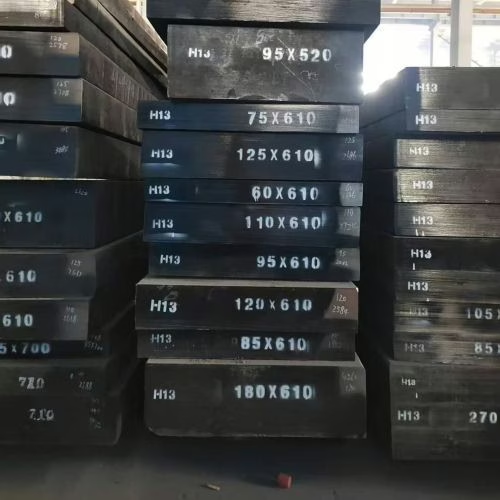
H13 | 1,2344 | SKD61
Aço ferramenta balanceado com cromo para trabalho a quente, utilizado em moldes de fundição sob pressão, ferramentas de extrusão, moldes de forjamento a quente, lâminas de corte a quente, insertos de moldes, pinos de núcleo e componentes de moldes sob tensão.
Guia de Seleção Rápida de Aplicações para Aço Ferramenta H13
| Aplicativo | Por que H13 é usado? | Dureza de trabalho típica | Principal risco de falha |
|---|---|---|---|
| Matrizes de fundição de alumínio | Resiste a fissuras térmicas, lavagem e rachaduras. | 42-48 HRC | Fadiga térmica, erosão do metal fundido |
| Matrizes de fundição de magnésio | Suporta ciclos térmicos rápidos e impactos. | 42-48 HRC | Rachaduras térmicas, fissuras |
| Matrizes de fundição sob pressão de zinco | Permite maior dureza devido à menor temperatura de serviço. | 48-52 HRC | Desgaste, danos superficiais |
| Matrizes de extrusão de alumínio | Resiste ao desgaste por calor, pressão e ciclos térmicos. | 44-50 HRC | Desgaste, deformação, fadiga térmica |
| Mandris de extrusão | Suporta resistência ao desgaste sob alta pressão. | 46-52 HRC | Desgaste, rachaduras, tensão de flexão |
| Matrizes de forjamento a quente | Equilibra a resistência ao impacto e a resistência ao calor. | 40-50 HRC | Rachaduras por impacto, superaquecimento, desgaste |
| Lâminas de corte a quente | Mantém a resistência da lâmina durante o corte a quente. | 45-52 HRC | Rachaduras nas bordas, lascas, amolecimento. |
| Inserções de matriz | Proporciona resistência localizada ao calor e ao desgaste. | 44-52 HRC | Rachaduras localizadas, desgaste, danos causados pelo calor. |
| Pinos de núcleo e pinos extratores | Combina resistência ao desgaste superficial com um núcleo resistente. | 40-52 HRC | Irritante, desgaste, rachaduras |
| Inserções de moldes de plástico | Utilizado quando o P20 não é suficiente em termos de resistência ao desgaste, polimento ou resistência ao calor. | 48-52 HRC | Abrasão, defeitos de polimento, distorção |
Os valores de dureza acima são faixas de serviço típicas, não limites fixos. Ferramentas grandes, condições de alto impacto e ciclos térmicos severos exigem maior tenacidade e menor dureza. Insertos menores, pinos, mandris e peças sujeitas a desgaste geralmente operam mais próximos do limite superior da faixa.
Como limite prático, o aço temperado e revenido H13 apresenta propriedades úteis para trabalho a quente até cerca de 52-54 HRC. Valores acima disso não são realistas para aplicações de trabalho a quente com aço revenido.
H13 para matrizes de fundição sob pressão
O aço H13 é um dos aços-ferramenta mais comuns para moldes de fundição de alumínio, magnésio e zinco. Esses moldes devem suportar metal fundido em alta velocidade, ciclos térmicos repetidos, pressão de fundição, tensões de resfriamento e desgaste superficial.
A principal razão para o uso do H13 na fundição sob pressão é sua resistência à fissuração térmica. Durante cada ciclo, a superfície do molde aquece rapidamente em contato com o metal fundido e esfria rapidamente durante a projeção ou o resfriamento interno. Essa expansão e contração repetidas criam microfissuras superficiais. À medida que essas fissuras crescem, degradam a qualidade da superfície da peça fundida, dificultam a extração e reduzem a vida útil do molde.
O H13 é adequado para fundição de alumínio sob pressão, pois o molde deve resistir tanto à fadiga térmica quanto à erosão do metal fundido. Na fundição de magnésio sob pressão, a mesma necessidade de resistência ao choque térmico e ao controle de trincas o torna uma escolha prática. Na fundição de zinco sob pressão, a temperatura de serviço é mais baixa, portanto o H13 pode ser utilizado com maior dureza para melhor resistência ao desgaste.
Para fundição de latão sob pressão, o aço H13 é limitado a condições menos severas ou lotes de produção mais curtos. O latão funde a temperaturas mais altas, portanto, quando o molde precisa suportar altas temperaturas por períodos prolongados, aços para trabalho a quente com maior liga são mais seguros.
H13 para matrizes e ferramentas de extrusão
O aço H13 suporta a pressão, o desgaste a quente e os ciclos térmicos repetidos da extrusão, mantendo uma tenacidade útil. Na extrusão, o tarugo é forçado através da matriz sob alta carga, portanto, as ferramentas devem resistir à deformação, fissuras e desgaste superficial.
Para extrusão de alumínio e magnésio, o aço H13 é utilizado em matrizes, mandris, blocos de apoio, espaçadores, anéis de matriz, pistões e revestimentos. Matrizes e mandris ativos necessitam de maior resistência ao desgaste, enquanto as ferramentas de suporte requerem maior tenacidade e capacidade de carga.
Para extrusão de cobre, latão e aço, o H13 ainda é utilizado em ferramentas de suporte, mandris, recipientes e componentes adjacentes. Quando a área ativa da matriz excede a temperatura de serviço prática do H13, são necessários aços para trabalho a quente com ligas mais elevadas.
H13 para matrizes de forjamento a quente
O aço H13 é utilizado em matrizes, punções e insertos para forjamento a quente. As ferramentas de forjamento devem resistir a impactos, cargas de compressão, contato com metal quente, desgaste superficial e ciclos repetidos de aquecimento e resfriamento.
Na forjagem por martelo, a carga de impacto é severa, portanto, o aço H13 é produzido com menor dureza para reduzir o risco de fratura frágil. Na forjagem por prensa, a carga é aplicada de forma mais gradual, permitindo o uso de maior dureza. A forjagem por prensa também resulta em um tempo de contato maior entre a peça quente e a matriz, de modo que o superaquecimento e a fadiga térmica ainda precisam ser controlados.
H13 para lâminas de corte a quente e insertos de matriz
O aço H13 é utilizado em lâminas de corte a quente porque mantém a resistência do fio em altas temperaturas, resistindo a impactos e choques térmicos. Essas lâminas cortam tarugos, barras e peças forjadas aquecidas, portanto, a dureza da lâmina precisa ser compatível com a severidade do corte.
Cortes a quente mais leves permitem maior dureza para resistência ao desgaste das bordas. Cortes pesados, seções espessas e impactos fortes exigem menor dureza para reduzir rachaduras nas bordas e fraturas da lâmina.
O H13 também é comum em insertos para matrizes. Em vez de usinar uma matriz inteira em aço para trabalho a quente, a zona ativa de desgaste e aquecimento é feita de H13, enquanto o suporte, bloco de apoio ou retentor utiliza um aço mais econômico. Em insertos para fundição sob pressão, o H13 resiste a trincas térmicas e erosão por metal fundido. Em insertos para forjamento, ele resiste ao desgaste, impacto e fadiga térmica. Para matrizes de alto ciclo, insertos de precisão ou superfícies de moldes polidas, o ESR H13 melhora a limpeza do aço e o desempenho em fadiga.
H13 para pinos de núcleo e componentes de moldes
O aço H13 é utilizado em pinos de núcleo, pinos extratores, guias, núcleos móveis, insertos de moldes e outros componentes de moldes sujeitos a esforços. Essas peças sofrem desgaste por deslizamento, aquecimento localizado, movimento repetido e alta pressão de contato.
Para pinos de núcleo e pinos extratores fundidos sob pressão, o H13 proporciona um núcleo resistente com uma superfície resistente ao desgaste, o que reduz o engripamento, o desgaste e as fissuras em ciclos repetidos.
Para moldes de plástico, o P20 é mais econômico para bases de moldes em geral e cavidades grandes. O H13 é escolhido quando o molde precisa de maior resistência ao desgaste, resistência ao calor, capacidade de polimento ou maior vida útil de produção, como em moldagem de resina abrasiva, moldes de plástico de alto ciclo e moldes para peças visíveis ou transparentes.
Para componentes ópticos, transparentes ou de alto polimento, o aço ESR H13 reduz defeitos de polimento, pois um aço mais limpo apresenta menos inclusões. Isso é importante para lentes transparentes, peças plásticas com acabamento estético e superfícies visíveis de alta qualidade.
Onde o H13 se encaixa melhor
Fundição sob pressão
Escolha H13 quando a verificação por aquecimento, a erosão do metal fundido, o choque térmico e a pressão de fundição forem os principais riscos.
Extrusão
Utilize H13 para matrizes, mandris, revestimentos e ferramentas de suporte de alumínio e magnésio que devem resistir ao desgaste por altas temperaturas e à pressão.
Forjamento
Escolha uma dureza menor para forjamento por martelo e uma dureza maior onde o desgaste por forjamento em prensa seja mais importante do que o risco de impacto.
Componentes do molde
Use H13 quando o P20 não fornecer resistência suficiente ao desgaste, resistência ao calor, capacidade de polimento ou vida útil.
Quando o aço ferramenta H13 não é a escolha certa
O H13 apresenta bom desempenho em aplicações de trabalho a quente equilibradas, mas não é a melhor escolha quando um requisito se torna dominante.
| Condições de serviço | Por que H13 pode não ser a melhor opção | Melhor Direção de Materiais |
|---|---|---|
| Serviço contínuo acima de aproximadamente 540°C | O H13 perde dureza e resistência muito rapidamente. | Aços para trabalho a quente de alta liga H21, H24, H26, H42 ou outros |
| Abrasão severa por frio | O H13 não possui o volume de carboneto necessário para máxima resistência ao desgaste por trabalho a frio. | Aços ferramenta D2, A2, M2, PM ou carboneto. |
| Moldagem de plástico corrosivo | O H13 não é inoxidável e pode enferrujar ou apresentar corrosão. | Aço inoxidável 420, pH 15-5 ou pH 17-4 |
| Moldes plásticos de grande porte com pressão de custos | O H13 é mais difícil de usinar e requer tratamento térmico. | P20 ou outros aços pré-endurecidos para moldes |
| tenacidade máxima à fratura | H13 é ligeiramente menos resistente que H11. | H11 ou H11 modificado |
| Blocos de matriz extremamente espessos | As propriedades do núcleo são difíceis de controlar sem um resfriamento adequado. | Aços premium H13, com design de inserção ou blocos alternativos. |
Para serviço contínuo em temperaturas muito elevadas, os aços para trabalho a quente com tungstênio superam o H13. Para desgaste severo a frio, o D2 ou o A2 são mais adequados. Para moldagem de plásticos corrosivos, os aços inoxidáveis para moldes são mais seguros. Para moldes de plástico de grande porte, onde a eficiência de usinagem e o custo são mais importantes do que o desempenho em trabalhos a quente, o P20 é a melhor escolha.
A regra de seleção é escolher H13 quando os principais riscos são fissuração por calor, trincas a quente, choque térmico, impacto e desgaste a quente.
Precisa de H13 para ferramentas de trabalho a quente?
Envie sua especificação, tamanho, quantidade, aplicação, dureza desejada e requisitos de qualidade. A Aobo Steel pode confirmar o fornecimento de aço H13 forjado ou laminado, condição recozida, opção ESR e detalhes do certificado de usina.
Perguntas frequentes
O aço ferramenta H13 é usado principalmente para ferramentas de trabalho a quente, incluindo matrizes de fundição de alumínio, matrizes de extrusão, matrizes de forjamento a quente, lâminas de corte a quente, insertos de matriz, pinos de núcleo, pinos extratores e componentes de moldes de alto desempenho.
O aço H13 é utilizado em moldes de fundição sob pressão devido à sua resistência a fissuras térmicas, choque térmico, erosão por metal fundido e trincas. Esses são riscos comuns de falha na fundição sob pressão de alumínio, magnésio e zinco.
Sim. O aço H13 é amplamente utilizado em matrizes de extrusão de alumínio, mandris, blocos de suporte, reforços, anéis de matriz, pistões e revestimentos, pois combina resistência ao trabalho a quente, tenacidade e boa resposta ao tratamento de superfície.
Sim. O aço H13 é comumente usado em matrizes de forjamento a quente, punções e insertos, pois suporta impactos, calor e ciclos térmicos repetidos melhor do que muitos aços de uso geral.
Sim. O aço H13 é utilizado em pinos de núcleo, pinos extratores, corrediças, núcleos móveis, insertos de moldes e componentes de moldes plásticos de alto desempenho, especialmente quando a resistência ao desgaste, a resistência ao calor ou a capacidade de polimento devem exceder as do aço P20 padrão.
O aço H13 é preferível quando o molde exige maior resistência ao desgaste, resistência ao calor, facilidade de polimento ou uma vida útil mais longa. O aço P20 geralmente é melhor para moldes plásticos em geral, onde o menor custo, a facilidade de usinagem e a disponibilidade de material pré-endurecido são mais importantes.
O aço H13 geralmente não é a melhor escolha para desgaste severo por trabalho a frio. Para estampagem a frio, corte, embutimento profundo e desgaste abrasivo em longas séries, os aços D2 ou A2 costumam ser mais adequados.