
Aço D2 ou aço 440C: qual escolher?
Aço ferramenta D2 é escolhida para desgaste abrasivo a seco; Aço inoxidável 440C É escolhida quando se deve combinar alta dureza com resistência à corrosão.
Aço D2 e 440C disponíveis na Aobo Steel.
A Aobo Steel fornece aço ferramenta D2 para ferramentas resistentes ao desgaste e aço inoxidável 440C para componentes de precisão resistentes à corrosão.
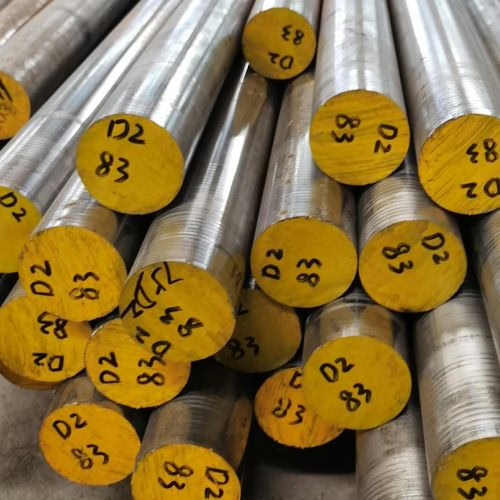
D2 | 1.2379 | SKD11
Aço ferramenta para trabalho a frio com alto teor de carbono e cromo, para desgaste abrasivo a seco, ferramentas de longa duração, matrizes de estampagem, punções, lâminas de corte e facas de corte longitudinal.
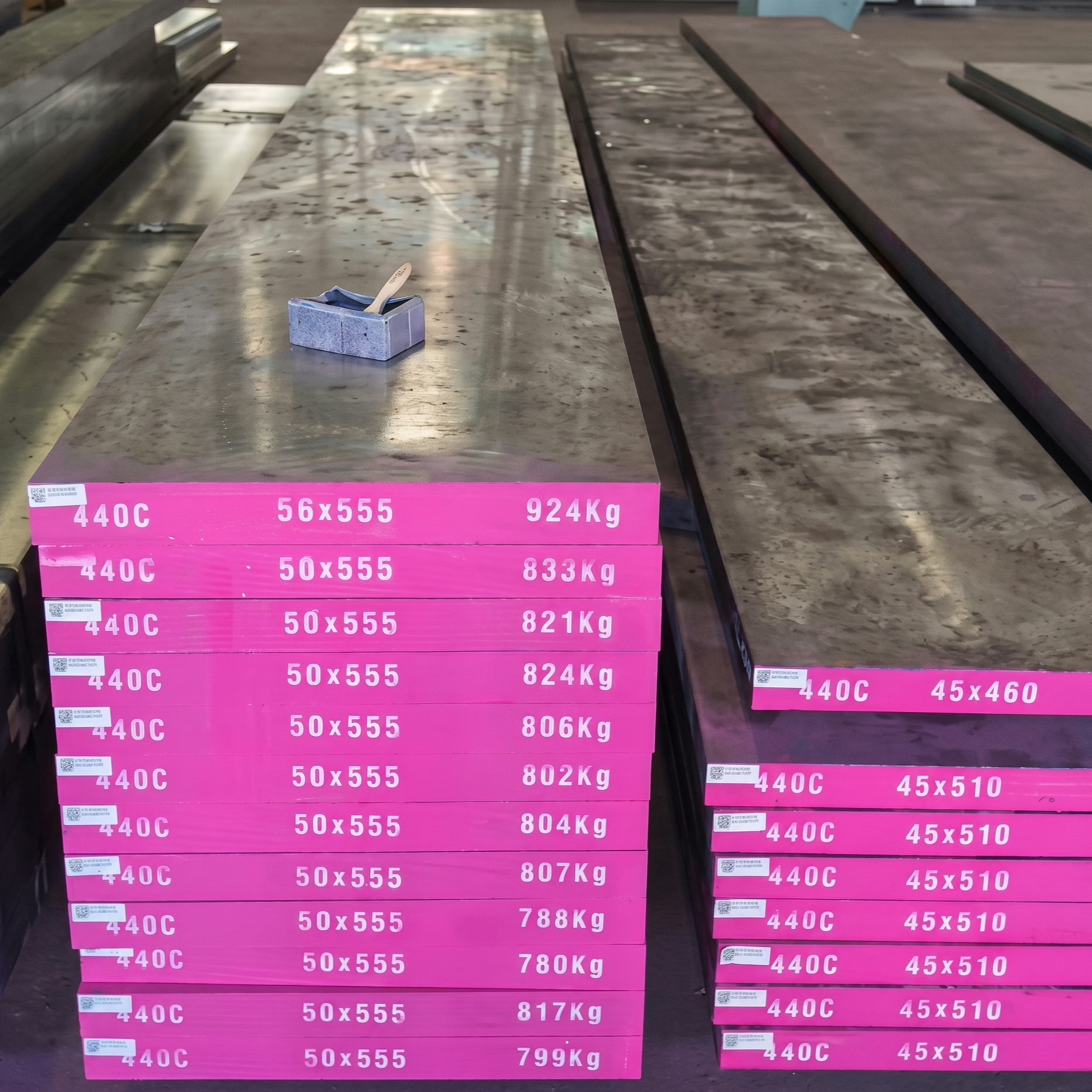
Aço inoxidável 440C
Aço inoxidável martensítico de alto carbono para rolamentos, válvulas, peças de bombas, componentes de precisão e aplicações que exigem dureza e resistência à corrosão.
D2 vs 440C: Guia de Seleção Rápida
| Se a sua necessidade for… | Escolher | Por que |
|---|---|---|
| Ambiente industrial seco com desgaste abrasivo intenso. | D2 | O alto volume de carboneto proporciona resistência superior ao desgaste e retenção de fio. |
| Longos períodos de produção e vida útil das ferramentas | D2 | Reduz a frequência de reafiação e melhora a vida útil da ferramenta. |
| Ferramentas de precisão com baixa exigência de distorção | D2 | O endurecimento ao ar proporciona excelente estabilidade dimensional. |
| Conformação a frio severa ou alta tensão compressiva | D2 | Apresenta bom desempenho em aplicações de alta dureza e trabalho a frio. |
| Ambiente úmido, molhado ou levemente corrosivo | 440C | Alto teor de cromo proporciona verdadeira resistência à corrosão. |
| Alta dureza combinada com resistência à corrosão | 440C | Mantém a dureza, resistindo à ferrugem e à corrosão. |
| Peças mecânicas de precisão, como rolamentos, válvulas e componentes de bombas. | 440C | Adequado para componentes de contato que exigem dureza e resistência à corrosão. |
| Condições de serviço limpas ou sensíveis à corrosão | 440C | Melhor resistência a manchas, oxidação e ataques químicos. |
Composição química do aço D2 versus aço 440C
| Elemento | Aço ferramenta D2 | Aço inoxidável 440C | Significado |
|---|---|---|---|
| Carbono | 1.40-1.60% | 0.95-1.20% | O D2 forma mais carbonetos, o que lhe confere maior resistência ao desgaste. |
| Chromium | 11.00-13.00% | 16.00-18.00% | O aço inoxidável 440C apresenta melhor comportamento e resistência à corrosão. |
| Molibdênio | 0.70-1.20% | <=0,75% | Garante a temperabilidade e a estabilidade do desempenho. |
| Vanadium | 0.50-1.10% | Não é uma grande adição ao padrão. | Melhora a resistência ao desgaste D2 e o refinamento do grão. |
| Manganês / Silício | <=0,60% | <=1,00% | Elementos secundários que auxiliam no processamento e na temperabilidade. |
O maior teor de carbono do D2 e volume de carboneto explicam sua maior resistência ao desgaste abrasivo. O maior teor de cromo do 440C explica por que ele apresenta melhor desempenho em ambientes úmidos, molhados ou levemente corrosivos.
D2 vs 440C: Equivalências e Normas Internacionais
Ao adquirir materiais globalmente, o D2 e o 440C podem aparecer sob diferentes normas internacionais. Tais designações ajudam os usuários a alinhar materiais entre mercados, mas só devem ser consideradas após verificar as especificações exatas.
| Sistema padrão | Aço ferramenta D2 | Aço inoxidável 440C |
|---|---|---|
| UNS | T30402 | S44004 |
| DIN / EN | 1,2379 / X153CrMoV12 | 1,4125 / X105CrMo17 |
| JIS | SKD11 | – |
| GB | Cr12Mo1V1 | – |
| ISO | 160CrMoV12 | – |
| BS | BD2 | – |
| AFNOR | X155CrMoV12 | – |
| SAE | – | 51440C |
| ASTM | – | A276 / A580 Tipo 440C |
| AMS | – | AMS 5618 / AMS 5630 |
| Especificação Federal | – | QQ-S-763 440C |
| Graus comerciais | Bohler K110, ASSAB XW41, Hitachi SLD, Daido DC11 | – |
Comparação das propriedades do aço D2 e do aço 440C
| Recurso | Aço ferramenta D2 | Aço inoxidável 440C |
|---|---|---|
| Steel type | Aço para ferramentas de trabalho a frio com alto teor de carbono e alto teor de cromo | Alto carbono aço inoxidável martensítico |
| Potencial de dureza | Até cerca de 62-64 HRC, dependendo do tratamento térmico. | Até cerca de 60-64 HRC, dependendo do tratamento térmico. |
| dureza de trabalho prática | Geralmente em torno de 58-60 HRC, dependendo da aplicação. | Geralmente em torno de 57-60 HRC, dependendo dos requisitos de corrosão e tenacidade. |
| Resistência ao desgaste | Extremamente alto; mais resistente em ferramentas abrasivas secas. | Bom, mas geralmente abaixo de D2 sob forte abrasão a seco. |
| Toughness | Baixo a moderado após o endurecimento; risco de lascamento sob impacto. | Baixa a moderada após o endurecimento; não é adequado para impactos fortes. |
| Resistência à corrosão | Limitado; não é um aço inoxidável verdadeiro. | Bom para aço inoxidável martensítico |
| Melhor ambiente | Serviço industrial a seco onde o desgaste abrasivo é o principal risco. | Serviço em ambientes úmidos, molhados ou levemente corrosivos, onde a prevenção da ferrugem é importante. |
A resistência à corrosão é frequentemente a linha divisória entre esses dois graus. Embora o D2 contenha alto cromo para um aço ferramenta, grande parte desse cromo está ligada em carbonetos, deixando cromo livre limitado para comportamento inoxidável.
Para o 440C, o desempenho frente à corrosão também depende do tratamento térmico e prática de revenimento. Os parâmetros finais devem ser validados com base no tamanho da seção, na composição química e na capacidade dos equipamentos.
Comparação entre os tratamentos térmicos D2 e 440°C
Tratamento térmico reforça a diferença principal: o D2 é tratado termicamente para melhorar a resistência ao desgaste e estabilidade dimensional, enquanto o 440C é projetado para manter tanto a dureza quanto a resistência à corrosão.
| Fator de tratamento térmico | Aço ferramenta D2 | Aço inoxidável 440C | Significado da seleção |
|---|---|---|---|
| Temperatura de austenitização | Aproximadamente 995-1030 °C | Aproximadamente entre 1038 e 1095 graus Celsius. | O processo 440C geralmente utiliza uma temperatura de endurecimento mais elevada. |
| Método de têmpera | Resfriamento por ar, vácuo ou controlado | Óleo, ar ou vácuo, dependendo da seção e do processo. | O D2 geralmente oferece melhor estabilidade dimensional. |
| Tratamento subzero | Frequentemente utilizado quando o controle da austenita retida é importante. | Frequentemente utilizado quando são necessárias alta dureza e estabilidade dimensional. | Ambos os aços requerem controle de processo para propriedades estáveis. |
| estratégia de temperagem | Geralmente temperado duas vezes para maior resistência ao desgaste e estabilidade. | Geralmente temperado com cuidado para proteger a resistência à corrosão. | O aço 440C pode perder resistência à corrosão se for temperado a uma temperatura muito alta. |
| Foco final na propriedade | Resistência ao desgaste e estabilidade dimensional | Dureza e resistência à corrosão | Essa é a principal diferença no tratamento térmico. |
Para obter mais informações sobre esses guias de tratamento térmico, visite o site. Como realizar o tratamento térmico D2 e Guia de tratamento térmico a 440°C.
Aço D2 vs. Aço 440C: Aplicações típicas
Aplicações do Aço para Ferramentas D2
Na seleção de aplicação, o D2 é mais forte em produções longas ferramentas de trabalho a frio.
| Aplicativo | Por que D2 é usado? |
|---|---|
| Matrizes de corte e estampagem | A elevada resistência ao desgaste prolonga a vida útil da ferramenta em longos períodos de produção. |
| Matrizes de conformação a frio e extrusão | Apresenta bom desempenho sob alta tensão compressiva. |
| Punções e lâminas de corte | Excelente retenção de fio em condições de corte a seco. |
| Facas de corte e ferramentas de corte industriais | Resiste ao desgaste abrasivo e ao arredondamento das bordas. |
| Ferramentas para laminação e conformação de roscas | Mantém a precisão do perfil mesmo sob contato repetido. |
| Calibradores e instrumentos de medição de precisão | A baixa distorção durante o tratamento térmico contribui para a precisão dimensional. |
Aplicações do aço inoxidável 440C
O aço 440C é mais adequado para peças de precisão do que para matrizes sujeitas a desgaste intenso.
| Aplicativo | Por que 440C é usado? |
|---|---|
| Esferas de rolamento e pistas de rolamento | Combina dureza com resistência à corrosão. |
| Componentes de válvulas e peças de bombas | Adequado para ambientes com contato com fluidos e sensíveis à corrosão. |
| Componentes mecânicos de precisão | Mantém a dureza, resistindo à oxidação e às manchas. |
| Ferramentas de corte de precisão expostas à umidade ou ambientes de limpeza | Equilibra a retenção de borda com a resistência à corrosão. |
| Componentes médicos e relacionados à alimentação | Resiste à corrosão, a agentes de limpeza e ao risco de contaminação. |
Para aplicações como facas industriais, peças de desgaste e ferramentas leves, onde ambas as classes se sobrepõem, selecione com base no modo de falha: D2 para desgaste abrasivo a seco, 440C para exposição à umidade ou corrosão.
D2 vs. Aço 440C em termos de custo
Avalie as diferenças de custo com base no modo de falha provável, e não apenas no preço da matéria-prima. Para ferramentas e peças de precisão, considere usinagem, retificação, tratamento térmico, ambiente de serviço e risco de falha na avaliação geral.
| Fator de custo | Aço ferramenta D2 | Aço inoxidável 440C |
|---|---|---|
| Nível de matéria-prima | Aço ferramenta premium com custo de liga equilibrado | Aço inoxidável premium com maior teor de cromo. |
| Custo de usinagem/retificação | Alto devido ao grande volume de carboneto | Alto devido ao elevado teor de carbono e cromo. |
| custo do tratamento térmico | Alto; o controle do processo afeta a resistência ao desgaste e a estabilidade. | Alto; o controle de têmpera afeta a resistência à corrosão. |
| Estabilidade dimensional após tratamento térmico | Geralmente é melhor porque o D2 endurece ao ar. | Mais dependente do método de têmpera e do tamanho da seção transversal. |
| Melhor cenário de custo-benefício | Ferramentas secas, de longa duração e com desgaste predominante | Peças de precisão sensíveis à corrosão |
| lógica de decisão de custos | Escolha quando a vida útil do produto determinar o custo total. | Escolha quando a falha por corrosão impacta o custo total. |
A opção de menor custo nem sempre é o aço mais barato. Se a ferramenta falhar por desgaste, o D2 geralmente oferece melhor valor a longo prazo. Se a peça falhar por ferrugem ou pitting, o 440C pode ser mais econômico ao longo de toda a vida útil.
Quando NÃO usar aço ferramenta D2
O D2 não é adequado quando tenacidade, resistência à corrosão, soldabilidade, ou estabilidade térmica é o requisito principal.
| NÃO utilize D2 quando… | Por que |
|---|---|
| Carga de choque ou impacto forte | O alto teor de carbonetos e a baixa tenacidade tornam o D2 propenso a lascamento de arestas e fratura frágil. |
| Estampagem ou conformação de aço inoxidável | A interação com o cromo pode causar desgaste, aderência de material e danos à superfície da matriz. |
| aplicações de trabalho a quente | O aço D2 é um aço para trabalho a frio e pode perder dureza ou rachar sob choque térmico. |
| Ambientes úmidos, molhados ou quimicamente agressivos | O aço D2 não é um aço inoxidável verdadeiro e não possui cromo livre suficiente para uma resistência confiável à corrosão. |
| Estruturas soldadas ou conjuntos fabricados | O alto teor de carbono e carbonetos torna o D2 difícil de soldar e propenso a rachaduras. |
O aço D2 é adequado para aplicações onde o desgaste abrasivo a seco é a principal preocupação. Não deve ser escolhido para impacto, conformação de aço inoxidável, trabalho a quente, serviço corrosivo ou fabricação por soldagem.
Para este tópico, visite Quais são as desvantagens do aço D2?
Quando NÃO usar aço inoxidável 440C
O aço 440C não é adequado para aplicações que exigem resistência, extrema resistência à corrosão ou alto desempenho em condições de desgaste a seco.
| NÃO utilize 440°C quando… | Por que |
|---|---|
| Cargas de alto impacto ou flexão | A baixa tenacidade após o endurecimento torna o material propenso a falhas frágeis. |
| Ambientes altamente corrosivos ou ácidos | Desempenho inferior aos aços inoxidáveis austeníticos, duplex ou de liga superior em casos de corrosão severa. |
| Desgaste abrasivo seco severo em ferramentas de longa duração. | A resistência ao desgaste é boa, mas geralmente inferior a D2 em ferramentas industriais. |
| Serviço de alta temperatura | Pode perder dureza e resistência à corrosão em temperaturas elevadas. |
| Conjuntos soldados | A estrutura martensítica rica em carbono pode apresentar fissuras em zonas afetadas pelo calor. |
| Requisitos complexos de usinagem | Baixa usinabilidade devido aos carbonetos de cromo duros. |
D2 vs 440C para lâminas de faca
Ao comparar D2 e 440C para lâminas de faca, a decisão muda de ferramental industrial pesado para o equilíbrio entre retenção de fio, resistência à corrosão, manutenção e risco de lascamento.
| Fator | Aço D2 | Aço 440C | Análise de seleção |
|---|---|---|---|
| retenção de borda | Melhorar | Bom | O D2 mantém o fio por mais tempo no corte abrasivo a seco. |
| Resistência à corrosão | Limitado | Forte | O 440C é um aço inoxidável verdadeiro e é mais adequado para ambientes úmidos. |
| Toughness | Baixo a moderado | Baixo a moderado | Ambos podem lascar sob impacto, alavancagem ou tensão lateral. |
| Maintenance | Requer lubrificação e manutenção. | Menor manutenção | O modelo 440C é mais fácil de manter em condições de uso diário ou em ambientes úmidos. |
| Melhor uso | Lâminas para corte a seco e uso intenso | Lâminas para uso externo, cozinha e sensíveis à corrosão. | A seleção depende do ambiente e da tolerância à manutenção. |
Escolha o aço D2 se a sua prioridade for a retenção do fio e você usar a faca principalmente em condições de corte a seco. Escolha o aço 440C se a sua principal preocupação for a alta resistência à corrosão e você precisar de uma lâmina de baixa manutenção para uso externo em ambientes úmidos ou para preparo de alimentos.
Escolha D2 quando o desgaste causar falha.
Escolha o aço D2 para aplicações secas, abrasivas e sujeitas a desgaste, como matrizes de corte, punções, lâminas de cisalhamento, facas de corte longitudinal e ferramentas de conformação.
Escolha 440C quando a corrosão causar falhas.
Escolha o aço 440C quando for necessário combinar alta dureza com resistência à corrosão, especialmente para rolamentos, componentes de válvulas, peças de bombas e peças de precisão expostas à umidade.
O aço D2 resolve problemas de desgaste; o aço 440C oferece dureza e resistência à corrosão.
Precisa de ajuda para escolher entre D2 e 440C?
A Aobo Steel fornece tanto aço para ferramentas D2 para ferramental resistente ao desgaste quanto aço inoxidável 440C para componentes resistentes à corrosão. Contact us para assistência na seleção de grau e cotações.
E-mail: [email protected] · Tel. e WhatsApp: +86 180 6294 5370
Páginas relacionadas
Comparações D2: D2 vs M2 · D2 vs 4140 · D2 vs O1 · D2 vs A2 · D2 vs DC53 · D2 vs D3 · D2 vs S7
Páginas de referência: Métodos de teste de dureza
Famílias de séries: graus de aço ferramenta · Aços ferramenta da série D · Localizador de materiais de aço ferramenta
Faixas de composição, valores de dureza e temperaturas de tratamento térmico são valores típicos publicados para D2 / 1.2379 / SKD11 e 440C / 1.4125. Confirme a faixa exata no certificado do fabricante para o lote entregue.