
Propriedades do aço inoxidável 440C
O aço 440C é um aço inoxidável martensítico de alto carbono e alto cromo, projetado para oferecer máxima dureza e resistência ao desgaste entre os aços resistentes à corrosão. Após tratamento térmico adequado, atinge até 60 HRC e é tipicamente utilizado entre 57 e 60 HRC, proporcionando alta resistência à abrasão, ao desgaste de borda e à deformação superficial sob carga de contato.
Seu alto teor de carbono também significa baixa ductilidade e resistência ao impacto limitada. Isso faz do 440C um material para peças sujeitas a desgaste sob carga estável, não para aplicações estruturais ou sujeitas a impactos. Tudo nesta página decorre dessa única compensação, portanto, é útil interpretar as propriedades como um equilíbrio, em vez de uma lista de pontos fortes.
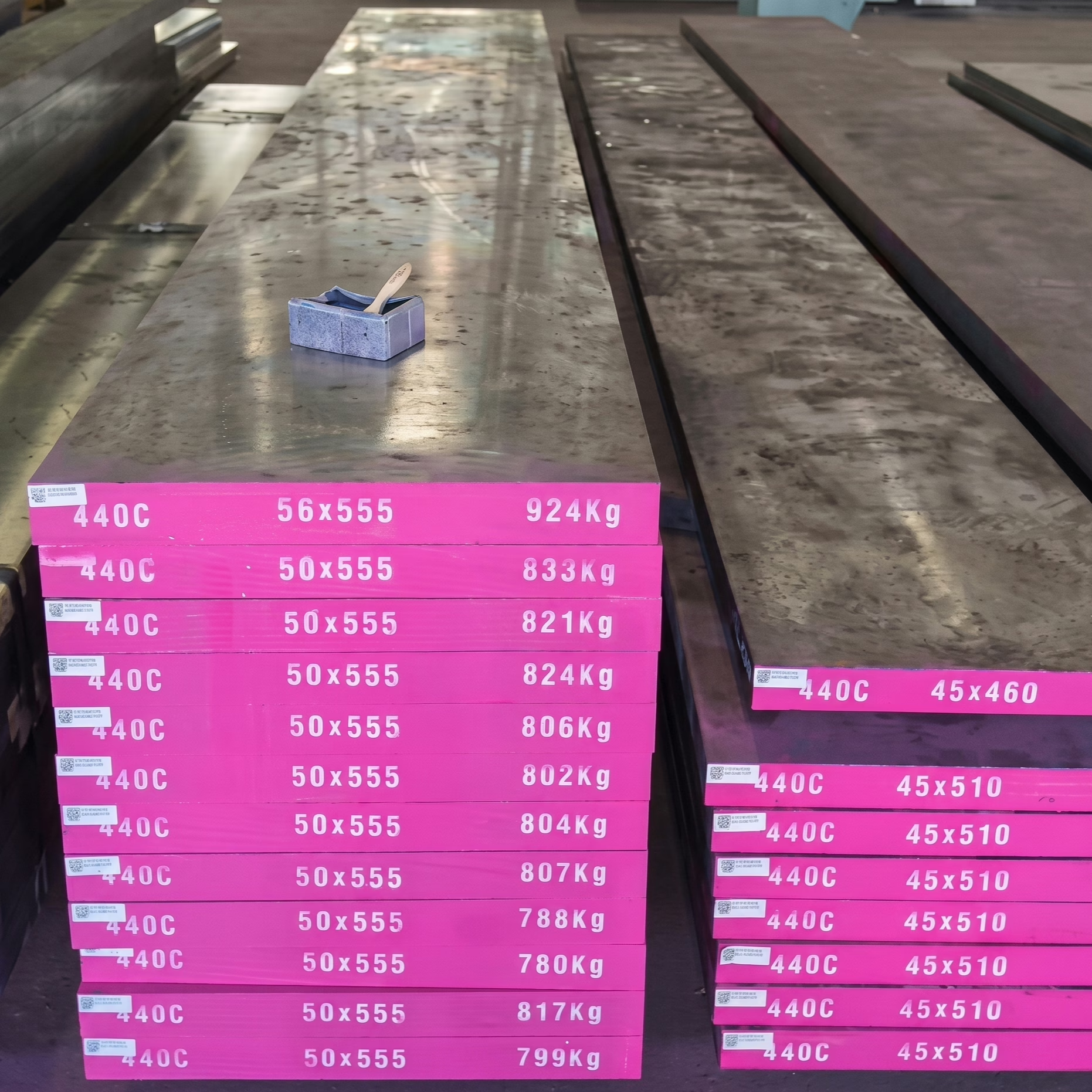
Precisa de aço 440C em barra ou chapa recozida?
A Aobo Steel mantém em estoque aço inoxidável 440C conforme especificações industriais, pronto para usinagem e tratamento térmico. Envie suas medidas para um orçamento, ou consulte primeiro nossa faixa padrão de fornecimento. A página de capacidade de fornecimento lista a faixa de tamanhos, tolerâncias, pedido mínimo e prazos de entrega.
Composição química do aço inoxidável 440C
A composição do aço 440C (UNS S44004) é definida para equilibrar a temperabilidade, a formação de carbonetos e a resistência à corrosão.
Composição típica (wt%):
| Elemento | Conteúdo (%) |
|---|---|
| Carbono (C) | 0,95 a 1,20 |
| Cromo (Cr) | 16:00 às 18:00 |
| Molibdênio (Mo) | 0,75 máximo |
| Manganês (Mn) | 1,00 máximo |
| Silício (Si) | 1,00 máximo |
| Fósforo (P) | 0,040 máximo |
| Enxofre (S) | 0,030 máximo |
Os altos níveis de carbono e cromo produzem uma matriz martensítica que contém um grande volume de carbonetos ricos em cromo. Essa estrutura é a fonte da dureza, resistência ao desgaste e resistência à compressão, e também é a razão pela qual a tenacidade é baixa. Interpretar as demais propriedades através da estrutura do carboneto é a maneira mais rápida de entender o aço 440C.
440A vs 440B vs 440C: Como o Carbono Altera a Classificação
A família 440 compartilha uma base de cromo e se diferencia principalmente pelo teor de carbono. O carbono controla a dureza máxima que a liga pode atingir e o quanto de tenacidade ela sacrifica.
| Grau | Carbono (%) | Dureza Máxima | Resistência ao desgaste | Resistência Relativa |
|---|---|---|---|---|
| 440A | 0,60 a 0,75 | 56 HRC | Médio | Mais alto |
| 440B | 0,75 a 0,95 | 58 HRC | Médio a alto | Médio |
| 440 °C | 0,95 a 1,20 | 60 HRC | Alto | Inferior |
Mais carbono forma carbonetos ricos em cromo, que aumentam a dureza e a resistência ao desgaste, mas reduzem a ductilidade e a resistência ao impacto. O aço 440A é a escolha ideal quando a resistência à corrosão e a tenacidade são mais importantes do que a vida útil da aresta de corte. O aço 440C é a escolha ideal quando a dureza e a resistência ao desgaste são prioridades e a peça pode ser projetada com uma tenacidade limitada. O aço 440B situa-se entre os dois.
Aço inoxidável 440C equivalente
| Sistema padrão | Designação |
|---|---|
| AISI / SAE | 440°C / 51440°C |
| UNS | S44004 |
| EN / DIN | 1.4125 |
| Nome em inglês | X105CrMo17 |
| ASTM | A276 (Barras e Formas) |
| Metalurgia do Pó | MIM 440C |
A liga EN 1.4125 (X105CrMo17) é o equivalente europeu mais próximo da AISI 440C, com uma faixa de carbono de aproximadamente 0,95 a 1,20% e uma faixa de cromo de 16 a 18%.
Propriedades mecânicas do aço inoxidável 440C
O comportamento mecânico do 440C muda acentuadamente entre as condições recozida e endurecida. Na prática, é fornecido recozido para usinagem e depois tratado termicamente para atingir seu desempenho final. Os dados de propriedades físicas dos graus inoxidáveis estão reunidos no Tabela de propriedades físicas do aço inoxidável.
| Propriedade | Condição recozida | Condição endurecida e revenida |
|---|---|---|
| Dureza | Aproximadamente 230 HB (máximo de 270 HB) | 57 a 60 HRC |
| Resistência à tracção | Aproximadamente 758 MPa | Por volta de 1970 MPa |
| Resistência ao escoamento | Aproximadamente 430 a 450 MPa | Aproximadamente de 1896 a 1900 MPa |
| Alongamento | 13 a 14% | Sobre 2% |
| Redução de Área | Sobre 25% | Sobre 10% |
| Resistência (Entalhe Charpy em V) | Normalmente não é relatado | 3 a 5 pés-libra |
| Usinabilidade | Sobre o 40% (em comparação com o AISI 1212) | Muito ruim |
O módulo de elasticidade é de cerca de 200 GPa, semelhante ao da maioria dos aços e não um fator de seleção. Após o tratamento térmico, o aço adquire alta resistência e dureza, enquanto a ductilidade e a resistência ao impacto diminuem. O alongamento 2% e os baixos valores de Charpy são os números a serem considerados: o aço 440C suporta bem a carga, mas não a redistribui, portanto, a falha sob sobrecarga ou impacto é repentina em vez de gradual.
Visão geral do tratamento térmico do aço inoxidável 440C
O desempenho do aço 440C depende muito do tratamento térmico. Sua dureza, resistência ao desgaste e estabilidade dimensional são alcançadas por meio de têmpera e revenido controlados.
| Processo | Faixa de temperatura | Objetivo principal |
|---|---|---|
| Recozimento | 845 a 900°C | Amolecer a estrutura para usinagem |
| Pré-aquecimento | Aproximadamente 790°C (várias etapas para peças grandes) | Reduzir o estresse térmico e a distorção. |
| Austenitização | 1010 a 1065°C (até 1095°C) | Dissolver carbonetos e possibilitar o endurecimento |
| Resfriamento | Ar ou óleo | Formam martensita e atingem a dureza. |
| Tratamento Subzero | Aproximadamente -75°C ou menos | Reduzir a austenita retida |
| Têmpera | Aproximadamente 150 a 370°C (tipicamente 315°C) | Ajuste a rigidez e alivie o estresse. |
A temperatura de revenido é a principal variável de controle para o resultado final. Para uma análise completa dos valores após têmpera e revenido, e por que os números relatados variam, consulte o [inserir referência aqui]. Página de dureza endurecida 440C.
Como as propriedades do 440C se traduzem em desempenho
As propriedades principais só importam dentro de um contexto. Em serviço real, o comportamento do aço 440C é determinado pelo equilíbrio entre dureza, resistência ao desgaste, resistência à corrosão e tenacidade. Nenhuma dessas propriedades pode ser analisada isoladamente, pois a mesma estrutura de carboneto que aumenta uma delas geralmente diminui outra.
Resistência ao desgaste
O aço 440C oferece alta resistência ao desgaste graças a uma matriz martensítica dura combinada com um alto volume de carbonetos ricos em cromo. Com dureza de 57-60 HRC, ele resiste tanto ao desgaste adesivo quanto ao abrasivo. A matriz dura limita a deformação da superfície, a adesão, o desgaste por atrito e o engripamento, enquanto os carbonetos resistem ao corte e ao sulcamento durante o contato por deslizamento ou rolamento. É por isso que o 440C mantém uma superfície e um fio estáveis por mais tempo do que a maioria dos aços inoxidáveis.
Os mesmos carbonetos definem o limite. Quando são grosseiros ou distribuídos de forma irregular, criam pontos de tensão local que podem iniciar microfissuras sob contato cíclico ou de rolamento. Nessa situação, o modo de falha muda de desgaste constante para fadiga superficial. O tratamento térmico subzero melhora a estabilidade dimensional reduzindo a austenita retida, mas não altera esse mecanismo. O aço 440C é confiável sob carga estável, mas torna-se menos previsível quando a fadiga de contato é o fator determinante.
Resistência à corrosão
O aço 440C oferece resistência moderada à corrosão e é adequado para serviços leves, como exposição atmosférica, sistemas lubrificados e condições industriais leves. A limitação, mais uma vez, reside nos carbonetos. Parte do cromo fica retido nos carbonetos e não consegue sustentar a camada passiva de óxido, resultando em uma película protetora mais frágil do que em aços austeníticos.
O tratamento térmico altera ainda mais esse processo. Altas temperaturas de austenitização dissolvem mais liga e melhoram a resistência à corrosão, enquanto o revenimento pode reduzi-la, alterando a composição local. O ajuste para melhor desempenho mecânico pode, portanto, comprometer a estabilidade à corrosão. O aço 440C não deve ser usado em ambientes ricos em cloretos, meios químicos agressivos ou corrosão em altas temperaturas.
Tenacidade e comportamento mecânico
No estado endurecido, o aço 440C é resistente, mas apresenta baixíssima ductilidade, com um alongamento de aproximadamente 2%. Sob carga, ele não consegue redistribuir a tensão, de modo que, quando um ponto local ultrapassa seu limite, a peça falha quase sem aviso prévio. Os modos de falha típicos são lascamento das bordas, iniciação de trincas em concentradores de tensão e fratura frágil repentina sob impacto ou flexão. Esses modos são impulsionados pela baixa ductilidade e pelos carbonetos que atuam como iniciadores de trincas.
A conclusão prática é consistente em todas as três propriedades. O aço 440C apresenta bom desempenho quando a carga é estável e bem distribuída, mas torna-se pouco confiável quando impacto, choque ou concentração de tensão determinam o resultado.
440C versus outros aços inoxidáveis e aços para ferramentas
Escolher o aço 440C fica mais fácil quando você percebe como ele equilibra dureza, resistência ao desgaste, resistência à corrosão e tenacidade em comparação com os aços com os quais geralmente compete.
| Propriedade | 440 °C | 420 | 440A / 440B | D2 | 316 |
|---|---|---|---|---|---|
| Tipo de aço | Aço inoxidável martensítico | Aço inoxidável martensítico | Aço inoxidável martensítico | Aço para ferramentas | Aço inoxidável austenítico |
| Dureza Máxima | Cerca de 60 HRC | 46 a 54 HRC | 56 a 58 HRC | 60 a 62 HRC | Não endurecível |
| Resistência ao desgaste | Alto | Médio | Médio | Muito alto | Baixo |
| Resistência à corrosão | Médio | Médio | Médio a alto | Baixo | Excelente |
| Robustez | Baixo | Médio | Médio | Muito baixo | Alto |
| Usinabilidade | Pobre | Moderado | Moderado | Pobre | Bom |
O aço 440C oferece um equilíbrio entre resistência ao desgaste e resistência à corrosão. Em comparação com os aços 420 ou 440A, apresenta maior dureza e vida útil mais longa. Em comparação com o D2, sacrifica um pouco da resistência ao desgaste em prol do desempenho em relação à corrosão. Em comparação com o 316, oferece resistência e dureza muito superiores, porém com resistência à corrosão significativamente menor.
Quando usar o aço inoxidável 440C
O aço 440C é mais adequado para aplicações que exigem alta dureza e resistência ao desgaste, resistência moderada à corrosão e carga estável.
É comum em ferramentas de corte de precisão, como facas, instrumentos cirúrgicos e lâminas finas, onde a retenção do fio é crucial. Apresenta bom desempenho em peças de contato rolante, como esferas e pistas de rolamento, especialmente onde a resistência à corrosão supera a dos aços para rolamentos padrão. Em sistemas de fluidos, é utilizado em sedes de válvulas, válvulas de agulha e peças de bombas que operam em água doce ou fluidos industriais leves. Também serve como inserto para moldes plásticos de polímeros abrasivos ou levemente corrosivos, onde a dureza superficial e a estabilidade dimensional são importantes. Para uma descrição completa por tipo de componente, consulte a página de aplicações do aço 440C.
Quando NÃO usar aço inoxidável 440C
O aço 440C não é a escolha certa quando os principais requisitos são resistência, alta resistência à corrosão ou facilidade de fabricação.
Seu desempenho sob impacto ou flexão é ruim devido à sua baixa tenacidade, tornando-o inadequado para peças estruturais ou sujeitas a cargas dinâmicas. Sua resistência à corrosão é limitada em ambientes ricos em cloreto ou marinhos, onde aços austeníticos como o 316 são mais confiáveis. O alto teor de carbono e o comportamento de endurecimento ao ar tornam a soldagem pouco confiável. Perde dureza em temperaturas elevadas e não é adequado para serviços em altas temperaturas. A usinagem é difícil mesmo quando recozido, e o desgaste da ferramenta é alto, portanto, aços de usinagem livre são frequentemente mais práticos para peças complexas ou de alto volume.
440C Aplicações Baseadas em Propriedades
A gama de aplicações decorre diretamente da combinação de alta dureza, resistência ao desgaste e resistência moderada à corrosão. O aço 440C é utilizado principalmente em peças sujeitas a fricção, contato por rolamento ou carregamento superficial repetido, incluindo rolamentos resistentes à corrosão, componentes de válvulas, instrumentos de precisão, ferramentas de corte e lâminas industriais. Onde são necessárias tanto resistência ao desgaste quanto proteção básica contra corrosão, ele aparece em instrumentos médicos, equipamentos para processamento de alimentos e componentes selecionados das indústrias aeroespacial e petrolífera. Processos de metalurgia do pó, como a moldagem por injeção de metal, são utilizados para produzir peças pequenas e complexas onde a usinagem é ineficiente, incluindo componentes automotivos de precisão, mecanismos de travamento e conjuntos miniatura resistentes ao desgaste.
Devido à sua baixa tenacidade e limitada estabilidade térmica, o aço 440C geralmente é evitado em aplicações sujeitas a impactos, estruturais e de alta temperatura.
Precisa de aço inoxidável 440C para peças resistentes ao desgaste?
Envie sua especificação, tamanho, quantidade, condição da superfície e aplicação. A Aobo Steel pode fornecer barras e chapas de aço inoxidável 440C recozido para usinagem, tratamento térmico, rolamentos, válvulas, ferramentas de corte e peças de desgaste de precisão.