
Propiedades del acero inoxidable 440C
El acero inoxidable martensítico 440C, con alto contenido de carbono y cromo, está diseñado para ofrecer la máxima dureza y resistencia al desgaste entre los aceros resistentes a la corrosión. Tras un tratamiento térmico adecuado, alcanza hasta 60 HRC y se utiliza habitualmente entre 57 y 60 HRC, lo que le confiere una gran resistencia a la abrasión, al desgaste de los bordes y a la deformación superficial bajo cargas de contacto.
Su alto contenido de carbono también implica baja ductilidad y resistencia al impacto limitada. Esto convierte al 440C en un material para piezas sometidas principalmente al desgaste bajo cargas estables, no para cargas de impacto ni para uso estructural. Todo lo que se menciona en esta página se deriva de esta limitación, por lo que conviene interpretar las propiedades como un equilibrio, en lugar de como una lista de ventajas.
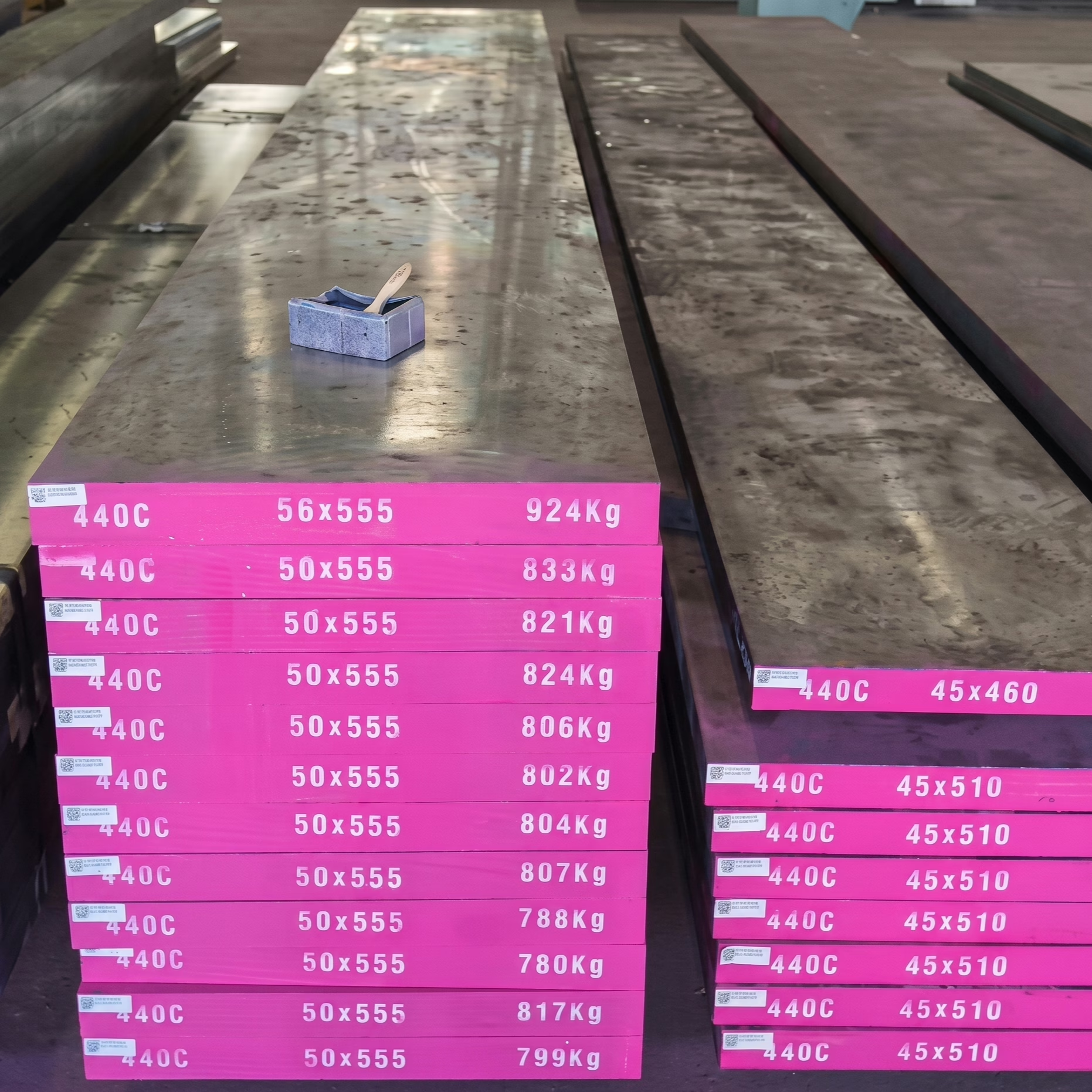
¿Necesita acero 440C en barra o placa recocida?
Aobo Steel almacena acero inoxidable 440C según especificaciones industriales, listo para mecanizado y tratamiento térmico. Envíe sus medidas para una cotización, o consulte primero nuestra gama de suministro estándar. El página de capacidad de suministro enumera el rango de medidas, tolerancias, pedido mínimo y plazos de entrega.
Composición química del acero inoxidable 440C
La composición del acero 440C (UNS S44004) está diseñada para equilibrar la templabilidad, la formación de carburos y la resistencia a la corrosión útil.
Composición típica (wt%):
| Elemento | Contenido (%) |
|---|---|
| Carbono (C) | 0,95 a 1,20 |
| Cromo (Cr) | De 16:00 a 18:00 |
| Molibdeno (Mo) | 0,75 máximo |
| Manganeso (Mn) | 1,00 máximo |
| Silicio (Si) | 1,00 máximo |
| Fósforo (P) | 0,040 máximo |
| Azufre (S) | 0,030 máximo |
Los altos niveles de carbono y cromo generan una matriz martensítica con un gran volumen de carburos ricos en cromo. Esta estructura es la responsable de la dureza, la resistencia al desgaste y la resistencia a la compresión, y también explica su baja tenacidad. Analizar el resto de estas propiedades a través de la estructura de los carburos es la forma más rápida de comprender el acero 440C.
440A vs 440B vs 440C: Cómo el carbono cambia la calidad
La familia 440 comparte una base de cromo y se diferencia principalmente por su contenido de carbono. El carbono controla la dureza que puede alcanzar el grado y la tenacidad que se pierde.
| Grado | Carbono (%) | Dureza máxima | Resistencia al desgaste | Resistencia relativa |
|---|---|---|---|---|
| 440A | 0,60 a 0,75 | 56 HRC | Medio | Más alto |
| 440B | 0,75 a 0,95 | 58 HRC | De medio a alto | Medio |
| 440C | 0,95 a 1,20 | 60 HRC | Alto | Más bajo |
Un mayor contenido de carbono forma carburos ricos en cromo, que aumentan la dureza y la resistencia al desgaste, pero reducen la ductilidad y la resistencia al impacto. El acero 440A es la opción ideal cuando la resistencia a la corrosión y la tenacidad son más importantes que la vida útil del filo. El acero 440C es la opción ideal cuando la dureza y la resistencia al desgaste son prioritarias y la pieza puede diseñarse con una tenacidad limitada. El acero 440B se sitúa entre ambos.
Grados equivalentes al acero inoxidable 440C
| Sistema estándar | Designación |
|---|---|
| AISI / SAE | 440 °C / 51440 °C |
| UNS | S44004 |
| EN / DIN | 1.4125 |
| Nombre EN | X105CrMo17 |
| ASTM | A276 (Barras y formas) |
| Metalurgia de polvos | MIM 440C |
El grado EN 1.4125 (X105CrMo17) es el equivalente europeo más cercano al AISI 440C, con un rango de carbono de aproximadamente 0,95 a 1,20% y un rango de cromo de 16 a 18%.
Propiedades mecánicas del acero inoxidable 440C
El comportamiento mecánico del 440C cambia drásticamente entre las condiciones recocida y endurecida. En la práctica, se suministra recocido para mecanizado y luego se somete a tratamiento térmico para alcanzar su rendimiento final. Los datos de propiedades físicas de los grados de acero inoxidable se recopilan en la Tabla de propiedades físicas del acero inoxidable.
| Propiedad | Condición recocida | Estado endurecido y templado |
|---|---|---|
| Dureza | Aproximadamente 230 HB (270 HB máximo) | 57 a 60 HRC |
| Resistencia a la tracción | Aproximadamente 758 MPa | Aproximadamente 1970 MPa |
| Límite elástico | Aproximadamente de 430 a 450 MPa | Aproximadamente de 1896 a 1900 MPa |
| Alargamiento | 13 a 14% | Acerca de 2% |
| Reducción de área | Acerca de 25% | Acerca de 10% |
| Resistencia (entalla en V Charpy) | No se suele informar | De 3 a 5 ft·lbf |
| maquinabilidad | Acerca del 40% (frente al AISI 1212) | Muy pobre |
El módulo de elasticidad es de aproximadamente 200 GPa, similar al de la mayoría de los aceros y no un factor de selección. Tras el tratamiento térmico, el acero adquiere una resistencia y dureza muy elevadas, mientras que la ductilidad y la resistencia al impacto disminuyen. Los valores de elongación 2% y los bajos valores de Charpy son los datos clave: el acero 440C soporta bien la carga, pero no la redistribuye, por lo que la falla bajo sobrecarga o impacto es repentina en lugar de gradual.
Descripción general del tratamiento térmico del acero inoxidable 440C
El rendimiento del acero 440C depende en gran medida del tratamiento térmico. Su dureza, resistencia al desgaste y estabilidad dimensional se logran mediante un endurecimiento y revenido controlados.
| Proceso | Rango de temperatura | Propósito clave |
|---|---|---|
| Recocido | 845 a 900 °C | Estructura blanda para el mecanizado |
| Precalentamiento | Aproximadamente 790 °C (varios pasos para piezas grandes) | Reduzca el estrés térmico y la distorsión. |
| Austenitización | De 1010 a 1065 °C (hasta 1095 °C) | Disuelve los carburos y permite el endurecimiento. |
| Temple | Aire o aceite | Formar martensita y alcanzar dureza |
| Tratamiento bajo cero | Aproximadamente -75 °C o inferior | Reducir la austenita retenida |
| Templado | Entre 150 y 370 °C (típicamente 315 °C) | Ajusta la dureza y alivia la tensión. |
La temperatura de revenido es la principal variable de control para el resultado final. Para un desglose completo de los valores en estado templado versus revenido y por qué varían los números informados, consulte la Página de dureza del endurecido 440C.
Cómo se traducen las propiedades del 440C en rendimiento
Las propiedades principales solo importan en su contexto. En condiciones reales de uso, el comportamiento del acero 440C viene determinado por el equilibrio entre dureza, resistencia al desgaste, resistencia a la corrosión y tenacidad. Ninguna de estas propiedades puede considerarse de forma aislada, ya que la misma estructura de carburo que mejora una suele perjudicar otra.
Resistencia al desgaste
El acero 440C ofrece una alta resistencia al desgaste gracias a una matriz martensítica dura combinada con un alto volumen de carburos ricos en cromo. Con una dureza de 57-60 HRC, soporta tanto el desgaste adhesivo como el abrasivo. La matriz dura limita la deformación superficial, la adhesión, el rayado y el agarrotamiento, mientras que los carburos resisten el corte y el arado durante el contacto deslizante o rodante. Por ello, el 440C mantiene una superficie y un filo estables durante más tiempo que la mayoría de los aceros inoxidables.
Los mismos carburos establecen el límite. Cuando son gruesos o están distribuidos de forma irregular, crean puntos de tensión local que pueden iniciar microfisuras bajo contacto cíclico o rodante. En esa situación, el modo de fallo cambia de desgaste constante a fatiga superficial. El tratamiento a temperaturas bajo cero mejora la estabilidad dimensional al reducir la austenita retenida, pero no modifica este mecanismo. El acero 440C es fiable bajo carga estable, pero se vuelve menos predecible cuando la fatiga por contacto es el factor determinante.
Resistencia a la corrosión
El acero 440C ofrece una resistencia a la corrosión moderada y es adecuado para aplicaciones de servicio ligero, como exposición atmosférica, sistemas lubricados y condiciones industriales suaves. La limitación reside, una vez más, en los carburos. Parte del cromo queda atrapado en los carburos y no puede sostener la capa de óxido pasiva, por lo que la película protectora es más débil que en los aceros austeníticos.
El tratamiento térmico modifica aún más esta propiedad. Las altas temperaturas de austenización ponen más aleación en solución y mejoran la resistencia a la corrosión, mientras que el revenido puede reducirla al alterar la composición local. Por lo tanto, la optimización del rendimiento mecánico puede ir en detrimento de la estabilidad frente a la corrosión. El acero 440C no debe utilizarse en entornos ricos en cloruros, medios químicos agresivos ni en ambientes con alta temperatura de corrosión.
Resistencia y comportamiento mecánico
En estado endurecido, el acero 440C es resistente pero de muy baja ductilidad, con una elongación de aproximadamente 21 TP3T. Bajo carga, no puede redistribuir la tensión, por lo que, una vez que un punto local supera su límite, la pieza falla con poca advertencia. Los modos de falla típicos son el astillamiento de los bordes, la iniciación de grietas en concentradores de tensión y la fractura frágil repentina por impacto o flexión. Estos se deben a la baja ductilidad y a que los carburos actúan como iniciadores de grietas.
La conclusión práctica es la misma para las tres propiedades. El acero 440C funciona bien cuando la carga es estable y está bien distribuida, pero se vuelve poco fiable cuando el impacto, el choque o la concentración de tensiones determinan el resultado.
Acero 440C frente a otros aceros inoxidables y para herramientas
Elegir el acero 440C es más fácil cuando se observa cómo equilibra la dureza, la resistencia al desgaste, la resistencia a la corrosión y la tenacidad en comparación con los aceros con los que suele competir.
| Propiedad | 440C | 420 | 440A / 440B | D2 | 316 |
|---|---|---|---|---|---|
| Tipo de acero | Acero inoxidable martensítico | Acero inoxidable martensítico | Acero inoxidable martensítico | Acero para herramientas | Acero inoxidable austenítico |
| Dureza máxima | Aproximadamente 60 HRC | 46 a 54 HRC | 56 a 58 HRC | 60 a 62 HRC | No se puede endurecer |
| Resistencia al desgaste | Alto | Medio | Medio | Muy alto | Bajo |
| Resistencia a la corrosión | Medio | Medio | De medio a alto | Bajo | Excelente |
| Tenacidad | Bajo | Medio | Medio | Muy bajo | Alto |
| maquinabilidad | Pobre | Moderado | Moderado | Pobre | Bien |
El acero 440C equilibra la resistencia al desgaste con la resistencia a la corrosión. En comparación con el 420 o el 440A, ofrece mayor dureza y una vida útil más prolongada. En comparación con el D2, sacrifica algo de resistencia al desgaste en favor de un mejor rendimiento frente a la corrosión. En comparación con el 316, ofrece mucha mayor resistencia y dureza, pero una resistencia a la corrosión mucho menor.
Cuándo usar acero inoxidable 440C
El acero 440C es el más adecuado para aplicaciones que requieren alta dureza y resistencia al desgaste, resistencia moderada a la corrosión y carga estable.
Es común en herramientas de corte de precisión, como cuchillos, instrumental quirúrgico y hojas finas, donde la retención del filo es fundamental. Ofrece un buen rendimiento en piezas de contacto rodante, como bolas y pistas de rodamientos, especialmente donde la resistencia a la corrosión supera la de los aceros para rodamientos estándar. En sistemas de fluidos, se utiliza para asientos de válvulas, válvulas de aguja y componentes de bombas que operan en agua dulce o fluidos industriales suaves. También sirve como inserto de molde de plástico para polímeros abrasivos o ligeramente corrosivos, donde la dureza superficial y la estabilidad dimensional son importantes. Para obtener un desglose completo por tipo de componente, consulte la página de aplicaciones del 440C.
Cuándo NO usar acero inoxidable 440C
El acero 440C no es la opción adecuada cuando la tenacidad, la alta resistencia a la corrosión o la facilidad de fabricación son los requisitos principales.
Su comportamiento ante impactos o flexiones es deficiente debido a su baja tenacidad, lo que lo hace inadecuado para piezas estructurales o sometidas a cargas dinámicas. Su resistencia a la corrosión es limitada en ambientes ricos en cloruros o marinos, donde los aceros austeníticos como el 316 son más fiables. Su alto contenido de carbono y su comportamiento de endurecimiento al aire dificultan la soldadura. Pierde dureza a temperaturas elevadas y no es apto para servicio a altas temperaturas. El mecanizado es difícil incluso después del recocido, y el desgaste de la herramienta es elevado, por lo que los aceros de fácil mecanizado suelen ser más prácticos para piezas complejas o de gran volumen.
Aplicaciones 440C basadas en propiedades
El rango de aplicaciones se deriva directamente de la combinación de alta dureza, resistencia al desgaste y resistencia moderada a la corrosión. El acero 440C se utiliza principalmente en piezas sometidas a fricción, contacto rodante o cargas superficiales repetidas, incluyendo cojinetes resistentes a la corrosión, componentes de válvulas, instrumentos de precisión, herramientas de corte y cuchillas industriales. Cuando se requiere tanto resistencia al desgaste como protección básica contra la corrosión, se emplea en instrumentos médicos, equipos de procesamiento de alimentos y componentes selectos de la industria aeroespacial o petrolera. Los procesos de metalurgia de polvos, como el moldeo por inyección de metal, se utilizan para producir piezas pequeñas y complejas donde el mecanizado es ineficiente, incluyendo componentes automotrices de precisión, mecanismos de bloqueo y conjuntos miniatura resistentes al desgaste.
Debido a su baja tenacidad y limitada estabilidad térmica, el acero 440C generalmente se evita en aplicaciones estructurales, de alta temperatura y sometidas a cargas de impacto.
¿Necesita acero inoxidable 440C para piezas resistentes al desgaste?
Indique el grado, tamaño, cantidad, estado de la superficie y aplicación. Aobo Steel puede suministrar barras y placas de acero inoxidable 440C recocido para mecanizado, tratamiento térmico, cojinetes, válvulas, herramientas de corte y piezas de desgaste de precisión.