
Guía de tratamiento térmico del acero inoxidable 440C
Para tratar térmicamente acero inoxidable 440C, precaliente el acero para reducir la tensión térmica, luego austenice a 1850–1950 °F / 1008–1063 °C. Después del mantenimiento, temple en aceite, aire o polímero, según el tamaño de la sección y la geometría de la pieza.
Para piezas de precisión, el tratamiento subcero a -100 °F / -73 °C o menos ayuda a reducir la austenita retenida y mejorar la estabilidad dimensional. Revena inmediatamente después del temple o del tratamiento subcero, generalmente por debajo de 800 °F / 427 °C, para mantener la dureza y la resistencia a la corrosión.
Evite el revenido en el rango de 800–1050 °F / 427–566 °C porque puede reducir la tenacidad y la resistencia a la corrosión.
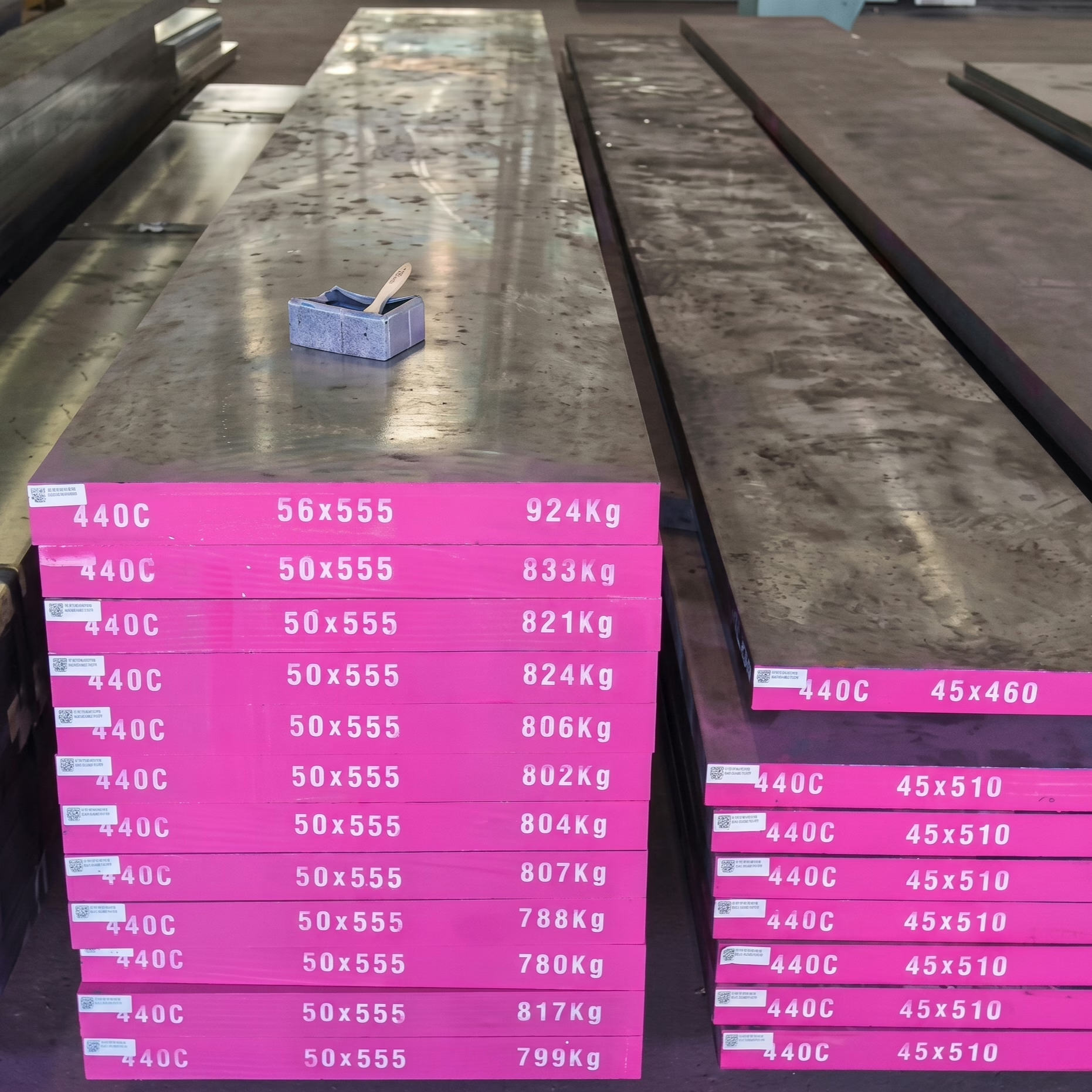
¿Necesita acero inoxidable 440C para mecanizado antes del tratamiento térmico?
Aobo Steel suministra barra y placa de 440C recocido a compradores industriales, listas para mecanizado y tratamiento térmico del cliente. Envíe su tamaño requerido, cantidad, condición de superficie y puerto de destino para una cotización. Nuestro capacidad de suministro a granel cubre el rango de tamaños, tolerancias, pedido mínimo y plazos de entrega.
El acero inoxidable 440C es un acero inoxidable martensítico de alto carbono utilizado donde la alta dureza, la resistencia al desgaste y la resistencia a la corrosión deben equilibrarse cuidadosamente. Puede alcanzar niveles de dureza de hasta aproximadamente 60 HRC, pero este rendimiento solo es confiable cuando cada etapa del ciclo de tratamiento térmico se controla estrictamente.
Proceso de tratamiento térmico del acero inoxidable 440C de un vistazo
El resultado del tratamiento térmico del 440C depende de la condición de recocido, el precalentamiento, la temperatura de austenización, el tiempo de mantenimiento, el método de temple, el tratamiento subcero, la temperatura de revenido y la geometría de la pieza.
| Etapa del proceso | Rango o método típico | Objetivo | Nota práctica |
|---|---|---|---|
| Recocido completo | 1550–1600 °F / 842–870 °C, enfriamiento lento en horno | Producir una estructura blanda mecanizable | La dureza típica recocida es de aproximadamente Rockwell B 92–97 |
| Recocido de proceso | 1250–1400 °F / 676–760 °C, enfriamiento al aire | Ablandamiento intermedio o alivio de tensiones | Útil antes del mecanizado, conformado o retrabajo |
| Precalentamiento | Aproximadamente 1200 °F / 650 °C, a veces 1400–1500 °F / 760–816 °C | Reducir los gradientes térmicos y la tensión | Importante para secciones complejas o pesadas |
| Austenitización | 1850–1950°F / 1008–1063°C | Controlar la disolución de carburos y la respuesta al endurecimiento | Un mantenimiento típico es de alrededor de 20 minutos después de la igualación |
| Temple | Aceite tibio, aire o polímero | Transformar la austenita en martensita | Seleccionar según el tamaño de la sección, la geometría y el riesgo de distorsión |
| Subzero treatment | -100 °F / -73 °C o menos durante al menos dos horas | Reducir la austenita retenida | Recomendado para componentes de precisión |
| Templado | Generalmente por debajo de 800 °F / 427 °C | Aliviar tensiones y establecer las propiedades finales | Revenar inmediatamente después del temple o del tratamiento subcero |
Cómo tratar térmicamente el acero inoxidable 440C paso a paso
La secuencia principal de tratamiento térmico para el acero inoxidable 440C incluye recocido cuando se requiere ablandamiento, seguido de precalentamiento, austenización, temple, tratamiento subcero opcional y revenido.
Paso 1: Recocer el acero inoxidable 440C
El proceso a menudo comienza con recocido para producir una estructura blanda y mecanizable. El recocido completo se lleva a cabo típicamente a 1550–1600 °F / 842–870 °C, seguido de un enfriamiento lento en horno a una velocidad controlada. Esto generalmente da como resultado una dureza recocida de aproximadamente Rockwell B 92–97.
Para el ablandamiento intermedio o el alivio de tensiones, se puede aplicar un recocido de proceso a 1250–1400 °F / 676–760 °C con enfriamiento al aire. Esta etapa ayuda a garantizar que las operaciones de mecanizado y conformado se puedan completar sin desgaste excesivo de la herramienta ni agrietamiento.
Paso 2: Precalentar y austenizar el acero inoxidable 440C
Debido a su alto contenido de aleación y baja conductividad térmica, el 440C es altamente sensible a los gradientes térmicos. El precalentamiento a aproximadamente 1200 °F / 650 °C, o en algunos casos hasta 1400–1500 °F / 760–816 °C, ayuda a igualar las temperaturas internas y reducir la tensión térmica.
El acero se calienta luego al rango de austenización de 1850–1950 °F / 1008–1063 °C, típicamente con un tiempo de mantenimiento de alrededor de 20 minutos. Esta etapa determina la disolución de carburos y el contenido de carbono de la austenita, ambos controlan directamente la dureza y la resistencia a la corrosión.
Temperaturas más altas de hasta 2000 °F / 1095 °C pueden mejorar la resistencia a la corrosión, pero el sobrecalentamiento puede causar engrosamiento del grano y reducción de la tenacidad.
Paso 3: Templar el acero inoxidable 440C
Después de la austenización, el acero 440C debe enfriarse rápidamente para transformar la austenita en martensita. Los métodos de enfriamiento incluyen aceite tibio, aire o polímeros de temple, según el tamaño de la sección y la geometría.
| Método de enfriamiento | Mejor utilizado para | Ventaja | Precaución |
|---|---|---|---|
| Temple en aceite tibio | Secciones pesadas o piezas que requieren dureza completa | Respuesta de enfriamiento fuerte | Mayor riesgo de deformación y agrietamiento |
| Air cooling | Piezas delgadas, complejas o de precisión | Menor riesgo de distorsión | Puede ser demasiado lento para algunos tramos pesados. |
| Temple en polímero | Aplicaciones de enfriamiento controlado | Severidad de enfriamiento ajustable | Requiere concentración calificada y control del proceso |
Las secciones pesadas generalmente requieren temple en aceite para lograr la dureza completa, mientras que las piezas más delgadas o complejas a menudo se enfrían al aire para minimizar la distorsión y el agrietamiento. A pesar de un temple adecuado, la austenita retenida puede permanecer en un 20–30 %, lo que potencialmente conduce a inestabilidad en servicio.
Paso 4: Aplicar tratamiento subcero cuando la estabilidad importa
Para estabilizar la microestructura, el tratamiento subcero o criogénico se aplica con frecuencia inmediatamente después del temple. Enfriar el material 440C a -100 °F / -73 °C o menos durante al menos dos horas promueve la transformación de la austenita retenida en martensita.
Este paso mejora significativamente la estabilidad dimensional y la consistencia de la dureza, especialmente para componentes de precisión como rodamientos o calibradores.
Paso 5: Revenar el acero inoxidable 440C
El revenido debe realizarse inmediatamente después del temple o del tratamiento subcero. Su función es aliviar las tensiones internas y establecer un equilibrio estable entre dureza y tenacidad. Cuando se aplica tratamiento subcero, el doble revenido se vuelve obligatorio para estabilizar la martensita recién formada.
Para una resistencia óptima a la corrosión, las temperaturas de revenido generalmente se mantienen por debajo de 800 °F / 427 °C.
| Temperatura de revenido | Dureza aproximada | Significado práctico |
|---|---|---|
| 325°F / 163°C | Aproximadamente 58 HRC como mínimo | Alta dureza y resistencia a la corrosión |
| 450°F / 232°C | Aproximadamente 55 HRC | Alivio de tensiones moderado con alta dureza retenida |
| 600°F / 316°C | Aproximadamente 57 HRC | La dureza a menudo se estabiliza cerca de este punto |
| 800–1050°F / 427–566°C | Generalmente evitado | Puede reducir la tenacidad al impacto y la resistencia a la corrosión |
Existe una limitación crítica en el rango de 800–1050 °F / 427–566 °C. El revenido dentro de este rango provoca la precipitación de carburos de cromo, lo que reduce significativamente tanto la tenacidad al impacto como la resistencia a la corrosión. Este rango de temperatura debe evitarse estrictamente en la mayoría de las aplicaciones.
AMS-H-6875 y AMS 2759/5 para el tratamiento térmico del 440C
Cuando se especifica 440C para aplicaciones aeroespaciales u otros trabajos regulados, se hace referencia comúnmente a dos especificaciones SAE, y se aplican en diferentes etapas de la cadena de suministro. AMS-H-6875 cubre el tratamiento térmico de la materia prima de acero, es decir, la condición en la que se suministra la barra, placa o material forjado. AMS 2759/5 cubre el tratamiento térmico de piezas terminadas de acero martensítico resistente a la corrosión, e incluye el 440C dentro de su alcance junto con grados como 410, 416, 420, 422 y 431.
La distinción es importante porque separa la responsabilidad del proveedor del material de la del procesador de la pieza. AMS-H-6875, sucesora de la antigua MIL-H-6875, rige la condición de entrega del producto de laminación, como la barra recocida lista para mecanizar. No se aplica a piezas terminadas. Para estas, remite al usuario a la especificación AMS 2759 con barra correspondiente. AMS 2759/5 rige entonces el ciclo de endurecimiento aplicado a la pieza mecanizada, cubriendo austenización, temple, tratamiento subcero y revenido, todo realizado bajo los requisitos generales de AMS 2759 y los controles de pirometría de hornos de AMS 2750.
En la práctica, un componente de 440C pasa por dos etapas documentadas. El material se produce y suministra en una condición certificada, típicamente recocida, conforme a los requisitos de materia prima. La pieza terminada luego es endurecida por el cliente o un tratador térmico calificado según AMS 2759/5, con parámetros de austenización, subcero y revenido seleccionados para cumplir con la dureza especificada y los controles de proceso que exige dicha especificación. La confusión común entre ambas especificaciones se resuelve con una regla simple: la condición de la materia prima sigue AMS-H-6875, y el tratamiento térmico de la pieza terminada sigue AMS 2759/5.
Aobo Steel suministra 440C como materia prima para esta ruta. Se proporciona en condición recocida con un certificado de laminación que cubre la composición química y la trazabilidad del número de colada, listo para piezas que luego serán mecanizadas y endurecidas según AMS 2759/5 por el cliente o un proveedor de tratamiento térmico calificado.
Problemas comunes y causas de falla en el tratamiento térmico del acero 440C
Los límites de rendimiento del 440C no se definen solo por sus propiedades nominales. La mayoría de las fallas se originan por errores de proceso que afectan directamente la distribución de tensiones, la estabilidad de fases o la estructura del grano.
1. Agrietamiento por temple impulsado por desequilibrio de tensiones térmicas
El agrietamiento y la distorsión son típicamente causados por gradientes térmicos no controlados durante el calentamiento o el temple. Cuando la superficie y el núcleo experimentan temperaturas significativamente diferentes, el efecto combinado de la tensión térmica y la expansión martensítica puede superar la resistencia a la tracción del material.
Este riesgo es especialmente crítico en secciones con espesor variable o geometría compleja. Se requieren precalentamiento y velocidades de calentamiento controladas para evitar la acumulación de tensiones antes de que ocurra la transformación.
2. Fragilización causada por revenido inadecuado
La limitación más crítica del revenido se encuentra dentro del rango de 800–1050 °F / 427–566 °C. La exposición a este rango resulta en una reducción marcada de la tenacidad al impacto y la resistencia a la corrosión debido a la precipitación de carburos y efectos en los límites de grano.
El resultado es una estructura que parece dura pero se comporta de manera frágil e inestable bajo condiciones de servicio. Incluso cuando objetivos específicos de resistencia requieren revenido cerca de este rango, la aplicación debe excluir cargas de impacto y entornos sensibles a la corrosión.
3. Austenita retenida que causa inestabilidad dimensional
Una transformación incompleta durante el temple puede dejar 20–30 % de austenita retenida en la estructura. Esta fase es metaestable y puede transformarse bajo tensión o con el tiempo, produciendo martensita fresca con un volumen específico mayor.
Los cambios dimensionales resultantes pueden provocar pérdida de tolerancia, acumulación de tensiones internas y agrietamiento diferido. Para componentes que requieren estabilidad, se requiere tratamiento subcero seguido de múltiples ciclos de revenido para reducir este riesgo.
4. El sobrecalentamiento reduce la tenacidad y aumenta la inestabilidad
Exceder la temperatura de austenización recomendada altera el equilibrio de transformación. La disolución excesiva de carburos enriquece la austenita con carbono, reduce la temperatura de inicio de la martensita y aumenta la austenita retenida después del temple.
Al mismo tiempo, el engrosamiento del grano reduce la tenacidad y promueve un comportamiento de fractura intergranular. Esta combinación conduce a una estabilidad de dureza menor a la esperada y una mayor probabilidad de falla frágil.
5. La sensibilización degrada la resistencia a la corrosión
Si el enfriamiento a través del rango de aproximadamente 800–1600 °F / 427–871 °C no se controla adecuadamente, los carburos de cromo pueden precipitar a lo largo de los límites de grano.
Esto reduce el contenido de cromo en la matriz circundante por debajo del nivel requerido para la pasivación, haciendo que el material sea vulnerable a la corrosión intergranular y al agrietamiento por corrosión bajo tensión. Este modo de falla es particularmente crítico en aplicaciones que requieren tanto resistencia al desgaste como a la corrosión.
6. La fragilización por hidrógeno conduce a fractura diferida
A altos niveles de dureza, el 440C se vuelve altamente susceptible a la falla inducida por hidrógeno. El hidrógeno introducido durante el procesamiento o tratamiento superficial puede difundirse en la red y acumularse en sitios de concentración de tensiones.
Bajo carga, esto puede causar fractura frágil repentina sin deformación previa. Se requieren tratamientos posteriores de horneado para eliminar el hidrógeno después de la exposición a entornos generadores de hidrógeno para mitigar este riesgo.
Consideraciones de ingeniería del tratamiento térmico del acero 440C
El uso del 440C no está limitado por su dureza alcanzable, sino por qué tan bien se pueden gestionar sus compensaciones inherentes tanto en el diseño como en el procesamiento. Las decisiones de ingeniería deben equilibrar la resistencia extrema al desgaste frente a la tenacidad limitada, la sensibilidad dimensional y las restricciones de fabricación.
1. La aplicación debe priorizar el desgaste sobre la tenacidad
El 440C ofrece una dureza muy alta, de hasta aproximadamente 60 HRC, y una resistencia a la tracción cercana a 285 ksi. Esto conlleva una ductilidad y una resistencia al impacto extremadamente bajas. El alargamiento puede caer a alrededor del 2 %, con una tenacidad al impacto de aproximadamente 5 ft-lb.
Esto lo hace adecuado para componentes donde predominan la resistencia al desgaste y la retención del filo, como rodamientos, componentes de válvulas y aplicaciones de corte. No debe especificarse para piezas sometidas a cargas de impacto, contención de presión o esfuerzos estructurales donde la fractura frágil determina la falla.
2. La estabilidad dimensional requiere compromiso con el proceso
Debido a su alto contenido de aleación y carbono, el 440C es inherentemente propenso a la austenita retenida y a la transformación retardada. Para componentes de precisión, la estabilidad dimensional no está garantizada solo por la selección del material. Depende de si el proceso de tratamiento térmico incluye una transformación subcero adecuada y un alivio de tensiones posterior.
Si estos pasos no pueden controlarse de manera consistente, el riesgo de cambio dimensional, distorsión o agrietamiento retardado sigue siendo significativo.
3. La ventana de revenido limita estrictamente el equilibrio de rendimiento
El rango de revenido utilizable para el 440C es estrecho, lo que restringe directamente su envolvente de rendimiento. El revenido a baja temperatura preserva la dureza y la resistencia a la corrosión, mientras que la exposición a temperaturas intermedias provoca una caída pronunciada de la tenacidad y la estabilidad química.
Esta limitación significa que el 440C no puede ajustarse fácilmente en una amplia gama de propiedades. En cambio, debe usarse dentro de una ventana operativa estrictamente definida.
4. Deben considerarse el costo de fabricación y la dificultad de mecanizado
El 440C presenta desafíos de fabricación significativos debido a su alta dureza incluso en estado recocido y a la presencia de carburos de cromo duros. La maquinabilidad es sustancialmente menor que la de los aceros al carbono estándar, lo que provoca mayor desgaste de herramientas, velocidades de mecanizado más lentas y mayores costos de producción.
Todas las operaciones de conformado y mecanizado deben completarse antes del endurecimiento final, ya que el procesamiento posterior al endurecimiento es extremadamente limitado.
5. La ventana de procesamiento es estrecha en rutas de fabricación avanzadas
En procesos como el moldeo por inyección de metal, el 440C requiere un control extremadamente estricto de la composición y los ciclos térmicos. La densificación rápida y la transformación de fases pueden provocar fácilmente distorsión si el proceso no se controla con precisión.
Esto hace que el 440C sea menos tolerante a la variación del proceso en comparación con aceros de menor aleación.
Aobo Steel no proporciona endurecimiento final ni procesamiento de tratamiento térmico. Suministramos material de acero inoxidable 440C para mecanizado y posterior tratamiento térmico por parte del cliente o de un proveedor de tratamiento térmico calificado.
Los datos sobre el tratamiento térmico que se incluyen en esta guía se proporcionan como referencia técnica para clientes, fabricantes de herramientas y profesionales del tratamiento térmico.
¿Necesita acero inoxidable 440C para piezas endurecidas?
Aobo Steel suministra acero inoxidable 440C para rodamientos, válvulas, herramientas de corte, piezas de desgaste, calibradores y componentes de precisión. Envíenos el tamaño, la cantidad y la condición superficial requeridos para soporte de suministro a granel.