
Aço ferramenta H13 vs H11: comparação entre desgaste térmico, fissuras e falhas da ferramenta
H13 e H11 são ambos aços para ferramentas de trabalho a quente com 5% de cromo utilizados para matrizes, moldes, insertos, punções e ferramentas de alta temperatura. Possuem sistemas de liga semelhantes, mas não são selecionados para as mesmas condições de falha.
Selecione H13 se a ferramenta falhar devido ao calor, desgaste a quente, erosão superficial, fissuras térmicas ou perda de dureza. Opte por H11 se a falha for causada por impacto, trincas, fraturas ou tensões em grandes seções.
Aço ferramenta H13 e H11 disponível na Aobo Steel.
A Aobo Steel fornece aços para ferramentas de trabalho a quente H13 e H11 para matrizes de fundição sob pressão, ferramentas de extrusão, matrizes de forjamento, punções a quente, insertos, machos e ferramentas de alta temperatura.
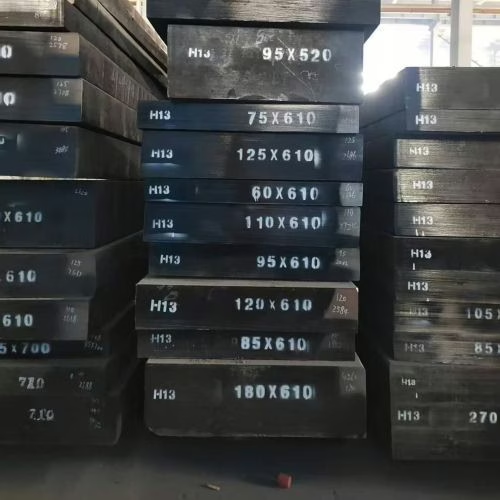
H13 | 1.2344 | SKD61
Aço ferramenta para trabalho a quente, adequado para desgaste a quente, fundição sob pressão, ferramentas de extrusão, resistência a fissuras térmicas, resposta à nitretação e estabilidade da superfície a quente.
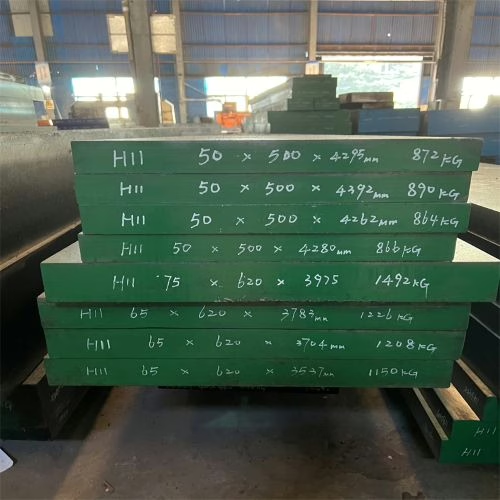
H11 | 1.2343 | SKD6
Aço ferramenta para trabalho a quente, resistente a impactos e fissuras, adequado para ferramentas sensíveis à fratura, punções a quente, matrizes de forjamento e ferramentas de grandes dimensões sujeitas a tensões.
Aço ferramenta H13 vs H11 em resumo
| Questão de seleção | Melhor escolha inicial |
|---|---|
| O desgaste a quente, a erosão, a lavagem ou a degradação da superfície controlam a vida útil da ferramenta. | H13 |
| O impacto, rachaduras, lascas ou fraturas controlam a vida útil da ferramenta. | H11 |
| As ferramentas de fundição ou extrusão precisam de maior estabilidade na superfície quente. | H13 |
| Matrizes de forjamento, punções a quente ou ferramentas de grande porte necessitam de maior resistência a fissuras. | H11 |
| É necessária uma superfície severamente nitretada para desgaste a quente. | H13 |
| Melhor usinabilidade é importante | H11 |
| É necessário um alto grau de polimento, especialmente para moldes de precisão. | ESR H13 |
| O modo de falha real não está claro. | Analise as condições de funcionamento antes de selecionar. |
O H13 é geralmente o ponto de partida mais robusto para ferramentas de desgaste a quente. O H11 é mais seguro quando trincamento, impacto ou fratura é a principal preocupação.
Aços para ferramentas H13 e H11 equivalentes
Diferentes países e normas utilizam nomes diferentes para H13 e H11. Essas designações ajudam os usuários a comparar materiais em diferentes mercados, mas não são substitutas automáticas. Para aplicações em ferramentas, as classes equivalentes devem sempre ser confirmadas com base na composição química, dureza, processo de fusão, requisitos de inspeção e condições de trabalho.
| Sistema padrão | Aço para ferramentas H13 | Aço para ferramentas H11 |
|---|---|---|
| UNS | T20813 | T20811 |
| DIN / EN | 1,2344 / X40CrMoV5-1 | 1,2343 / X38CrMoV5-1 |
| JIS | SKD61 | SKD6 |
| Reino Unido / China | 4Cr5MoSiV1 | Confirme pela composição ou especificação do tipo H11. |
| AFNOR / França | Z40CDV5 | Z38CDV5 |
| BS / Reino Unido | BH13 | BH11 |
| SS / Suécia | 2242 | – |
| UNI / Itália | – | X35CrMo05KU |
| ASTM | A681 H13 | A681 H11 |
| Aeroespacial AMS | – | AMS 6437 / 6485 / 6487 / 6488 |
Diferença na composição química entre H13 e H11
A principal diferença química entre H13 e H11 é o teor de vanádio.
O H13 contém mais vanádio, o que promove a formação de carbonetos duros. Isso melhora a resistência ao desgaste a quente, a estabilidade superficial e a resistência ao amolecimento durante o serviço a quente.
O H11 contém menos vanádio, o que reduz o volume de carbonetos e ajuda a melhorar a tenacidade, a usinabilidade e a resistência a fissuras.
| Elemento | Faixa típica H11 (%) | Faixa típica H13 (%) | Significado prático |
|---|---|---|---|
| Carbono | 0.33-0.43 | 0.32-0.45 | Base de endurecimento semelhante |
| Chromium | 4.75-5.50 | 4.75-5.50 | Ambos pertencem à família de aços para trabalho a quente com cromo 5%. |
| Molibdênio | 1.10-1.60 | 1.10-1.75 | Suporta alta resistência ao calor e à têmpera. |
| Vanadium | 0.30-0.60 | 0.80-1.20 | O H13 apresenta maior resistência ao desgaste graças ao suporte de carboneto. |
| Silicon | 0.80-1.20 | 0.80-1.20 | Oferece bom desempenho em trabalhos a quente e resistência à oxidação. |
Assim, o H13 prioriza o desgaste a quente e a estabilidade da superfície, enquanto o H11 enfatiza a tenacidade e a resistência à fratura.
Comparação de desempenho entre H13 e H11
| Fator de desempenho | Aço para ferramentas H13 | Aço para ferramentas H11 | Significado da seleção |
|---|---|---|---|
| Resistência ao desgaste | Mais alto | De moderado a bom | Escolha H13 quando o desgaste da superfície controlar a vida útil da ferramenta. |
| Dureza quente | Melhor sob calor constante | Bom | Selecione H13 quando a ferramenta precisar resistir ao amolecimento durante o contato a quente. |
| Toughness | Bom | Melhorar | Escolha H11 quando o principal risco for rachaduras ou lascas. |
| Resistência a choques | Bom | Melhorar | Escolha H11 para ferramentas sujeitas a impacto. |
| resistência à formação de trincas térmicas | Resistente em diversas condições de fundição e extrusão. | Ótimo, especialmente quando a principal preocupação é a propagação de fissuras. | A escolha deve levar em consideração se o dano superficial ou a propagação da fissura é mais grave. |
| Usinabilidade | Mais difícil | Mais fácil | H11 pode reduzir a dificuldade de usinagem |
| Resposta de nitretação | Excelente | Bom a excelente | O H13 é frequentemente preferido para superfícies sujeitas a desgaste severo em altas temperaturas. |
| Confiabilidade em grandes seções | Bom com processamento adequado | Geralmente é mais seguro onde o risco de fissuras é alto. | O H11 pode ser considerado para ferramentas grandes ou altamente exigidas. |
Resistência ao desgaste e dureza a quente
O H13 apresenta melhor desempenho quando a superfície de trabalho é exposta à abrasão a quente, fluxo de metal fundido, erosão, lavagem ou contato de alto atrito. Isso o torna uma excelente opção para matrizes de fundição sob pressão, ferramentas de extrusão, ferramentas de conformação a quente e moldes, onde a estabilidade da superfície controla a vida útil da ferramenta.
O aço H13 também apresenta melhor resistência à perda de dureza sob contato quente prolongado. No entanto, a temperatura de trabalho segura não deve ser considerada um valor fixo. Ela depende da dureza desejada, das condições de revenimento, das práticas de resfriamento e da vida útil esperada da ferramenta.
Resistência e durabilidade
O aço H11 apresenta melhor desempenho quando a ferramenta é exposta a impactos, concentração de tensões, carregamento mecânico cíclico ou tensões em grandes seções. Ele é menos sensível ao início e à propagação de trincas do que o H13 sob carregamento mecânico severo.
Isso torna o H11 útil para matrizes de forjamento a martelo, punções a quente, grandes ferramentas para trabalho a quente e aplicações onde a fratura repentina é mais perigosa do que o desgaste gradual da superfície.
Fadiga Térmica e Verificação de Calor
Ambos os aços podem sofrer de fissuração térmica sob aquecimento e resfriamento repetidos.
O aço H13 é geralmente preferido quando o dano principal começa na superfície, como fissuras térmicas ou erosão. O H13 é ideal para danos iniciados na superfície. O H11 é adequado para situações de estresse térmico e mecânico intenso combinados, onde a resistência a fissuras é mais importante do que a máxima resistência ao desgaste superficial.
Uma ferramenta que se desgasta na superfície não deve ser escolhida da mesma forma que uma ferramenta que racha com o impacto.
| Aplicação/Condição | Melhor escolha inicial | Razão |
|---|---|---|
| Matrizes de fundição de alumínio | H13 | Melhor resistência a fissuras térmicas, erosão por metal fundido e desgaste superficial a quente. |
| Fundição em magnésio ou latão | H13 | Maior dureza a quente e estabilidade superficial sob ciclos térmicos. |
| Fundição de zinco | H13 ou H11 | H13 para desgaste superficial; H11 onde temperaturas operacionais mais baixas e risco de fissuras são importantes. |
| Insertos e núcleos para fundição sob pressão | H13 / ESR H13 | Melhor estabilidade superficial, facilidade de polimento e resistência a fissuras térmicas. |
| matrizes de extrusão a quente | H13 | Melhor resistência ao desgaste a quente e ao amolecimento térmico. |
| Mandris de extrusão e blocos falsos | H13 ou H11 | H13 para desgaste; H11 para impacto ou concentração de tensão. |
| matrizes de forjamento a martelo | H11 | Maior resistência e durabilidade |
| Punções quentes e matrizes de cabeça quente | H11 | Melhor resistência a impactos e rachaduras |
| Matrizes de forjamento com desgaste abrasivo severo | H13 | Melhor resistência ao desgaste superficial |
| Blocos de matrizes de trabalho a quente de grande porte | H11 pode ser considerado | As dimensões da seção transversal e a resistência à fissuração tornam-se mais importantes. |
| Lâminas de cisalhamento a quente | H11 ou H13 | H11 para impacto; H13 para desgaste em altas temperaturas. |
| Moldes de injeção de plástico | H13 | Boa resistência ao desgaste, facilidade de polimento e resposta à nitretação. |
| Componentes estruturais de alta tensão | H11 | Maior resistência, força e durabilidade. |
Para a maioria das ferramentas de fundição e trabalho a quente, comece com o aço H13 devido às suas propriedades de trabalho a quente. Para ferramentas expostas a impactos severos, grandes seções ou alto risco de fissuras, considere o aço H11 devido à sua tenacidade.
Diferenças de fabricação
H13 e H11 apresentam comportamento semelhante em relação ao tratamento térmico, mas seu teor de carbonetos afeta o desempenho na usinagem, no tratamento de superfície e após o tratamento térmico.
| Fator de fabricação | Aço para ferramentas H13 | Aço para ferramentas H11 | Significado prático |
|---|---|---|---|
| Usinabilidade | Classificação relativa 45-55% | Classificação relativa 55-65% | O H11 geralmente é mais fácil de usinar. |
| Distorção do tratamento térmico | Baixo quando devidamente controlado. | Baixo quando devidamente controlado. | Ambas são adequadas para ferramentas complexas. |
| Revenimento | É necessário um processo de têmpera em alta temperatura. | É necessário um processo de têmpera em alta temperatura. | O revenimento correto é necessário para equilibrar dureza e tenacidade. |
| Resposta de nitretação | Excelente | Bom a excelente | O H13 é frequentemente preferido para serviços severos de desgaste em altas temperaturas. |
| Reparo de solda | Possível, mas requer controle rigoroso. | Possível, mas requer controle rigoroso. | Ambos necessitam de pré-aquecimento, resfriamento lento e tratamento pós-soldagem. |
O H11 é geralmente mais fácil de usinar porque contém menos vanádio e menos carbonetos duros. O H13 é mais agressivo para as ferramentas de corte, mas oferece melhor resistência ao desgaste a quente após tratamento térmico adequado e engenharia de superfície.
Ambos os graus exigem tratamento térmico adequado e controle de atmosfera. Para matrizes de precisão e ferramentas de trabalho a quente, geralmente prefere-se tratamento térmico a vácuo ou atmosfera protetora controlada.
A nitretação pode melhorar a resistência ao desgaste superficial em ambas as classes. A classe H13 costuma ser a mais resistente quando a nitretação é usada para melhorar a resistência ao desgaste severo a quente, à aderência ou à erosão.
Erros comuns na seleção
Os principais erros não são causados pelos nomes das notas. Geralmente, decorrem de uma incompreensão do verdadeiro modo de falha.
| Erro | Resultado |
|---|---|
| Utilizando H13 quando a fratura por impacto é o modo de falha real. | A ferramenta pode rachar ou lascar antes de atingir o fim de sua vida útil. |
| Utilizando H11 quando o desgaste a quente severo controla a vida útil da ferramenta. | A superfície pode desgastar-se, erodir-se ou amolecer-se muito rapidamente. |
| Tratar H13 e H11 como substitutos diretos | A classe selecionada pode não ser adequada às condições de tensão, temperatura ou desgaste. |
| Escolher apenas pela dureza | A dureza por si só não demonstra resistência ao desgaste, tenacidade ou comportamento de fadiga térmica. |
| Ignorando o tamanho da seção | Ferramentas de grande porte exigem maior atenção à resistência a fissuras e à uniformidade do tratamento térmico. |
Para o H13, o erro comum na seleção é usá-lo onde a fratura por impacto é mais grave do que o desgaste superficial.
Para o H11, o erro comum na seleção é utilizá-lo em situações onde o desgaste severo a quente, a erosão ou o amolecimento térmico a longo prazo controlam a vida útil da ferramenta.
Na extrusão de alumínio, os mesmos dois graus se dividem por componente e não por preferência: o corpo da matriz, o mandril e as inserções cada um leva um diferente. A divisão é feita com base na página de seleção de aço para matrizes de extrusão de alumínio.
Recomendação final
Escolha H13 para ferramentas de desgaste a quente.
Escolha o aço ferramenta H13 se a ferramenta precisar resistir a altas temperaturas, desgaste a quente, erosão superficial, fissuras térmicas, amolecimento térmico ou degradação superficial severa.
Escolha H11 para ferramentas sensíveis a trincas.
Selecione o aço ferramenta H11 quando a ferramenta falhar com mais frequência devido a impacto, fissuras, fraturas, concentração de tensão ou tensão mecânica em grandes seções.
O aço H13 costuma ser mais adequado para ferramentas sujeitas a desgaste a quente. Já o aço H11 costuma ser mais indicado para ferramentas sujeitas a impactos e sensíveis a trincas. Antes de substituir um aço por outro, verifique as condições de trabalho, o processo de tratamento térmico, os requisitos de inspeção e o modo de falha real da ferramenta.
Precisa de aço ferramenta para trabalho a quente H13 ou H11?
A Aobo Steel fornece aços ferramenta H13 e H11 para fundição sob pressão, extrusão, forjamento, estampagem a quente, insertos, núcleos e aplicações de ferramentas para altas temperaturas.
E-mail: [email protected] · Tel. e WhatsApp: +86 180 6294 5370
Páginas relacionadas
Comparações com H13: H13 vs A2 · H13 vs P20 · H13 vs 1.2367 · H13 vs H21 · H13 vs SKD61
Páginas de referência: Propriedades do aço para ferramentas H11 · Aços para ferramentas resistentes à fadiga térmica
Famílias de séries: graus de aço ferramenta · Aços para ferramentas da série H · Localizador de materiais de aço ferramenta
Os valores de composição, dureza e tratamento térmico são valores típicos publicados para H13 / 1.2344 / SKD61 e H11 / 1.2343 / SKD6. Confirme a faixa exata no certificado do fabricante para o lote entregue.