
Guía de tratamiento térmico del acero para herramientas S1
El acero para herramientas S1 (1.2550, SKS41) se endurece mediante precalentamiento a aproximadamente 650 °C (1200 °F), austenización a 900 °C a 955 °C (1650 °F a 1750 °F), temple en aceite a 50 °C a 70 °C y revenido inmediato mientras la pieza aún está caliente. La dureza después del temple es de aproximadamente 57 a 59 HRC, y un doble revenido entre 205 °C y 315 °C (400 °F y 600 °F) proporciona la alta tenacidad y resistencia al impacto por las que se valora el S1. Las piezas mecanizadas en desbaste o trabajadas en frío deben someterse a alivio de tensiones antes del endurecimiento.
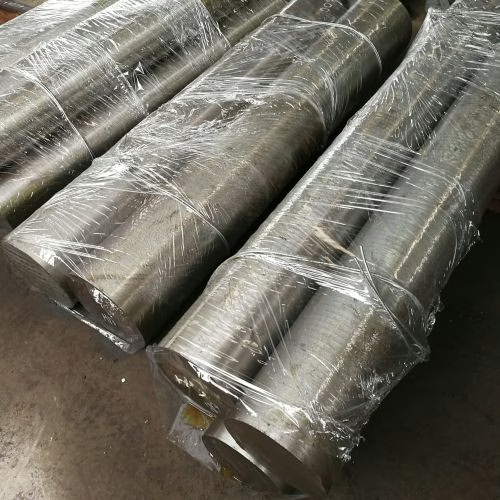
Aobo Steel suministra acero para herramientas S1 (1.2550, SKS41) para aplicaciones resistentes al impacto. Envíe el tamaño, la cantidad, la condición y la aplicación requeridos para obtener una cotización.
Stress Relief
El alivio de tensiones prepara los componentes de S1 después del mecanizado en desbaste o el trabajo en frío, reduciendo el riesgo de distorsión y agrietamiento durante el endurecimiento. Las tensiones internas del mecanizado, si no se eliminan, pueden causar una distorsión microestructural o dimensional grave una vez que la pieza alcanza la temperatura de endurecimiento.
- Temperatura de calentamiento: Calentar uniformemente a 650 °C a 675 °C (1200 °F a 1250 °F).
- Tiempo de permanencia: 1 hora por cada 25 mm (1 pulgada) de espesor, con un mínimo de 1 hora.
- Enfriamiento: Enfriamiento lento al aire.
Precalentamiento
Para prevenir el choque térmico y la deformación excesiva, las piezas frías de S1 nunca deben colocarse directamente en un horno que ya esté a la temperatura de austenización.
- Temperatura de calentamiento: Elevar lentamente la temperatura a aproximadamente 650 °C (1200 °F).
- Permanencia: Mantener hasta que la sección transversal esté uniformemente calentada.
Para piezas con geometría compleja o grandes variaciones en la sección transversal, el precalentamiento es crítico. Sincroniza el aumento de temperatura entre el núcleo y la superficie durante el calentamiento final, lo que reduce la tensión térmica y previene el agrietamiento.
Austenización (endurecimiento)
La austenización es el paso central del endurecimiento. El calentamiento transforma la estructura en austenita y disuelve los carburos en la matriz. La temperatura de austenización del S1 no debe ser ni demasiado alta ni demasiado baja.
- Temperatura de calentamiento: 900°C to 955°C (1650°F to 1750°F).
- Tiempo de permanencia: 15 a 45 minutos, determinado por el espesor de la sección para que toda la sección transversal se endurezca completamente.
- Atmósfera: Debido a que el S1 tiene solo una resistencia moderada a la descarburación, calentar en una atmósfera neutra controlada, vacío o baño de sales neutro para prevenir la oxidación superficial y la pérdida de carbono.
Temple
El S1 es un acero de temple en aceite. El temple en agua se usa ocasionalmente para secciones grandes o simples, pero se prefiere el temple en aceite para obtener la mejor tenacidad y el menor riesgo de agrietamiento.
- Medio de temple: Aceite de temple precalentado y en circulación.
- Procedimiento: Templar hasta que la pieza alcance 50 °C a 70 °C (120 °F a 160 °F), punto en el que aún está caliente.
Nunca dejar que la pieza se enfríe a temperatura ambiente antes del revenido. La estructura después del temple conlleva alta tensión interna, y el revenido retrasado deja al S1 altamente propenso a la fractura frágil espontánea.
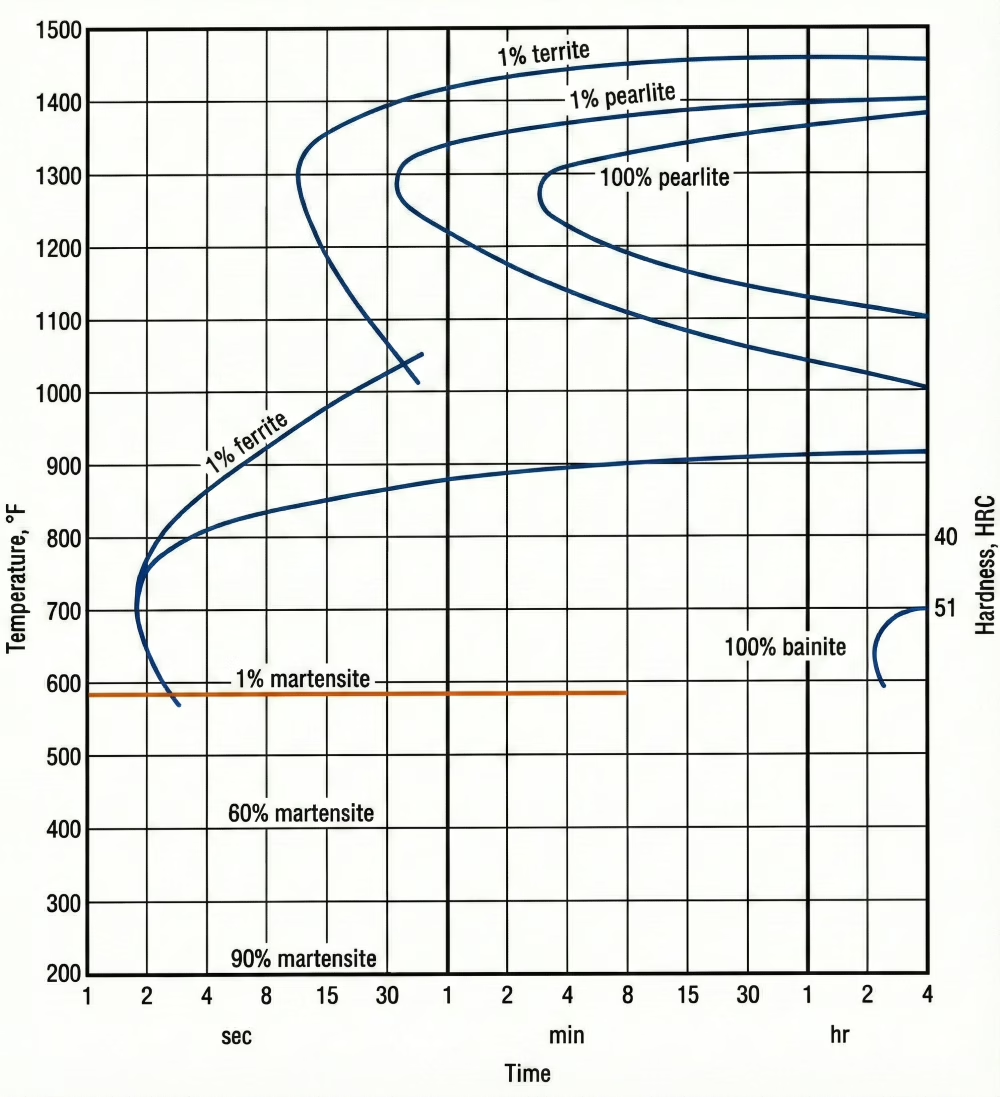
Templado
Revenir inmediatamente después del temple para restaurar la tenacidad y la ductilidad. El revenido convierte la estructura después del temple en martensita revenida, y la temperatura se establece según la dureza requerida.
- Tiempo de permanencia: Al menos 2 horas por cada 25 mm (1 pulgada) de espesor de sección.
- Revenido secundario: Se recomienda un segundo revenido para eliminar la austenita retenida inestable, mejorar el límite elástico y las propiedades al impacto, y reducir la probabilidad de distorsión o agrietamiento posterior en servicio.
- Enfriamiento: Enfriar a temperatura ambiente entre el primer y el segundo revenido.
Dureza aproximada después del temple en aceite desde 900 °C a 955 °C (1650 °F a 1750 °F):
| Temperatura de revenido | Dureza aproximada (HRC) |
|---|---|
| A medida que se apaga | 57 to 59 |
| 150°C (300°F) | 56 to 58 |
| 205°C (400°F) | 55 to 57 |
| 260°C (500°F) | 54 to 56 |
| 315°C (600°F) | 52 to 55 |
| 370°C (700°F) | 50 to 53 |
| 425°C (800°F) | 48 to 50 |
| 540°C (1000°F) | 40 to 45 |
Para obtener la máxima tenacidad, como en cinceles y punzones de servicio pesado, el S1 generalmente se reviene entre 205 °C y 315 °C (400 °F y 600 °F). Se pueden usar temperaturas de revenido más altas para condiciones de servicio más cálidas, pero la dureza disminuye significativamente.
Problemas comunes de tratamiento térmico y soluciones
Agrietamiento por temple
Predominan dos causas. La primera es el revenido retrasado, donde la pieza permanece a temperatura ambiente después del temple el tiempo suficiente para que la tensión supere la resistencia del material. La segunda es la concentración de tensiones en esquinas afiladas, marcas de estampado o superficies mecanizadas en desbaste. Revenir inmediatamente, transfiriendo la pieza al horno de revenido mientras aún conserva calor residual cerca de 50 °C a 70 °C. En la etapa de diseño y mecanizado, usar esquinas redondeadas en las uniones críticas y mantener las superficies con un acabado alto.
Dureza baja
Las causas comunes son la descarburación superficial por una atmósfera de austenización inadecuada, temperatura o tiempo de permanencia de austenización insuficientes, y un temple débil por aceite demasiado caliente o mal agitado.
Deformación
La deformación generalmente proviene del choque térmico causado por un calentamiento demasiado rápido, o de la tensión residual de mecanizado liberada durante el calentamiento. Precalentar a 650 °C antes del endurecimiento, aliviar las tensiones de las piezas mecanizadas en desbaste antes del temple, y soportar las piezas largas o complejas para prevenir el pandeo.
Capa blanda descarburada
Se forma una capa superficial blanda cuando el oxígeno o la humedad del horno reaccionan con el carbono superficial y lo arrastran como monóxido de carbono o dióxido de carbono. Una verificación rápida es pasar una lima por la superficie; si raya fácilmente, hay una capa blanda presente. Para prevenirla, usar un horno de vacío o una atmósfera de gas inerte (nitrógeno o argón) para excluir el oxígeno, calibrar los baños de sales regularmente para mantenerlos neutros, y dejar suficiente sobreespesor de rectificado para que la capa descarburada pueda eliminarse después del tratamiento térmico.
¿Necesita acero para herramientas S1 para aplicaciones resistentes al impacto?
El acero para herramientas S1 (1.2550, SKS41) se usa donde se requieren alta tenacidad y resistencia al impacto. Envíe el tamaño, la cantidad, la condición y la aplicación requeridos para obtener una cotización.