

ACERO INOXIDABLE 440C | 1.4125 | SUS440C Proveedor para pedidos al por mayor
1.4125 / Barra y chapa redonda SUS440C | Cantidad mínima de pedido: 5 toneladas | Longitud de fábrica para exportación: 2–5,5 m
El acero inoxidable 440C es un acero inoxidable martensítico con alto contenido de carbono y cromo. Pertenece a la serie 400 de aceros inoxidables, que generalmente son magnéticos. En el ámbito médico, el acero 440C se utiliza ampliamente en la fabricación de bisturíes quirúrgicos y otros instrumentos médicos. También se emplea en la industria para la fabricación de moldes de plástico y caucho resistentes a la corrosión.
Descripción general del suministro de acero inoxidable 440C
| Grado | ACERO INOXIDABLE 440C | 1.4125 | SUS440C |
| Condiciones de entrega | Totalmente recocido (estado blando para el mecanizado) |
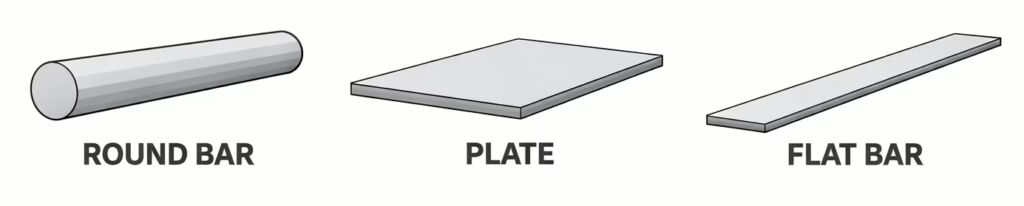
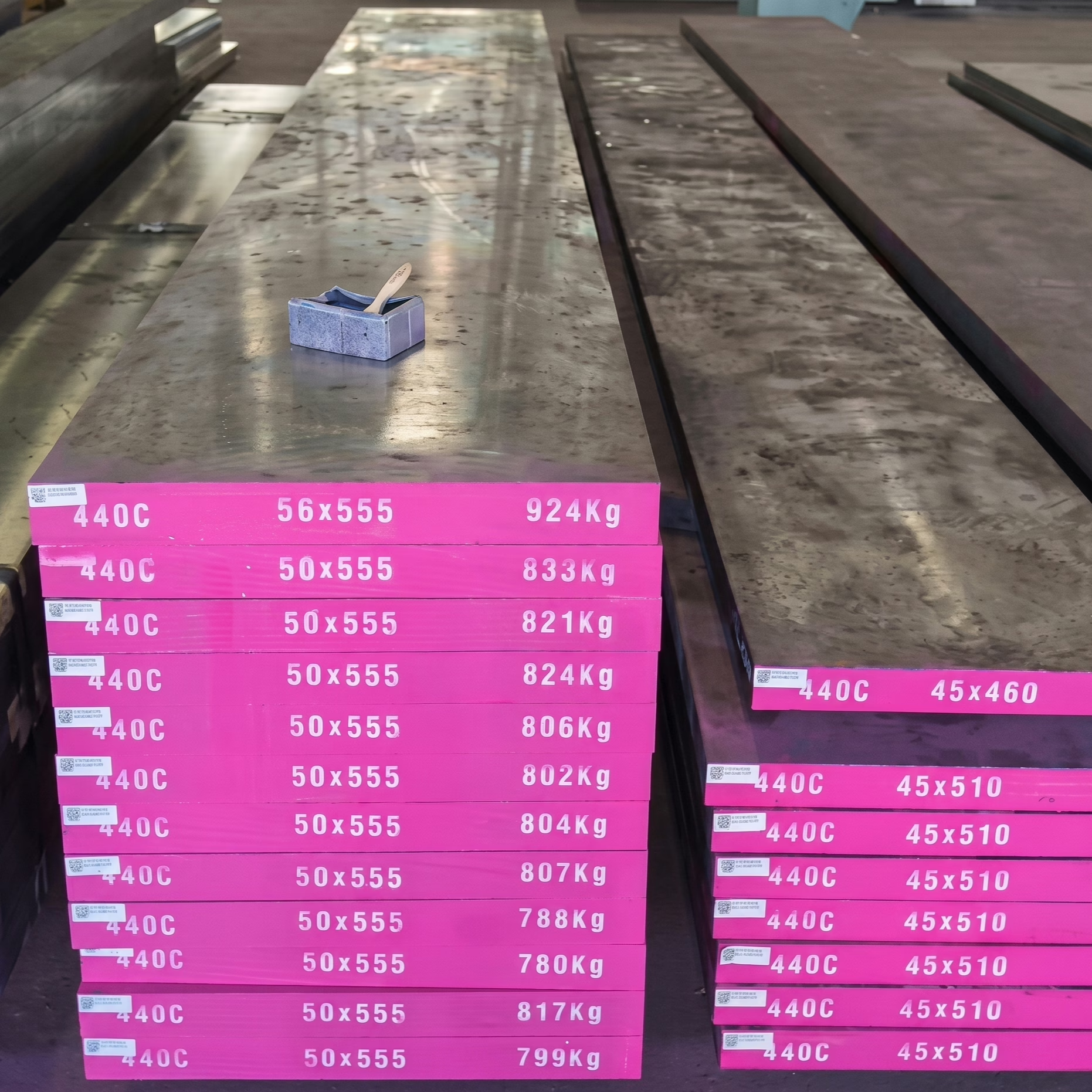
| Formularios disponibles | Barra redonda / Barra plana / Placa / Bloque forjado |
| Capacidad de producción mensual | Aproximadamente 1000 toneladas métricas |
| Cantidad de exportación recomendada | Contenedor completo de 20GP (~26 toneladas) |
| Cantidad mínima de pedido | 5 toneladas |
| Plazo de entrega (con existencias de lingotes) | Aproximadamente 20 días |
| Plazo de entrega (fundición reciente) | 30–45 días |
| Plazo de entrega (Grado ESR) | Aproximadamente 60 días |
| Inspección | Equipo interno de pruebas ultrasónicas + Inspección por terceros disponible |
| Documentación | MTC (EN 10204 3.1) + Informe UT |
¿Por qué los distribuidores globales obtienen el acero 440C de Aobo Steel?
- Suministro mensual continuo de alrededor de 1000 toneladas
- Cantidad mínima de pedido (MOQ) a partir de 5 toneladas para pedidos al por mayor.
- Longitudes de barras y placas optimizadas para contenedores
- Se admiten tamaños mixtos para la carga de exportación.
- Entrega recocida para mecanizado posterior
- Abastecimiento estable a través de socios de cadena de suministro integrados
- Inspección UT disponible para SEP 1921-82 D/d o E/e
- Trazabilidad del MTC y del lote con cada envío
- Seguimiento del número de lote para el control de pedidos
- Opciones de superficie negra, torneada y pulida
- Embalaje a granel para exportación marítima
- Ruta de conversión clara a la página dedicada al suministro a granel.
Producción estable para un suministro a granel a largo plazo
- Ciclos de producción continuos para la reposición de inventario.
- El proceso ESR (refundición por electroescoria) está disponible bajo petición.
- Suministro estable de aleaciones para reducir el riesgo de interrupción del suministro.
- Trazabilidad completa del lote vinculada al número de colada original.
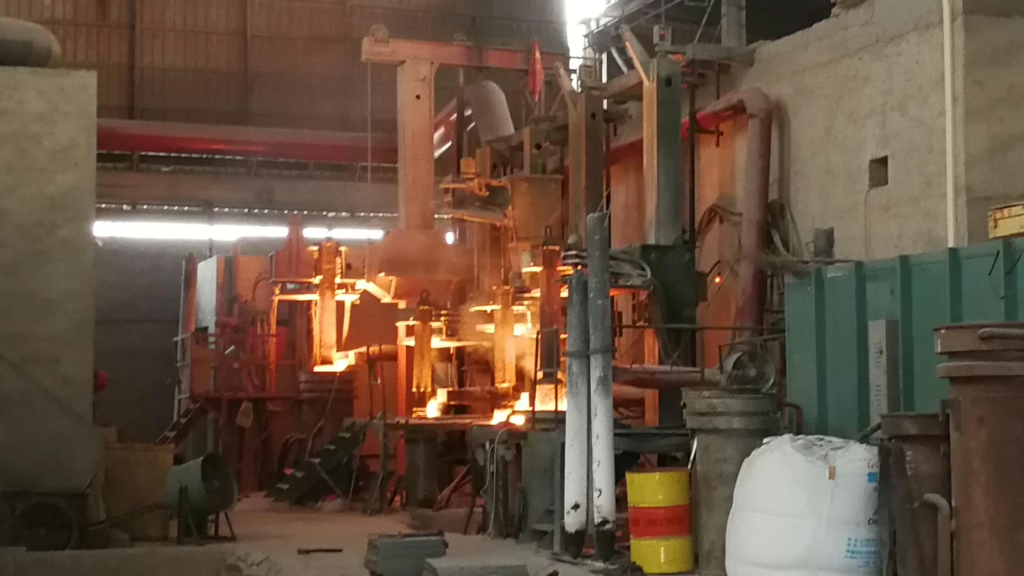
Moldes disponibles en acero inoxidable 440C.
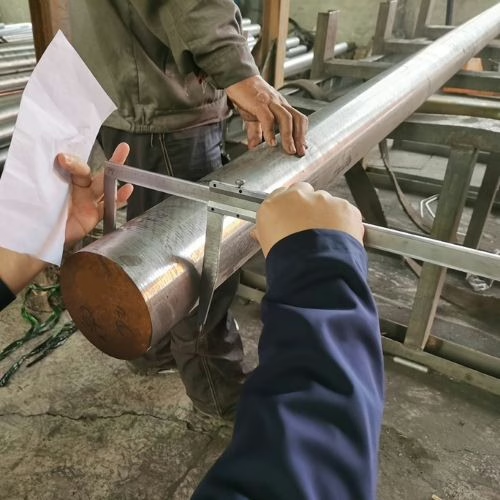
Control de calidad para pedidos al por mayor
Cada lote de acero para herramientas suministrado por Aobo Steel se verifica antes del envío para garantizar la precisión del grado, la integridad interna y la trazabilidad de los pedidos a granel.
- Composición química verificada mediante un espectrómetro.
- Pruebas ultrasónicas disponibles (SEP 1921-82)
- Entregado en estado recocido esferoidizado
- Certificado de prueba de fábrica (EN 10204 3.1) con número de colada
- Inspección dimensional y superficial antes del envío.
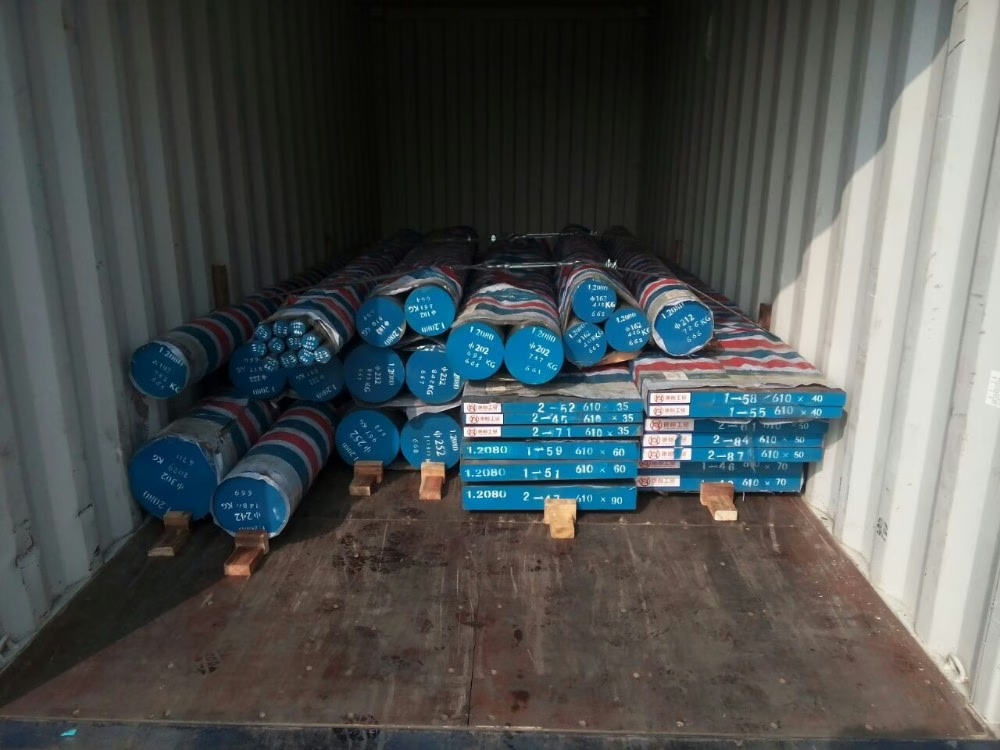
Embalaje para exportación y carga de contenedores
- Embalaje profesional apto para exportación marítima
- Carga de 20GP optimizada hasta ~26 toneladas
- Se admiten grados y tamaños mixtos.
- Protección anticorrosión para largos tránsitos marítimos
Para envíos internacionales, se recomienda encarecidamente la carga de contenedores completos para garantizar la rentabilidad y una tramitación aduanera más ágil.
1. Aplicaciones
- Herramientas de corte
- Aspectos
- Materiales para moldes de plástico
- Piezas de válvula
- Engranajes, ejes, levas
- Instrumentos quirúrgicos y dentales
- Ballestas
- Aplicaciones médicas
- Aplicaciones resistentes al desgaste
- Industria automotriz
- Hardware
2. Composición de acero inoxidable 440C
| Carbono (C) | Cromo (Cr) | Manganeso (Mn) | Silicio (Si) | Molibdeno (Mo) | Fósforo (P) | Azufre (S) |
| 0.95 – 1.20 | 16.0 – 18.0 | 1,00 máximo | 1,00 máximo | 0,75 máximo | 0,040 máximo | 0,030 máximo |
3. Propiedades del acero inoxidable 440C
3.1 Propiedades mecánicas
| Condición/Tipo | Resistencia a la tracción (ksi/MPa) | Límite elástico (0,2% Offset) (ksi/MPa) | Alargamiento en 2″ / 50 mm (%) |
|---|---|---|---|
| Recocido | 110 ksi (758 MPa) (Mín. 110 ksi / 758 MPa para bar) | 65 ksi (448 MPa) (Mín. 65 ksi / 448 MPa para bar) | 14% (Mínimo 14% para barra) |
| Tratado térmicamente / Endurecido | 285 ksi (1965 MPa) | 275 ksi (1896 MPa) | 2% |
| Barra de acabado en frío | Mínimo 125 ksi (862 MPa) | Mínimo 100 ksi (689 MPa) | Mínimo 7% |
| Alambre recocido | Mínimo 140 ksi (965 MPa) | – | Mínimo 13% |
| Alambre de conformado en frío | Típico 110 ksi (760 MPa) | – | – |
| Alambre ligeramente estirado | Típico 120 ksi (830 MPa) | – | – |
| MIM (Moldeado por Inyección de Metal) 440C | 876 MPa (después del tratamiento térmico) | – | – |
3.2 Propiedades físicas y térmicas
| Propiedad | Valor |
|---|---|
| Resistencia (Tratamiento térmico) | 5 pies-libra |
| Módulo de elasticidad | 29 x 10^6 psi (aprox. 200 GPa) |
| Calor específico (32-212 °F) | 0,11 Btu/lb·°F |
| Densidad | Aprox. 0,29 lb/in³ (8,02 g/cm³) |
| Conductividad térmica (20 °C) | 29,3 W/(m·K) |
| Coeficiente de dilatación térmica lineal | Aprox. 10,5 x 10^-6 K^-1 (En los rangos: 20-100°C, 20-200°C, 20-300°C, 20-500°C) |
¿Le interesa el acero inoxidable 440C? ¡Por favor, rellene el formulario a continuación para ponerse en contacto con nosotros hoy mismo!
4. Tratamiento térmico
El tratamiento térmico del acero inoxidable 440C, al igual que otros aceros inoxidables martensíticos, generalmente implica austenización, temple, y el revenido. El proceso tiene como objetivo transformar el acero en una microestructura martensítica, que luego se somete a un revenido para optimizar su equilibrio entre dureza, resistencia, ductilidad y resistencia a la corrosión.
4.1 Austenización (endurecimiento)
La temperatura de austenización es de 925 a 1065 °C (1700 a 1950 °F). Recomendamos 1038 °C (1900 °F) porque creemos que proporciona la mejor dureza y resistencia a la corrosión. Además, sugerimos precalentar el material a 650 °C (1200 °F) antes de este paso para minimizar la distorsión, el alabeo o el agrietamiento debido a los altos gradientes térmicos durante el calentamiento o enfriamiento rápido. El tiempo de remojo debe ser suficiente para asegurar que los carburos se disuelvan en la austenita, lo cual puede ser más lento que en los aceros al carbono simples debido a la presencia de cromo.
4.2 Enfriamiento
Tras la austenización, el acero 440C se suele templar al aire o en aceite. El temple en aceite a temperaturas como 1038 °C (1900 °F) o 1040 °C (1900 °F) es una opción común. Después del temple, el acero se transforma en martensita, una estructura dura pero frágil.
4.3 Templado
El paso posterior al temple es el revenido, cuyo objetivo es reducir la dureza, mejorar la tenacidad y la ductilidad, y aliviar las tensiones internas.
La temperatura de templado es De 392 °F a 662 °F (de 200 °C a 350 °C). Las diferentes temperaturas de revenido dan como resultado distintos niveles de dureza, como se indica a continuación:
| Temperatura (°C) | Temperatura (°F) | Dureza (HRC) |
| 150 | 300 | 60 |
| 315 | 600 | 57 |
| 425 | 800 | 58 |
| 480 | 900 | 57 |
| 540 | 1000 | 55 |
Cabe señalar que el revenido del acero inoxidable 440C y de aceros inoxidables martensíticos de alto contenido de carbono similares en el rango de 427 °C a 566 °C (800 °F a 1050 °F) dará como resultado fragilidad por revenido y una menor resistencia al impacto y a la corrosión.
Si es necesario un revenido fuera del rango de temperatura mencionado para mejorar la tenacidad, recomendamos una temperatura de revenido de 593 °C (1100 °F) o superior. El revenido a esta temperatura mejora la resistencia al impacto y a la corrosión, pero reduce la dureza.
4.4 Consideraciones especiales en el tratamiento térmico del acero 440C
- Precalentamiento: Antes del proceso principal de endurecimiento (austenización), recomendamos precalentar el acero inoxidable 440C a aproximadamente 650 °C (1200 °F). Esto ayuda a garantizar una distribución de temperatura más uniforme y a minimizar el choque térmico durante la posterior etapa de austenización.
- Enfriamiento lento después del forjado: Para aceros con alto contenido de carbono, como el 440C, recomendamos un enfriamiento lento después del forjado, o un enfriamiento intermitente, que consiste en enfriar a 150-250 °C, recalentar a aproximadamente 650 °C y, finalmente, enfriar. Esto ayuda a prevenir el agrietamiento y la formación de carburos en los límites de grano.
- Gestión de la austenita retenida: El acero 440C templado puede contener una cantidad significativa de austenita retenida (potencialmente entre 20 y 301 TP3T en volumen). Si no se trata, esta austenita retenida puede transformarse espontáneamente con el tiempo, provocando cambios dimensionales y un mayor riesgo de agrietamiento. Un tratamiento térmico a temperaturas bajo cero tras el temple puede transformar eficazmente esta austenita retenida en martensita sin templar. Este tratamiento térmico debe ir seguido de al menos un ciclo de revenido estándar para templar la martensita recién formada y aliviar las tensiones internas.
- Tratamiento térmico posterior a la soldadura (PWHT): Para componentes soldados de acero 440C, el tratamiento térmico posterior a la soldadura (PWHT) es casi siempre necesario. Este tratamiento sirve para templar la martensita formada en la soldadura y la zona afectada por el calor, y para aliviar las tensiones residuales. El rango de temperatura del PWHT para el acero 440C es de 480 °C a 750 °C (895 °F a 1380 °F).
5. Calificaciones Equivalentes
- DIN EN (Europa): 1,4125 (X105CrMo17)
- JIS (Japón): SUS440C
- ISO: X105CrMo17
- GB (China): 9Cr18Mo o 95Cr18