
Bloques de troqueles H13 de gran sección para troqueles de gigacasting
La gigacasting ha transformado el enfoque de los fabricantes de automóviles en el diseño estructural. Al fundir la parte inferior trasera, el portón trasero o la torreta de amortiguación como una sola pieza de aluminio, los fabricantes reducen considerablemente el número de soldaduras, los pasos de ensamblaje y el peso del vehículo. Sin embargo, los moldes que lo hacen posible son un caso aparte. En la fundición a alta presión, la relación peso del molde/pieza suele ser de aproximadamente 1000 a 1, lo que significa que un solo bloque de molde de gigacasting puede pesar varias decenas de toneladas. El acero para herramientas de trabajo en caliente H13 sigue siendo la opción estándar para estos moldes debido a su dureza en caliente, templabilidad y resistencia al choque térmico, pero la producción y el tratamiento térmico de un bloque de ese tamaño presentan problemas que no se manifiestan en herramientas más pequeñas.
Por qué el tamaño de la sección cambia el comportamiento del acero
Un bloque de matriz de menos de 100 mm de espesor y otro de más de 400 mm de espesor presentan propiedades diferentes tras el tratamiento térmico, incluso partiendo de una composición química H13 idéntica. La diferencia radica en la velocidad de enfriamiento.
El H13 es de endurecimiento profundo y puede endurecerse completamente mediante enfriamiento al aire en espesores moderados. En un bloque que supera los 300 a 500 mm, el núcleo no puede enfriarse lo suficientemente rápido. Las simulaciones de secciones gruesas enfriadas al aire en el rango de 150 a 300 mm ya muestran velocidades de enfriamiento demasiado lentas para producir una estructura completamente martensítica, y el núcleo se transforma parcialmente en bainita. La bainita en el H13 tiene menor tenacidad a la fractura y peor resistencia a la fatiga térmica que la martensita templada, lo que representa una seria desventaja en una superficie de matriz que estará sometida a miles de ciclos térmicos durante su vida útil.
El enfriamiento lento en la etapa inicial del temple genera un segundo problema. Permite que los carburos proeutectoides precipiten a lo largo de los límites de grano de la austenita previa antes de que la matriz se transforme. Estas redes de carburos forman trayectorias frágiles continuas a lo largo de los límites de grano, y es ahí donde comienzan las grietas bajo carga. Un bloque de matriz con esta microestructura puede superar una prueba de dureza superficial y aun así fallar prematuramente en servicio, ya que la dureza mide la matriz y no dice nada sobre la red de límites de grano subyacente.
La microsegregación añade una tercera capa al problema y comienza antes del tratamiento térmico, en la etapa de fundición del lingote. El vanadio, el molibdeno y el cromo se segregan a medida que un lingote grande se solidifica, produciendo carburos eutécticos gruesos, tipos MC ricos en V y tipos M6C ricos en Mo, concentrados en el núcleo del lingote. Una vez que se forman estas redes, no pueden redisolverse mediante ningún tratamiento térmico posterior. El resultado es un bloque con una tenacidad direccional y anisotrópica que varía según la dirección de carga, lo que es difícil de predecir y aún más difícil de contrarrestar con el diseño de un molde. Consulte más detalles en Limitaciones conocidas del H13 en secciones pesadas.
Pasos de procesamiento que abordan el problema del tamaño de la sección
Ninguno de los tres problemas mencionados anteriormente se puede solucionar después de que el bloque se haya fundido y forjado de forma convencional, por lo que la corrección debe comenzar en una etapa anterior del proceso.
La refundición por electroescoria o por arco al vacío es el primer requisito para el H13 destinado a un molde de gigafundición. El horno de arco eléctrico convencional más el refinado en cuchara dejan la segregación y las redes de carburos descritas anteriormente prácticamente intactas en un bloque de este tamaño. ESR El proceso VAR, combinado con un ciclo prolongado de homogeneización a alta temperatura, descompone las gruesas vetas de carburo eutéctico y reduce la microsegregación lo suficiente como para cumplir con los requisitos de tenacidad de grado superior de NADCA. Este paso no es opcional para secciones grandes, a diferencia de lo que podría serlo para un inserto de molde más pequeño.
El mecanizado basto previo al endurecimiento es el segundo factor clave, y actúa directamente contra el problema de la velocidad de enfriamiento. El mecanizado de la cavidad, los canales de refrigeración y otras características profundas antes del endurecimiento final reduce el espesor efectivo de la sección en las superficies más importantes: la cavidad de trabajo. Una sección efectiva más delgada se enfría más rápido durante el temple, lo que favorece la formación de martensita en la superficie de la cavidad en lugar de bainita, aunque el bloque en su conjunto siga siendo macizo.
El temple debe equilibrar dos necesidades contrapuestas. El bloque debe enfriarse lo suficientemente rápido en el rango de temperatura superior para evitar la precipitación de carburos proeutectoides, y luego lo suficientemente lento, a menudo mediante un ciclo de revenido interrumpido o martemper, para igualar la temperatura en toda la sección antes de que alcance el punto de inicio de la martensita. Si se enfría demasiado rápido en esa etapa, el bloque se deforma o se agrieta debido a la tensión del gradiente térmico. Si se enfría demasiado lento antes, las redes de carburos se forman de todos modos.
El revenido de un bloque de este tamaño nunca es un ciclo único. El H13 es un acero de endurecimiento secundario, por lo que el primer revenido convierte la austenita retenida en martensita nueva, y los revenidos posteriores estabilizan esa estructura. curva de templado También debe evitarse la zona de fragilización alrededor de los 500 °C, que se sitúa cerca del pico de dureza secundaria, pero que deja la tenacidad al impacto peligrosamente baja. Para matrices de gigacasting de gran tamaño, el objetivo práctico es templar por encima de ese pico, hasta un rango de trabajo de aproximadamente 44 a 48 HRC, o de 42 a 45 HRC cuando la resistencia al choque es más importante que la resistencia al desgaste. El objetivo final debe confirmarse con el diseño de la matriz y el certificado de ensayo de la fábrica, en lugar de tratarse como un valor fijo.
¿Qué sucede cuando se omiten estos pasos?
Los tres modos de fallo observados en el servicio de gigacasting se remontan directamente a los problemas metalúrgicos mencionados anteriormente.
El agrietamiento térmico, la red de finas grietas superficiales producidas por ciclos térmicos repetidos contra aluminio a 650 °C, es la falla más común y la más sensible a la limpieza de inclusiones y carburos. Los óxidos gruesos, los sulfuros o los carburos segregados mencionados anteriormente actúan como concentradores de tensión que proporcionan un punto de inicio para las grietas por agrietamiento térmico.
La fisuración por clivaje es la falla más peligrosa porque ocurre sin previo aviso. Un bloque con tensiones residuales de fabricación, un núcleo bainítico o con alto contenido de carburo, o un precalentamiento insuficiente antes de las primeras inyecciones, son propensos a la fractura repentina. El precalentamiento es importante porque el H13 es notablemente más resistente a la temperatura de operación que a temperatura ambiente, por lo que un troquel frío comienza desde su punto más débil.
Daños por electroerosión Se trata de un riesgo de procesamiento más que de material, pero interactúa con todo lo anterior. La creación de una cavidad mediante electroerosión deja una fina capa blanca martensítica sin templar, sometida a una alta tensión residual. Si se deja en su lugar, esta capa se convierte en el punto de partida para la aparición de grietas por calor en los primeros cientos de disparos. El rectificado o pulido de esta capa, o la aplicación de un tratamiento térmico posterior a la electroerosión, elimina el riesgo antes de que la matriz entre en contacto con aluminio fundido.
Para un programa de fundición a presión, las especificaciones del bloque de matriz deben contemplar todos estos aspectos antes de realizar el pedido del acero, no después de que aparezcan las primeras grietas. El tamaño de la sección, el método de refundición, la secuencia de mecanizado en bruto y el programa completo de templado deben acordarse con el proveedor con antelación.
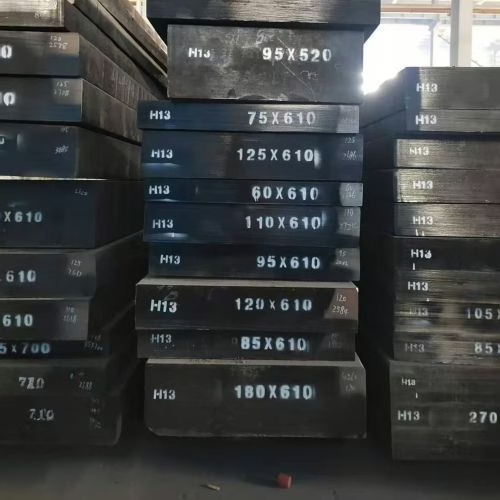
¿Necesitas ESR H13 para tus chips de gigacasting?
Aobo Steel suministra acero ESR H13 certificado a granel con documentación de ensayos de fábrica para herramientas de gran sección. Rellene el formulario de contacto para solicitar información sobre el acero para herramientas ESR H13.