
Aço ferramenta O1 vs O2: qual aço para trabalho a frio escolher?
Escolha o aço ferramenta O1 quando a ferramenta exigir maior tenacidade, estabilidade de aresta e confiabilidade geral em trabalhos a frio. Escolha o aço ferramenta O2 quando a eficiência de usinagem, a precisão dimensional e a baixa distorção após o endurecimento forem mais importantes.
Ambos são aços para ferramentas de trabalho a frio temperáveis a óleo com dureza de trabalho semelhante após o tratamento térmico. O O1 oferece uma margem de segurança maior para aplicações gerais, enquanto o O2 se destaca na usinagem e no controle para formas complexas ou de precisão.
Aço ferramenta O1 e O2 disponível na Aobo Steel.
A Aobo Steel fornece aços para ferramentas de trabalho a frio temperáveis a óleo O1 e O2 para medidores, punções, matrizes de corte, ferramentas complexas e ferramentas de produção curta a média.
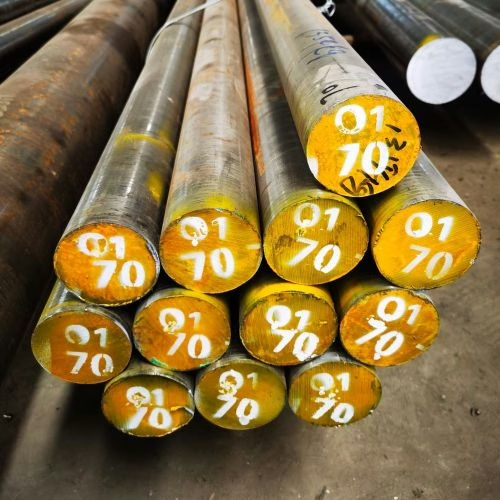
O1 | 1.2510 | SKS3
Aço ferramenta para trabalho a frio com têmpera em óleo, apresentando melhor tenacidade, estabilidade de aresta e confiabilidade geral das ferramentas.
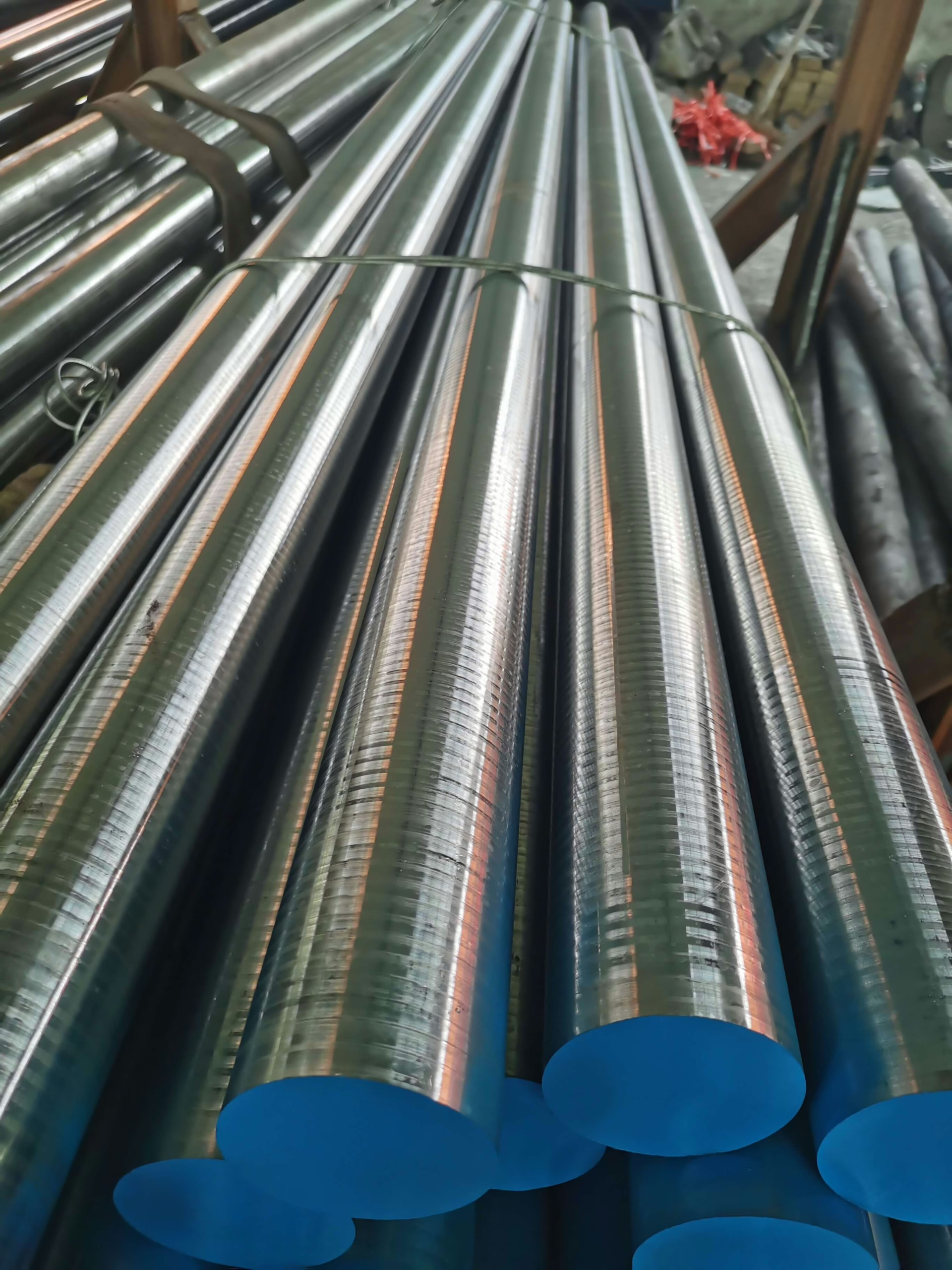
O2 | 1.2842
Aço ferramenta para trabalho a frio com têmpera em óleo, que facilita a usinagem, proporciona melhor controle dimensional e permite a criação de formas complexas.
Tabela de Seleção Rápida: Aço Ferramenta O1 vs O2
| Exigência | Melhor escolha | Razão prática |
|---|---|---|
| Melhor resistência | O1 | Mais confiável sob impacto moderado e carga nas bordas. |
| Melhor estabilidade de borda | O1 | Mais seguro para ferramentas de corte, punções e lâminas de guilhotina. |
| Resposta de endurecimento mais profunda | O1 | Melhor profundidade de têmpera para ferramentas de pequeno e médio porte. |
| Ferramentas gerais para trabalho a frio | O1 | Mais adequado para corte, conformação, estampagem e perfuração. |
| Menor distorção após o endurecimento | O2 | Melhor retenção da forma após têmpera em óleo. |
| Usinagem mais fácil | O2 | Reduzir a resistência ao corte antes do tratamento térmico. |
| Medidores de precisão | O2 | Melhor controle dimensional. |
| Matrizes intrincadas e formas complexas | O2 | Menos correções e retificações após o endurecimento. |
| partes longas ou finas | O2 | Menor risco de deformação em comparação com O1. |
Equivalência entre as notas O1 e O2
O1 e O2 são comercializados sob nomes padrão diferentes em diferentes mercados. Ao realizar compras internacionais, os compradores devem verificar tanto o nome da classe quanto o padrão do material antes de confirmar um pedido.
| Grau AISI | Designação UNS | DIN / W.-Nr. | Designação Europeia Comum | Padrão britânico |
|---|---|---|---|---|
| Aço Ferramenta O1 | T31501 | 1.2510 | 100MnCrW4 | BO1 |
| Aço para ferramentas O2 | T31502 | 1.2842 | 90MnCrV8 | BO2 |
O O1 é comumente associado ao 1.2510 / 100MnCrW4. O O2 é comumente associado ao 1.2842 / 90MnCrV8.
As classes equivalentes são úteis para fins de fornecimento, mas o resultado final ainda depende do controle da composição química, do tratamento térmico, do tamanho da ferramenta e das condições de trabalho.
Composição química de O1 vs O2
Comparado ao O2, o O1 tem um projeto de liga mais equilibrado porque cromo e tungstênio são adicionados além do manganês. O O2 depende mais fortemente do manganês, o que favorece a temperabilidade em temperaturas de têmpera relativamente baixas.
| Elemento | Aço Ferramenta O1 | Aço para ferramentas O2 |
|---|---|---|
| Carbono | 0.85-1.00% | 0.85-0.95% |
| Manganese | 1.00-1.40% | 1.40-1.80% |
| Silicon | <=0,50% | <=0,50% |
| Chromium | 0.40-0.60% | <=0,50% |
| Tungstênio | 0.40-0.60% | Normalmente não é adicionado. |
| Molibdênio | <=0,30% | <=0,30% |
| Vanadium | <=0,30% | <=0,30% |
A adição de cromo e tungstênio torna o O1 menos dependente apenas do manganês. Isso confere ao O1 uma resposta de endurecimento mais equilibrada e melhor estabilidade de corte após o tratamento térmico.
O maior teor de manganês da liga O2 contribui para o seu endurecimento eficaz a temperaturas mais baixas e para uma melhor estabilidade dimensional durante o processo de endurecimento. A sua estrutura de liga mais simples também facilita a usinabilidade antes do tratamento térmico.
Tratamento térmico O1 vs O2
Tanto o O1 quanto o O2 são mais fáceis de controlar do que os aços temperáveis a água, mas a têmpera a óleo ainda cria tensão térmica. Cantos vivos, seções finas, comprimentos longos e geometrias complexas exigem tratamento térmico cuidadoso.
| Fator de tratamento térmico | Aço Ferramenta O1 | Aço para ferramentas O2 |
|---|---|---|
| Steel type | Aço para ferramentas de trabalho a frio endurecido em óleo | Aço para ferramentas de trabalho a frio endurecido em óleo |
| Principal característica de liga | Mn, Cr, W, pequeno V | Alto teor de Mn, baixo teor de Cr e Mo |
| temperatura de austenitização | Aproximadamente 788-816 C | Aproximadamente 760-802 °C |
| Pré-aquecimento | Recomendado | Aquecimento controlado recomendado |
| Prática de imersão | Geralmente baseado no tamanho da seção | Geralmente, utiliza-se um período curto ou limitado de imersão. |
| Têmpera | Resfriamento de óleo | Resfriamento de óleo |
| Estabilidade dimensional | Bom | Melhorar |
| risco de rachaduras | Controlável com o devido controle. | Menor devido à temperatura de endurecimento mais baixa. |
| faixa de revenimento | Aproximadamente 163-260 °C | Aproximadamente 163-316 °C |
| temperabilidade | Melhor profundidade de endurecimento | Mais raso que O1 |
| Principal vantagem do tratamento térmico | Melhor confiabilidade de desempenho | Melhor controle de distorção |
As principais diferenças no tratamento térmico são o risco de distorção e a profundidade de endurecimento. O O1 é melhor quando a ferramenta precisa de uma profundidade de endurecimento mais consistente em toda a peça. O O2 é melhor quando manter a forma da peça após a têmpera é a principal preocupação.
Para informações detalhadas sobre tratamento térmico, consulte nosso [link para o documento/artigo]. Guia de tratamento térmico do aço ferramenta O1 e Guia de tratamento térmico do aço ferramenta O2.
Comparação de aplicações O1 vs O2
As opções O1 e O2 se sobrepõem em muitas aplicações de trabalho a frio, mas os motivos para escolher uma em detrimento da outra são diferentes. A opção O1 é selecionada quando a ferramenta precisa tolerar pressão de corte, carga na aresta de corte ou impacto leve. A opção O2 é selecionada quando a peça é difícil de usinar, sensível à distorção ou tem um custo de correção elevado após o endurecimento.
| Aplicativo | Melhor escolha | Razão |
|---|---|---|
| socos gerais | O1 | Melhor estabilidade da aresta sob pressão de corte. |
| Punções longas de precisão | O2 | Menor distorção após o endurecimento. |
| Matrizes de corte | O1 | Melhor desempenho geral de corte. |
| Matrizes de corte de precisão | O2 | Melhor controle dimensional quando a precisão da forma é importante. |
| Matrizes de cunhagem | O1 | Melhor desempenho sob cargas compressivas e de borda moderadas. |
| Matrizes complexas | O2 | Usinagem mais fácil e menos correções após o endurecimento. |
| Lâminas de tesoura | O1 | Melhor resistência à carga nas bordas. |
| Medidores de precisão | O2 | Melhor retenção de forma e estabilidade dimensional. |
| matrizes de estampagem | Depende | O1 para resistência de carga; O2 para menor distorção. |
| Insertos de molde de plástico para uso em aplicações de baixa demanda. | O2 | Usinagem mais fácil e maior estabilidade. |
| Hastes de ferramentas e peças de suporte | O2 | Boa usinabilidade e dureza aceitável após o tratamento. |
O1 vs O2: Dureza, Resistência ao Desgaste e Usinabilidade
Tanto o O1 quanto o O2 podem atingir cerca de 57-62 HRC após um tratamento térmico adequado.
| Fator de desempenho | Aço Ferramenta O1 | Aço para ferramentas O2 |
|---|---|---|
| Dureza de trabalho típica | 57-62 HRC | 57-62 HRC |
| Resistência ao desgaste | Médio | Médio |
| resistência ao impacto | Ligeiramente mais alto | Ligeiramente inferior |
| Estabilidade de borda | Melhor sob carga moderada | Bom, mas menos robusto que o O1. |
| Estabilidade dimensional | Bom | Melhorar |
| Usinabilidade | Classificação relativa 65-75% | Classificação relativa 90-100% |
| Dureza quente | Baixo | Baixo |
| Escala de produção adequada | corridas curtas a médias | corridas curtas a médias |
Sua resistência ao desgaste vem principalmente da matriz endurecida, não de um alto volume de carbonetos de liga duros. Para Abrasão severa ou produções muito longas, D2, D3 ou outros aços para trabalho a frio de maior desgaste geralmente são mais adequados.
Diferença de custo entre O1 e O2
A diferença de preço das matérias-primas entre O1 e O2 geralmente não é o principal fator de custo.
O oxigênio pode reduzir os custos de usinagem, permitindo um corte mais fácil antes do tratamento térmico. Também pode reduzir os custos de acabamento, pois apresenta melhor estabilidade dimensional após o endurecimento.
O O1 pode reduzir os custos de falha quando a ferramenta está sob corte, carga na aresta ou sofrendo Impacto moderado. Nessas condições, melhor tenacidade e estabilidade da aresta podem importar mais do que a usinagem mais fácil.
| Fator de custo | Aço Ferramenta O1 | Aço para ferramentas O2 |
|---|---|---|
| Custo da matéria-prima | Ligeiramente mais alto | Ligeiramente inferior |
| Custo de usinagem | Mais alto | Inferior |
| desgaste da ferramenta de corte durante a usinagem | Mais alto | Inferior |
| Correção pós-endurecimento | Moderado | Inferior |
| Risco sob impacto moderado | Inferior | Mais alto |
| Melhor vantagem de custo | Menor risco de falha no serviço | Redução dos custos de fabricação e acabamento |
Quando não usar aço ferramenta O1 ou O2
O1 e O2 são aços para ferramentas temperáveis a óleo econômicos aços para ferramentas temperáveis a óleo para aplicações controladas de trabalho a frio. Não são a melhor escolha quando o principal problema é abrasão severa, choque pesado, Alta temperatura de trabalho, ou endurecimento total em seções grandes.
| Condições inadequadas | Por que o O1 ou o O2 podem falhar | Melhor Direção de Materiais |
|---|---|---|
| Desgaste abrasivo severo | A resistência média ao desgaste não é suficiente. | Aços D2, D3 ou outros aços para trabalho a frio de alta resistência ao desgaste |
| cargas de choque severas | A alta dureza reduz a resistência ao impacto. | Aços S1, S7 ou outros aços resistentes a choques |
| Alta temperatura de trabalho | Baixa dureza a quente e fraca resistência ao amolecimento. | Aços H11, H13 ou outros aços para trabalho a quente |
| corte em alta velocidade | Sem dureza vermelha | M2, M35 ou aço rápido |
| Grandes seções que requerem endurecimento profundo | Temperabilidade limitada, especialmente para O2 | Aços ferramenta da série A ou da série D |
| Controle de distorção muito preciso em ferramentas maiores. | O resfriamento do óleo ainda gera estresse. | Aço A2 ou outros aços de endurecimento ao ar |
Conclusão
Escolha O1 para confiabilidade.
Escolha O1 quando a pressão de corte, a carga na borda, o impacto moderado ou o trabalho a frio em geral exigirem uma margem de segurança maior.
Escolha O2 para controle preciso
Escolha O2 quando a velocidade de usinagem, o controle de distorção ou a precisão dimensional forem mais importantes do que as necessidades de resistência.
O modo O1 costuma ser mais seguro para ferramentas de uso geral. O modo O2 oferece um controle de precisão mais fácil para geometrias complexas.
Precisa de aço ferramenta O1 ou O2 para ferramentas de trabalho a frio?
A Aobo Steel fornece aços ferramenta O1 e O2 com têmpera em óleo em condições práticas de fornecimento para calibradores, punções, matrizes, insertos e projetos de ferramentas de produção em pequena a média escala.
E-mail: [email protected] · Tel. e WhatsApp: +86 180 6294 5370
Páginas relacionadas
Comparações relacionadas: O1 vs D2 · A2 vs O1 · D2 vs A2
Páginas de referência: Tabela de revenimento de aço para ferramentas · Tabela de dureza Rockwell S7 · Guia de tratamento térmico H13 · Dureza do aço H13
Famílias de séries: graus de aço ferramenta · Localizador de materiais de aço ferramenta
Faixas de composição, valores de dureza e temperaturas de tratamento térmico são valores típicos publicados para O1 / 1.2510 e O2 / 1.2842. Confirme a faixa exata com o certificado do fabricante para o lote entregue.