

Início > Centro Técnico de Tratamento Térmico de Aços para Ferramentas Guia de Tratamento Térmico do Aço Ferramenta O2
Aobo Steel | Fornecedor global de aço para ferramentas na China
Guia de Tratamento Térmico do Aço Ferramenta O2
Diretrizes de tratamento térmico para aço ferramenta O2 (DIN 1.2842/JIS SKS31), com foco na resistência ao desgaste, usinabilidade e estabilidade dimensional para aplicações em ferramentas de trabalho a frio.
Aço para ferramentas O2 É um aço ferramenta para trabalho a frio temperado em óleo, com alta dureza, alta resistência ao desgaste e mínima deformação durante o tratamento térmico. Comparado ao aço temperado em água, o aço O2 apresenta melhor estabilidade dimensional e maior tenacidade após têmpera completa.1. Os graus equivalentes de aço para ferramentas O2 incluem:
| Padrão | Grau |
|---|---|
| EN/DIN | 1,2842 / 90MnCrV8 |
| JIS | SKS31 |
| GB | 9Mn2V |
Lista de verificação rápida do tratamento térmico do aço ferramenta O2
Siga estes passos sequenciais para o tratamento térmico adequado do aço ferramenta O2: pré-aquecimento, têmpera (austenitização), têmpera em óleo e revenido.
- Pré-aquecimento
Pré-aqueça a 649–677 °C (1200–1250 °F) até que esteja uniformemente aquecido. Isso reduz o choque térmico e o risco de deformação ou rachaduras.
- Austenitização (endurecimento)
Aqueça a 760–800 °C (1400–1472 °F). Os carbonetos da liga se dissolvem e a microestrutura se transforma em austenita.
- Têmpera
Resfrie em óleo. Pare quando a peça atingir 66–93°C (150–200°F).
- Revenimento
Comece imediatamente assim que a peça esfriar a 52–65 °C (125–150 °F). Revenimento a 150–260 °C (300–500 °F). Tempo mínimo de permanência: 2 horas por polegada (4,7 min/mm) de seção transversal.
Processo de tratamento térmico
Pré-aquecimento
Pré-aqueça a 649–677 °C (1200–1250 °F) e mantenha nessa temperatura até que a peça esteja aquecida uniformemente. Isso reduz o choque térmico e o risco de deformação ou fissuras quando o aço entra no forno de austenitização.
Austenitização
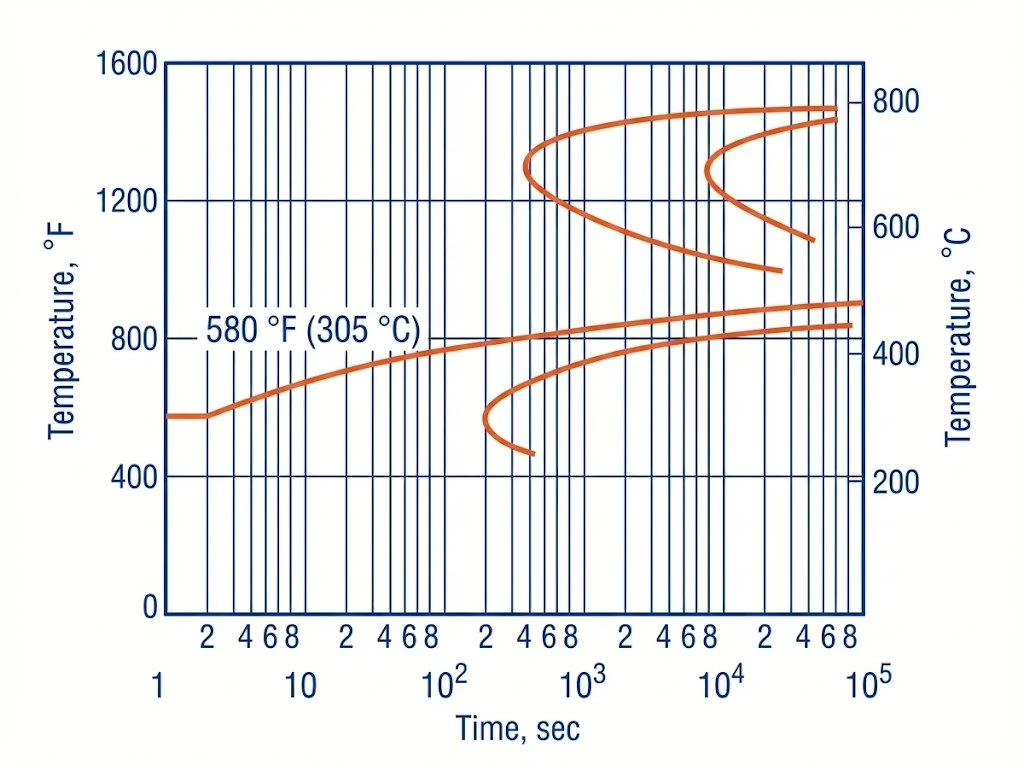
Aqueça a 760–800 °C (1400–1472 °F). Nessa temperatura, os carbonetos da liga se dissolvem e a microestrutura se transforma em austenita. 790 °C (1450 °F) é a temperatura padrão recomendada para a maioria das aplicações. Controle cuidadosamente o tempo de permanência — o tempo excessivo aumenta o teor de austenita retida e reduz a dureza final.
Têmpera
Resfrie a peça em óleo, parando quando ela atingir 66–93 °C (150–200 °F). Mantenha a temperatura do óleo de têmpera entre 50–70 °C (120–160 °F). Não use água ou salmoura — o risco de rachaduras é alto. Não envolva a peça em papel alumínio, pois isso impede o contato com o óleo.
Revenimento
Inicie o revenimento imediatamente após a peça esfriar a 52–65 °C (125–150 °F) — não deixe que ela atinja a temperatura ambiente primeiro. Revena a 150–260 °C (300–500 °F). Tempo mínimo de permanência: 2 horas por polegada (4,7 min/mm) de seção transversal, seguido de resfriamento ao ar.
Para aplicações exigentes, o revenimento duplo é preferível. Para a maioria das ferramentas, um revenimento único a 175–205 °C (345–400 °F) atinge uma dureza de trabalho de 58–62 HRC.
Dureza versus temperatura de revenimento:
| Temperatura de têmpera °C (°F) | Dureza (HRC) |
|---|---|
| 150 (300) | 62.5 |
| 205 (400) | 59.5 |
| 260 (500) | 56.5 |
| 315 (600) | 54.0 |
| 370 (700) | 52.0 |
| 425 (800) | 49.5 |
| 480 (900) | 46.0 |
| 540 (1000) | 41.5 |
Problemas comuns e soluções
Deformação e alterações dimensionais
A deformação no aço O2 geralmente é causada por taxas de têmpera excessivas ou aquecimento irregular. Três controles:
- Martemperagem: Interrompa o resfriamento em óleo quente ou sal fundido, mantido a 14–28°C (25–50°F) acima da temperatura de início da martensita (Ms), mantenha até que a temperatura da peça se iguale e, em seguida, resfrie ao ar.
- Pré-aquecimento: O pré-aquecimento a 650°C (1200°F) antes da austenitização reduz significativamente a distorção durante o endurecimento.
- Tolerância de usinagem: Após o desbaste, mantenha uma quantidade suficiente de material para corrigir qualquer distorção resultante do tratamento térmico final.
Trincamento por têmpera
As causas incluem taxas de aquecimento excessivas, cantos vivos e mudanças abruptas na seção transversal da geometria da ferramenta.
- Somente óleo para resfriamento. Água e salmoura são proibidas.
- Resfrie a peça antes que ela esfrie completamente à temperatura ambiente para aliviar a tensão residual.
- Para geometrias complexas, realize um recozimento de alívio de tensões a 650–675°C após o desbaste e antes do endurecimento final.
Descarbonetação superficial
O aço O2 é sensível à descarbonetação durante o aquecimento. A perda de carbono na superfície produz uma camada macia que reduz a resistência ao desgaste.
- Aquecer em atmosfera protetora — um gás endotérmico, um banho de sal ou vácuo.
- Remova toda a camada de óxido e qualquer camada descarbonetada existente da superfície antes do tratamento térmico final.
Austenita retida e controle de dureza
A austenitização acima da temperatura recomendada aumenta o teor de austenita retida, resultando em dureza insuficiente e instabilidade dimensional após o resfriamento brusco.
- Mantenha a temperatura entre 760 e 800 °C. Ultrapassar esse limite é a principal causa de problemas com austenita retida.
- O tratamento criogênico a −196°C (−321°F) converte uma porção significativa da austenita retida em martensita.
- Revenimento a 175–205°C (345–400°F) para atingir uma dureza de trabalho estável de 58–62 HRC.
Limites de aplicação
O aço O2 não possui dureza a quente. É adequado para estampagem a frio, corte e conformação em temperatura ambiente. Não deve ser utilizado em aplicações de trabalho a quente, como fundição sob pressão ou forjamento a quente.
Perguntas frequentes
O aço ferramenta O2 deve ser pré-aquecido a 649-677°C (1200-1250°F) até que o material esteja aquecido uniformemente. O pré-aquecimento ajuda a reduzir o choque térmico e diminui o risco de deformação ou fissuras.
A faixa de temperatura típica de austenitização (endurecimento) para o aço O2 é 760 a 800°C (1400 a 1472°F). Nessa temperatura, os carbonetos de liga complexos se dissolvem e a microestrutura se transforma em austenita.
Após a austenitização, o aço ferramenta O2 é tipicamente submetido a um processo rápido de aquecimento. temperado em óleo Para transformar a austenita em martensita dura, o material deve ser resfriado a uma temperatura entre 66 e 93 °C (150 e 200 °F) antes de prosseguir com a têmpera.
O revenimento deve começar imediatamente após a temperatura da etapa de têmpera ter caído para 52-65°C (125-150°F). Essa aplicação imediata é crucial para evitar efeitos adversos na vida útil da ferramenta e impedir a estabilização da austenita retida.
Cada ciclo de revenimento para aço ferramenta O2 requer um tempo de permanência de pelo menos 2 horas por polegada (4,7 minutos por milímetro) da seção transversal. O revenimento normalmente ocorre em baixas temperaturas, entre 150 °C e 260 °C (300 °F a 500 °F).) para manter alta dureza.
O aço ferramenta O2 geralmente requer apenas um único ciclo de revenimento. No entanto, o revenimento duplo é por vezes preferido, exigindo arrefecimento ao ar até à temperatura ambiente entre os revenimentos.
- Nee, JG (Revisor Técnico Chefe e Editor-Chefe). (2010). Fundamentos do Projeto de Ferramentas (6ª ed.). Sociedade de Engenheiros de Manufatura. ↩︎