
Por que o ESR D2 (1,2379) é especificado para lâminas industriais de precisão?
Um padrão de ordem recorrente que vale a pena explicar.
Um padrão de pedido se destacou com clareza suficiente para merecer uma explicação. Um fabricante de ferramentas de corte em São Paulo, Brasil, que fornece lâminas circulares, facas de corte longitudinal e lâminas de cisalhamento para as indústrias metalúrgica, de plásticos, têxtil, de borracha, alimentícia e de embalagens, fez vários pedidos nesse padrão. D2 (1,2379) encomendas feitas conosco nos últimos dois anos. Cada uma delas especificava material refundido por eletroescória (ESR). Em nenhum momento o comprador aceitou o aço D2 padrão, fundido convencionalmente, como substituto, mesmo quando este foi oferecido a um preço mais baixo e com um prazo de entrega mais curto.
Para um fornecedor, uma especificação repetida e deliberada como essa merece ser investigada em vez de simplesmente atendida. Geralmente, significa que o comprador já pagou o custo de usar o aço D2 padrão na produção, na forma de lascas nas bordas, dureza inconsistente após o tratamento térmico ou falhas no polimento, e concluiu que o acréscimo do ESR é mais barato do que repetir essa falha. Este artigo parte desse padrão: o que o ESR realmente altera no aço D2 e em que condições essa alteração é importante o suficiente para justificar sua especificação em um pedido de compra?
O problema: por que o D2 padrão falha em aplicações com bordas finas?
O aço AISI D2 padrão, conhecido na Europa pela designação DIN 1.2379, é um aço ferramenta para trabalho a frio com alto teor de carbono e cromo, valorizado por sua resistência ao desgaste, alta dureza após têmpera e estabilidade dimensional. Essas propriedades fizeram do D2 a escolha padrão para matrizes de estampagem, punções e ferramentas de corte por décadas. No entanto, o D2 padrão apresenta uma limitação estrutural que se torna aparente apenas em geometrias específicas: baixa tenacidade à fratura. Sob carregamento de tração ou compressão, o D2 praticamente não apresenta deformação plástica antes da ruptura, resultando em uma superfície de fratura plana em vez do estreitamento dúctil observado em ligas mais tenazes.
Em aplicações com bordas finas, como arestas de corte finas, lâminas de corte longitudinal ou ferramentas com cantos vivos e sem arredondamento, essa limitação se torna o modo de falha dominante. A tensão operacional se concentra nessas transições geométricas abruptas. Como o material não consegue aliviar essa tensão por meio de fluxo plástico, microfissuras se nucleiam em defeitos internos e se propagam rapidamente pela matriz martensítica revenida, resultando em lascamento da borda e uma queda acentuada na vida útil da ferramenta.
Segregação e lascamento de carbonetos na aresta de corte
A causa principal desse modo de falha é a segregação de elementos de liga e carbonetos durante a solidificação do lingote. Em aços de alta liga fundidos convencionalmente, carbono, cromo, molibdênio e vanádio se concentram na última fase líquida a solidificar entre as dendritas em crescimento, produzindo redes grosseiras e frágeis de carbonetos eutéticos primários M7C3. O trabalho a quente não dissolve esses carbonetos; apenas os alonga em filamentos e bandas alinhados com a direção de laminação, o que introduz anisotropia mecânica na barra acabada.
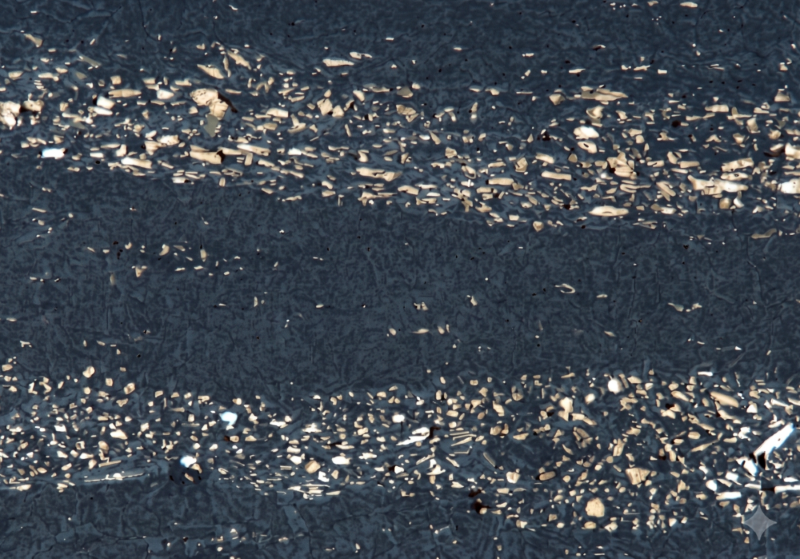
Em uma aresta de corte afiada, essa microestrutura irregular cria uma sequência de falhas auto-reforçada. Aglomerados grosseiros de carbonetos têm baixa resistência à fratura e atuam como concentradores de tensão interna, iniciando microfissuras sob carga cíclica ou lateral. Uma vez que uma fissura se inicia, ela segue o caminho oferecido pela rede de carbonetos segregados, produzindo microlascamento localizado na aresta. O microlascamento, por sua vez, desgasta a aresta, o que aumenta a força de corte e o calor por atrito, acelerando o desgaste e reduzindo ainda mais a vida útil da ferramenta.
Duas rotas de refino abordam diretamente essa segregação: a refusão por eletroescória e a metalurgia do pó. A metalurgia do pó atomiza a liga em gotículas finas antes da solidificação, produzindo a dispersão de carbonetos mais uniforme disponível, mas a um custo e prazo de entrega que a tornam inviável para a maioria das ferramentas de estampagem e corte. A refusão por eletroescória situa-se entre a fundição de lingotes padrão e a metalurgia do pó. Ela não elimina os carbonetos primários como a atomização, mas os refina e dispersa o suficiente para eliminar o lascamento causado pela segregação descrito acima, a uma fração do custo adicional. Essa relação custo-benefício é o motivo pelo qual a refusão por eletroescória, em vez da metalurgia do pó, é o material que a maioria dos compradores em aplicações de bordas finas especifica.
Dureza inconsistente após tratamento térmico
Os profissionais de tratamento térmico frequentemente observam dureza inconsistente ao processar o aço D2 padrão, devido a três problemas relacionados.
O janela de austenitização A faixa de temperatura de transição martensítica é estreita, tipicamente entre 995 °C e 1030 °C (1827 °F e 1888 °F). Abaixo dessa faixa, os carbonetos de liga não se dissolvem completamente na austenita, e o aço não consegue atingir a dureza martensítica total após o resfriamento. Acima dessa faixa, a dissolução excessiva de carbonetos satura a austenita com carbono e cromo, o que reduz a temperatura de início da transformação martensítica, pode elevar a austenita retida muito acima dos níveis normais e promove o crescimento de grãos.
A austenita retida é macia e termodinamicamente instável. Sob carga ou ao longo do tempo, ela pode se transformar em martensita não revenida à temperatura ambiente, produzindo variações inesperadas de dureza, tensões residuais e crescimento dimensional. É por isso que o aço D2 requer revenimento duplo: tipicamente, um tempo mínimo de permanência de duas horas, com tempo adicional para seções mais espessas, repetido para um segundo ciclo para transformar completamente a austenita retida e aliviar a tensão na martensita fresca. Ignorar ou encurtar esse ciclo é uma causa comum de dureza inconsistente em campo, mais uma questão de controle do processo do que do próprio aço. Carbonetos grosseiros e segregados já reduzem a faixa de processo aceitável, e é aí que as práticas de fusão se tornam relevantes.
Se a atmosfera do forno não for totalmente protetora, o oxigênio reage com o carbono da superfície, produzindo uma camada descarbonetada de ferrita ou perlita macia. Essa camada não consegue formar martensita de alta dureza durante o resfriamento rápido, permanecendo macia, desgastando-se rapidamente e carregando tensões residuais de tração que podem promover o surgimento de trincas por têmpera.
Defeitos superficiais após o polimento
Obter um acabamento espelhado, necessário para moldes de injeção de plástico e matrizes de estampagem de precisão, o que exige um polimento mecânico fino do aço ferramenta. A microestrutura heterogênea do Standard D2 atenua esse problema de três maneiras distintas.
Pontos fracos localizados, resultantes de austenita retida, descarbonetação ou revenido insuficiente, deformam-se de maneira irregular sob a pressão do polimento, deixando uma textura ondulada na superfície, conhecida como casca de laranja. Os carbonetos primários M7C3, muito mais duros que a matriz circundante, podem ser completamente removidos pelas forças de polimento, deixando cavidades microscópicas conhecidas como furos. Além disso, uma partícula dura desalojada nem sempre se desprende da boina de polimento; presa sob o pano, ela arrasta-se pela superfície e cria um risco linear visível próximo ao local de desprendimento, um defeito conhecido como cauda de cometa.
Os três defeitos têm a mesma causa raiz: uma distribuição irregular de carbonetos duros e inclusões em uma matriz mais macia. É exatamente essa condição que o ESR foi projetado para corrigir.
O que a refusão por eletroescória realmente altera no D2
Os lingotes D2 fundidos convencionalmente apresentam redes grosseiras de carbonetos, segregação química e inclusões não metálicas herdadas da solidificação estática. A refusão por eletroescória é o processo de refino secundário mais comumente utilizado para corrigir esses defeitos antes que o aço seja trabalhado a quente em barras ou chapas.
Na ESR, um eletrodo consumível feito de aço primário D2 é imerso em um cadinho de cobre refrigerado a água, preenchido com escória fundida reativa. Uma corrente elétrica passa pela escória, fundindo a ponta do eletrodo gota a gota; cada gota é refinada ao atravessar a camada de escória e, em seguida, solidifica-se progressivamente em um novo lingote. Isso altera a microestrutura do aço de três maneiras mensuráveis.
Distribuição de carboneto mais fina e uniforme
A fundição estática convencional resfria lentamente, dando tempo para que os elementos de liga se segreguem e formem redes grosseiras de carbonetos eutéticos que a forjagem a quente pode alongar, mas não quebrar. A fundição por arraste de vapor (ESR) mantém apenas uma pequena quantidade de metal fundido no molde resfriado a água a qualquer momento, de modo que a solidificação é mais rápida e localizada. Isso limita o tempo disponível para o crescimento dos carbonetos, produzindo carbonetos primários menores e mais uniformes, reduzindo a formação de bandas de carbonetos no produto forjado final e proporcionando uma distribuição mais fácil de quebrar durante o trabalho a quente. O resultado prático é uma melhor resistência ao desgaste e tenacidade para a mesma composição química.
Conteúdo de inclusão reduzido
O aço fundido ao ar retém inclusões não metálicas, sulfetos, óxidos e silicatos que atuam como concentradores de tensão e reduzem a ductilidade, a tenacidade e a resistência à fadiga. À medida que as gotículas de D2 fundido passam pelo banho de escória ESR, tipicamente uma base de CaF2 modificada com CaO, MgO e Al2O3, a escória reage com essas impurezas e captura uma parcela significativa delas.
Os dados de usinagem do aço ferramenta ESR normalmente mostram uma redução de enxofre de aproximadamente 50 a 70 TP3T em relação ao material fundido ao ar, frequentemente para menos de 0,0021 TP3T, juntamente com menor teor de oxigênio e quaisquer inclusões remanescentes menores, mais arredondadas e distribuídas de maneira mais uniforme. De acordo com as classificações de limpeza do Método D da ASTM E45, o material de grau ESR normalmente apresenta pontuação bem inferior ao aço padrão fundido em forno elétrico a arco, que é a base para os limites de limpeza que os compradores podem incluir em uma especificação de compra, abordada posteriormente neste artigo.
Microestrutura consistente em toda a seção transversal
Os lingotes convencionais solidificam de fora para dentro, o que promove macrosegregação, porosidade na linha central e cavidades de contração que se estendem por distâncias muito grandes para serem corrigidas com tratamento térmico pós-fundição. O processo ESR solidifica progressivamente de baixo para cima em uma poça rasa e continuamente resfriada, o que impede a segregação na linha central e a formação de tubulações, além de reduzir significativamente o espaçamento entre os braços dendríticos secundários em comparação com o núcleo de resfriamento mais lento de um lingote convencional.
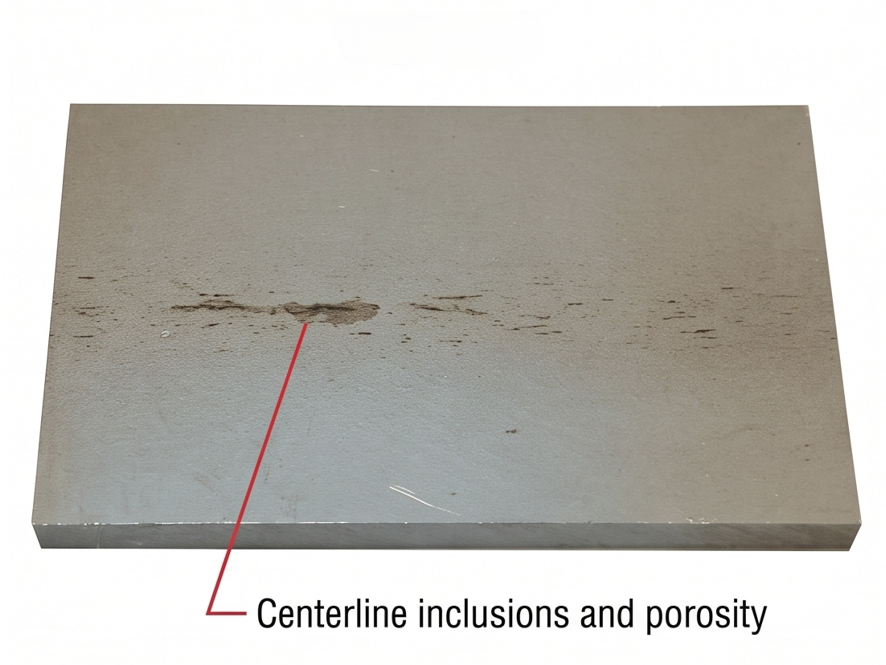
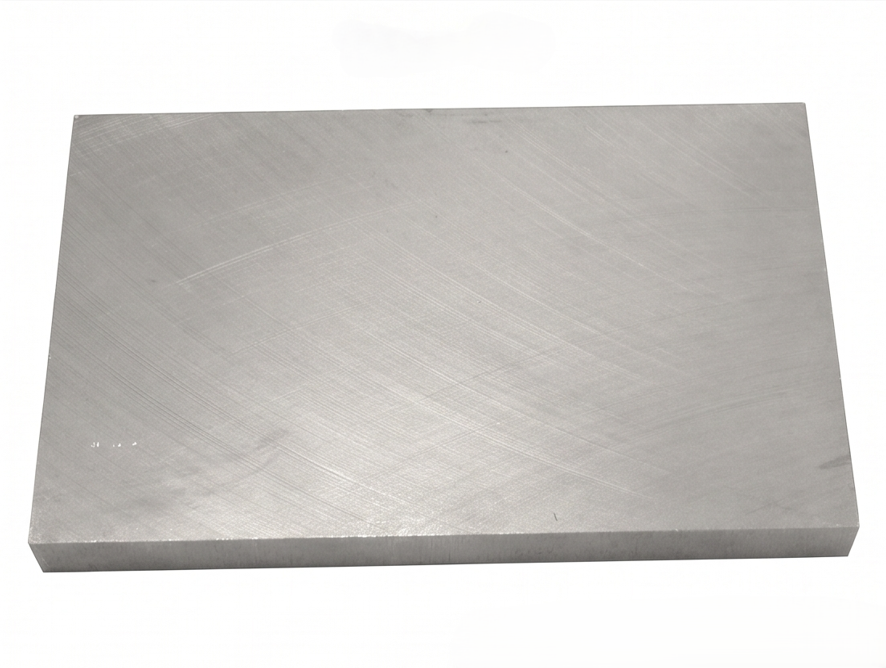
O resultado prático é uma barra ou placa cuja dureza, resistência à tração e alongamento permanecem consistentes, independentemente de serem medidos na superfície ou no centro, e na direção longitudinal ou transversal. O aço D2 convencional normalmente perde resistência ao impacto transversal e ductilidade à medida que a seção transversal aumenta, porque as bandas de segregação e as inclusões se alinham com a direção de laminação. O aço D2 laminado a quente com tecnologia ESR retém uma tenacidade transversal significativamente maior em toda a sua seção transversal, que é a propriedade mais importante para matrizes e blocos espessos.
ESR D2 vs. D2 padrão: uma comparação direta
As diferenças descritas acima podem ser resumidas com base nos mesmos sete parâmetros que um agente de compras verificaria em um relatório de teste de fábrica.
| Parâmetro técnico | Padrão D2 (Fundido convencionalmente em lingote) | ESR D2 (Refundido por Eletroescória) |
| Perfil de solidificação | Estático, de fora para dentro; propenso à porosidade na linha central, segregação e tubulação. | Progressivo, direcional, de baixo para cima; tubulação central e porosidade efetivamente eliminadas. |
| Macroestrutura e homogeneidade | Maior variação transversal; estrutura dendrítica mais grosseira com uma zona globular no centro. | Secção transversal densa e uniforme com espaçamento entre os braços dendríticos secundários marcadamente refinado. |
| Microlimpeza (ASTM E45) | Maiores índices de inclusão de sulfeto, aluminato, silicato e óxido. | Refino extensivo de escória metálica; teor de enxofre tipicamente abaixo de 0,002%, índices de inclusão substancialmente menores. |
| Morfologia e tamanho do carboneto | Redes eutéticas grosseiras M7C3, alongadas em faixas e filamentos por trabalho a quente. | Tamanho de célula eutética mais fino; redução da formação de bandas de carboneto na barra acabada. |
| Propriedades mecânicas | Anisotropia; ductilidade transversal, tenacidade e resistência à fadiga são os fatores limitantes. | Mais próximo da isotropia; a tenacidade transversal aumentou muito, aproximando-se dos valores longitudinais. |
| Trabalhabilidade a quente e rendimento | Requer reduções de forjamento mais intensas para romper as redes de carbonetos. | Permite menores reduções de forjamento devido a uma estrutura já refinada. |
| Resposta ao tratamento térmico | Variação na dureza devido à macrosegregação; carbonetos maiores limitam a dissolução da liga. | Dureza mais consistente; carbonetos refinados proporcionam dissolução uniforme e resposta ideal ao revenido. |
| Capacidade de polimento (acabamento espelhado) | Propenso a apresentar casca de laranja, corrosão por arrancamento de carboneto e arranhões em forma de cauda de cometa. | Carbonetos refinados e bem ligados, juntamente com uma matriz limpa, proporcionam um polimento espelhado impecável. |
Nenhuma dessas diferenças aparece em um certificado químico básico. Duas barras de aço D2 podem ter análises químicas idênticas e ainda apresentar desempenhos muito diferentes em aplicações de bordas finas, porque a diferença reside em como o aço solidificou, e não em sua composição. É por isso que uma especificação de compra baseada apenas na composição química não oferece proteção suficiente contra o recebimento de material padrão, fundido ao ar, quando o aço ESR (Aço de Alta Resistência à Fricção) é necessário para a aplicação, um ponto abordado com mais detalhes adiante neste artigo.
DIN 1.2379 e seus equivalentes internacionais
D2 is an AISI designation. Buyers working from European or Latin American drawings more commonly encounter this grade under its DIN designation, 1.2379, or in Werkstoffnummer format, W.Nr. 1.2379. The two refer to the same chemistry family: a high-carbon, high-chromium cold-work tool steel with molybdenum and vanadium additions, produced to comparable, though not always identical, compositional tolerances under ASTM A681 in the United States and DIN EN ISO 4957 in Europe.
As referências cruzadas comuns para esta classe incluem AISI/SAE D2 nos Estados Unidos, DIN/W.Nr. 1.2379 na Alemanha e em grande parte da Europa continental, JIS SKD11 no Japão e GB Cr12Mo1V1 na China, uma composição próxima, mas não totalmente idêntica. Nenhuma dessas designações especifica o processo de fusão. Um certificado de usina que indique a composição química 1.2379 ou D2 confirma a família da liga, não se o material foi fundido convencionalmente ou refundido por eletroescória. Os compradores que necessitam de qualidade ESR devem especificar esse requisito separadamente, nos termos abordados na próxima seção, independentemente da designação nacional que conste no desenho.
Quando os compradores devem especificar o ESR em sua consulta
O processo ESR produz aço mais limpo, resistente e uniforme, mas é mais lento e caro do que a fusão convencional em forno elétrico a arco. O aço D2 refinado por ESR geralmente custa de duas a três vezes mais do que o mesmo aço produzido convencionalmente. As siderúrgicas não utilizam o ESR por padrão, e seu uso geralmente se restringe a aplicações onde esse custo adicional é facilmente justificável.
Aplicações que justificam o custo
Ferramentas complexas e de alto valor agregado são o caso mais evidente. O aço bruto normalmente representa uma pequena fração do custo total de uma matriz acabada, frequentemente na ordem de 10% para ferramentas menores, com o restante consumido por fresagem CNC, eletroerosão a fio e usinagem em bancada. Uma ferramenta que falha prematuramente devido a um defeito interno perde todo o investimento em sua fabricação, não apenas o custo do material, o que torna a especificação de ESR (Equivalente de Substituição de Aço) uma apólice de seguro barata em relação à mão de obra que protege.
Moldes cosméticos de alto brilho, como moldes para lentes automotivas e outras ferramentas para produtos de consumo de alto brilho, não toleram os poros e riscos em forma de cauda de cometa causados pelas inclusões convencionais de D2 durante o polimento. A filtragem de escória da ESR é o que torna possível um acabamento espelhado impecável.
Seções transversais grandes e blocos espessos solidificam-se lentamente em processos de fundição convencionais, de modo que a segregação na linha central e a porosidade tornam-se significativas. A solidificação direcional da ESR é geralmente especificada quando a espessura da seção transversal atinge o patamar de blocos pesados, onde uma estrutura uniforme e íntegra na linha central é mais importante do que em seções transversais menores.
Ferramentas sujeitas a fadiga cíclica ou choque, como punções de extrusão a frio, matrizes de estampagem estrutural e insertos de conformação a frio, sofrem carregamento de impacto repetido, no qual concentradores de tensão internos facilmente iniciam microfissuras. O teor reduzido de inclusões do ESR aumenta diretamente a vida útil à fadiga e a resistência ao impacto sob esse tipo de carregamento.
Aplicações onde a norma D2 é suficiente
Em produções de curto a médio prazo, onde o desgaste da ferramenta não limita a produção planejada antes da substituição ou retificação da matriz, normalmente não se compensa o prêmio ESR. Geometrias simples e simétricas, com raios de concordância generosos e sem cantos vivos e sem arredondamento, não concentram a tensão da mesma forma que ferramentas de aresta fina, e o aço D2 padrão apresenta desempenho adequado nesses formatos.
Aplicações de desgaste abrasivo puro com impacto mínimo, como lâminas de corte retas ou matrizes de conformação de cerâmica, dependem do volume de carbonetos do D2 para resistência ao desgaste, em vez da tenacidade transversal que o ESR (Efeito de Resistência à Fricção) aprimora principalmente. Componentes de ferramentas estruturais, blocos de suporte, sapatas de matrizes e placas de apoio não necessitam da dureza ou resistência ao desgaste do D2; um aço de baixa liga pré-endurecido, como o P20, ou um aço de médio carbono, como o 4140, é a opção mais econômica para essas peças, independentemente do processo de fusão.
Como incluir o ESR em uma especificação de compra
Uma designação como AISI D2 ou 1.2379 em um pedido de compra confirma a composição química, não o processo de fusão. Um fornecedor pode atender a esse pedido com material fundido convencionalmente e ainda assim cumprir a especificação à risca. Para receber com segurança a qualidade ESR, a especificação de compra deve declarar o seguinte explicitamente.
Consulte a norma base aplicável para química e requisitos gerais, ASTM A681 nos Estados Unidos ou DIN EN ISO 4957 na Europa, e observe que nenhuma das normas exige, por si só, uma prática de fusão específica ou um nível de limpeza; esses requisitos devem ser adicionados separadamente, e esse é o propósito das cláusulas abaixo.
Indique explicitamente que o aço deve ser fundido em forno elétrico e posteriormente refundido por eletroescória, e solicite ao fornecedor que confirme isso no certificado de teste da usina, em vez de inferir apenas pela designação.
As classificações de referência do método D da norma ASTM E45, JK, para amostras longitudinais, apresentam limites máximos adequados à qualidade ESR, geralmente na faixa de 1,0 (fino) a 0,5 (pesado) para inclusões do tipo sulfeto e óxido. Esses valores são normalmente negociados entre o comprador e a usina, em vez de serem fixados pela própria norma A681, portanto, precisam ser incluídos no pedido.
Exigir um teste de macroataque que confirme uma estrutura livre de porosidade na linha central, tubulação ou macrosegregação, complementado por uma inspeção ultrassônica completa para verificar a integridade interna em seções maiores.
Exija um certificado de teste de fábrica certificado, em conformidade com a norma EN 10204 3.1, quando aplicável, que documente a composição química real, o processo de fusão e refino, os resultados de limpeza E45 e a aprovação da inspeção ultrassônica, e não apenas uma tabela de composição química.
Fornecimento de barras e chapas redondas ESR D2/1.2379
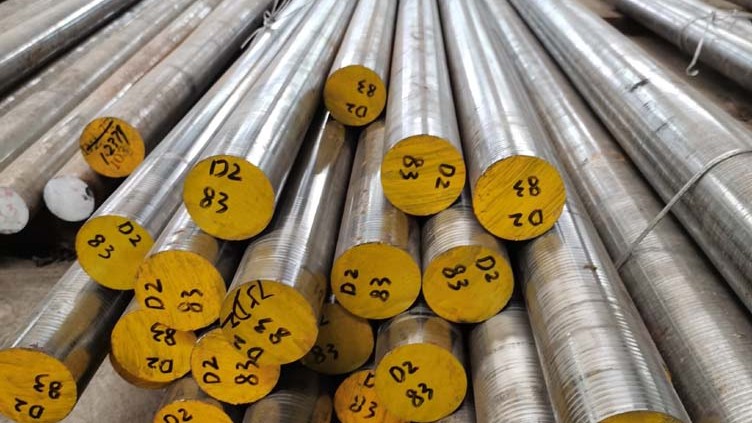
A Aobo Steel fornece aço ESR D2 (1.2379) em barras redondas e chapas, provenientes de usinas parceiras que atendem às especificações acima, com certificados de teste de fábrica emitidos de acordo com a norma EN 10204 3.1 e documentação complementar abrangendo análises químicas, exame metalográfico, teste de dureza e inspeção dimensional. O material é enviado em comprimentos padrão de fábrica, com carregamento otimizado para pedidos em contêineres a granel.
Se a sua aplicação se enquadra em uma das categorias descritas acima — arestas de corte finas, moldes de alto polimento, seções espessas ou ferramentas de carga cíclica — vale a pena confirmar a rota de fusão no seu próximo pedido, em vez de presumir que a designação D2 ou 1.2379 por si só a abrange.