
Aço ferramenta H13 vs A2
H13 e A2 são aços para ferramentas de endurecimento ao ar usados em condições diferentes. H13, um aço para ferramentas de trabalho a quente, tem bom desempenho sob calor, pressão, ciclagem e impacto. Seus principais pontos fortes são tenacidade, resistência a quente e resistência à formação de trincas térmicas. O A2 é um Aço ferramenta para trabalho a frio com endurecimento ao ar. É usado quando as ferramentas operam à temperatura ambiente e precisam de alta dureza, resistência ao desgaste, retenção de fio e estabilidade dimensional.
Use H13 para trincas por trabalho a quente, fissuras térmicas ou fadiga térmica. Use A2 para desgaste por trabalho a frio, retenção de borda ou quando for necessária distorção mínima.
Tanto o H13 quanto o A2 contêm cerca de 5% de cromo. No entanto, o A2 possui maior teor de carbono e vanádio, o que lhe confere maior dureza e resistência ao desgaste, enquanto o H13 oferece melhor tenacidade e estabilidade em altas temperaturas.
Aço ferramenta H13 e A2 disponível na Aobo Steel.
A Aobo Steel fornece aço ferramenta para trabalho a quente H13 e aço ferramenta para trabalho a frio com têmpera ao ar A2 para diferentes modos de falha de ferramentas, desde fadiga térmica e fissuras a quente até resistência ao desgaste e estabilidade dimensional.
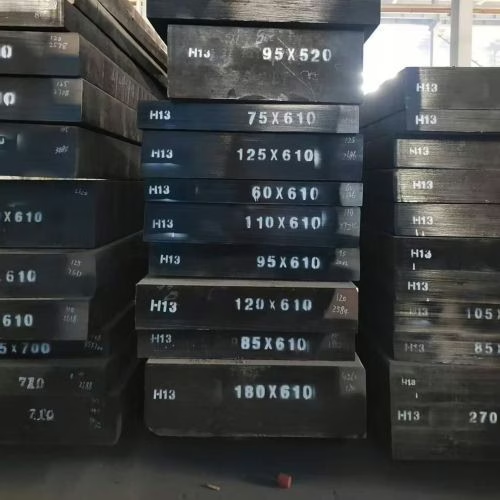
H13 | 1.2344 | SKD61
Aço ferramenta para trabalho a quente, utilizado em moldes de fundição sob pressão, moldes de forjamento a quente, ferramentas de extrusão, punções a quente, lâminas de corte a quente, com resistência a fissuras térmicas e resistência à fadiga térmica.
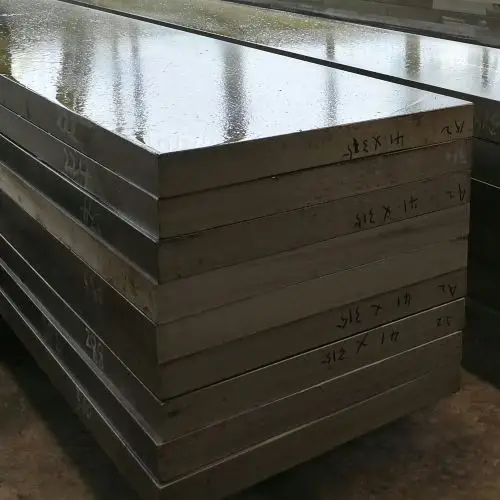
A2 | 1.2363 | SKD12
Aço para ferramentas de trabalho a frio de endurecimento ao ar para matrizes de corte a frio, punções, ferramentas de conformação a frio, matrizes de laminação de roscas, lâminas de tesoura para trabalho a frio, ferramentas de precisão e estabilidade dimensional.
Comparação rápida entre H13 e A2
| Item | Aço para ferramentas H13 | Aço para ferramentas A2 |
|---|---|---|
| Steel type | Aço para ferramentas de trabalho a quente | Aço ferramenta para trabalho a frio com têmpera ao ar |
| Condições principais de funcionamento | Calor, pressão, ciclos térmicos, impacto | Corte, conformação, perfuração e cisalhamento à temperatura ambiente. |
| Resistência principal à falha | fissuração por calor, fadiga térmica, trincas a quente | Desgaste abrasivo, desgaste de borda, alteração dimensional |
| Dureza de trabalho típica | 38-53 HRC | 57-62 HRC |
| Faixa de trabalho comum | 40-48 HRC para muitas ferramentas de trabalho a quente | 58-60 HRC para muitas ferramentas de trabalho a frio |
| resistência ao desgaste abrasivo | Médio | Alto |
| Toughness | Alto | Médio |
| Dureza quente | Alto | Limitado |
| resistência à fadiga térmica | Excelente | Não adequado para serviços de trabalho a quente. |
| Estabilidade dimensional | Muito bom | Excelente |
| Aplicações típicas | Matrizes de fundição sob pressão, matrizes de forjamento a quente, ferramentas de extrusão a quente, punções a quente, lâminas de corte a quente | Matrizes de estampagem, punções, ferramentas de conformação a frio, matrizes de laminação de roscas, lâminas de corte para trabalho a frio, ferramentas de precisão |
| Risco de uso indevido | Não é ideal para bordas trabalhadas a frio com alto desgaste. | Não é adequado para aquecimento e resfriamento repetidos. |
Diferença na composição química
| Grau | C | Cr | Mo | V |
|---|---|---|---|---|
| H13 | 0.32-0.45% | 4.75-5.50% | 1.10-1.75% | 0.80-1.20% |
| A2 | 0.95-1.05% | 4.75-5.50% | 0.90-1.40% | 0.15-0.50% |
O aço A2 possui cerca de 1,0% de carbono, mais que o dobro do H13. Após o tratamento térmico, forma uma matriz mais dura e resistente ao desgaste. Isso contribui para a retenção de fio do A2 em ferramentas de trabalho a frio.
O menor teor de carbono do H13 reduz a fragilidade e melhora a resistência ao choque e à tensão térmica. O molibdênio e o vanádio ajudam a manter a resistência a altas temperaturas.
graus equivalentes
| Grau AISI | DIN / W.-Nr. | JIS | UNS | Referência GB | Tipo de aço |
|---|---|---|---|---|---|
| H13 | 1.2344 | SKD61 | T20813 | 4Cr5MoSiV1 | Aço para ferramentas de trabalho a quente |
| A2 | 1.2363 | SKD12 | T30102 | Referência do tipo Cr5Mo1V | Aço ferramenta para trabalho a frio com têmpera ao ar |
Em padrões internacionais, H13 também corresponde a 1.2344 ou SKD61. A2 corresponde a 1.2363 ou SKD12.
Diferença entre dureza e tratamento térmico
A liga A2 é geralmente utilizada com maior dureza para resistência ao desgaste. Já a liga H13 é utilizada com menor dureza para obter a tenacidade e a resistência à fadiga térmica necessárias para ferramentas de trabalho a quente.
| Item | H13 | A2 |
|---|---|---|
| Categoria Aço | Aço para ferramentas de trabalho a quente | Aço ferramenta para trabalho a frio com têmpera ao ar |
| Faixa de austenitização | Aproximadamente 995-1025 °C | Aproximadamente 925-980 °C |
| Têmpera | Ar ou gás pressurizado | Ar |
| prática de revenimento | Têmpera dupla ou tripla são comumente usadas. | O uso de têmpera dupla é geralmente recomendado. |
| Dureza de trabalho típica | 38-53 HRC | 57-62 HRC |
| Faixa de trabalho comum | 40-48 HRC para muitas ferramentas de trabalho a quente | 58-60 HRC para muitas ferramentas de trabalho a frio |
| Referência de dureza após recozimento | Aproximadamente 220-235 HB | Aproximadamente 220-235 HB |
| Alvo de tratamento térmico | Resistência, alta resistência ao calor, alívio de tensão, resistência à fadiga térmica | Alta dureza, resistência ao desgaste, retenção de fio, estabilidade dimensional |
A2 é tipicamente 57-62 HRC. O endurecimento ao ar limita a distorção, favorecendo ferramentas de precisão.
O H13 é revenido em temperaturas mais altas para manter a estabilidade em situações de trabalho a quente. Nessas aplicações, o equilíbrio entre tenacidade, resistência a quente e resistência à fissuração térmica é priorizado em relação à dureza máxima.
Resistência ao desgaste, tenacidade e fadiga térmica
A2 possui resistência superior ao desgaste abrasivo; H13 possui tenacidade superior e resistência à fadiga térmica.
| Propriedade | H13 | A2 | Melhor escolha |
|---|---|---|---|
| resistência ao desgaste abrasivo | Médio | Alto | A2 |
| Retenção de bordas em trabalhos a frio | Médio | Alto | A2 |
| Toughness | Alto | Médio | H13 |
| Resistência a choques | Alto | Médio | H13 |
| Dureza quente | Alto | Limitado | H13 |
| resistência à fadiga térmica | Excelente | Não adequado para serviços de trabalho a quente. | H13 |
| Estabilidade dimensional após tratamento térmico | Muito bom | Excelente | A2 |
Escolha A2 quando as ferramentas falharem devido ao desgaste abrasivo, arredondamento das arestas ou perda de desempenho em trabalhos a frio. Escolha H13 quando as ferramentas estiverem sujeitas a impacto, pressão a quente, ciclos repetidos de aquecimento e resfriamento ou fissuras térmicas. Nessas condições, a resistência ao desgaste por si só é insuficiente.
Guia de Seleção de Aplicativos
| Condições de aplicação ou de funcionamento | Melhor escolha | Razão |
|---|---|---|
| Matrizes de fundição de alumínio | H13 | Resiste a rachaduras por calor e fadiga térmica. |
| Ferramentas de fundição sob pressão de zinco e magnésio | H13 | Suporta ciclos repetidos de aquecimento e resfriamento. |
| Matrizes de forjamento a quente | H13 | Maior resistência ao calor e a impactos. |
| Matrizes de extrusão a quente, mandris e revestimentos | H13 | Resiste ao calor, à pressão e aos ciclos térmicos. |
| socos quentes | H13 | Melhor resistência ao calor e ao choque. |
| Lâminas de cisalhamento a quente | H13 | Melhor resistência ao calor e a impactos |
| Matrizes de corte | A2 | Melhor retenção de borda em trabalhos a frio |
| Socos para trabalho a frio | A2 | Maior dureza e resistência ao desgaste |
| Ferramentas de conformação a frio | A2 | Boa resistência ao desgaste com baixa distorção. |
| Matrizes de laminação de roscas | A2 | Boa estabilidade dimensional e resistência ao desgaste |
| Lâminas de corte e cortadoras para trabalho a frio | A2 | Maior dureza de trabalho |
| Medidores e ferramentas de precisão | A2 | Boa estabilidade dimensional após tratamento térmico. |
| A ferramenta falha devido à verificação de calor. | H13 | Melhor resistência à fadiga térmica |
| A ferramenta falha devido ao desgaste abrasivo da borda. | A2 | Maior teor de carbono e melhor resistência ao desgaste. |
| A ferramenta falha devido a rachaduras por impacto. | Geralmente H13 | Melhor resistência |
| A ferramenta requer dureza Rockwell C de 57 a 62. | A2 | Mais adequado para ferramentas de trabalho a frio de alta dureza. |
| A ferramenta requer estabilidade a quente entre 38 e 53 HRC. | H13 | Melhor para serviços de trabalho a quente |
Moldes de injeção podem usar qualquer um dos dois. Escolha A2 se o desgaste abrasivo for fundamental; H13 se tenacidade, estabilidade, polibilidade ou vida útil forem mais importantes.
Quando H13 ou A2 é a escolha errada
| Situação | Evitar | Melhor direção |
|---|---|---|
| Corte a frio ou cisalhamento a frio de longa duração com desgaste abrasivo severo | H13 | Aços para trabalho a frio A2 ou com maior resistência ao desgaste podem ser melhores. |
| Fundição sob pressão, forjamento a quente, extrusão a quente ou ciclos repetidos de aquecimento e resfriamento. | A2 | H13 é a direção correta. |
| Impacto severo, rachaduras ou fraturas repentinas à temperatura ambiente. | A2 | H13 ou um grau resistente ao choque como o S7 pode ser mais seguro |
| Ferramentas de trabalho a frio de alta dureza, sem aquecimento e sem impacto severo. | H13 | A2 costuma ser mais prático. |
| Produção de trabalho a frio extremamente abrasiva | A2 pode ser insuficiente. | D2 ou outros aços para trabalho a frio com maior teor de carbonetos podem proporcionar melhor vida do fio |
| Exigência extremamente alta de resistência ao desgaste ou dureza a quente | O padrão H13 pode ser insuficiente. | Podem ser consideradas ligas de maior resistência para trabalho a quente. |
| A ferramenta requer dimensões finais muito precisas após o tratamento térmico. | Não assuma distorção zero. | O aço A2 apresenta boa estabilidade, mas a variação dimensional final ainda depende da dimensão da seção transversal, da geometria e das práticas de tratamento térmico. |
Não selecione o aço H13 apenas pela sua resistência. Se não houver exposição a calor, ciclos térmicos ou impactos, o H13 provavelmente será desnecessário. Não utilize o aço A2 para trabalhos a quente. Ele não foi projetado para suportar fissuras térmicas, trincas a quente ou exposição prolongada a altas temperaturas.
Seleção final
Selecione H13 para falha em trabalho a quente
Escolha H13 para ferramentas expostas a calor, pressão, ciclos térmicos, impacto, fissuras a quente, fadiga térmica ou risco de trincas térmicas.
Escolha A2 para roupas de trabalho em clima frio.
Escolha o aço A2 para aplicações em temperatura ambiente que exigem alta dureza, resistência ao desgaste abrasivo, retenção de fio, precisão e estabilidade dimensional.
Na prática, a regra é que H13 se refere a falhas por trabalho a quente. A2 se refere a desgaste por trabalho a frio e ferramentas de precisão.
Precisa de aço ferramenta H13 ou A2?
A Aobo Steel fornece aço ferramenta para trabalho a quente H13 e aço ferramenta para trabalho a frio com têmpera ao ar A2 para aplicações em fundição sob pressão, forjamento a quente, ferramentas de extrusão, matrizes de corte, punções, ferramentas de conformação a frio e ferramentas de precisão.
E-mail: [email protected] · Tel. e WhatsApp: +86 180 6294 5370
Páginas relacionadas
Comparações com H13: H13 vs H11 · H13 vs P20 · H13 vs H21 · H13 vs SKD61
Páginas de referência: Guia de tratamento térmico A2 · Dureza do aço H13
Famílias de séries: graus de aço ferramenta · Aços para ferramentas da série H · Localizador de materiais de aço ferramenta
Os valores de composição, dureza e tratamento térmico são valores típicos publicados para H13 / 1.2344 / SKD61 e A2 / 1.2363 / SKD12. Confirme a faixa exata no certificado do fabricante para o lote entregue.