
Aço H13 vs. Aço P20: Principais diferenças, aplicações e como escolher
O P20 é um aço para moldes de plástico pré-endurecido, normalmente fornecido com cerca de 28–32 HRC. Ele é projetado para usinagem eficiente, produção estável de moldes e custo de fabricação controlado. Para moldes de injeção de plástico padrão que operam em condições moderadas, o P20 costuma ser a escolha prática. Detalhes de aplicação por tipo de molde, incluindo onde o P20 deixa de ser adequado, estão em Aplicações do aço para ferramentas P20 guia.
Em resumo, selecione P20 para custo e eficiência, e H13 para resistência ao calor e ao desgaste.
O H13 é um aço para ferramentas de trabalho a quente. Ele é normalmente fornecido na condição recozida, usinado primeiro e depois tratado termicamente até a dureza de trabalho exigida. É usado quando a ferramenta precisa resistir a calor, fadiga térmica, desgaste abrasivo, alta pressão e longos ciclos de produção.
Aço H13 e P20 disponíveis na Aobo Steel.
A Aobo Steel fornece aço ferramenta para trabalho a quente H13 e aço pré-endurecido para moldes de plástico P20 para fundição sob pressão, ferramentas para trabalho a quente, moldes de injeção de plástico, bases de moldes, insertos e componentes de moldes.
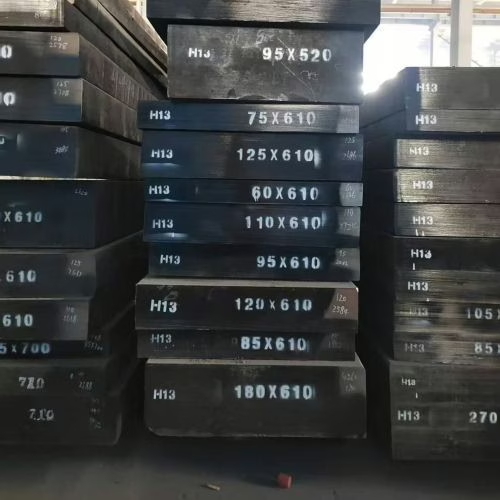
H13 | 1,2344 | SKD61
Aço ferramenta para trabalho a quente, utilizado em moldes de fundição sob pressão, cavidades, núcleos, insertos, resistência ao desgaste por trabalho a quente, resistência à fadiga térmica e ferramentas de produção de alta pressão.
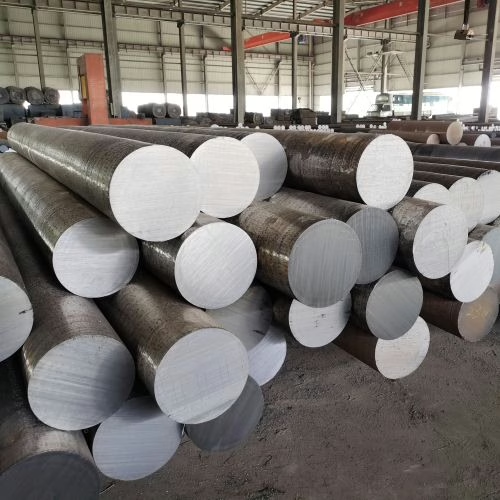
P20 | 1,2311 | 3Cr2Mo
Aço pré-endurecido para moldes de plástico, utilizado em moldes de injeção padrão, bases de moldes, suportes, placas de apoio, usinagem eficiente e produção de moldes com custos controlados.
Principais diferenças entre H13 e P20
| Característica | Aço H13 | Aço P20 |
|---|---|---|
| Tipo de aço | Aço para ferramentas de trabalho a quente | Molde de plástico em aço |
| Condição de entrega comum | Recozido | Pré-endurecido |
| Dureza de trabalho típica | 40–54 HRC após tratamento térmico | 28–32 HRC |
| Resistência ao calor | Alto | Baixo |
| resistência à fadiga térmica | Alto | Limitado |
| Resistência ao desgaste | Alto após tratamento térmico | Moderado |
| Usinabilidade | Médio | Excelente |
| Requisito de tratamento térmico | Requerido para o desempenho final. | Geralmente não é necessário após a usinagem. |
| Nível de custo típico | Mais alto | Inferior |
| Melhor uso | Fundição sob pressão, trabalho a quente, peças de molde de alto desgaste | Moldes plásticos padrão, suportes, placas de apoio |
O P20 oferece um desempenho útil do molde já na sua condição pré-endurecida. O H13 só atinge o seu desempenho máximo após um tratamento térmico adequado.
Essa diferença afeta não apenas a dureza, mas também a rota de usinagem, o planejamento de entrega, distortion risk, a vida útil da ferramenta e o custo total do molde.
Aços H13 e P20 Equivalentes
Ao adquirir H13 ou P20 internacionalmente, é importante verificar a equivalência das classes de materiais, pois os compradores podem usar as designações AISI, DIN, JIS, GB, UNS ou designações locais.
| Padrão/Região | Equivalente a H13 | Equivalente a P20 |
|---|---|---|
| AISI / ASTM | H13 / ASTM A681 H13 | P20 / ASTM A681 P20 |
| ONU | T20813 | T51620 |
| DIN / W-Nr. | 1.2344 | 1.2311 |
| JIS | SKD61 | Geralmente referenciado como aço para moldes de plástico do tipo P20. |
| GB China | 4Cr5MoSiV1 | 3Cr2Mo |
| BS | BH13 / H13 | Referência BS 4659 P20 |
| AFNOR | Z40CDV5 | Referência do tipo Z 33 C 35 |
| Graus modificados comuns | variantes H13 | 1,2738, 1,2312, 3Cr2MnNiMo |
Para a maioria das compras internacionais, as principais referências cruzadas são simples:
O H13 é comumente associado ao 1.2344, SKD61 e 4Cr5MoSiV1. O P20 é comumente associado ao 1.2311 e ao 3Cr2Mo.
Dureza, tratamento térmico e usinabilidade
A dureza é uma das diferenças mais pesquisadas entre o H13 e o P20, mas não deve ser o único fator avaliado. A questão mais importante é como o aço atinge sua condição de trabalho.
| Item | Aço H13 | Aço P20 |
|---|---|---|
| Condição de fornecimento | Recozido | Pré-endurecido |
| Dureza típica fornecida | Geralmente macio o suficiente para usinagem | Geralmente 28–32 HRC |
| Dureza de trabalho | Geralmente, 40–54 HRC após o tratamento térmico. | Geralmente usado diretamente na dureza fornecida. |
| Rota de usinagem | Primeiro a usinagem, depois o tratamento térmico. | Máquina e uso direto |
| Risco de distorção | Deve ser controlado durante o tratamento térmico. | Baixa porque geralmente não é necessário endurecimento final. |
| Principal vantagem | Resistência a altas temperaturas, resistência ao desgaste, resistência à fadiga térmica | Usinagem rápida, custo reduzido, fabricação de moldes estáveis |
A liga P20 é geralmente escolhida por economizar tempo de usinagem e eliminar a necessidade de tratamento térmico final. Para muitos moldes plásticos padrão, uma dureza de 28–32 HRC é suficiente. A vantagem da liga P20 não é a dureza máxima, mas sim a estabilidade na usinagem, o curto tempo de fabricação e o menor custo do molde.
O aço H13 é selecionado quando a ferramenta requer maior dureza de trabalho e melhor estabilidade térmica. Em fundição sob pressão e ferramentas para trabalho a quente, o H13 é frequentemente usado com dureza entre 44 e 48 HRC, dependendo da peça, da liga, da carga de impacto e das condições de ciclo térmico.
Higher hardness is not always better. Se o H13 for exigido demais, a tenacidade pode diminuir e o risco de trincamento pode aumentar. A dureza correta deve corresponder à condição de trabalho, não apenas ao maior valor de HRC possível.
Aplicações: Moldagem por Injeção, Fundição sob Pressão e Modo de Falha
A escolha certa depende de como a ferramenta funciona e de como ela provavelmente falhará.
| Condição de aplicação/falha | Melhor escolha | Razão |
|---|---|---|
| Moldes padrão para injeção de plástico | P20 | Custo mais baixo, usinagem mais fácil, condição pré-endurecida |
| Moldes plásticos para tiragens curtas a médias | P20 | Bom equilíbrio entre custo, estabilidade e desempenho do molde. |
| Bases de moldes grandes, suportes, placas de apoio | P20 | Boa função de suporte sem custos desnecessários de liga metálica. |
| Plásticos com carga de vidro ou abrasivos | H13 | Melhor resistência ao desgaste após tratamento térmico. |
| Moldes plásticos de alto volume | H13 | Maior vida útil da ferramenta em situações onde o desgaste se torna um problema significativo. |
| Áreas de entrada, insertos e seções de moldes de alto desgaste | H13 | Maior durabilidade sob pressão e fricção |
| Fundição de alumínio, magnésio ou latão | H13 | Melhor resistência a altas temperaturas e à fadiga térmica. |
| Cavidades, núcleos e insertos para fundição sob pressão | H13 | Resiste a fissuras térmicas, erosão e ciclos térmicos. |
| Peças de suporte para fundição sob pressão em baixas temperaturas ou não críticas | P20 pode ser usado | Adequado apenas para locais onde o calor e a erosão são limitados. |
Para moldagem por injeção padrão, o P20 costuma ser o material mais prático. Ele pode ser usinado e usado diretamente, reduzindo o tempo de fabricação e evitando distorções por tratamento térmico.
O H13 torna-se mais adequado quando o plástico contém fibra de vidro ou cargas abrasivas, quando o molde precisa funcionar por um longo período ou quando a cavidade, o núcleo, o ponto de injeção ou a área de inserção se desgastam muito rapidamente.
Para fundição sob pressão, o H13 geralmente é o material base correto. A fundição sob pressão expõe a ferramenta a calor, ciclagem térmica, soldagem, erosão e trincas térmicas. O P20 não é projetado para esse tipo de serviço repetido em alta temperatura.
Se a falha for causada por calor, fadiga térmica ou amolecimento, o tratamento superficial sozinho não pode transformar o P20 em H13. Uma camada nitretada ou revestimento pode melhorar a dureza superficial, mas não pode compensar totalmente um aço base que não possui resistência a quente.
Custo versus vida útil da ferramenta
A diferença econômica entre H13 e P20 está mais relacionada ao custo total do ciclo de vida da ferramenta do que apenas aos preços do aço.
O P20 geralmente reduz o custo inicial do molde, pois a usinagem é mais fácil e o tratamento térmico final muitas vezes é desnecessário. Para moldes plásticos padrão, produção em lotes de pequeno a médio porte e peças que exigem menor resistência ao calor, o P20 oferece custos iniciais mais baixos, mas pode exigir substituição antecipada caso as ferramentas sejam submetidas a demandas maiores.
O aço H13 tem um custo inicial mais elevado devido aos preços mais altos do aço e ao tratamento térmico necessário, mas sua maior durabilidade pode prolongar a vida útil da ferramenta, reduzir o tempo de inatividade e diminuir os custos de manutenção em aplicações exigentes. Para fundição sob pressão, plásticos abrasivos, aplicações de alta pressão ou de produção em larga escala, o custo inicial mais alto pode resultar em economias totais maiores devido à maior vida útil da ferramenta.
| Fator de custo | Aço P20 | Aço H13 |
|---|---|---|
| Custo da matéria-prima | Inferior | Mais alto |
| Custo de usinagem | Inferior | Mais alto |
| custo do tratamento térmico | Geralmente não é necessário após a usinagem. | Requerido para o desempenho final. |
| Prazo de entrega da fabricação | Mais curto | Mais longo |
| Controle de distorção | Mais fácil | Deve ser gerenciado durante o tratamento térmico. |
| Vida útil da ferramenta em moldagem de plástico moderada | Bom | Frequentemente desnecessário |
| Vida útil da ferramenta em serviços quentes ou abrasivos | Limitado | Melhorar |
| Melhor opção econômica | Moldes padrão e produção com custos controlados | Ferramentas para serviço pesado e longos períodos de produção |
Para compras, a pergunta relevante não é apenas "Qual aço é mais barato?". Em vez disso, pergunte-se "Qual aço oferece o menor custo total ao longo da vida útil esperada da ferramenta, considerando desempenho, durabilidade, substituição e manutenção?".“
Se a ferramenta funcionar em condições moderadas de moldagem de plástico, o P20 geralmente oferece o melhor custo-benefício. Se a ferramenta falhar devido ao calor, desgaste, pressão ou fadiga térmica, o H13 é a opção mais segura a longo prazo.
Regra de Seleção Final
Selecione P20 para fabricação eficiente de moldes.
Selecione P20 para obter eficiência de usinagem, estabilidade dimensional e menor custo de molde na produção padrão.
Opte pelo H13 para serviços exigentes.
Opte pelo H13 quando a ferramenta precisar suportar calor, fadiga, pressão, desgaste ou longos períodos de funcionamento.
O aço P20 é adequado para fabricação de moldes eficiente e moderada; o H13 suporta ambientes mais quentes e exigentes. O aço correto depende das condições de trabalho e dos modos de falha esperados.
Precisa de aço H13 ou P20 para o seu projeto de molde ou ferramental?
A Aobo Steel fornece aço para ferramentas de trabalho a quente H13 e aço para moldes de plástico pré-endurecido P20 para moldes de injeção, ferramental de fundição sob pressão, insertos, bases de moldes e aplicações de ferramental de produção.
E-mail: [email protected] · Tel. e WhatsApp: +86 180 6294 5370
Páginas relacionadas
Comparações com H13: H13 vs A2 · H13 vs H11 · H13 vs 1.2367 · H13 vs H21 · H13 vs SKD61
Páginas de referência: Tabela de revenimento de aço para ferramentas · Propriedades do aço H13 · Polimento e texturização de moldes
Famílias de séries: graus de aço ferramenta · H-series tool steels · Localizador de materiais de aço ferramenta
Os valores de composição, dureza e tratamento térmico são valores típicos publicados para H13 / 1.2344 / SKD61 e P20 / 1.2311 / 3Cr2Mo. Confirme a faixa exata com o certificado do fabricante para o lote entregue.