
Aço ferramenta D2 vs M2: principais diferenças, dureza, aplicações e guia de seleção
Aço ferramenta D2 O D2 e o M2 são ambos aços-ferramenta de alta dureza, mas são utilizados para diferentes aplicações. O D2 é escolhido principalmente pela sua resistência ao desgaste por trabalho a frio em matrizes, punções, ferramentas de conformação, facas de corte e ferramentas de estampagem. O M2 é escolhido principalmente para ferramentas de corte de alta velocidade que devem manter a dureza e a resistência da aresta sob o calor gerado pelo atrito. Embora ambos os aços possam atingir alta dureza, o D2 e o M2 não devem ser considerados substitutos diretos.
Escolha D2 quando a ferramenta operar próxima à temperatura ambiente e falhar principalmente devido ao desgaste abrasivo. Escolha M2 quando a ferramenta precisar cortar em alta velocidade e resistir ao amolecimento em temperaturas de corte elevadas.
Aço ferramenta D2 e M2 disponível na Aobo Steel.
A Aobo Steel fornece aço ferramenta para trabalho a frio D2 e aço rápido M2 para matrizes, punções, ferramentas de corte, facas, brochas, matrizes de laminação de roscas e aplicações de desgaste severo.
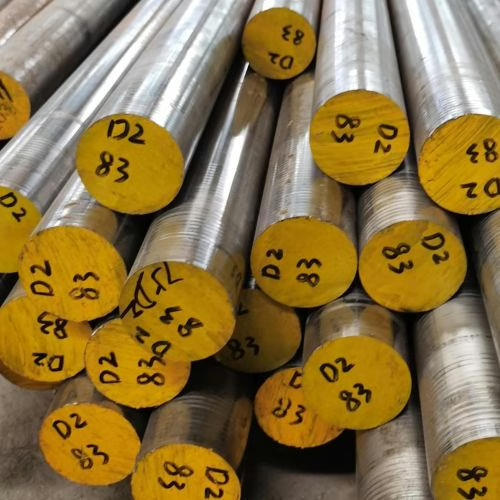
D2 | 1.2379 | SKD11
Aço ferramenta para trabalho a frio com alto teor de carbono e cromo, para aplicações em desgaste abrasivo, retenção de fio, matrizes de estampagem, ferramentas de conformação, punções e facas de corte.
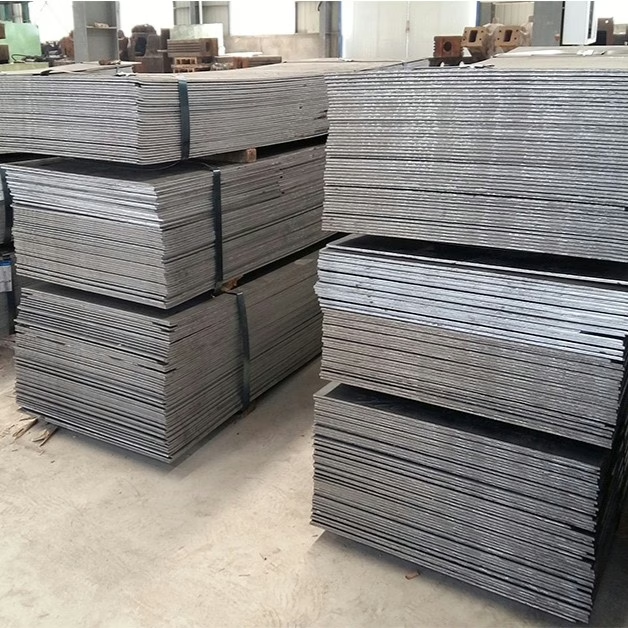
M2 | 1.3343 | SKH51
Aço rápido molibdênio-tungstênio para brocas, machos, fresas de topo, brochas, fresas de engrenagem, lâminas de serra, cortadores e serviços de corte que geram calor.
Aço ferramenta D2 vs M2: comparação rápida
| Fator | Aço ferramenta D2 | Aço Ferramenta M2 |
|---|---|---|
| Steel type | Aço ferramenta para trabalho a frio | Aço rápido para ferramentas |
| Sistema de liga principal | Alto teor de carbono e alto teor de cromo | Molibdênio, tungstênio, cromo e vanádio |
| Resistência principal | Resistência ao desgaste abrasivo por trabalho a frio | Dureza a quente e retenção do fio de corte |
| Dureza de trabalho típica | Aproximadamente 58–62 HRC | Aproximadamente 62–65 HRC |
| Resistência ao calor | Limitado em comparação com o aço rápido | Alta resistência ao amolecimento sob calor de corte |
| Toughness | Moderado a baixo | Ligeiramente melhor que o D2, mas não é um aço resistente a choques. |
| Aplicações típicas | Matrizes, punções, ferramentas de corte, ferramentas de conformação, facas de corte longitudinal | Brocas, machos, fresas de topo, brochas, serras, fresas de corte |
| Cost level | Geralmente mais baixo | Geralmente mais alto |
| Lógica de seleção ideal | Resistência ao desgaste em trabalhos a frio | Retenção de fio sob alta velocidade e calor |
A principal diferença não reside apenas na dureza. O material D2 é selecionado para desgaste em temperaturas de trabalho mais baixas. Já o material M2 é escolhido quando se considera o calor, a velocidade e a estabilidade da aresta de corte no controle da vida útil da ferramenta.
O que é o aço ferramenta D2?
O aço ferramenta D2 é um aço com alto teor de carbono e alto teor de cromo. aço para ferramentas de trabalho a frio. Sua principal vantagem é a forte resistência ao desgaste abrasivo, combinada com boa estabilidade dimensional após tratamento térmico adequado.
O aço D2 é amplamente utilizado em matrizes de corte, matrizes de conformação, matrizes de estampagem, punções, facas de corte longitudinal, lâminas de cisalhamento, facas de corte transversal, matrizes de laminação de roscas, ferramentas de cunhagem, placas de desgaste e calibradores. Em ferramentas industriais de corte e cisalhamento, como facas de corte longitudinal, lâminas de cisalhamento e facas de corte transversal, o principal modo de falha é o desgaste abrasivo da aresta em temperaturas próximas à ambiente, e não o amolecimento pelo calor, que é exatamente onde o D2 apresenta bom desempenho. Ele mantém sua aresta de corte e dimensões sob desgaste por cisalhamento a frio a um custo razoável.
A mesma estrutura de carboneto que confere ao D2 uma forte resistência ao desgaste também limita sua tenacidade. Para impactos fortes, choques severos ou ferramentas com alta concentração de tensão, o D2 pode lasca ou rachadura. Nesses casos, um aço mais resistente, como o S7, H11 ou outro aço ferramenta adequado, pode ser mais seguro.
O que é o aço ferramenta M2?
O aço ferramenta M2 é um aço rápido de molibdênio-tungstênio. Sua principal vantagem é a capacidade de manter a dureza e a resistência do fio de corte sob o calor gerado pela usinagem em alta velocidade.
O aço M2 é comumente usado em brocas helicoidais, machos, alargadores, fresas de topo, fresas de corte, brochas, fresas de engrenagem, lâminas de serra, cossinetes, ferramentas de torno e outras ferramentas de corte. Também pode ser usado em algumas aplicações severas de trabalho a frio, quando o aço D2 não oferece resistência suficiente a lascas, quebra de aresta ou condições de desgaste exigentes.
O M2 não é simplesmente uma "versão mais resistente" do D2. Ele utiliza um sistema de liga diferente e exige um tratamento térmico mais rigoroso. Além disso, geralmente é mais caro, portanto, a melhoria de desempenho deve justificar o custo.
Equivalência entre notas D2 e M2
| Grau de aço | AISI / SAE | UNS | DIN / EN | JIS | Reino Unido / China | Descrição comum |
|---|---|---|---|---|---|---|
| Aço ferramenta D2 | D2 | T30402 | 1,2379 / X153CrMoV12 | SKD11 | Cr12Mo1V1 | Aço para ferramentas de trabalho a frio com alto teor de carbono e alto teor de cromo |
| Aço Ferramenta M2 | M2 | T11302 | 1.3343 / HS6-5-2C | SKH51 | W6Mo5Cr4V2 | Aço rápido molibdênio-tungstênio |
Em compras internacionais, o D2 pode ser solicitado como 1.2379, SKD11 ou Cr12Mo1V1. O aço M2 pode ser solicitado como M2, 1.3343, SKH51 ou W6Mo5Cr4V2. Antes de fazer um pedido, os compradores devem confirmar a norma, a composição química, as condições de entrega, as tolerâncias dimensionais, os requisitos de inspeção e a aplicação desejada.
Composição química D2 vs M2
A liga D2 depende principalmente de alto teor de carbono e cromo para resistência ao desgaste por trabalho a frio. Já a liga M2 depende de molibdênio, tungstênio e vanádio para endurecimento secundário, dureza a quente e desempenho de corte.
| Elemento | Aço ferramenta D2 | Aço Ferramenta M2 | Significado prático |
|---|---|---|---|
| Carbono | Aproximadamente 1,40–1,60% | Aproximadamente 0,78–0,90% no padrão M2 | Favorece a dureza e a formação de carbonetos. |
| Chromium | Aproximadamente 11,00–13,00% | Aproximadamente 3,75–4,50% | O D2 forma mais carbonetos ricos em cromo para maior resistência ao desgaste abrasivo. |
| Molibdênio | Aproximadamente 0,70–1,20% | Aproximadamente 4,50–5,50% | O M2 adquire maior endurecimento secundário e dureza a quente. |
| Tungstênio | Não é um elemento de liga principal | Aproximadamente 5,50–6,75% | Suporta dureza vermelha e desempenho de corte |
| Vanadium | Aproximadamente 0,70–1,10% | Aproximadamente 1,75–2,20% | Melhora a resistência ao desgaste e a estabilidade da borda. |
| Cobalt | Normalmente ausente | Normalmente ausente no M2 padrão | O cobalto é mais relevante para aços de alta resistência, como o M35 e o M42. |
O D2 possui teores muito mais elevados de cromo e carbono, por isso forma uma grande quantidade de carbonetos resistentes ao desgaste. Isso é útil para matrizes e punções de trabalho a frio, mas também torna o aço menos resistente e mais difícil de usinar.
O aço M2 possui teores muito mais elevados de molibdênio, tungstênio e vanádio. Esses elementos ajudam o aço a manter sua dureza após o revenimento em altas temperaturas e durante o serviço de corte. É por isso que o M2 é preferido para ferramentas de alta velocidade, enquanto o D2 é preferido para ferramentas de trabalho a frio.
Dureza D2 vs M2
Os aços D2 e M2 podem atingir alta dureza, mas essa dureza serve a propósitos diferentes.
| Aço | Dureza de trabalho típica | Objetivo principal |
|---|---|---|
| Aço ferramenta D2 | Aproximadamente 58–62 HRC | Resistência ao desgaste em matrizes de trabalho a frio, punções e ferramentas de corte. |
| Aço Ferramenta M2 | Aproximadamente 62–65 HRC | Retenção do fio de corte e dureza a quente em ferramentas de alta velocidade. |
Dureza D2 Oferece resistência ao desgaste em processos de conformação a frio, corte, estampagem e cisalhamento. Pode atingir alta dureza, mas não a retém tão bem quanto o aço M2 quando a aresta de trabalho aquece.
O aço M2 geralmente opera em uma faixa de dureza mais alta e apresenta uma resistência muito melhor ao amolecimento sob o calor de corte. Sua resposta de endurecimento secundário é um dos principais motivos pelos quais ele tem um bom desempenho em brocas, machos, fresas e brochas.
Para matrizes de trabalho a frio, Maior dureza nem sempre é melhor.. Se uma ferramenta D2 lascar ou rachar, simplesmente aumentar a dureza pode agravar o problema. A dureza correta depende do projeto da ferramenta, da dimensão da seção transversal, do tratamento térmico, do material da peça e do modo de falha.
Diferença entre os tratamentos térmicos D2 e M2
O tratamento térmico é uma diferença fundamental entre os aços D2 e M2, pois ambos são projetados para condições de serviço distintas. O tratamento térmico do D2 prioriza a resistência ao desgaste por trabalho a frio, a estabilidade dimensional e a tenacidade controlada. Já o tratamento térmico do M2 concentra-se no endurecimento secundário, na dureza a quente e na retenção do fio de corte.
| Fator de tratamento térmico | Aço ferramenta D2 | Aço Ferramenta M2 |
|---|---|---|
| Finalidade principal | Resistência ao desgaste e estabilidade dimensional em ferramentas de trabalho a frio | Dureza a quente e retenção de fio de corte em ferramentas de corte de alta velocidade |
| Pré-aquecimento | Geralmente pré-aquecido lentamente a uma temperatura entre 650 e 705 °C (1200–1300 °F). | Frequentemente utiliza pré-aquecimento duplo antes do endurecimento final. |
| temperatura de austenitização | Geralmente em torno de 1850°F / 1010°C | Geralmente em torno de 2200–2225°F / 1200–1220°C |
| Controle de imersão | Precisa de tempo suficiente de imersão para preparar o endurecimento sem superaquecer. | Necessita de imersão muito curta e rigorosamente controlada. |
| controle de atmosfera | A proteção da superfície é importante. | Mais sensível à oxidação e à descarbonetação. |
| Têmpera | Conhecido por endurecer ao ar e apresentar boa estabilidade dimensional. | Pode ser resfriado em ar, óleo ou banho de sal, dependendo do processo. |
| Revenimento | Utilizado para equilibrar dureza, resistência ao desgaste, tenacidade e estabilidade dimensional. | É necessário um revenimento duplo; o revenimento triplo é frequentemente utilizado. |
| Principal risco | Rachaduras, fragilidade, austenita retida ou alteração dimensional | Descarbonetação, superaquecimento, crescimento de grãos ou fusão incipiente. |
O aço D2 é geralmente mais tolerante que o M2, mas um tratamento térmico inadequado ainda pode causar fissuras, fragilidade excessiva, austenita retida ou alterações dimensionais. Seu tratamento térmico não deve ser guiado apenas pela dureza; o resultado final deve ser compatível com as condições de desgaste da ferramenta, o tamanho da seção transversal e o risco de lascamento.
O M2 é mais exigente porque é endurecido a uma temperatura muito mais alta e depende fortemente de têmpera em alta temperatura. O processo exige um controle rigoroso da atmosfera do forno, do tempo de permanência na temperatura e dos ciclos de revenimento. Caso contrário, a ferramenta pode perder carbono superficial, tornar-se quebradiça ou não atingir a dureza a quente esperada.
Para fins de seleção, isso significa que o M2 não é apenas um aço mais caro, mas também exige critérios mais rigorosos. controle de tratamento térmico. Se a aplicação não exigir alta dureza a quente ou desempenho de corte em alta velocidade, o aço D2 costuma ser a escolha mais prática. Se a aresta da ferramenta precisar manter a dureza sob o calor de corte, o aço M2 é a opção mais segura.
Veja informações detalhadas sobre o tratamento térmico: Como realizar tratamento térmico em aço ferramenta D2 e Como realizar tratamento térmico em aço ferramenta M2.
Usinabilidade D2 vs M2
Nem o D2 nem o M2 são aços fáceis de usinar. Ambos são aços de liga rica em carbonetos e ambos devem ser usinados no estado recozido antes da têmpera. A peça final endurecida é produzida por retificação, não por corte do aço temperado.
O aço D2 é exigente devido ao seu alto teor de cromo e carbono, que forma um grande volume de carbonetos de cromo duros. Esses carbonetos são abrasivos e desgastam as ferramentas de corte rapidamente; portanto, a usinagem do D2 geralmente requer avanços mais lentos, ferramentas de metal duro afiadas e tolerância ao desgaste da ferramenta. O aço M2, na condição recozida, também apresenta limitações, mas sua estrutura de carbonetos é geralmente... menos abrasivo para a máquina do que o D2, por isso muitas oficinas consideram o M2 recozido ligeiramente mais fácil de cortar do que o D2 recozido.
Para compras e planejamento de produção, os pontos práticos são simples. Encomende ambos os aços no estado recozido para usinagem. Reserve material para retificação para as dimensões finais, pois a peça é dimensionada por retificação após o tratamento térmico. Não planeje usinar nenhum dos aços no estado temperado. Se um projeto depende muito de usinagem rápida e de baixo custo, nem o D2 nem o M2 são o ponto de partida adequado, e um aço ferramenta mais usinável ou um aço pré-temperado deve ser considerado.
D2 vs M2: Resistência ao desgaste, tenacidade e resistência ao calor
Os aços D2 e M2 são ambos resistentes ao desgaste, mas não possuem a mesma resistência nas mesmas condições.
| Propriedade | Melhor escolha | Razão |
|---|---|---|
| Desgaste abrasivo por trabalho a frio | D2 | Altos teores de carbono e cromo criam um volume de carboneto altamente resistente ao desgaste. |
| Retenção de ponta | M2 | Molibdênio, tungstênio e vanádio contribuem para a dureza a quente e a estabilidade da aresta de corte. |
| Dureza quente | M2 | O M2 resiste melhor ao amolecimento em temperaturas de corte elevadas. |
| Toughness | M2, ligeiramente | O M2 costuma ser mais resistente que o D2, mas nenhuma das duas classes é ideal para impactos fortes. |
| Estabilidade dimensional em ferramentas de trabalho a frio | D2 | O D2 é amplamente utilizado onde são necessários resistência ao desgaste e controle dimensional. |
| Resistência severa a impactos | Nenhum | Use uma classe de resistência maior, como S7 ou H11. |
O D2 geralmente apresenta vantagem no desgaste abrasivo por trabalho a frio. É adequado para ferramentas que sofrem principalmente desgaste por deslizamento, desgaste de aresta ou abrasão em temperaturas de trabalho mais baixas.
O aço M2 apresenta vantagem quando o calor é um fator de falha. As ferramentas de corte precisam manter a dureza mesmo com o aquecimento das arestas de corte. O aço D2 não consegue competir com o M2 nesse aspecto.
Em termos de tenacidade, o M2 geralmente é melhor que o D2, mas a diferença é pequena. Ambos os aços são de alta dureza e ricos em carbonetos. Se a ferramenta falhar devido a rachaduras, quebras por impacto ou cargas de choque, Um aço ferramenta mais resistente pode ser uma solução melhor do que o D2 ou o M2.
Aplicações D2 vs M2
| Aplicativo | Melhor escolha | Razão |
|---|---|---|
| Matrizes de corte | D2 | Alta resistência ao desgaste por trabalho a frio |
| Matrizes de conformação | D2 | Adequado para conformação a frio resistente ao desgaste. |
| matrizes de estampagem | D2 | Boa resistência ao desgaste e estabilidade dimensional. |
| Punções | D2 ou M2 | D2 para desgaste geral em trabalhos a frio; M2 para lascamento de borda mais severo ou serviço exigente. |
| Facas de corte | D2 ou M2 | D2 para desgaste por cisalhamento a frio; M2 para velocidades mais altas ou condições de corte mais severas. |
| cossinetes de roscagem por conformação | D2 ou M2 | D2 é comum; M2 pode ser usado para trabalhos mais pesados. |
| Brocas helicoidais | M2 | Requer dureza a quente e retenção de fio de corte. |
| Machos e alargadores | M2 | Requer desempenho de corte estável sob calor friccional. |
| Fresas de topo e fresas de corte | M2 | O D2 não foi projetado para cortes de alta velocidade. |
| Brochas e fogões | M2 | Requer resistência nas bordas, resistência ao desgaste e dureza a quente. |
| Ferramentas de impacto severo | Nenhum | Considere materiais resistentes a impactos ou de maior resistência. |
A ferramenta D2 é geralmente selecionada quando opera em condições de trabalho a frio e requer resistência ao desgaste a um custo razoável. A ferramenta M2 é selecionada quando corta material em alta velocidade e deve resistir ao amolecimento da aresta de corte devido ao calor.
O aço M2 pode ser usado como um upgrade premium em algumas ferramentas para trabalho a frio severo, mas não deve ser escolhido apenas por ser mais duro. O custo adicional deve ser justificado por uma vida útil mais longa da ferramenta, redução do tempo de inatividade ou melhor desempenho em um modo de falha específico.
Para a maioria das ferramentas de corte e lascamento a frio, o aço D2 é a escolha prática, pois a aresta de trabalho permanece fria e as falhas são causadas principalmente por desgaste. O aço M2 justifica seu custo mais elevado apenas quando as mesmas lâminas operam em velocidades mais altas, sofrem maior aquecimento por atrito ou falham devido a lascamento da aresta que o D2 não suporta, caso em que o ganho em estabilidade da aresta precisa justificar o preço.
O D2 pode substituir o M2?
O aço D2 geralmente não pode substituir o M2 em aplicações de corte de alta velocidade. Ele não possui a mesma dureza a quente, a mesma resposta de endurecimento secundário ou a mesma resistência ao amolecimento sob o calor de corte.
Para brocas, machos, fresas, brochas, fresas de engrenagem, serras e outras ferramentas de corte, o aço M2 é normalmente a opção mais segura. O aço D2 pode ser resistente ao desgaste à temperatura ambiente, mas isso não o torna adequado para cortes em alta velocidade.
O aço D2 deve ser considerado apenas quando a aplicação for mais voltada para cisalhamento a frio, conformação ou resistência ao desgaste do que para usinagem de alta velocidade propriamente dita. Se a aresta da ferramenta aquecer durante o uso, o aço M2 geralmente é a melhor opção.
O M2 pode substituir o D2?
O aço M2 pode substituir o D2 em algumas aplicações de trabalho a frio, mas nem sempre é necessário. Ele pode ser útil quando o D2 falha devido a lascamento da aresta, desgaste por atrito, resistência insuficiente da aresta ou vida útil curta da ferramenta em condições severas de serviço.
Exemplos comuns incluem punções para serviço pesado, insertos para conformação a frio, matrizes de laminação de roscas, ferramentas de estampagem severas e algumas aplicações de corte ou cisalhamento onde o D2 não oferece desempenho suficiente.
A desvantagem reside no custo e na dificuldade do tratamento térmico. O M2 é mais caro e mais sensível a Descarbonetação. Normalmente, é necessário um tratamento térmico em atmosfera controlada, vácuo ou banho de sal para obter resultados confiáveis.
Se a aplicação for uma matriz de trabalho a frio padrão e o D2 já proporcionar uma vida útil aceitável, o M2 pode não ser economicamente viável. O M2 deve substituir o D2 somente quando o ganho de desempenho for evidente.
Quando não usar D2 ou M2
Os aços D2 e M2 não são aços-ferramenta universais. Ambos são de alta dureza e apresentam limitações em resistência ao impacto, soldabilidade e em projetos de ferramentas submetidas a altas solicitações.
| Situação | Evitar | Melhor direção |
|---|---|---|
| Carga de impacto ou choque severo | D2 e M2 | Considere S7, H11 ou outra série mais difícil. |
| fundição a quente ou extrusão a quente | D2 e M2 | Considere o H13, o H11 ou outros aços para ferramentas de trabalho a quente. |
| Placa de molde de plástico geral | D2 e M2 | Considere P20, 1,2311 ou 1,2738. |
| Peças estruturais de baixo custo | D2 e M2 | Considere aços-liga como o 4140/42CrMo. |
| Ferramentas de corte de alta velocidade | D2 | Use M2 ou outro aço rápido. |
| Matrizes padrão para trabalho a frio com pressão de custo | M2 pode ser desnecessário | D2 costuma ser mais prático |
| Ferramentas que requerem soldagem | D2 e M2 | Redesenhe a ferramenta ou escolha um material mais soldável. |
| Designs com cantos vivos e alta concentração de tensão | D2 e M2 | Melhore o design da ferramenta ou use um aço mais resistente. |
Não utilize aço D2 como aço de corte rápido. Não utilize M2 simplesmente por ser mais duro ou mais caro. A escolha correta depende da temperatura de trabalho, do tipo de desgaste, da carga de impacto, do volume de produção e da capacidade de tratamento térmico.
Escolha D2 para desgaste abrasivo em trabalho a frio.
O D2 é a escolha prática quando a ferramenta opera perto da temperatura ambiente e as falhas se devem principalmente ao desgaste, arredondamento das arestas ou perda do controle dimensional.
Escolha M2 para velocidade, aquecimento e retenção de fio.
O aço M2 é a melhor escolha quando uma lâmina de corte precisa manter a dureza e a resistência sob calor friccional ou em condições exigentes de alta velocidade.
Precisa de aço ferramenta D2 ou M2 para ferramentas industriais?
A Aobo Steel fornece aços ferramenta D2 e M2 para matrizes, punções, ferramentas de corte, facas, brochas, matrizes de laminação de roscas e aplicações de desgaste severo. Compartilhe sua especificação, tamanho, quantidade e caso de uso para uma sugestão prática de material.
E-mail: [email protected] · Tel. e WhatsApp: +86 180 6294 5370
Páginas relacionadas
Comparações D2: D2 vs 4140 · D2 vs O1 · D2 vs A2 · D2 vs DC53 · D2 vs D3 · D2 vs 440C · D2 vs S7
Páginas de referência: Calculadora de conversão de dureza · tabela de dureza a quente do aço ferramenta · gráfico de recozimento e normalização
Famílias de séries: graus de aço ferramenta · Aços ferramenta da série D · Aços rápidos · Localizador de materiais de aço ferramenta
Os valores de composição, dureza e tratamento térmico são valores típicos publicados para D2 / 1.2379 / SKD11 e M2 / 1.3343 / SKH51. Confirme a faixa exata consultando o certificado de fábrica do lote entregue.