
Aço D2 vs. Aço 4140: Como escolher o material certo
Usar Aço ferramenta D2 Para ferramentas de trabalho a frio sujeitas a desgaste crítico, como matrizes, punções, lâminas de corte, facas de corte longitudinal e ferramentas de conformação. Utilize aço-liga 4140 para peças mecânicas estruturais, incluindo eixos, engrenagens, parafusos, dispositivos de fixação e componentes de máquinas.
Para superfícies de ferramentas sujeitas a desgaste, o aço D2 costuma ser a melhor opção. Para peças estruturais ou mecânicas que falham por impacto, fadiga, flexão ou torção, o aço 4140 costuma ser mais seguro.
Aço ferramenta D2 disponível na Aobo Steel.
A Aobo Steel fornece aço ferramenta D2 para ferramentas de trabalho a frio resistentes ao desgaste.
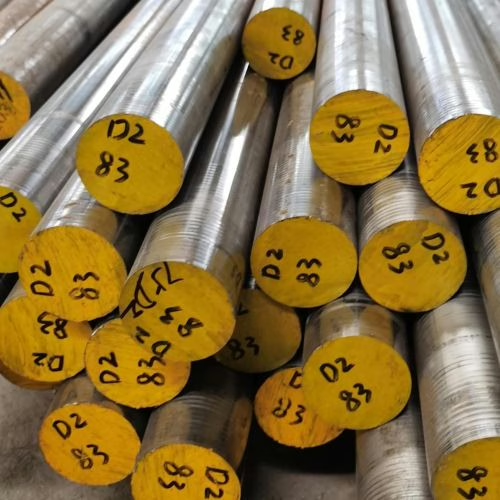
D2 | 1.2379 | SKD11
Aço ferramenta para trabalho a frio com alto teor de carbono e cromo, ideal para matrizes de longa produção, punções, lâminas de corte, facas de fenda, ferramentas de conformação e superfícies sujeitas a desgaste abrasivo.
O aço D2 é mais duro e resistente ao desgaste, mas também é mais quebradiço. 4140 É mais resistente e fácil de usinar, mas não se compara ao D2 em resistência ao desgaste abrasivo. A escolha deve ser feita com base na função da peça, na carga, no desgaste e no risco de falha.
Tabela de seleção rápida
| Exigência | Melhor escolha | Razão |
|---|---|---|
| resistência ao desgaste abrasivo | D2 | Altos teores de carbono e cromo formam carbonetos duros e resistentes ao desgaste. |
| retenção de borda | D2 | Melhor para cortar, cisalhar e formar bordas. |
| Ferramentas de longo prazo | D2 | Maior vida útil da ferramenta quando o desgaste controla as falhas. |
| Alta dureza das ferramentas de trabalho a frio | D2 | Geralmente usado em torno de 58-62 HRC. |
| Carga de ferramenta compressiva | D2 | A elevada dureza e resistência à compressão suportam a pressão das ferramentas. |
| Resistência ao impacto | 4140 | Maior resistência e ductilidade. |
| Resistência à fadiga | 4140 | Melhor para peças rotativas e submetidas a cargas cíclicas. |
| Carga de torção e flexão | 4140 | Mais adequado para tensões mecânicas dinâmicas. |
| Eixos, engrenagens, eixos de transmissão | 4140 | Projetado para peças mecânicas que suportam carga. |
| Acessórios e peças de suporte | 4140 | Mais fácil de usinar e mais econômico. |
| Custo de usinagem reduzido | 4140 | Melhor usinabilidade e flexibilidade de fabricação. |
| Soldagem ou fabricação estrutural | 4140 | Mais prático que o D2 para peças soldadas ou fabricadas. |
Equivalências de graus internacionais
D2 e 4140 são ambas designações AISI. As mesmas ligas são produzidas sob nomes de grau diferentes em outras normas. Ao comprar internacionalmente, verifique a composição química em relação à sua especificação e solicite um Certificado de Teste de Fábrica confirmando a análise química real.
| Padrão | Equivalente a D2 | Equivalente a 4140 |
|---|---|---|
| AISI/SAE | D2 | 4140 |
| DIN/EN | 1,2379 / X153CrMoV12 | 1,7225 / 42CrMo4 |
| JIS | SKD11 | SCM440 |
| GB | Cr12Mo1V1 | 42CrMo |
| BS | BD2 | 708M40 |
| AFNOR | Z160CDV12 | 42CD4 |
| UNS | T30402 | G41400 |
O D2 e seus equivalentes são aços-ferramenta para trabalho a frio. O 4140 e seus equivalentes são aços-liga estruturais. Eles não são intercambiáveis. Não especifique 42CrMo4 ou SCM440 como substitutos para 1.2379 ou SKD11 em aplicações de ferramentas de desgaste abrasivo.
Composição química e seus efeitos
O aço D2 possui maior teor de carbono e cromo, proporcionando maior resistência ao desgaste. Já o aço 4140, com seus menores teores de carbono e liga, melhora a tenacidade, a ductilidade, a usinabilidade e a resistência à fadiga.
| Elemento | Aço ferramenta D2 (peso %) | Aço liga 4140 (% em peso) | Efeito no desempenho |
|---|---|---|---|
| Carbon (C) | 1.40-1.60 | 0.38-0.43 | O aço D2 atinge maior dureza e forma mais carbonetos. O aço 4140 mantém melhor tenacidade e ductilidade. |
| Cromo (Cr) | 11.00-13.00 | 0.80-1.10 | O aço D2 apresenta uma resistência ao desgaste muito maior. O aço 4140 utiliza o cromo principalmente para aumentar sua temperabilidade. |
| Molibdênio (Mo) | 0.70-1.20 | 0.15-0.25 | Favorece a temperabilidade em ambos os aços. O D2 também utiliza Mo para melhorar a resposta ao revenido e o desempenho ao desgaste. |
| Manganês (Mn) | <=0,60 | 0.75-1.00 | O aço 4140 utiliza um teor mais elevado de manganês para favorecer a temperabilidade e o processamento. |
| Silício (Si) | <=0,60 | 0.15-0.35 | Favorece a resistência e a desoxidação, mas não é o principal fator de desempenho em nenhum dos aços. |
| Vanádio (V) | <=1,10 | Geralmente não especificado | O D2 adquire resistência adicional devido à presença de carboneto e maior resistência ao desgaste. |
| Fósforo (P) | <=0,030 | <=0,035 | Controlado como elemento de impureza. |
| Enxofre (S) | <=0,030 | <=0,040 | Controlado como elemento de impureza. |
O carbono, o cromo e o vanádio presentes no aço D2 conferem-lhe uma resistência superior ao desgaste. A estrutura mais simples da liga 4140 torna-a mais resistente e fácil de usinar, sendo mais adequada para peças que suportam carga.
Comparação de Comportamento Mecânico
| Propriedade | Aço ferramenta D2 | Aço liga 4140 |
|---|---|---|
| Dureza típica | 58-62 HRC após tratamento térmico | 28-34 HRC, temperado e revenido |
| Resistência ao desgaste | Excelente | Moderado |
| retenção de borda | Alto | Moderado |
| Toughness | Baixo | Alto |
| Ductilidade | Muito baixo | Melhorar |
| Resistência à fadiga | Limitado para carga dinâmica | Melhorar |
| resistência à compressão | Muito alto | Moderado a alto |
| Usinabilidade | Mais pobre | Melhorar |
| Moabilidade | Mais difícil | Mais fácil |
| Adequação para soldagem | Não recomendado para uso em ferramentas comuns. | Mais prático com controle adequado. |
| risco de falha comum | lascamento ou fratura frágil | Falha por desgaste, deformação ou fadiga |
O D2 funciona bem como superfície de desgaste, mas tem um desempenho ruim como eixo, engrenagem, pinhão ou componente sujeito a impactos.
O aço 4140 funciona bem como componente mecânico, mas desgasta-se mais rapidamente quando usado como superfície de corte, cisalhamento ou ferramenta abrasiva.
Diferença no tratamento térmico
O D2 é geralmente selecionado para alta dureza, resistência ao desgaste e estabilidade dimensional após o tratamento térmico. É um Aço ferramenta para trabalho a frio com endurecimento ao ar, portanto a distorção é geralmente menor do que a de aços que exigem têmpera líquida.
O aço 4140 é temperado e revenido para equilibrar resistência, tenacidade e resistência à fadiga. Não busque dureza do tipo D2; a prioridade é a tenacidade.
| Aspecto | Aço ferramenta D2 | Aço liga 4140 |
|---|---|---|
| Tipo de têmpera | Endurecimento ao ar | Geralmente, têmpera com óleo ou líquido. |
| Objetivo principal do tratamento térmico | Resistência ao desgaste e dureza | Força e resistência |
| Dureza típica após o tratamento | 58-62 HRC | 28-34 HRC, varia com a temperatura de revenimento. |
| Direção de uso típica | Ferramentas para trabalho a frio | Peças mecânicas |
| Tendência à distorção | Relativamente mais baixo | Superior a D2 no resfriamento rápido de líquidos |
| Propósito de temperagem | Reduzir a fragilidade e estabilizar a dureza. | Ajustar o equilíbrio entre força e resistência |
| risco do tratamento térmico | Fragilidade, austenita retida, fissuração | Baixa resistência se tratado incorretamente. |
Para ferramentas de D2, o desempenho final depende fortemente da dureza, condição de revenimento, controle de austenita retida e suporte de aresta.
Para informações detalhadas sobre o tratamento térmico D2, consulte nosso [link para o produto/serviço]. Guia de tratamento térmico de aço para ferramentas D2.
Usinabilidade e Fabricação
O aço 4140 é mais fácil de usinar, soldar e fabricar. Isso o torna mais prático para peças mecânicas, dispositivos de fixação, componentes de suporte, protótipos e ferramentas para produção em pequena escala.
D2 é mais difícil de usinar e retificar devido ao seu alto teor de carbonetos. Isso aumenta o desgaste da ferramenta, o tempo de acabamento, a dificuldade de retificação e o custo total de processamento.
| Fator de Processamento | Aço ferramenta D2 | Aço liga 4140 |
|---|---|---|
| Usinabilidade | Baixo | De moderado a bom |
| Dificuldade de retificação | Alto | Inferior |
| Soldagem | Não recomendado para uso em ferramentas comuns. | Possível com controle adequado |
| Flexibilidade de fabricação | Limitado | Melhorar |
| Custo de processamento | Mais alto | Inferior |
O aço D2 deve ser utilizado quando sua resistência ao desgaste justificar os custos mais elevados de usinagem e retificação. Se o desgaste não for o principal problema, o aço 4140 costuma ser a opção mais econômica.
Para parâmetros de corte e sugestões de usinagem, consulte nosso Guia de usinagem do aço ferramenta D2.
D2 e 4140 podem se substituir mutuamente?
Os modelos D2 e 4140 raramente se substituem mutuamente, pois desempenham funções diferentes.
O D2 pode substituir o 4140?
Não. O aço D2 não deve ser usado em eixos, engrenagens, parafusos, eixos de transmissão, peças de bombas ou outros componentes sujeitos a cargas dinâmicas. Essas peças precisam de tenacidade, ductilidade e resistência à fadiga. O D2 pode ser mais duro que o 4140, mas é mais propenso a rachaduras ou falhas sob impacto ou cargas cíclicas.
O aço D2 pode substituir o 4140 somente quando a peça serve como superfície de ferramental e o desgaste abrasivo se torna o principal modo de falha. Exemplos incluem algumas ferramentas de freio, blocos de apoio, ferramentas de suporte ou componentes de ferramentas para trabalho a frio, onde a vida útil é mais importante do que a tenacidade.
O 4140 pode substituir o D2?
Apenas em ferramentas de produção em pequena escala ou com baixo desgaste. O aço 4140 pode ser usado para protótipos, dispositivos de fixação, blocos de suporte, placas de apoio, gabaritos de furação e ferramentas de baixo volume onde o desgaste não é severo. É mais fácil de usinar e geralmente mais barato de processar.
Para processos de estampagem, punção, corte longitudinal, cisalhamento ou usinagem a frio abrasiva em larga escala, o aço 4140 normalmente apresenta desgaste excessivo.
Diferença de custo e processamento
O aço D2 geralmente apresenta custos mais elevados de matéria-prima e processamento. Já o aço 4140 costuma ter um custo inicial menor e melhor usinabilidade.
| Fator de custo | Aço ferramenta D2 | Aço liga 4140 |
|---|---|---|
| Custo da matéria-prima | Mais alto | Inferior |
| Custo de usinagem | Mais alto | Inferior |
| Custo de moagem | Mais alto | Inferior |
| Sensibilidade ao tratamento térmico | Mais alto | Moderado |
| Flexibilidade de fabricação | Inferior | Mais alto |
| Vida útil da ferramenta sob desgaste abrasivo | Melhorar | Inferior |
| Melhor cenário de custo | ferramentas de desgaste de longo prazo | Peças mecânicas e ferramentas para pequenos lotes |
O 4140 é frequentemente disponível em condições normalizada, recozida ou temperada e revenida, dependendo do fornecedor e da aplicação. Isso pode reduzir o número de etapas de usinagem ou tratamento térmico para peças mecânicas.
O D2 é geralmente fornecido em um condição recozida para usinagem. Para atingir a dureza típica de ferramentas de trabalho a frio, normalmente requer um tratamento térmico final após a usinagem de desbaste. O tratamento térmico a vácuo é comumente preferido para ferramentas de precisão para controlar oxidação, distorção e dureza final.
Para peças mecânicas, dispositivos de fixação, protótipos e componentes de suporte, o aço 4140 costuma ser mais econômico.
Para ferramentas de produção longa, o D2 pode reduzir o custo total ao prolongar a vida útil da ferramenta, reduzir a retificação e manter as dimensões estáveis por um ciclo de produção mais longo.
Escolha o aço 4140 se o desgaste não for severo. Escolha o aço D2 se uma vida útil mais longa justificar o custo de processamento mais elevado.
Quando não usar D2 ou 4140
| Condições de aplicação | Evite D2 | Evite 4140 |
|---|---|---|
| Eixos, engrenagens, eixos de transmissão e peças dinâmicas | Sim | Não |
| carga de choque ou impacto | Sim | Geralmente não |
| Flexão ou torção repetidas | Sim | Não |
| Peças mecânicas submetidas à fadiga | Sim | Não |
| Soldagem estrutural | Sim | Geralmente não |
| Ferramentas abrasivas de longa duração | Não | Sim |
| retenção da borda de corte ou cisalhamento | Não | Sim |
| Alta dureza das ferramentas de trabalho a frio | Não | Sim |
| Estabilidade dimensional rigorosa baseada no desgaste | Não | Sim |
| Protótipo ou dispositivo de baixo custo | Geralmente sim | Não |
Não utilize D2 quando a tenacidade e a resistência à fadiga forem de extrema importância.
Não utilize o aço 4140 quando a resistência ao desgaste abrasivo ou a retenção do fio de corte forem fatores críticos.
Exemplos práticos de seleção
| Aplicativo | Aço recomendado | Razão |
|---|---|---|
| Matriz de corte | D2 | A resistência ao desgaste e a retenção do fio de corte são importantes. |
| Punção | D2 | Alta dureza e resistência à compressão são úteis. |
| Faca de corte | D2 | A retenção da aresta de corte e o controle da resistência ao desgaste prolongam a vida útil da ferramenta. |
| Lâmina de cisalhamento | D2 | Melhor opção para cortes abrasivos e cisalhamento. |
| Haste | 4140 | Requer resistência, resistência à fadiga e resistência à torção. |
| Engrenagem | 4140 | Melhor para cargas dinâmicas e resistência à fadiga. |
| Eixo | 4140 | Necessita de ductilidade e confiabilidade para suportar cargas. |
| Parafuso de alta resistência | 4140 | Melhor equilíbrio entre força e resistência. |
| Jogo | 4140 | Mais fácil de usinar e geralmente mais econômico. |
| Placa de suporte | 4140 ou D2 | 4140 para suporte, D2 somente se o desgaste for severo. |
| Ferramentas de freio para pequenos lotes | 4140 ou D2 | 4140 para custo, D2 para maior durabilidade. |
| Ferramentas de trabalho a frio de longa duração | D2 | Maior vida útil das ferramentas sob desgaste abrasivo. |
Resumo da Seleção Final
Escolha D2 para ferramentas sujeitas a desgaste crítico.
O aço D2 é o mais indicado para desgaste abrasivo, retenção de fio, alta dureza por trabalho a frio e falhas por perda dimensional em matrizes, punções, lâminas de corte, facas de corte longitudinal e ferramentas de conformação.
Escolha o aço 4140 para peças estruturais.
O aço 4140 é a melhor opção quando a peça falha por impacto, fadiga, flexão, torção ou carga estrutural, especialmente em eixos, engrenagens, parafusos, dispositivos de fixação e componentes de máquinas.
Os aços D2 e 4140 têm aplicações diferentes. O D2 é mais indicado para ferramentas sujeitas a desgaste; o 4140 é mais indicado para peças que suportam carga.
Precisa de aço ferramenta D2 para ferramentas sujeitas a desgaste?
A Aobo Steel fornece aço ferramenta D2 para matrizes, punções, lâminas de corte, facas de corte longitudinal e outras ferramentas abrasivas para trabalho a frio. Compartilhe suas dimensões, quantidade, tolerância e aplicação para receber uma sugestão de fornecimento adequada.
E-mail: [email protected] · Tel. e WhatsApp: +86 180 6294 5370
Páginas relacionadas
Comparações D2: D2 vs M2 · D2 vs O1 · D2 vs A2 · D2 vs DC53 · D2 vs D3 · D2 vs 440C · D2 vs S7
Páginas de referência: Temperaturas de forjamento do aço para ferramentas
Famílias de séries: graus de aço ferramenta · Aços ferramenta da série D · Localizador de materiais de aço ferramenta
Faixas de composição, valores de dureza e temperaturas de tratamento térmico são valores típicos publicados para D2 / 1.2379 / SKD11 e 4140 / 42CrMo4. Confirme a faixa exata com o certificado do fabricante para o lote entregue.