
Microstructure of 416, 420 and 440C Martensitic Stainless
A 12% chromium martensitic stainless steel is bought for a mould or a cutter that has to resist corrosion and still be hardened, and its structure has two features that decide whether it will do the job, the carbide network it carries and how much austenite was left after the quench. This page collects the published micrographs of 420, 440C, 416, 440B and the closely related 403, 410 and 422 grades in the annealed, quenched and tempered and as-cast conditions, with the etchants that reveal each feature.
What decides the reading on these grades
The chromium level makes all of these grades slow to etch and quick to form carbide at the grain boundaries, so the reagent choice matters more here than on a low alloy tool steel. Four reagents cover most of the work. Ralph’s reagent and Vilella’s reagent reveal the carbide and the grain boundaries in the annealed and hardened conditions, 4% picral with HCl is used where a softer contrast is wanted, and modified Fry’s reagent brings out the carbide in the high carbon end of the family. A tint etch such as Beraha’s sulfamic acid reagent is the one to reach for when the carbide network has to be separated from the matrix in color, and the high carbon grades are as easy to decarburize and to crack at the carbide as the tool steels they sit beside.
Carbide networks in the annealed condition
Annealed 420 down the bar carries a grain boundary carbide network, and how heavy that network is decides how the steel machines and how it hardens. The two plates below are the same grade and the same condition under a plain reagent and under a tint etch, which is the quickest way to show what the tint etch adds. Under Ralph’s reagent the network reads as a thin dark boundary. Under the sulfamic acid tint etch the carbide takes its own color and the network can be traced around the grains without the matrix competing for attention.
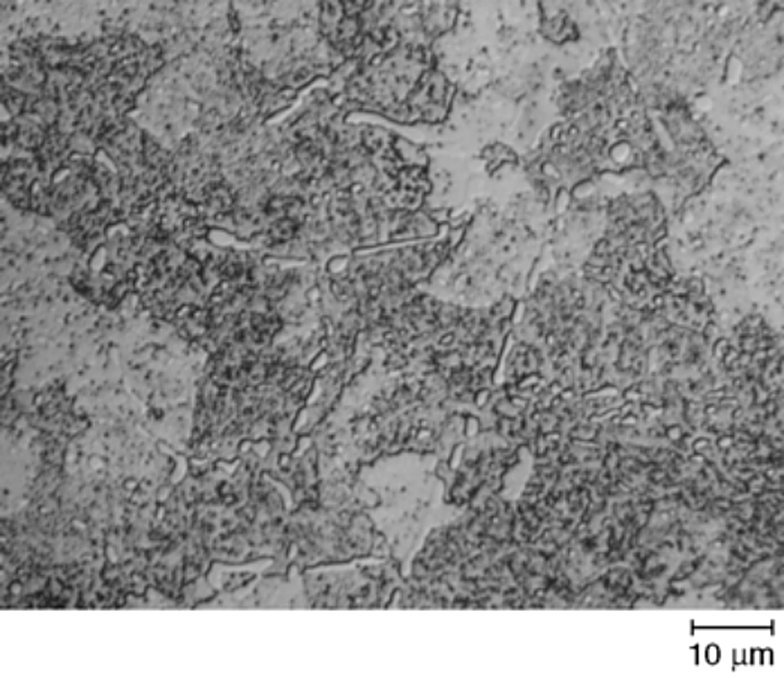
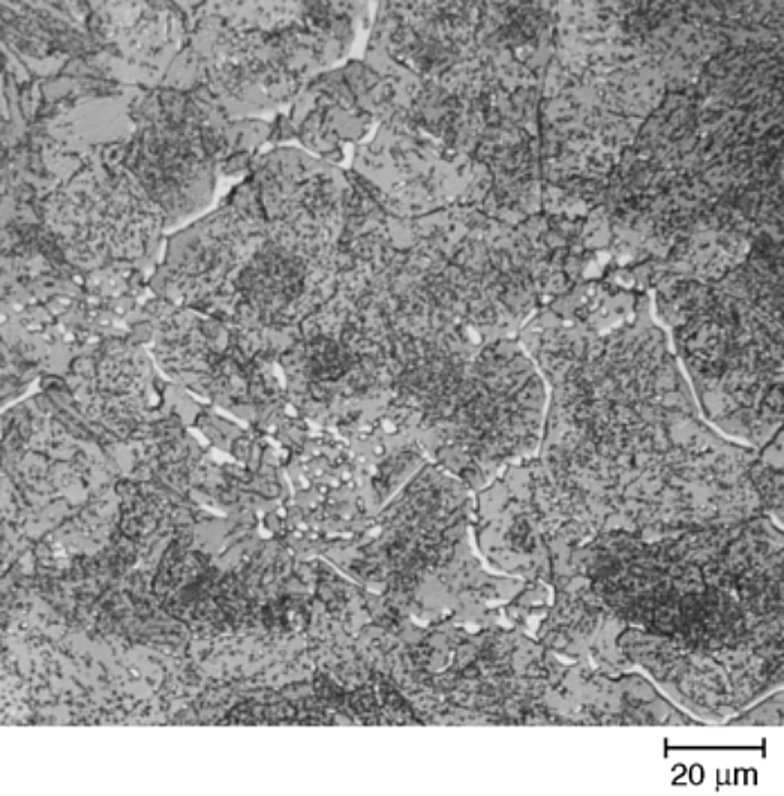
A carbide network is not automatically a defect. A light network that breaks up during the austenitizing soak is normal for the grade, and a heavy continuous network that survives into the hardened part is a cracking path. That is why the network is read on the annealed bar and again after hardening, and why the spheroidize anneal and the austenitizing temperature are both specified for these grades. The schedules are set out on the 420 stainless heat treatment page.
Quenched and tempered appearance
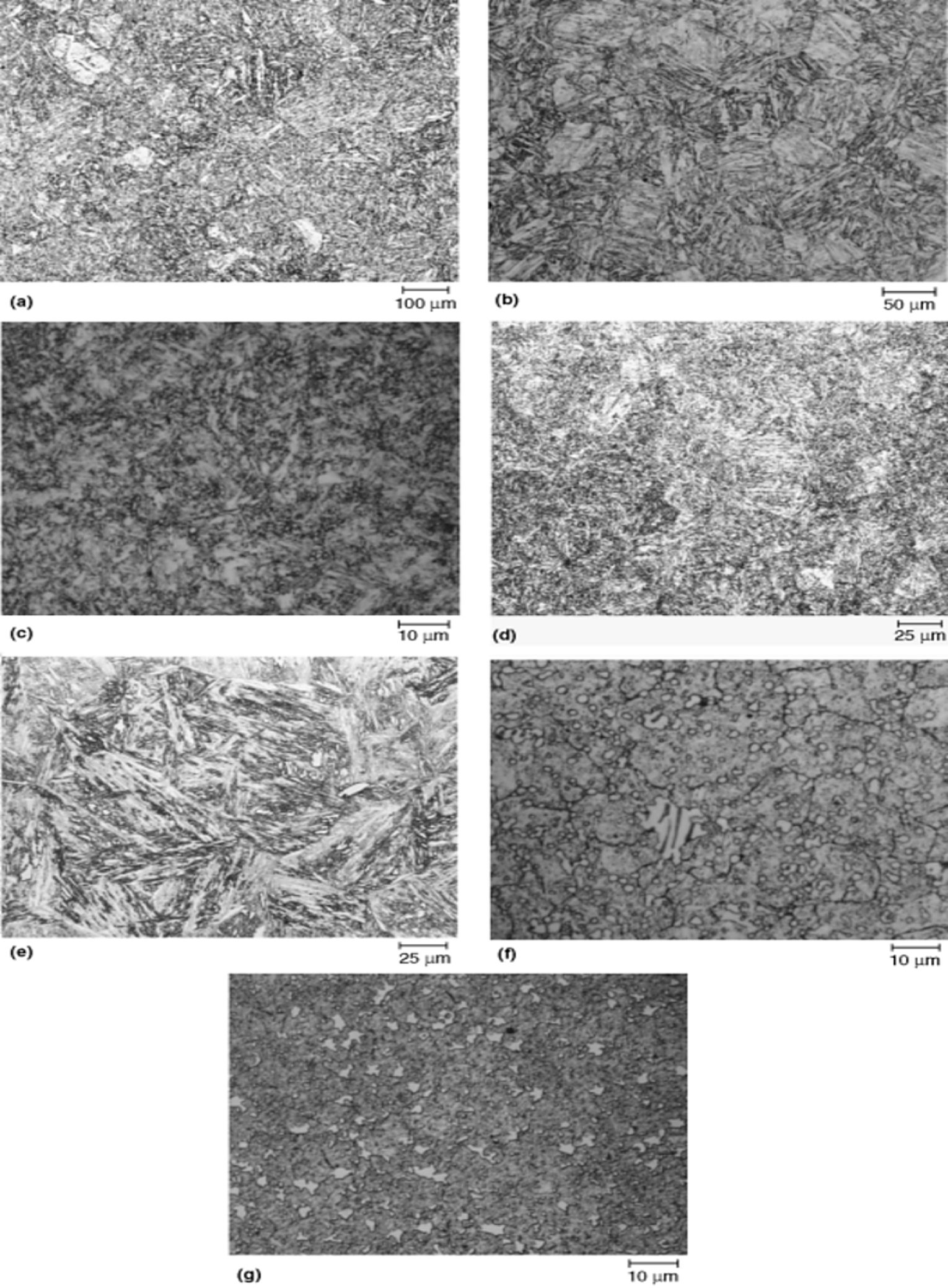
A properly hardened and tempered martensitic stainless steel is a fine martensitic matrix with dispersed carbide, and the differences between the grades show up mainly in how coarse the martensite is and how much carbide is left. The set below runs across 403, 410, 420 and the powder metallurgy and remelted versions of 422, each with the reagent its own article used, and the reason the plates are printed side by side is that the same structure looks different under each of them.
The annealed series across the family
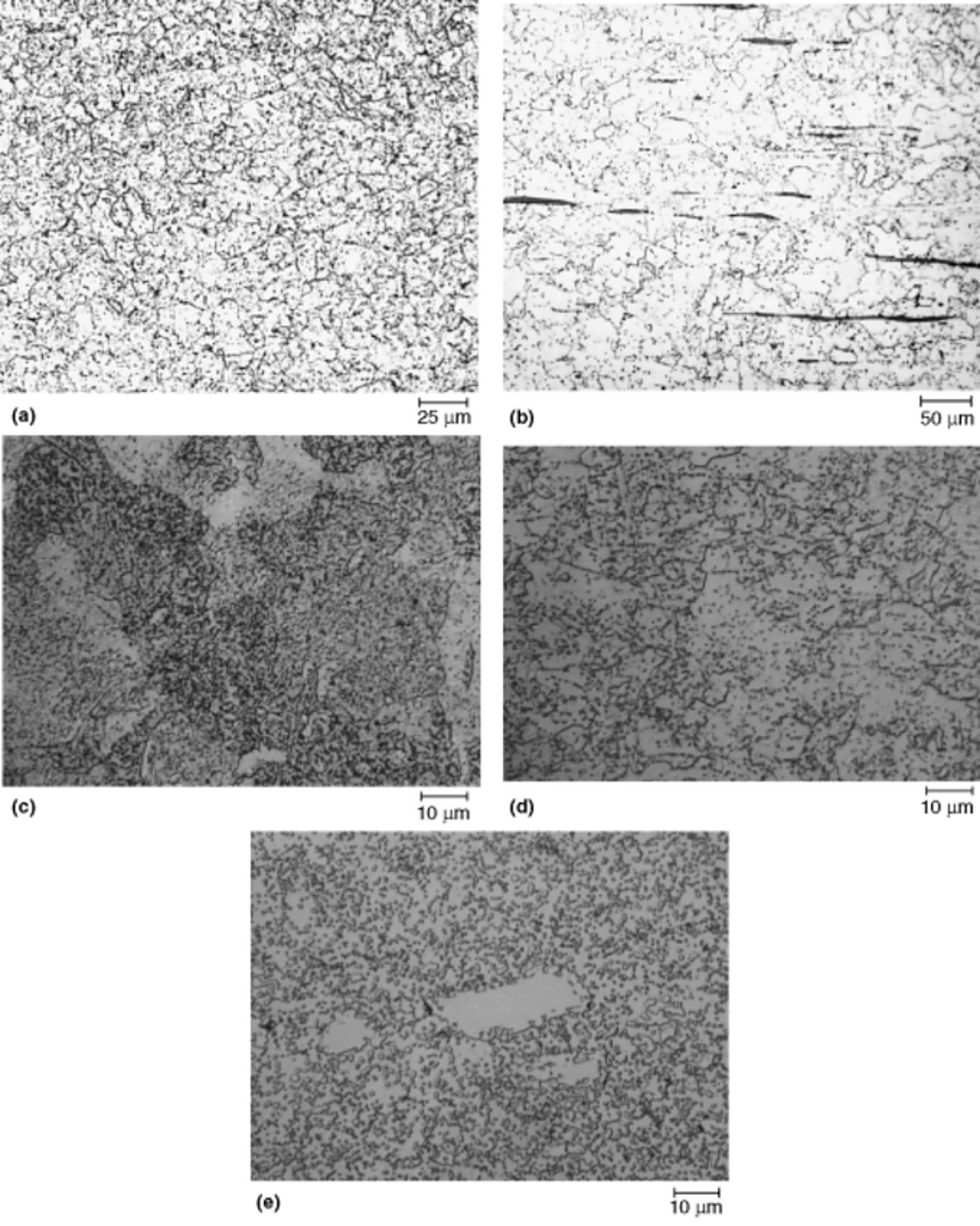
In the annealed condition the family runs from the low carbon free machining end to the high carbon end, and the carbide content rises with it. The series below covers 403, bushing quality 416, 420, a resulfurized grade and 440C. The 416 plate is the one to look at where machinability is the requirement, because the sulfur that makes it machine also puts manganese sulfide particles into the structure, and 440C at the other end carries the heaviest carbide population in the group.
Cracked carbide in the cold worked grades
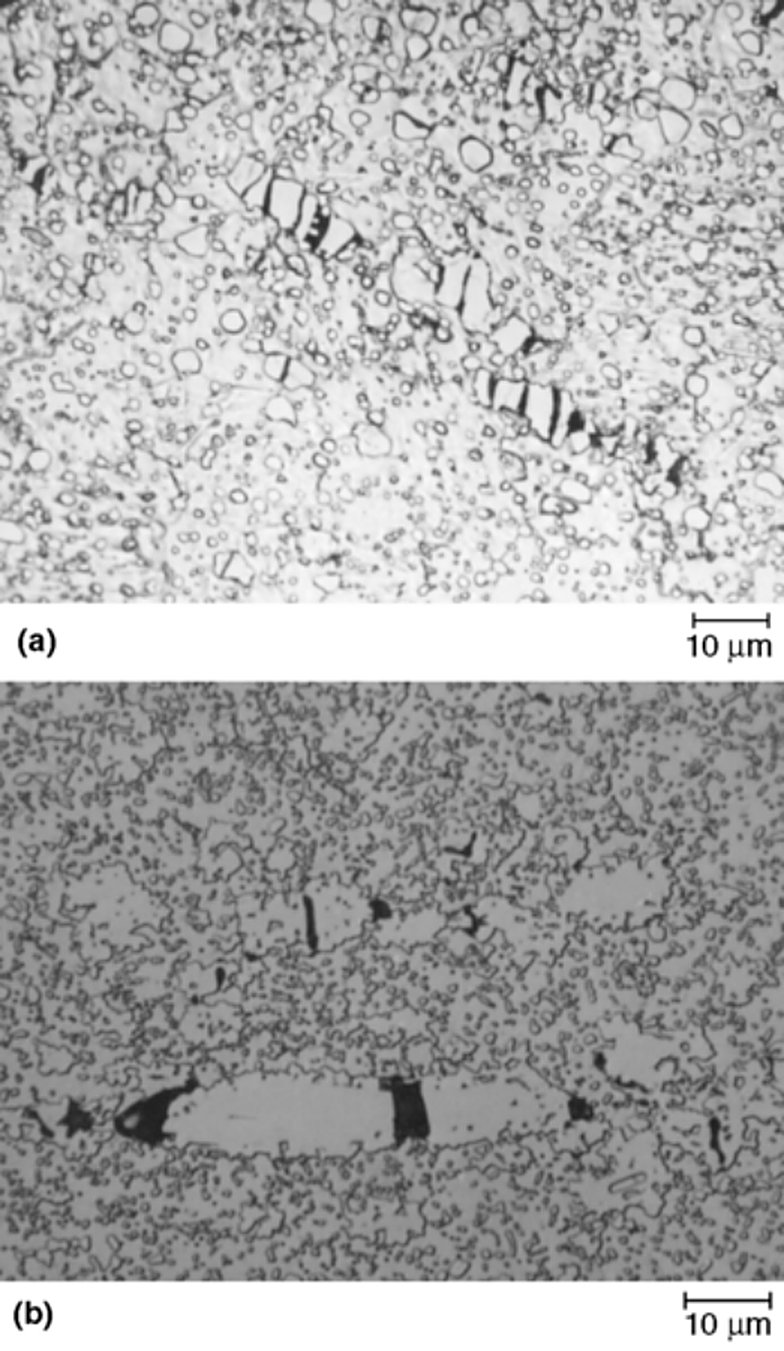
The high carbon end of this family is cold worked, and cold working a structure that already carries coarse carbide cracks the carbide itself. The plate below is 440B and 440C after excessive cold deformation, and the cracked carbides are the damage. A cracked carbide is a stress raiser in the finished part, so the amount of cold reduction and the carbide size in the starting bar are both specified, and the same rule applies to the tool steel carbides that behave the same way in D2 and D3.
Austenitizing 440C, from martensite to austenite
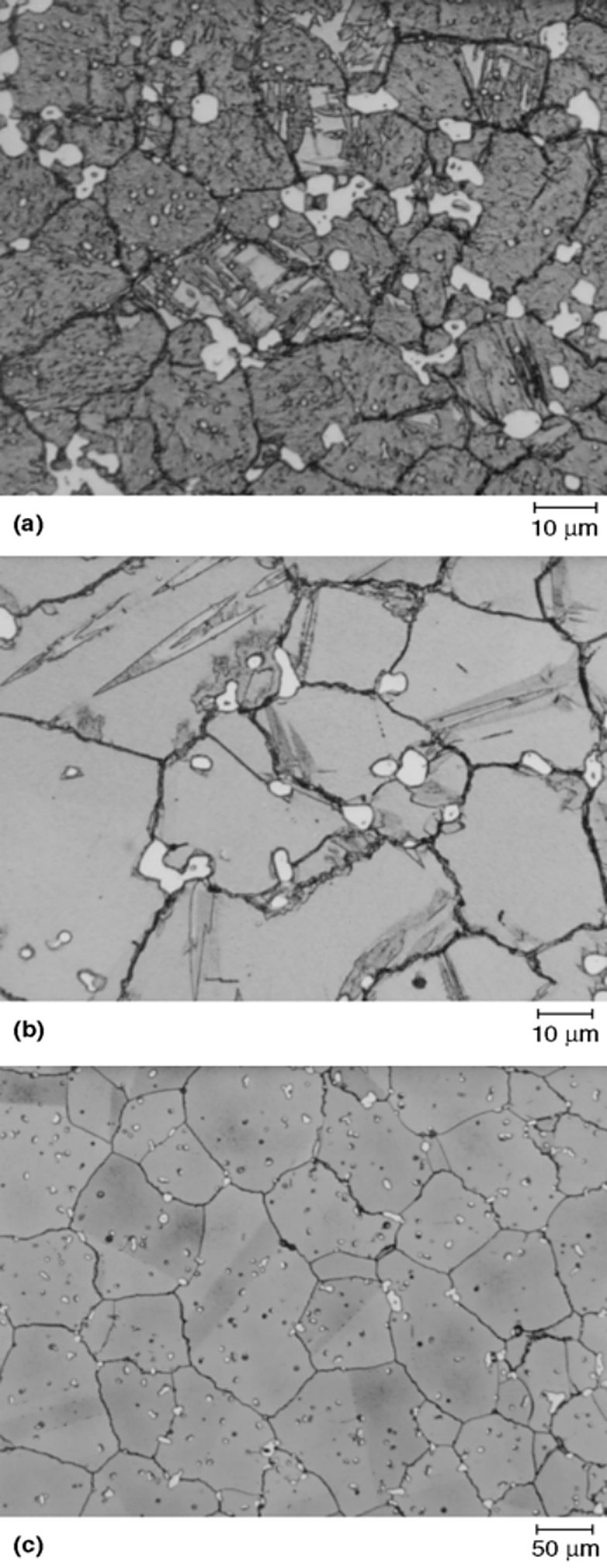
440C is the grade where retained austenite is easiest to produce by accident. The three plates below are the same steel austenitized in steps from 1150 °C to 1260 °C. At the bottom of the range the as-quenched structure is mainly martensite with some retained austenite, and at the top of the range it is mostly retained austenite. A part that was meant to be hard and is instead soft and dimensionally unstable has usually been taken up this ladder, which is the same mechanism that the austenitizing series for tool steels shows on O1 and S7.
The as-cast structure and the eutectic carbide
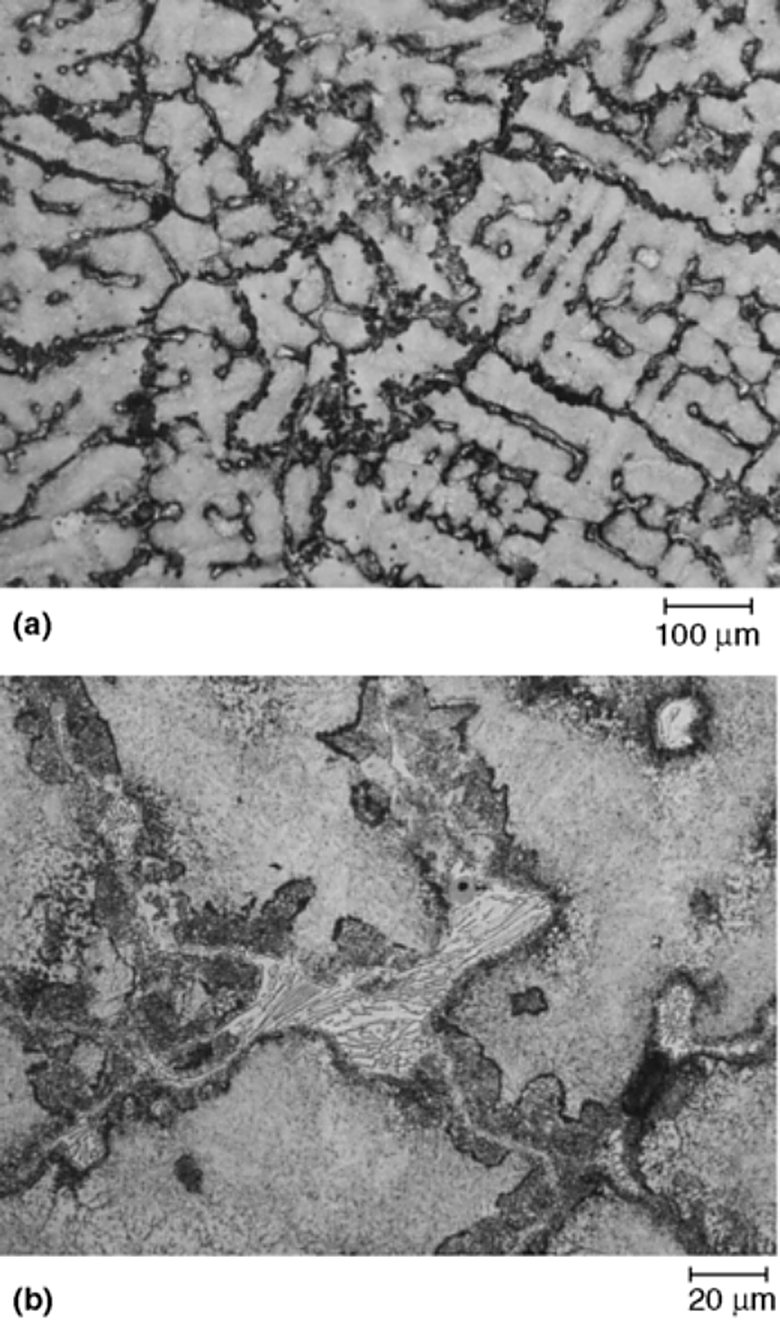
A 440C ingot is not the same material as a rolled bar of the same grade. The as-cast structure is a martensitic matrix with a eutectic carbide constituent sitting in the interdendritic regions, at 560 HV in the plate below. That eutectic carbide is coarse and it is the reason these grades are hot worked before they are sold, and it is what a badly worked or a badly located piece of bar still carries. Reading it on an as-cast or a poorly worked specimen is how a supplier shows the difference between conventional and remelted product.
Decarburization on a hardened surface
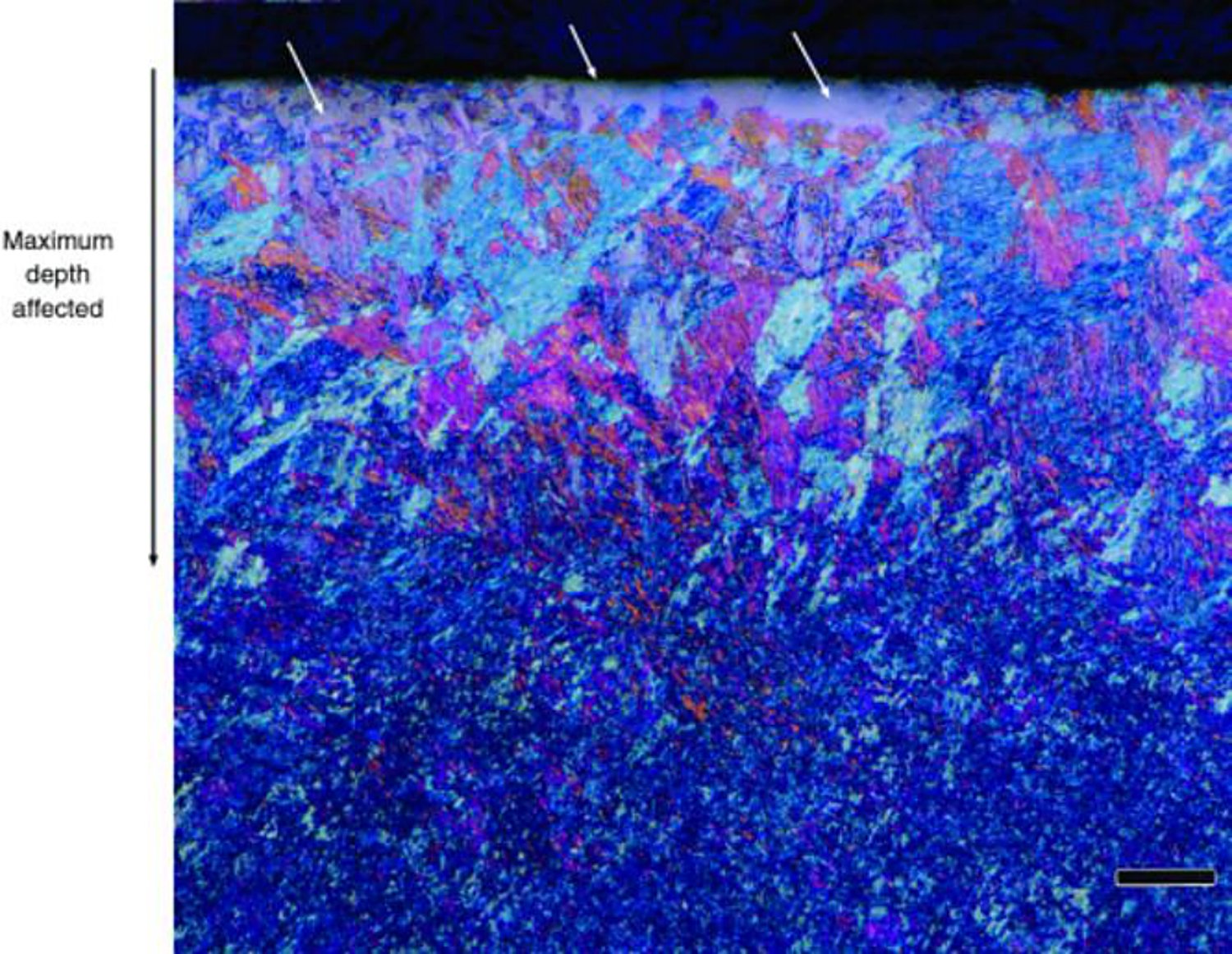
A martensitic stainless steel loses carbon at the surface when it is heated in air, and the loss shows up as free ferrite on a hardened part. The plate below is a 420 specimen whose surface decarburized before the quench, tint etched so that the free ferrite, the partly decarburized zone and the sound martensite below it each take a different color. The surface layer of the part is soft and the section under it is correct, so a hardness test taken on the outside will read low and a test taken after a light grind will read true, which is worth knowing before a heat is rejected. The same check on a tool steel surface is described on the tool steel microstructure page.
The grades behind these plates
The heat treatment schedules for the grades shown here are on the 420, 440C, 416 and 410 stainless steel heat treatment pages, and the mechanical property comparison across the family is on the martensitic stainless steel properties chart. The tool steels that are read the same way, with the same carbide and retained austenite questions, are collected on the tool steel microstructure page.
Compiled from ASM Handbook, Volume 9, Metallography and Microstructures, the articles Metallography and Microstructures of Stainless Steels and Maraging Steels and Color Metallography (G.F. Vander Voort), ASM International, 2004. Plates Fig. 38, 44 to 48, 50 and 56. Every caption was read from the searchable text layer of the file and checked against the printed plate, and each plate was cropped from the file at 1.5 times its printed pixel width. The plates are a reference summary of published practice rather than an Aobo Steel specification, so confirm the grade, the condition and the test position against the material test certificate before a process sheet is written.