
D-Series Tool Steels
D-series tool steels are high-carbon, high-chromium cold-work tool steels used for long-run dies, punches, knives, shear blades, drawing tools, thread-rolling dies, and wear-resistant tooling. They are selected when abrasive wear resistance, high hardness, compressive strength, and dimensional stability are more important than impact toughness.
D-Series Tool Steel Grades Available from Aobo Steel
Aobo Steel supplies D-series tool steel in bulk round bar and flat bar for cold work dies, punches, shear blades, slitter knives, drawing tools, and wear-resistant industrial tooling.
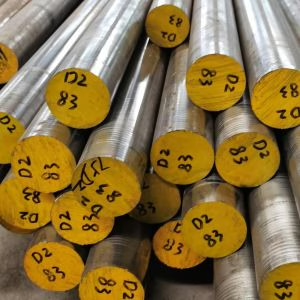
D2 | 1.2379 | SKD11
Most widely used D-series grade for long-run dies, knives, punches, and wear-resistant tooling.
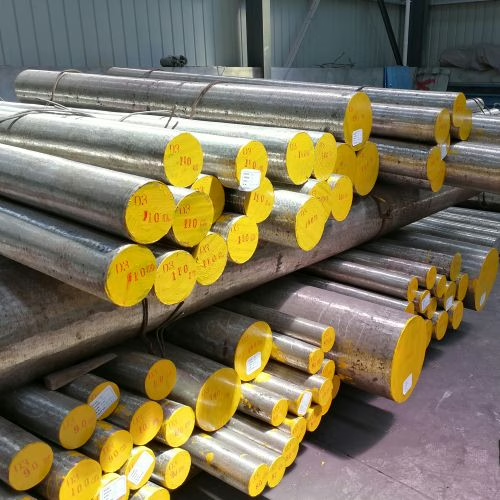
D3 | 1.2080 | SKD1
High-carbon, high-chromium cold work steel for abrasive wear and high compressive strength.
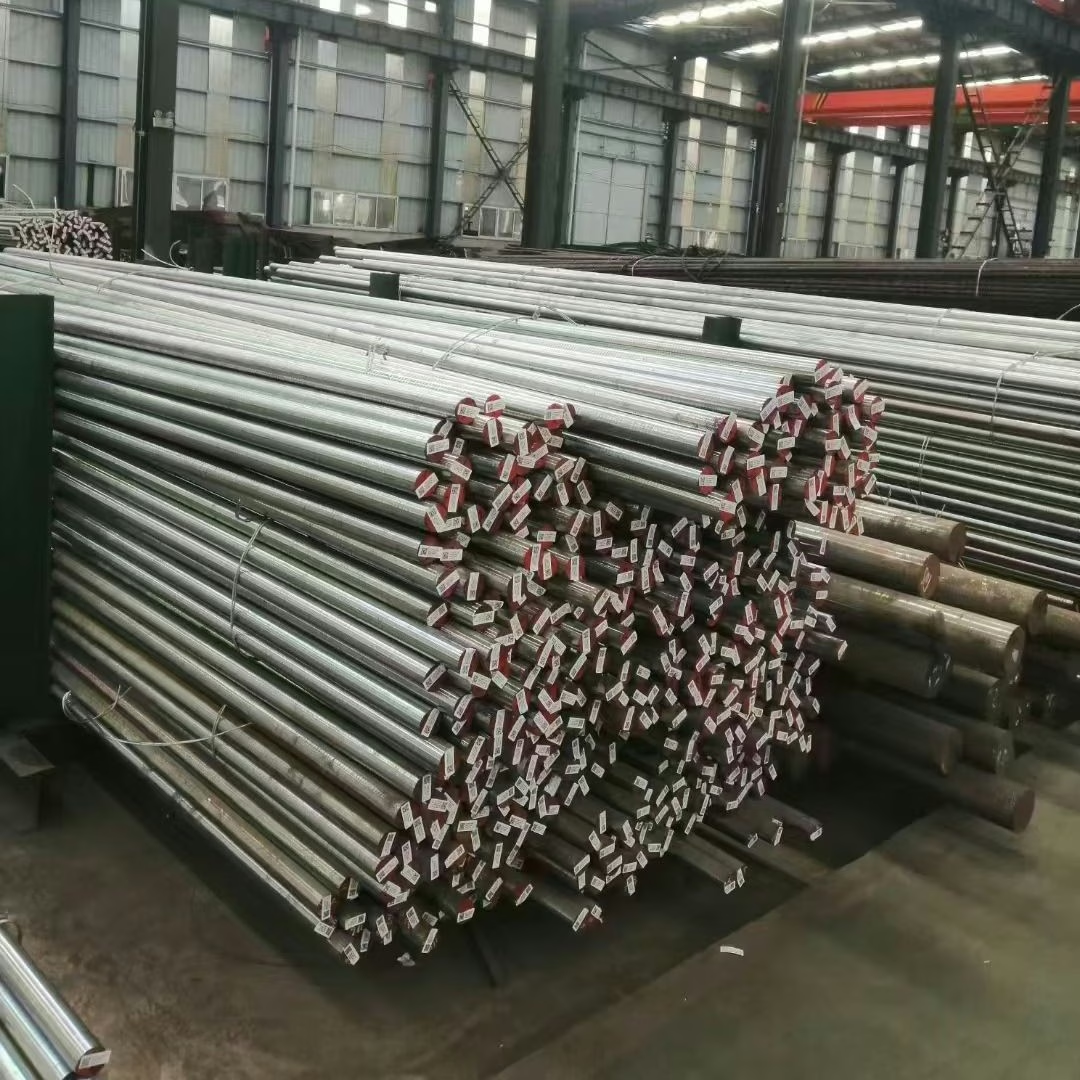
D6 | 1.2436 | SKD2
Chromium-tungsten cold work steel for high wear resistance and specialized tooling applications.
The D-series includes D2, D3, D4, D5, D6, and D7. These grades share a similar high-carbon, high-chromium base, but they differ in alloy design, hardening behavior, toughness, wear resistance, and application range.
For most cold work tooling, D2 is the most practical starting grade. Other D-series grades are used when the application requires higher abrasion resistance, special heat-treatment behavior, or a specific equivalent grade such as 1.2436 / SKD2.
D-Series Tool Steel Grades and Equivalent Standards
The table below summarizes common equivalent standards for D-series tool steels. Equivalent grades should be checked against the required standard and the order specification, especially when the application has strict chemical composition or heat-treatment requirements.
| AISI / SAE | DIN / W.Nr. | EN / ISO Name | JIS | GB / Chinese Grade | BS / UK | AFNOR / France | Notes |
|---|---|---|---|---|---|---|---|
| D2 | 1.2379 | X153CrMoV12 | SKD11 | Cr12Mo1V1 | BD2 | Z150CDV12 | Most common D-series equivalent group |
| D3 | 1.2080 | X210Cr12 | SKD1 | Cr12 | BD3 | Z200C12 | High-carbon, high-chromium cold work grade |
| D5 | 1.2880 | Not commonly listed | Not commonly listed | Not commonly listed | Not commonly listed | Z160CKDV12-03 | Cobalt-bearing D-series grade |
| D6 | 1.2436 | X210CrW12 | SKD2 | Cr12W | Not commonly listed | Not commonly listed | Chromium-tungsten cold work grade |
Chemical Composition of D-Series Tool Steels
D-series steels usually contain about 1.40% to 2.50% carbon and about 11.00% to 13.50% chromium. Their high carbide content is the main reason for their strong wear resistance, but it also increases processing difficulty and reduces toughness.
| Grade | Carbon | Chromium | Molybdenum | Vanadium | Other Main Elements |
|---|---|---|---|---|---|
| D2 | 1.40-1.60% | 11.00-13.00% | 0.70-1.20% | 1.10% max | Not primary |
| D3 | 2.00-2.35% | 11.00-13.50% | Not primary | 1.00% max | W 1.00% max |
| D4 | 2.05-2.40% | 11.00-13.00% | 0.70-1.20% | 1.00% max | Not primary |
| D5 | 1.40-1.60% | 11.00-13.00% | 0.70-1.20% | 1.00% max | Co 2.50-3.50% |
| D6 | About 2.10% | About 11.50% | Not primary | About 0.20% | W about 0.70% |
| D7 | 2.15-2.50% | 11.50-13.50% | 0.70-1.20% | 3.80-4.40% | Not primary |
Properties of D-Series Tool Steels
D-series tool steels are used when abrasive wear is the main failure risk. Their performance comes from high hardness, high carbide volume, and strong compressive strength after proper heat treatment.
| Property | D-Series Performance | Practical Meaning |
|---|---|---|
| Wear resistance | High to extremely high | Suitable for abrasive materials and long production runs |
| Hardness after heat treatment | High | Commonly used in the high HRC range for cold work tools |
| Compressive strength | High | Useful for punches, dies, and tools under pressure |
| Dimensional stability | Good in air-hardening grades | Important for precision dies, gages, and forming tools |
| Toughness | Low to moderate | Not ideal for severe impact or shock loading |
| Machinability | Low | Cutting cost is higher than simpler cold work steels |
| Grindability | Low | Large carbide volume makes grinding more difficult |
| Corrosion resistance | Limited | High chromium content does not make D-series steels stainless |
Heat Treatment Overview for D-Series Tool Steels
D-series tool steels are normally supplied in an annealed condition for machining. Final working performance depends on hardening and tempering. Heat treatment controls hardness, wear resistance, internal stress, dimensional change, and cracking risk.
| Process | Typical Range or Practice |
|---|---|
| Annealing | 870-900 °C, followed by slow cooling |
| Annealed hardness | About 217-255 HB |
| Stress relieving | 650-705 °C, followed by air cooling |
| Preheating | 650-790 °C |
| Austenitizing D2 | 995-1030 °C |
| Austenitizing D3 | 925-980 °C |
| Austenitizing D5 | 1010-1095 °C |
| Austenitizing D6 | 950-980 °C |
| Austenitizing D7 | 1010-1080 °C |
| Quenching | Air, oil, or controlled cooling depending on grade |
| Tempering | Often double tempering |
D2, D4, D5, and D7 are generally treated as air-hardening grades. Air hardening helps reduce distortion compared with oil quenching. D3 is traditionally oil hardened, so hardening control is more critical for tools with complex shapes or strict dimensional requirements.
Low tempering around 200 °C is commonly used when high hardness and wear resistance are the priority. High-temperature tempering at 480-540 °C can be used to exploit the secondary hardening response, especially when improved dimensional stability or tempering resistance is required.
Maximum hardness should not be the only target. For tools at risk of edge chipping or cracking, a slightly lower hardness may yield a longer service life than the highest possible HRC.
Applications of D-Series Tool Steels
D-series tool steels are used in cold work applications where wear resistance, edge retention, and dimensional control are more important than shock resistance. The table below connects common applications with suitable grades.
| Application Area | Suitable Grades | Reason |
|---|---|---|
| Blanking dies | D2, D3, D4 | High wear resistance and compressive strength |
| Stamping dies | D2, D3 | Suitable for long production runs |
| Punches | D2, D3, D6 | High hardness and pressure resistance |
| Shear blades | D2, D3, D5 | Edge retention and wear resistance |
| Slitter knives | D2, D3 | Cutting-edge stability |
| Forming dies | D2, D4 | Wear resistance with dimensional control |
| Drawing dies | D2, D3, D4 | Sliding wear resistance |
| Thread rolling dies | D2 | Abrasion resistance and low movement after heat treatment |
| Precision gages | D2 | Dimensional stability |
| Brick and ceramic molds | D7 | Extreme abrasion resistance |
| Engraving rollers and valve seats | D6 | Specialized wear-resistant applications |
How to Choose the Right D-Series Tool Steel
The best D-series grade depends on the tool’s failure mode, required hardness, dimensional tolerances, heat-treatment method, and manufacturing cost.
| Main Requirement | Better Choice | Reason |
|---|---|---|
| General cold work tooling | D2 | Balanced performance and wide availability |
| Higher wear resistance than D2 | D3, D4, D6, or D7 | Higher carbide volume or special alloy design |
| Better dimensional control | D2, D4, D5 | Air-hardening behavior reduces movement |
| Maximum abrasion resistance | D7 | High carbon and high vanadium content |
| High compressive strength | D3 | Suitable for heavy pressure and gradual loading |
| Limited heated shearing or forming | D5 | Cobalt improves resistance to softening |
Need Bulk D-Series Tool Steel Supply?
Aobo Steel supplies D2, D3, D6 and other D-series tool steel round bar and flat bar for bulk industrial orders. Send your required grade, size, quantity, and application.