
DC53 vs D2 Tool Steel: Comparison and Selection Guide
D2 tool steel is the standard cold work tool steel for wear resistance, dimensional stability, and cost-performance. DC53 is an upgraded cold work die steel used when D2 shows chipping, cracking, wire-cut EDM problems, or insufficient stability after high-temperature tempering and coating.
The practical difference is that D2 is usually the economical choice for wear resistance. DC53 is the better choice when the tool also needs higher toughness, cleaner EDM performance, and stable hardness after high-temperature tempering.
D2 and DC53 Tool Steel Available from Aobo Steel
Aobo Steel supplies D2 cold-work tool steel and DC53 upgraded cold-work die steel for blanking dies, forming dies, precision punches, wire-cut inserts, coated tooling, and wear-resistant cold-work applications.
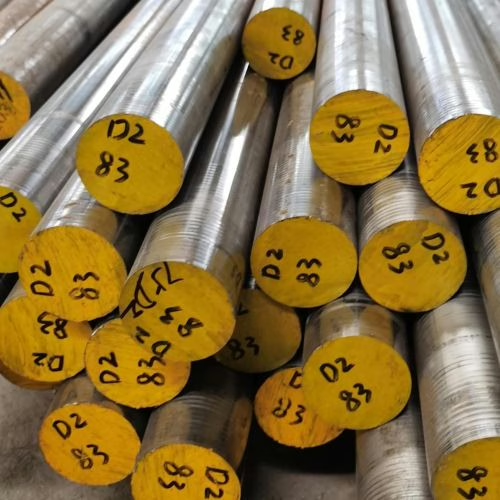
D2 | 1.2379 | SKD11
Standard high-carbon, high-chromium cold-work tool steel for wear resistance, dimensional stability, and cost-performance.
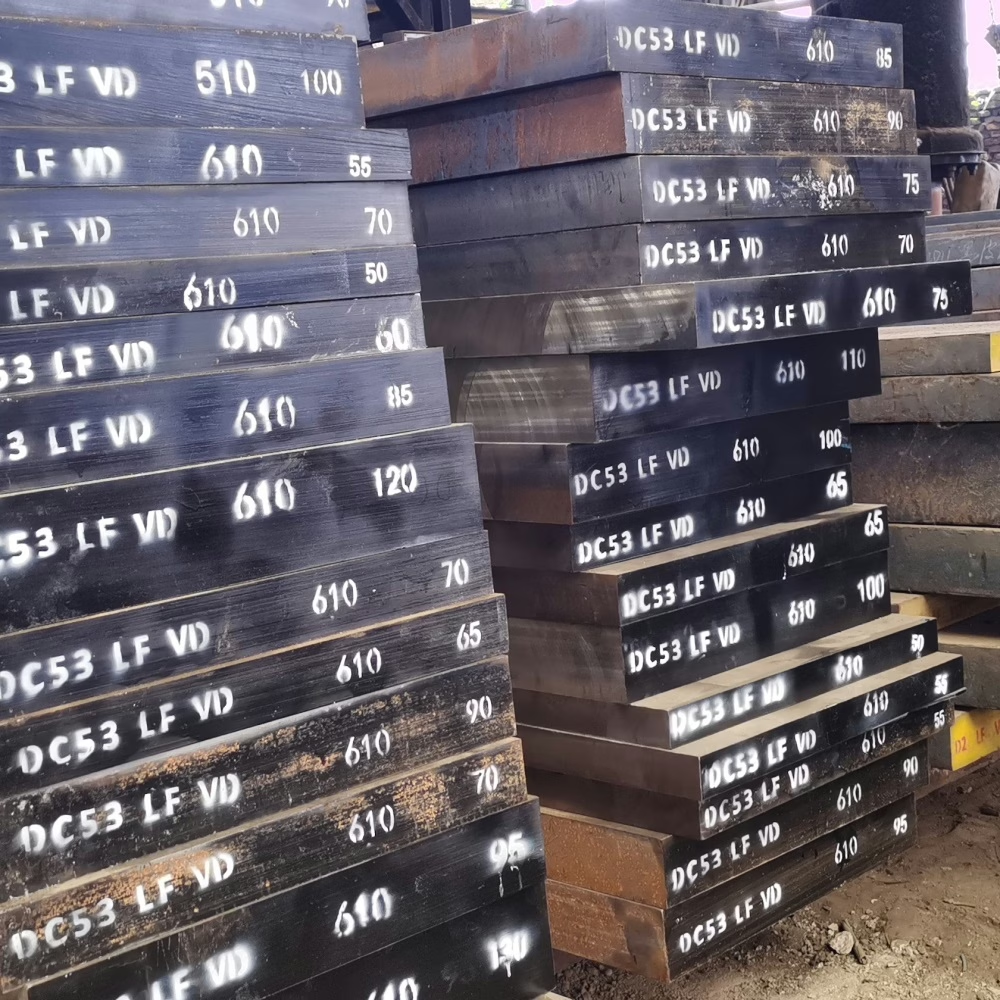
DC53 Tool Steel
Upgraded cold-work die steel used when D2 shows chipping, cracking, EDM problems, or insufficient high-temperature tempering stability.
Quick Comparison
| Item | D2 / 1.2379 / SKD11 | DC53 |
|---|---|---|
| Main position | Standard cold work tool steel | Upgraded cold work die steel |
| Main strength | Wear resistance and cost-performance | Toughness, high hardness, EDM stability |
| Typical working hardness | 58–60 HRC | 60–62 HRC, sometimes 62–63 HRC |
| Wear resistance | Excellent | Excellent |
| Toughness | Moderate to low | Higher than D2 |
| Chipping resistance | Lower, especially at thin edges | Better |
| EDM / wire cutting | Usable, but process control is important | Better suited for complex wire-cut tools |
| Coating stability | Sensitive if low-temperature tempered | Better after high-temperature tempering |
| Cost | Lower | Higher |
| Best use | Standard blanking, forming, slitting, trimming | Precision dies, complex punches, EDM-cut inserts, coated tooling |
Material Positioning
D2 is a high-carbon, high-chromium air-hardening cold work tool steel. It is widely used for blanking dies, forming dies, punches, slitting knives, shear blades, trimming dies, and other wear-resistant cold work tools.
Its strength comes from high carbide volume, especially chromium-rich carbides. These carbides give D2 excellent abrasive wear resistance, but they also reduce toughness. When the tool has thin edges, sharp corners, interrupted load, or poor EDM control, D2 can chip or develop microcracks.
DC53 is a proprietary cold work die steel developed as an improved alternative to D2 / SKD11. It uses a different alloy balance, with lower carbon and chromium than D2 and higher molybdenum. This design improves secondary hardening, high-temperature tempering response, toughness, and EDM processing stability.
DC53 is not a direct international equivalent of D2. It is better understood as a performance upgrade for similar cold-work tooling applications.
Chemical Composition Difference
| Element | D2 / 1.2379 / SKD11 | DC53 |
|---|---|---|
| Carbon | 1.40–1.60% | About 0.95–1.05% |
| Chromium | 11.00–13.50% | About 8.00% |
| Molybdenum | 0.70–1.20% | About 2.00% |
| Vanadium | Up to about 1.10% | About 0.30% |
| Iron | Balance | Balance |
The chemistry explains the difference in behavior.
D2 has more carbon and chromium, so it forms harder carbides. This improves wear resistance, but it also makes the steel less forgiving under impact, thin-edge loading, and EDM thermal stress.
DC53 has a modified carbide structure and a stronger molybdenum effect. It does not rely only on a very high carbide volume. This allows DC53 to keep high hardness while improving toughness and process stability.
Hardness and Tempering Behavior
D2 is commonly used around 58–60 HRC. It can be hardened further, but increasing hardness usually raises the risk of brittleness and edge chipping.
DC53 can commonly reach 60–62 HRC and may reach 62–63 HRC after quenching and high-temperature tempering around 520–530°C. The important point is not only the higher hardness number. The real advantage is that DC53 can maintain high hardness after high-temperature tempering while still offering better toughness than D2.
| Condition | D2 | DC53 |
|---|---|---|
| Common working hardness | 58–60 HRC | 60–62 HRC |
| High-temperature tempering | More hardness and stability trade-off | Better hardness retention |
| Retained austenite control | More sensitive to tempering choice | Better after high-temperature tempering |
| Practical result | Good wear resistance | Higher hardness with better chipping resistance |
For tools that need both high hardness and reduced cracking risk, DC53 has a clear advantage.
EDM and Wire-Cut Performance
Wire-cut EDM creates a heat-affected surface layer. In tool steels with lower toughness or unstable retained austenite, this can lead to microcracks, weak cutting edges, or dimensional movement after machining.
D2 can be wire-cut successfully, but it needs careful process control. Sharp corners, thin sections, poor EDM settings, and insufficient stress relief can make D2 more vulnerable to cracking.
DC53 is generally better for wire-cut EDM because it has higher toughness and better stability after high-temperature tempering. This makes it more suitable for precision stamping dies, fine blanking tools, complex punches, and inserts with narrow or complicated profiles.
Coating and High-Temperature Processing
PVD coating and nitriding often expose the tool to temperatures around 400–550°C. If D2 has been low-temperature tempered, subsequent high-temperature exposure may cause hardness changes, dimensional changes, or the transformation of retained austenite.
DC53 is well-suited to high-temperature tempering. This makes it more compatible with PVD coating and other post-heat-treatment processes that require dimensional stability.
For coated precision tools, DC53 is usually the safer choice.
When to Use D2
Use D2 when the main requirement is wear resistance and the tool design is stable.
D2 is suitable for:
| Application | Why D2 Works |
|---|---|
| Standard blanking dies | Strong wear resistance and stable cost |
| Forming dies | Good dimensional stability after correct heat treatment |
| Slitting knives | Good edge wear resistance |
| Shear blades | Proven cold work performance |
| Trimming dies | Economical for repeat production |
| General punches | Suitable when impact and chipping risk are moderate |
D2 remains the better choice when the tool is not failing due to chipping or cracking, and the buyer needs a widely available, cost-effective cold-work tool steel.
When to Use DC53 Instead of D2
Use DC53 when D2’s wear resistance is acceptable, but the tool fails because of chipping, cracking, EDM damage, or dimensional instability.
| Tooling Problem | Better Choice | Reason |
|---|---|---|
| Cutting edge chips too early | DC53 | Higher toughness |
| Punch cracks under intermittent load | DC53 | Better fracture resistance |
| Tool has thin or sharp working edges | DC53 | Lower chipping risk |
| Tool requires complex wire cutting | DC53 | Better EDM stability |
| Tool will receive PVD coating | DC53 | Better high-temperature stability |
| Precision die needs tight dimensional control | DC53 | Better stability after high-temperature tempering |
| Tool needs higher working hardness | DC53 | Can reach high hardness with better toughness |
DC53 is not necessary for every cold work tool. It is most useful when the extra cost solves a real failure problem.
Need D2 or DC53 tool steel?
Share your grade, size, quantity, hardness target, heat-treatment route, and tooling application for a practical supply suggestion.
Email [email protected] · Tel and WhatsApp +86 180 6294 5370
Related pages
D2 comparisons: D2 vs M2 · D2 vs 4140 · D2 vs O1 · D2 vs A2 · D2 vs D3 · D2 vs 440C · D2 vs S7
Reference: Tool steel heat treatment guide · Tool steel equivalent grades · How to select tool steels
Grade families: D-series tool steels · Tool steel grades · Tool steel material finder
Composition ranges and hardness figures are typical published values for D2 / 1.2379 / SKD11 and DC53. Confirm the exact range against the mill certificate for the delivered lot.