
Hardened Structure of Shock Resisting and Medium Alloy Tool Steels
A properly hardened tool steel looks much the same from one grade to the next, and the grades that break that rule are the ones with a low carbon content and almost no residual carbide. In those steels nearly all of the carbon goes into solution, the martensite comes out coarser, and the light microscope has more to show. This page collects the hardened and tempered micrographs of the shock resisting grades and the medium alloy oil and air hardening grades, S7 alongside S1, S2 and S5, L6, O1 and O2, and the H11 and H13 hot work end of the family.
Why these grades show more structure
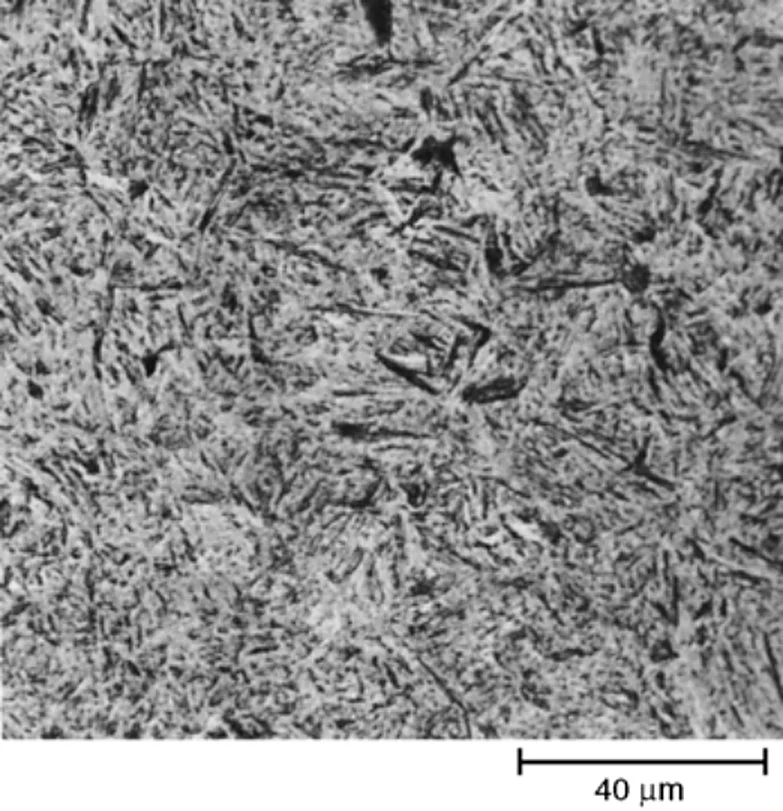
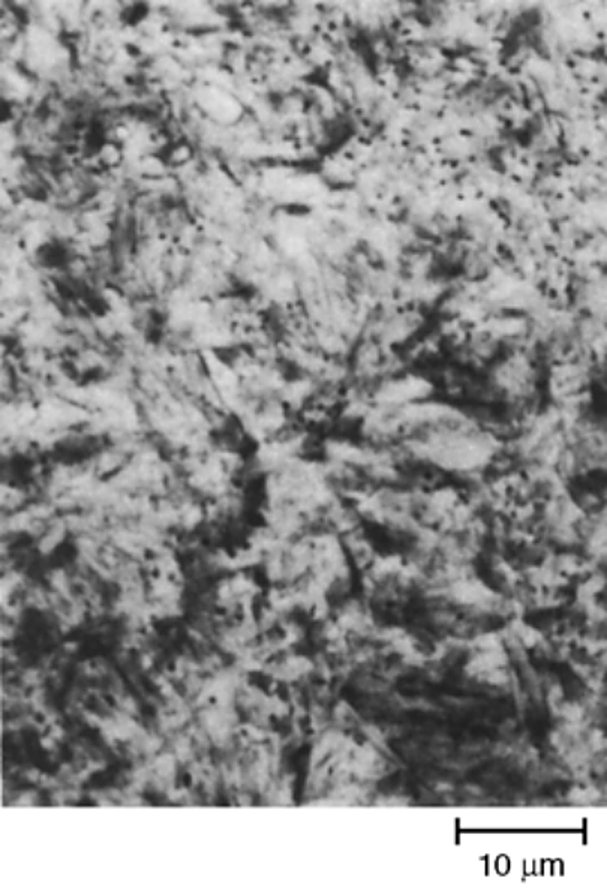
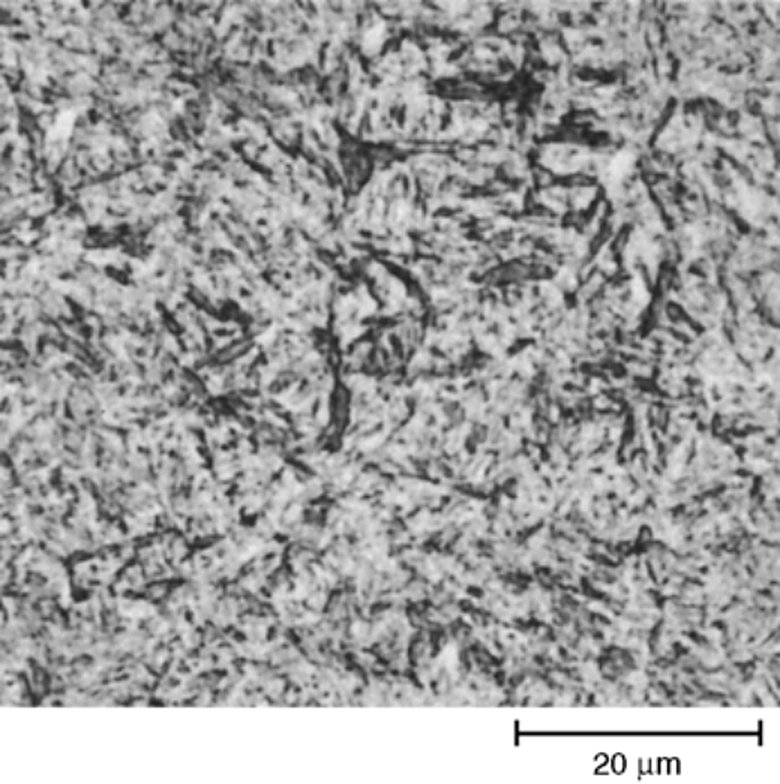
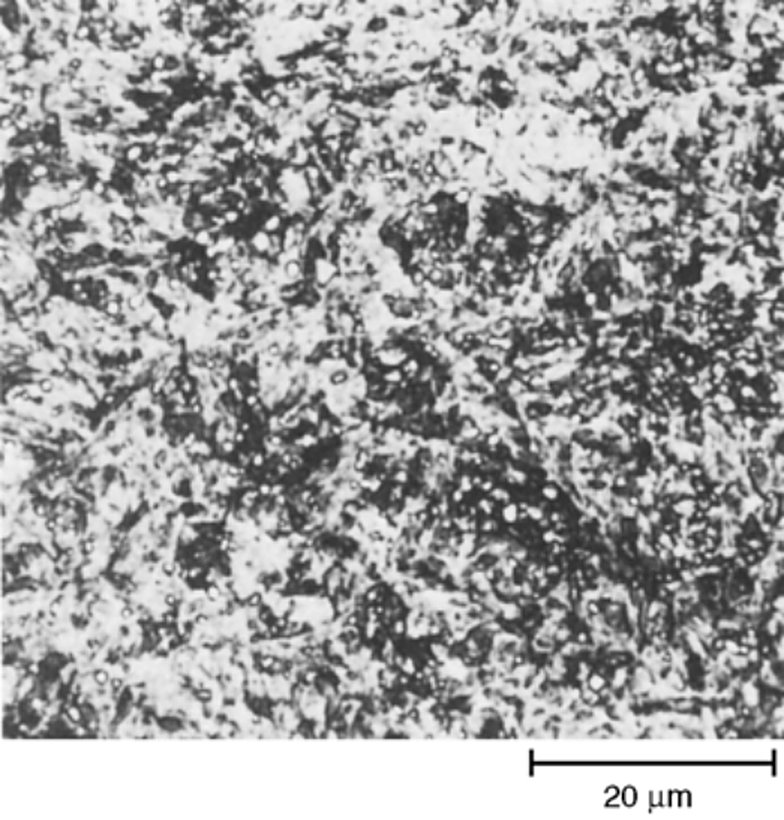
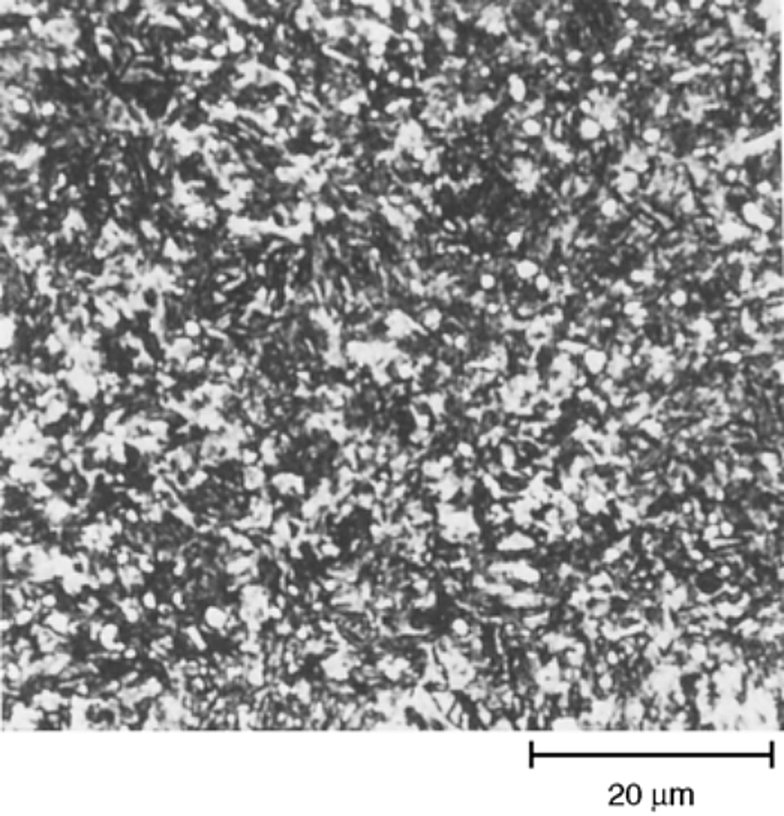
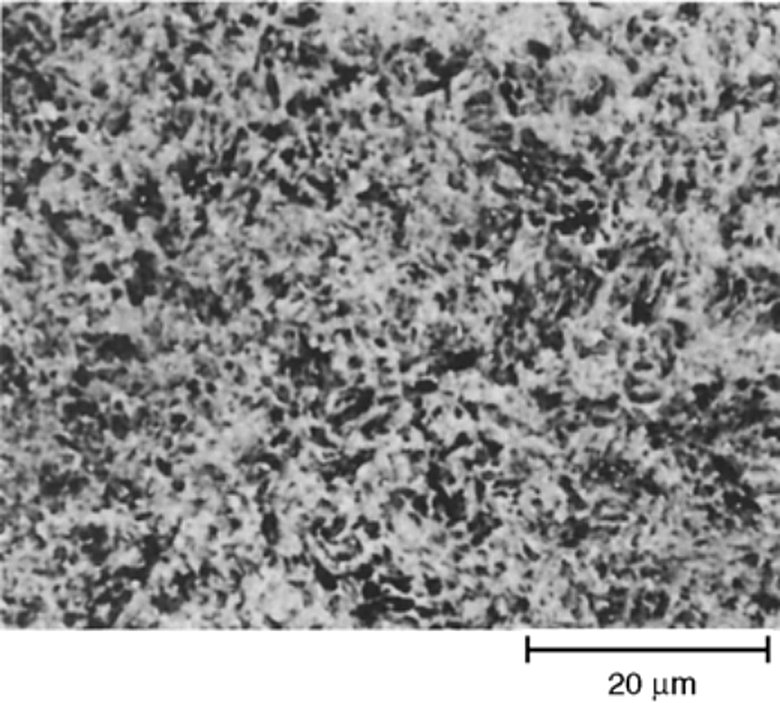
Heat treated tool steel micrographs look similar when the grades are properly treated, and the main difference between them is the amount and the type of residual undissolved carbide, which sets how coarse the plate martensite is. In most tool steels the martensite is so fine that little detail comes out of a light microscope. That is not the case in the shock resisting grades such as S1, S5 and S7, which carry lower carbon, dissolve nearly all of it, and therefore produce a coarser martensite with more detail visible at 500x and 1000x.
Tempered low, at full hardness
The six plates below are the cold work end of the group, all of them quenched and then tempered in the 150 to 175 °C window that relieves the quenching stress without touching the hardness. The hardnesses run from 58 to 61.5 HRC and the tempering temperatures are all low, which is the normal combination for a die or a cutter that has to hold a keen edge at room temperature. What separates the plates is how much carbide is left. S1 and S5 show martensite only, because the grade carries so little residual carbide that none of it survives into the image at these magnifications.
Tempered hot, for a die that runs warm
The hot work grades are quenched and then tempered at a temperature thirty times higher, because the die has to hold its hardness while it is working hot. H11 is air hardened from 1010 °C and double tempered at 510 °C to 52 HRC, and H21, the tungsten hot work grade, is oil quenched from 1200 °C and tempered at 595 °C to 53.5 HRC. Both carry a small amount of very fine carbide in a martensitic matrix, and both are read for the same two things when a die fails early, the prior-austenite grain size and whether the tempering cycle was followed twice.
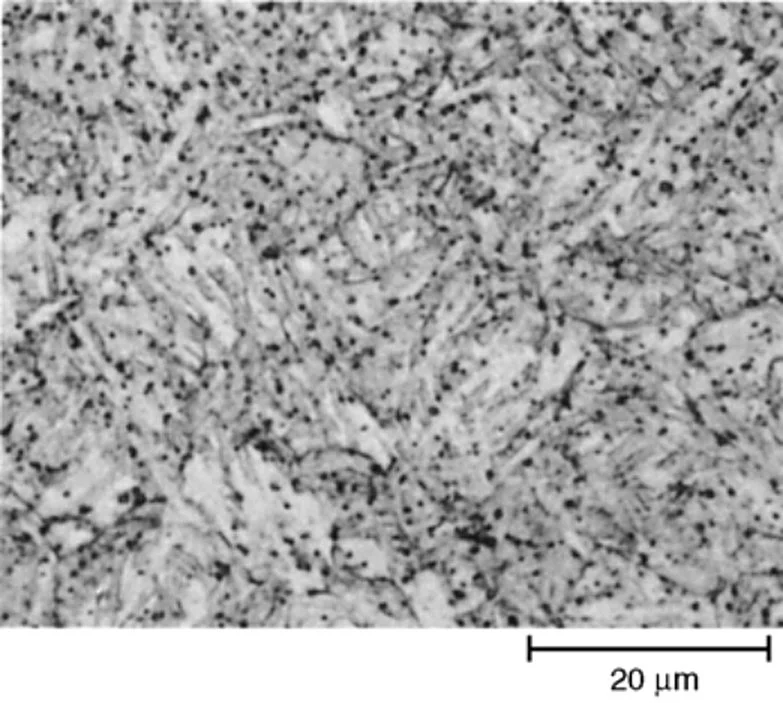
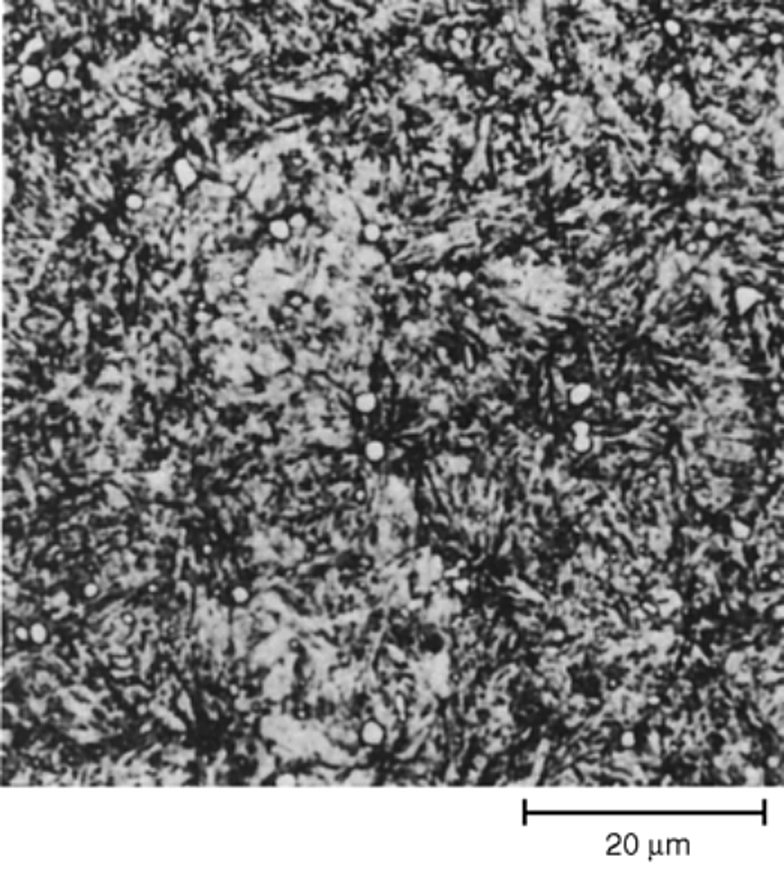
The double temper is not optional on this end of the family. The second temper is what conditions the structure left after the first one, and the hot work dies that fail by cracking rather than by wear are usually the ones that were tempered once. The tempering schedules for the chromium hot work grades are set out on the tool steel heat treatment guide, and the same grades under a nitrided case are on the tool steel microstructure page.
What the plate can and cannot show
A hardened tool steel micrograph settles the grain size, the amount of undissolved carbide and whether the structure is fully martensitic, and it does not settle which carbide is present or how much retained austenite is left. Retained austenite stays invisible until a substantial amount is there, generally more than 10%, and the carbide type needs a tint etch or a higher resolution method to be identified. Both of those checks are set out on the tint etching page, and the hardness each grade holds after each tempering temperature is on the tempering chart.
Compiled from ASM Handbook, Volume 9, Metallography and Microstructures, article Metallographic Techniques for Tool Steels by George F. Vander Voort, ASM International, 2004 (heat treated microstructures section, Fig. 49 to Fig. 53, Fig. 57, Fig. 58 and Fig. 60). Every caption was read from the searchable text layer of the file and checked against the printed plate, and each plate was cropped from the file at 1.5 times its printed pixel width. The plates are a reference summary of published practice rather than an Aobo Steel specification, so confirm the grade, the austenitizing temperature and the tempering cycle against the material test certificate before a process sheet is written.