
Aobo Steel | Global Tool Steel Supplier in China
DC53 Tool Steel Supplier for Bulk Orders
High-Toughness Cold Work Die Steel | Annealed Delivery | For Global Distributors
- 100% UT Tested – SEP 1921-82 Class D/d Guaranteed
- Annealed State Delivery · MTC (EN 10204 3.1)
- Surface: Black Scale / Turned / Mill Finish / Polished
- Ready stock in Huangshi — 1,000 t of tool steel
Check stock & price
Send the sizes, quantity and destination port — we confirm stock and price within one working day.
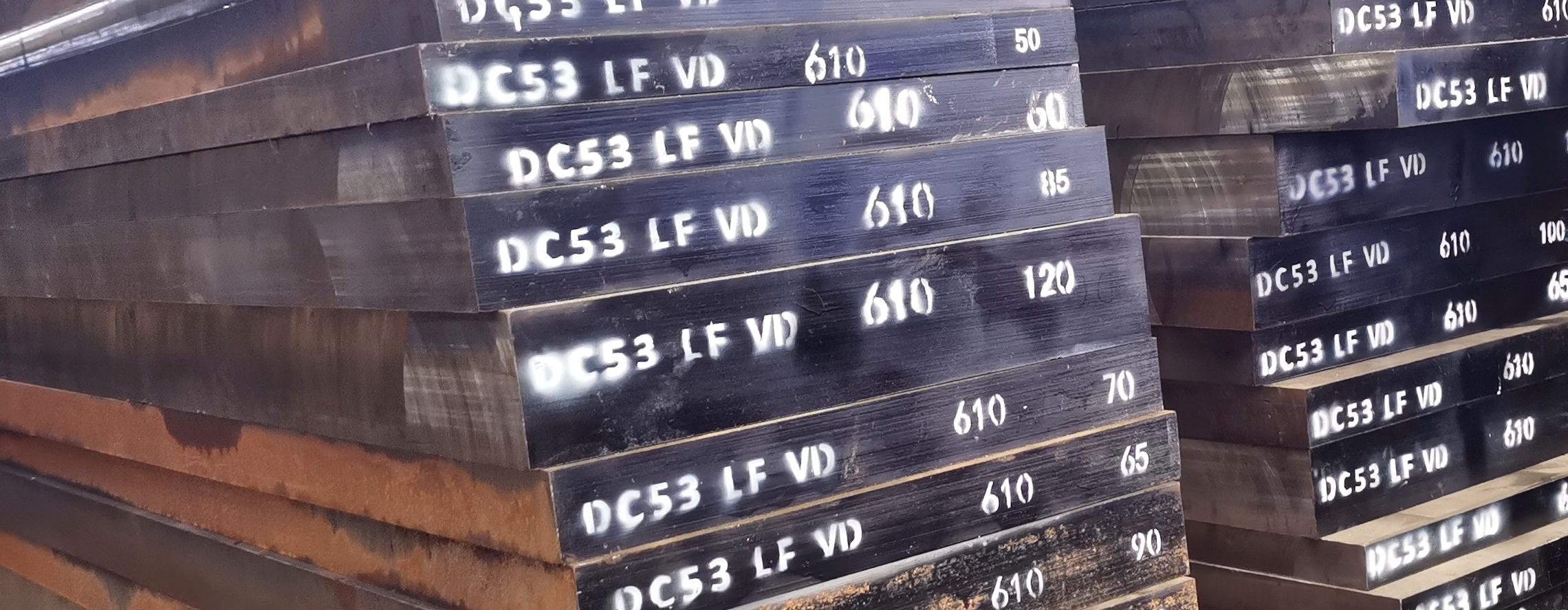
DC53 steel is a high-chromium steel and a general-purpose high-toughness cold-work die steel. After quenching and tempering at 520-530°C, its hardness can reach 62-63 HRC, exceeding that of SKD11 steel. Although its hardness is 2-3 HRC higher, its wear resistance and impact toughness are significantly improved, making it an excellent steel grade for replacing D2. DC53 round bar and plate are held in stock in Huangshi, drawn from our 1,000 t tool steel stock; sizes outside the range below are produced to order.
DC53 Tool Steel Supply Overview
| Grade | JIS DC53 |
| Delivery Condition | Fully Annealed (Soft Condition for Machining) |
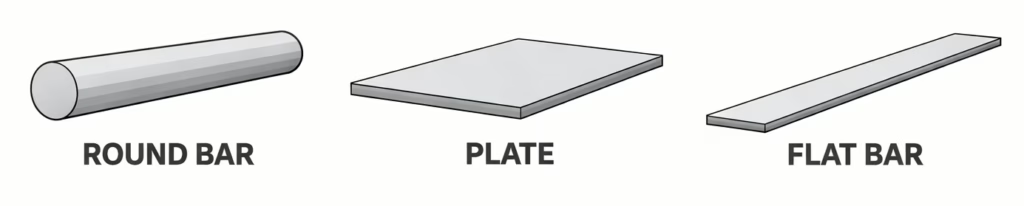
| Available Forms | Round Bar / Flat Bar / Plate / Forged Block Plate also milled square or ground flat to finished size — precision ground tool steel plate |
| Stock | 1,000 t of tool steel in stock in Huangshi — DC53 is supplied from it within the size range below |
| Size Range | Flat bar 8–810 mm · Round bar Φ12–Φ500 mm — full size table |
| Monthly Production Capacity | Approx. 1,200 metric tons |
| Recommended Export Quantity | Full 20GP container (~26 tons) |
| MOQ | 5 tons |
| Lead Time (With Ingot Stock) | Approx. 20 days |
| Lead Time (Fresh Melt) | 30–45 days |
| Lead Time (ESR Grade) | Approx. 60 days |
| Inspection | In-house UT team + Third-party inspection available |
| Documentation | MTC (EN 10204 3.1) + UT Report |
Why Global Distributors Source DC53 from Aobo Steel
- Continuous monthly supply of around 1,200 tons
- MOQ from 5 tons for wholesale orders
- Container-optimized bar and plate lengths
- Mixed sizes are supported for export loading
- Annealed delivery for downstream machining
- Stable sourcing through integrated supply chain partners
- UT inspection available to SEP 1921-82 D/d or E/e
- MTC and batch traceability with each shipment
- Heat number tracking for order control
- Black, turned, and polished surface options
- Bulk export packing for sea shipment
- Clear conversion path to the dedicated bulk supply page
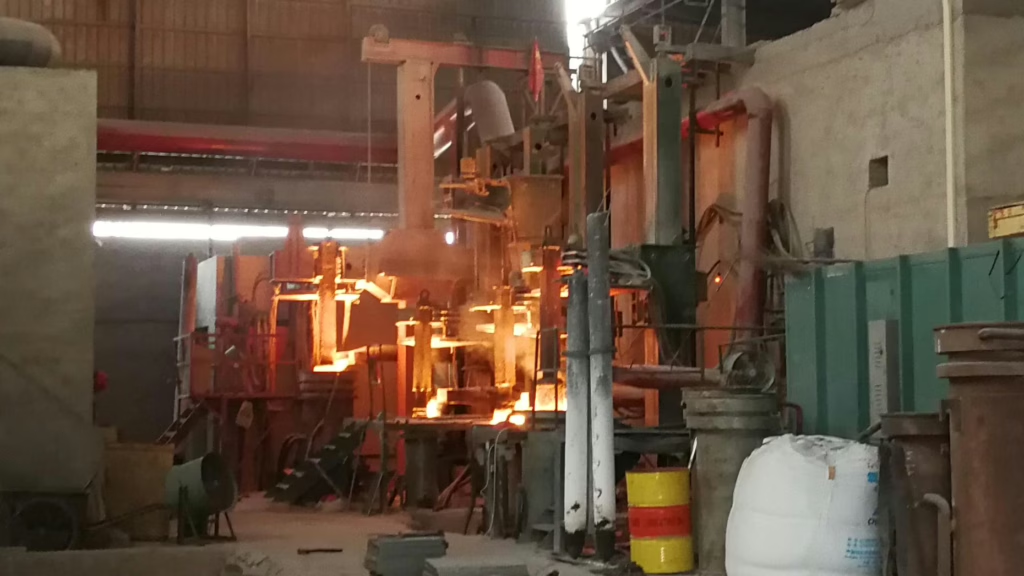
Stable Production for Long-Term Bulk Supply
- Continuous monthly output of around 1,200 tons
- Continuous production cycles for inventory replenishment
- ESR (Electro-Slag Remelting) is available upon request
- Stable alloy sourcing to reduce supply interruption risk
- Full batch traceability linked to the original heat number
Available DC53 Tool Steel Forms and Size Range
| Shape | Thickness / Diameter (mm) | Width (mm) | Length |
|---|---|---|---|
| Flats (forged, black surface) | 35–400 | 200–810 | 2–5 m |
| Flats (forged, machined surface) | 30–400 | 200–810 | 2–5 m |
| Flats (hot rolled, black surface) | 8–60 | 210–610 | 3–5 m |
| Rounds (forged, black and turned) | Φ60–Φ500 | — | 2–5 m |
| Rounds (rolled, black and turned) | Φ12–Φ60 | — | 3–5.8 m |
Supply range for forged and rolled tool steel — not a stock list. Stock is held on part of this range; anything outside it is produced to order: about 25 days with ingot in stock, 30–45 days for a fresh melt, 60 days for ESR.
Quality Control for Bulk Orders
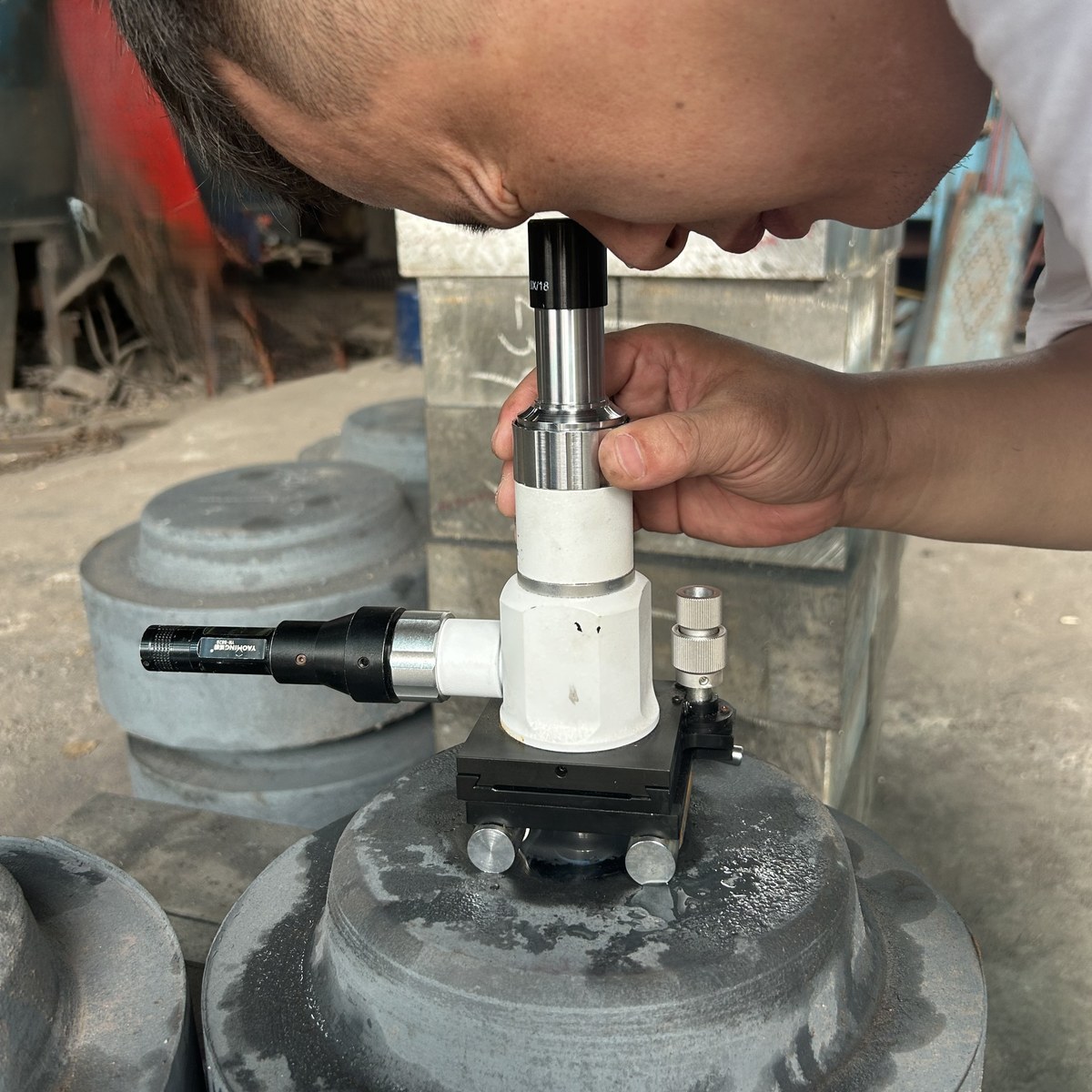
Every batch of tool steel supplied by Aobo Steel is verified before shipment to ensure grade accuracy, internal soundness, and traceability for bulk orders.
- Chemical composition verified by a spectrometer
- Ultrasonic testing available (SEP 1921-82)
- Delivered in spheroidized annealed condition
- Mill Test Certificate (EN 10204 3.1) with heat number
- Dimensional and surface inspection before shipment
Export Packaging and Container Loading
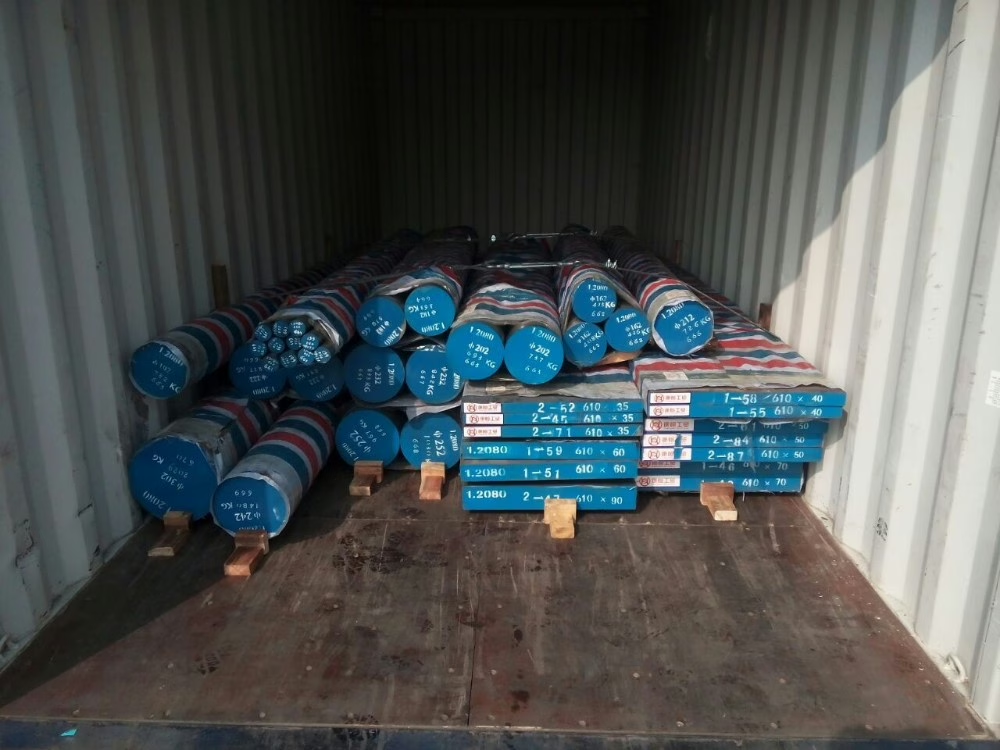
- Professional seaworthy export packing
- 20GP loading optimized up to ~26 tons
- Mixed grades and mixed sizes supported
- Anti-rust protection for long sea transit
For international shipments, full-container loading is strongly recommended to ensure cost efficiency and smoother customs processing.
Application
Blanking dies, cold-forming dies, cold-drawing dies, forming roll punches, and cold-extrusion dies are essential for shaping and cutting materials in cold-working processes.
Precision blanking and various types of stamping dies for wire-cutting processing are ideal for intricate, accurate cutting tasks.
Plastic deformation dies for difficult-to-machine materials: This includes cold-forging, deep-drawing, and thread-rolling dies, as well as high-speed blanking punches and stainless-steel sheet punches, suited for challenging material processing.
Cold-stamping dies requiring high wear resistance, hardness, and toughness are ideal for demanding stamping operations that require durability and strength.
Dies with higher performance requirements than D2 steel and molds needing exceptional toughness: DC53 offers superior performance and excellent cost-effectiveness in these scenarios.
Large molds and precision molds: Suitable for applications where size and precision are critical.
Composition
| Element | Carbon (C) | Silicon (Si) | Manganese (Mn) | Chromium (Cr) | Molybdenum (Mo) | Vanadium (V) |
| Percentage (%) | 0.90 – 1.10 | 1 | 0.4 | 8 | 2 | 0.3 |
Heat treatment
Hardening process
The first step is quenching. The process involves heating the material to 940-960°C, then rapidly cooling, typically with air or oil.
Tempering
After quenching, a tempering treatment is applied. There are two types of tempering for DC53 steel:
- Low-temperature tempering (180-220°C): This method is suitable for molds requiring very high hardness. The hardness after tempering can reach 60-62 HRC, which is particularly wear-resistant.
- High-temperature tempering (520-530°C): This method maintains high hardness (62-63 HRC) while increasing ductility, which is ideal for molds that need to be strong and durable.
Heat treatment precautions
- It should be in a step-warming manner to avoid heating too fast and causing the material to open up.
- After tempering the material, the air cools to room temperature.
- If the material is used to make precision molds, it is recommended that it be tempered at 520-530°C for optimal results.