
High Speed Steel Microstructure and Carbide Distribution
High speed steel is bought for the carbide it carries, and the microstructure is where the difference between one supplier and another shows up. A conventional ingot route leaves carbide in bands and stringers that follow the solidification pattern, and the powder metallurgy route leaves the same carbide chemistry in a structure with no bands at all. This page collects the hardened structures of M2, M1 and M4 together with the full powder metallurgy series printed for T15, from the pressed and slow cooled condition through the annealed and the hardened state.
What the hardened structure of a high speed steel contains
A high speed steel is hardened from a much higher austenitizing temperature than a cold work grade, and the structure that comes out is martensite with a large undissolved carbide population. The carbide is not an impurity, it is the wear resistant phase, and the amount of it that survives the austenitizing soak is what separates the grades. M1 sits at the low vanadium end of the molybdenum family, and M4 carries more vanadium, which raises the volume of hard MC carbide in the structure. Both plates below are at the same 62 HRC, and the difference between them is the carbide population rather than the matrix.
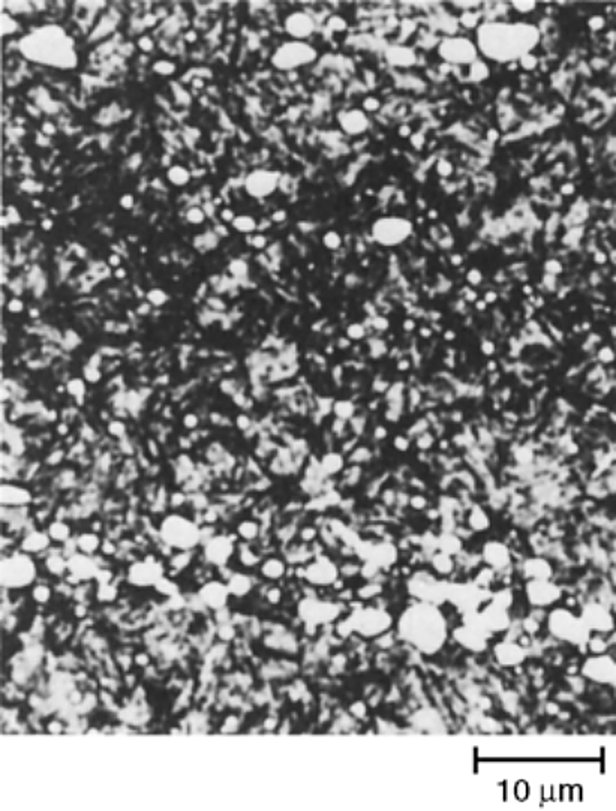
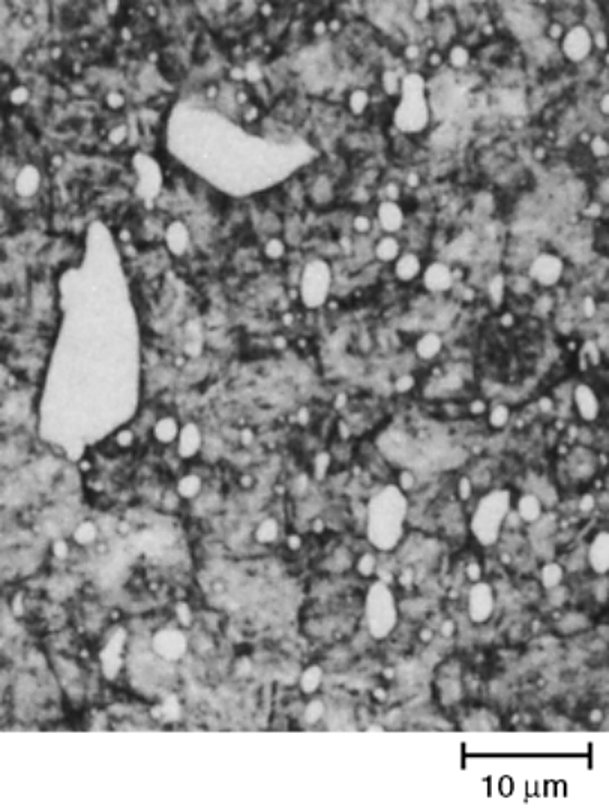
The same rule is visible across the molybdenum family, where a higher alloy content buys wear resistance with a heavier carbide load. The hardened structures of M2 and M42, the two grades most often quoted against each other, are on the tool steel microstructure page, and the property comparison for the high speed grades is on the high speed steel property chart.
Why the ingot route needs help
Highly alloyed high speed steels are difficult to make by ingot casting, because the alloy and the carbide segregate as the ingot solidifies and the yield from ingot to finished bar is poor. The segregation also survives hot working as banding, which is what a macroetch of a large bar shows, and it leaves the centre of a big bar with a heavier and coarser carbide population than the outside. The powder metallurgy route solves it by solidifying the steel as powder, so there is no ingot and no macroscopic segregation to inherit. Some grades exist only as powder metallurgy product for that reason.
T15 through the powder metallurgy route
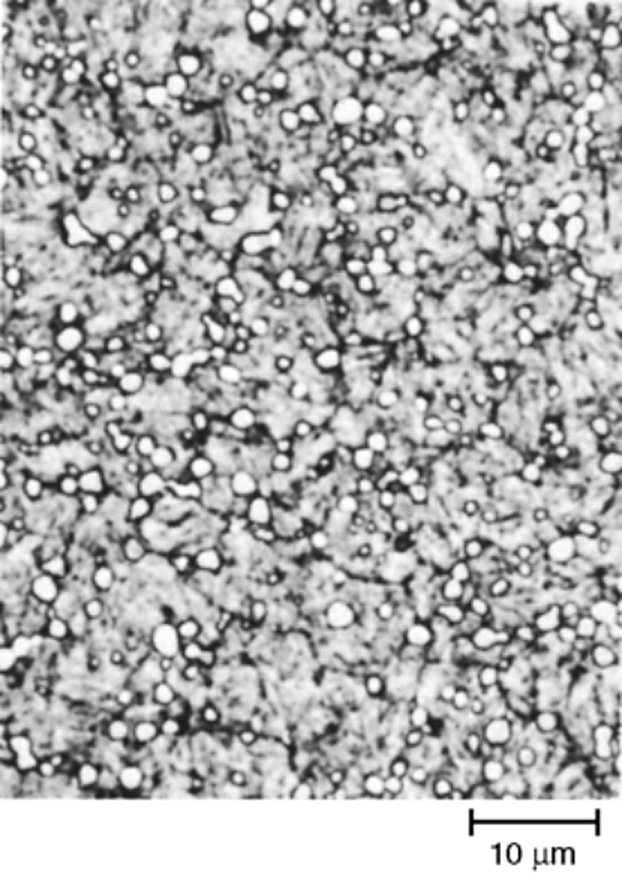
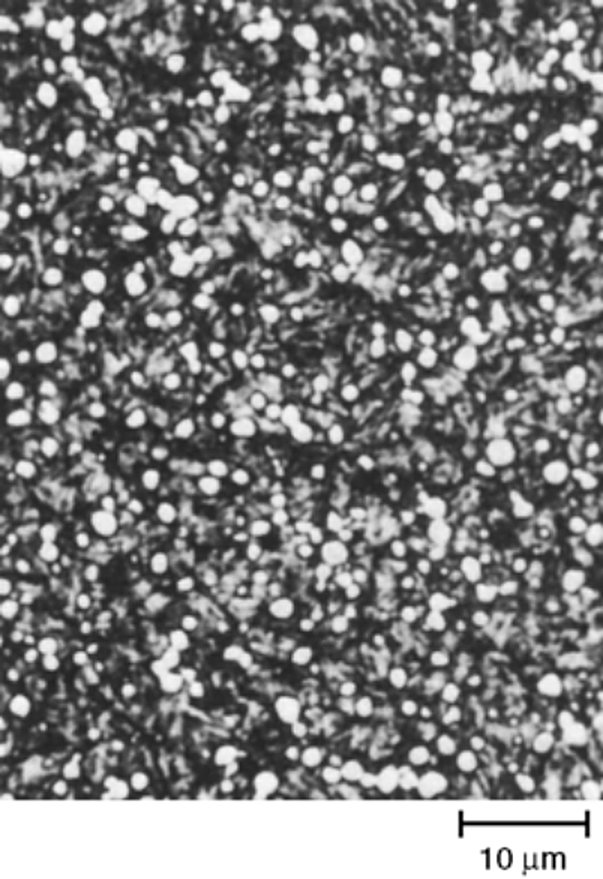
The four plates below follow one powder metallurgy grade from the consolidation step to the finished hardened structure. The first is the material as it came out of a hot isostatic press and then cooled slowly, which leaves it partly annealed at 28 HRC with fine carbide spread evenly through the matrix and no segregation anywhere in the field. The second is the same material after it was pressed, forged and annealed, which is the fully annealed delivery condition at 24 HRC. In both of them the carbide is fine and evenly distributed, which is the whole point of the route.
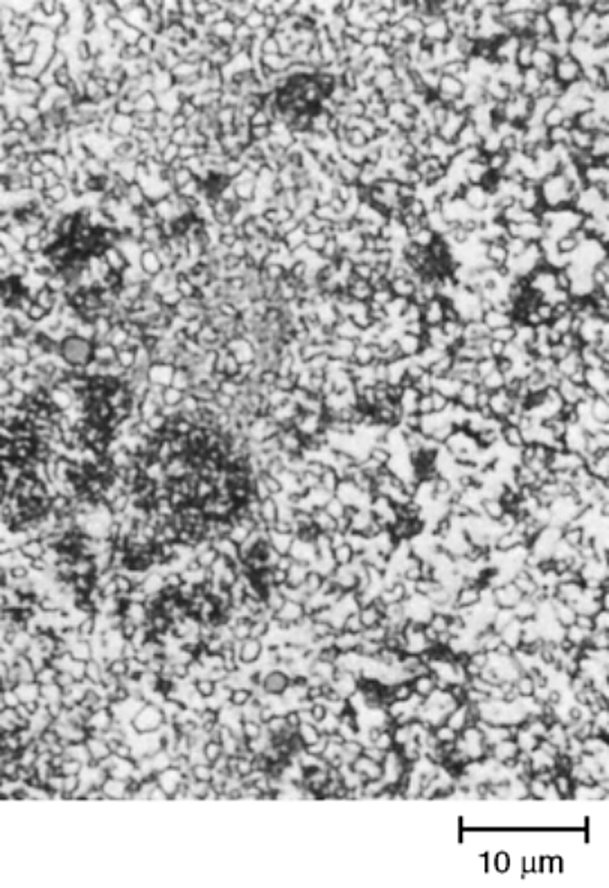
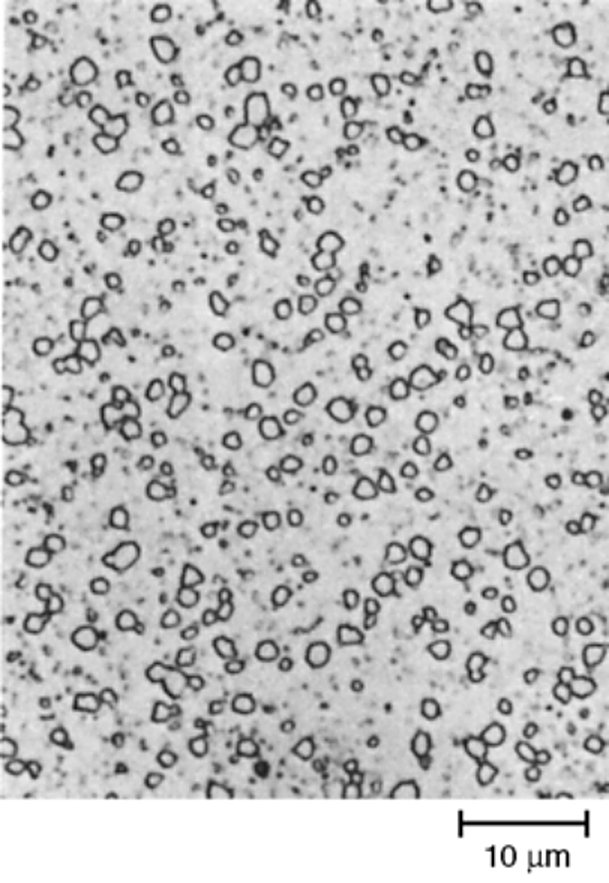
The last two plates are the hardened condition. The sample was heated to 1230 °C for 5 minutes in a salt bath, oil quenched and triple tempered for 2 h at 540 °C to reach 65 HRC, and it is shown twice under two different reagents. Nital gives the standard reading of martensite with undissolved carbide, and the metabisulfite reagent separates the carbide from the matrix more strongly, which is the reagent to reach for when the carbide population has to be counted rather than just seen.
What to ask for on a powder metallurgy grade
Two questions separate a good powder metallurgy delivery from a poor one, and both are answered in the micrograph rather than on the certificate. The first is whether the carbide is distributed evenly with no visible banding or stringer, which the plates above show and a macroetch of the bar confirms at a coarser scale. The second is whether the annealed hardness is inside the band the grade is specified at, because a partly annealed powder metallurgy bar machines differently from a fully annealed one and the two conditions can look similar at a glance. Asking for the delivery condition and the annealing state in writing, next to the hardness, is what makes the two comparable.
The carbide types themselves are listed on the carbide types and hardness page, the volume fraction each grade carries is on the carbide volume fraction page, and the grades and their equivalents are on the high speed steel grades page.
Compiled from ASM Handbook, Volume 9, Metallography and Microstructures, article Metallographic Techniques for Tool Steels by George F. Vander Voort, ASM International, 2004 (powder metallurgy section, Fig. 63, 65 and 79 to 82). Every caption was read from the searchable text layer of the file and checked against the printed plate, and each plate was cropped from the file at 1.5 times its printed pixel width. The plates are a reference summary of published practice rather than an Aobo Steel specification, so confirm the grade, the route and the delivery hardness against the material test certificate before an order is placed.