
H13 vs H11 acero para herramientas: comparación de desgaste térmico, agrietamiento y falla de herramientas
H13 y H11 son ambos aceros para herramientas de trabajo en caliente con 5% de cromo utilizados para matrices, moldes, insertos, punzones y herramientas de alta temperatura. Tienen sistemas de aleación similares, pero no se seleccionan para las mismas condiciones de falla.
Seleccione H13 si la herramienta falla debido al calor, desgaste en caliente, erosión superficial, agrietamiento térmico o pérdida de dureza. Opte por H11 si la falla es causada por impacto, agrietamiento, fractura o tensión en secciones grandes.
Acero para herramientas H13 y H11 disponible en Aobo Steel
Aobo Steel suministra aceros para herramientas de trabajo en caliente H13 y H11 para matrices de fundición a presión, herramientas de extrusión, matrices de forja, punzones en caliente, insertos, núcleos y herramientas de alta temperatura.
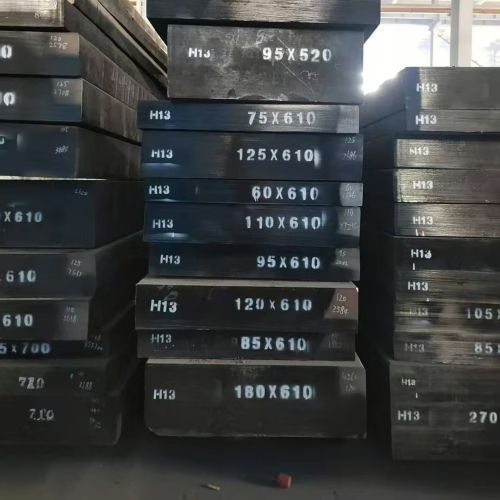
H13 | 1.2344 | SKD61
Acero para herramientas de trabajo en caliente para desgaste en caliente, fundición a presión, herramientas de extrusión, resistencia al agrietamiento térmico, respuesta a la nitruración y estabilidad superficial en caliente.
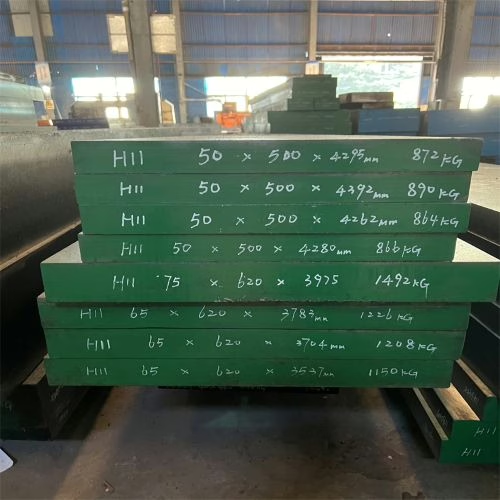
H11 | 1.2343 | SKD6
Acero para herramientas de trabajo en caliente para impacto, resistencia al agrietamiento, herramientas sensibles a la fractura, punzones en caliente, matrices de forja y herramientas grandes sometidas a tensión.
H13 vs H11 acero para herramientas de un vistazo
| Pregunta de selección | Mejor opción inicial |
|---|---|
| El desgaste en caliente, la erosión, el lavado o la degradación superficial controlan la vida útil de la herramienta | H13 |
| El impacto, agrietamiento, desportillado o fractura controlan la vida útil de la herramienta | H11 |
| Las herramientas de fundición a presión o extrusión necesitan mejor estabilidad superficial en caliente | H13 |
| Las matrices de forja, punzones en caliente o herramientas grandes necesitan mayor resistencia al agrietamiento | H11 |
| Se requiere una superficie nitrurada severa resistente al desgaste en caliente | H13 |
| Una mejor maquinabilidad es importante | H11 |
| Se requiere alta pulibilidad, especialmente para moldes de precisión | ESR H13 |
| El modo de falla real no está claro | Revise las condiciones de trabajo antes de seleccionar |
H13 suele ser el punto de partida más sólido para herramientas de desgaste en caliente. H11 es más seguro cuando el agrietamiento, el impacto o la fractura es la principal preocupación.
Grados equivalentes de acero para herramientas H13 vs H11
Diferentes países y normas utilizan nombres distintos para H13 y H11. Estas designaciones ayudan a los usuarios a comparar materiales entre mercados, pero no son sustitutos automáticos. Para aplicaciones de herramientas, los grados equivalentes siempre deben confirmarse con base en la composición química, condición de dureza, ruta de fusión, requisitos de inspección y condiciones de trabajo.
| Sistema estándar | Acero para herramientas H13 | Acero para herramientas H11 |
|---|---|---|
| UNS | T20813 | T20811 |
| DIN / EN | 1.2344 / X40CrMoV5-1 | 1.2343 / X38CrMoV5-1 |
| JIS | SKD61 | SKD6 |
| GB / China | 4Cr5MoSiV1 | Confirmar por composición o especificación tipo H11 |
| AFNOR / Francia | Z40CDV5 | Z38CDV5 |
| BS / Reino Unido | BH13 | BH11 |
| SS / Suecia | 2242 | – |
| UNI / Italia | – | X35CrMo05KU |
| ASTM | A681 H13 | A681 H11 |
| Aeroespacial AMS | – | AMS 6437 / 6485 / 6487 / 6488 |
Diferencia de composición química entre H13 y H11
La principal diferencia química entre H13 y H11 es el contenido de vanadio.
H13 contiene más vanadio, lo que promueve la formación de carburos duros. Esto mejora resistencia al desgaste en caliente, la estabilidad superficial y la resistencia al ablandamiento durante el servicio en caliente.
H11 contiene menos vanadio, lo que reduce el volumen de carburos y ayuda a mejorar la tenacidad, la maquinabilidad y la resistencia al agrietamiento.
| Elemento | Rango típico de H11 (%) | Rango típico de H13 (%) | Significado práctico |
|---|---|---|---|
| Carbono | 0.33-0.43 | 0.32-0.45 | Base de endurecimiento similar |
| Cromo | 4.75-5.50 | 4.75-5.50 | Ambos pertenecen a la familia de aceros de trabajo en caliente con 5% de cromo |
| Molibdeno | 1.10-1.60 | 1.10-1.75 | Soporta resistencia en caliente y resistencia al revenido |
| Vanadio | 0.30-0.60 | 0.80-1.20 | H13 obtiene mayor resistencia al desgaste respaldada por carburos |
| Silicio | 0.80-1.20 | 0.80-1.20 | Soporta rendimiento en trabajo en caliente y resistencia a la oxidación |
Por lo tanto, H13 prioriza el desgaste en caliente y la estabilidad superficial, mientras que H11 enfatiza la tenacidad y la resistencia a la fractura.
Comparación de rendimiento de H13 y H11
| Factor de rendimiento | Acero para herramientas H13 | Acero para herramientas H11 | Significado de la selección |
|---|---|---|---|
| Resistencia al desgaste | Más alto | De moderado a bueno | Elija H13 cuando el desgaste superficial controla la vida útil de la herramienta |
| dureza caliente | Mejor bajo calor sostenido | Bien | Elija H13 cuando la herramienta deba resistir el ablandamiento durante el contacto en caliente |
| Tenacidad | Bien | Mejor | Elija H11 cuando el agrietamiento o el desportillado sea el riesgo principal |
| Resistencia a los golpes | Bien | Mejor | Elija H11 para herramientas sometidas a impacto |
| Resistencia al agrietamiento térmico | Fuerte en muchas condiciones de fundición a presión y extrusión | Buena, especialmente cuando el crecimiento de grietas es la principal preocupación | Elija según si el daño superficial o la propagación de grietas es más grave |
| maquinabilidad | Más difícil | Más fácil | H11 puede reducir la dificultad de mecanizado |
| Respuesta a la nitruración | Excelente | Bueno a excelente | H13 se prefiere a menudo para superficies con desgaste en caliente severo |
| Confiabilidad en secciones grandes | Bueno con el procesamiento adecuado | A menudo más seguro donde el riesgo de agrietamiento es alto | H11 puede considerarse para herramientas grandes o altamente solicitadas |
Wear Resistance and Hot Hardness
H13 rinde mejor cuando la superficie de trabajo está expuesta a abrasión en caliente, flujo de metal fundido, erosión, lavado o contacto de alta fricción. Esto lo convierte en una opción sólida para matrices de fundición a presión, herramientas de extrusión, herramientas de conformado en caliente y moldes donde la estabilidad superficial controla la vida útil de la herramienta.
H13 también tiene mejor resistencia a la pérdida de dureza bajo contacto en caliente prolongado. Sin embargo, la temperatura de trabajo segura no debe tratarse como un número fijo. Depende del requisito de dureza, la condición de revenido, la práctica de enfriamiento y la vida útil esperada de la herramienta.
Toughness and Crack Resistance
H11 rinde mejor cuando la herramienta está expuesta a impacto, concentración de tensiones, carga mecánica cíclica o tensiones en secciones grandes. Es menos sensible a la iniciación y propagación de grietas que H13 bajo carga mecánica severa.
Esto hace que H11 sea útil para matrices de forja por martillo, punzones en caliente, herramientas grandes de trabajo en caliente y aplicaciones donde la fractura súbita es más peligrosa que el desgaste superficial gradual.
Fatiga térmica y agrietamiento por calor
Ambos aceros pueden sufrir agrietamiento por calor bajo calentamiento y enfriamiento repetidos.
H13 se prefiere generalmente cuando el daño principal comienza en la superficie, como agrietamiento por calor o erosión. H13 es ideal para daño iniciado en la superficie. H11 es adecuado para tensión térmica y mecánica pesada combinada, donde la resistencia al agrietamiento es más importante que la máxima resistencia al desgaste superficial.
Una herramienta que se desgasta en la superficie no debe seleccionarse de la misma manera que una herramienta que se agrieta bajo impacto.
| Aplicación / Condición | Mejor opción inicial | Razón |
|---|---|---|
| matrices de fundición de aluminio | H13 | Mejor resistencia al agrietamiento por calor, erosión por metal fundido y desgaste superficial en caliente |
| Fundición a presión de magnesio o latón | H13 | Mayor dureza en caliente y estabilidad superficial bajo ciclos térmicos |
| Fundición a presión de zinc | H13 or H11 | H13 para desgaste superficial; H11 donde importan la temperatura de operación más baja y el riesgo de agrietamiento |
| Insertos y machos de fundición a presión | H13 / ESR H13 | Mejor estabilidad superficial, pulibilidad y resistencia al agrietamiento por calor |
| matrices de extrusión en caliente | H13 | Mejor resistencia al desgaste en caliente y resistencia al ablandamiento térmico |
| Mandriles de extrusión y bloques ficticios | H13 or H11 | H13 para desgaste; H11 para impacto o concentración de tensiones |
| Troqueles de forja por martillo | H11 | Mejor tenacidad y resistencia al choque |
| Punzones en caliente y matrices de recalcado en caliente | H11 | Mejor resistencia al impacto y al agrietamiento |
| Matrices de forja con desgaste abrasivo severo | H13 | Mejor resistencia al desgaste superficial |
| Bloques grandes de matrices para trabajo en caliente | Puede considerarse H11 | El tamaño de sección y la resistencia al agrietamiento se vuelven más importantes |
| cuchillas de corte en caliente | H11 or H13 | H11 para impacto; H13 para desgaste en caliente |
| Moldes de inyección de plástico | H13 | Buena resistencia al desgaste, pulibilidad y respuesta a la nitruración |
| Componentes estructurales de alta solicitación | H11 | Mejor tenacidad, resistencia y resistencia a la fatiga |
Para la mayoría de las herramientas de fundición a presión y trabajo en caliente, comience con H13 debido a sus propiedades para trabajo en caliente. Para herramientas expuestas a impacto severo, secciones grandes o alto riesgo de agrietamiento, considere más seriamente H11 por su tenacidad.
Diferencias de fabricación
H13 y H11 son similares en comportamiento de tratamiento térmico, pero su contenido de carburos afecta el mecanizado, el tratamiento superficial y el rendimiento posterior al tratamiento térmico.
| Factor de fabricación | Acero para herramientas H13 | Acero para herramientas H11 | Significado práctico |
|---|---|---|---|
| maquinabilidad | Calificación relativa del 45-55 % | Calificación relativa del 55-65 % | H11 suele ser más fácil de mecanizar |
| Distorsión por tratamiento térmico | Baja cuando se controla adecuadamente | Baja cuando se controla adecuadamente | Ambos son adecuados para herramientas complejas |
| Templado | Se requiere revenido a alta temperatura | Se requiere revenido a alta temperatura | El revenido correcto es necesario para equilibrar dureza y tenacidad |
| Respuesta a la nitruración | Excelente | Bueno a excelente | H13 se prefiere a menudo para servicio con desgaste en caliente severo |
| Reparación por soldadura | Posible pero requiere control estricto | Posible pero requiere control estricto | Ambos necesitan precalentamiento, enfriamiento lento y tratamiento posterior a la soldadura |
H11 suele ser más fácil de mecanizar porque contiene menos vanadio y menos carburos duros. El H13 es más exigente con las herramientas de corte, pero ofrece mejor resistencia al desgaste en caliente después de un tratamiento térmico e ingeniería de superficies adecuados.
Ambos grados requieren un tratamiento térmico adecuado y atmosphere control. Para matrices de precisión y herramientas de trabajo en caliente, normalmente se prefiere el tratamiento térmico al vacío o una atmósfera protectora controlada.
La nitruración puede mejorar la resistencia al desgaste superficial en ambos grados. El H13 suele ser la opción más sólida cuando se utiliza la nitruración para mejorar la resistencia al desgaste severo en caliente, al agarrotamiento o a la erosión.
Errores comunes de selección
Los principales errores no se deben a los nombres de los grados. Normalmente provienen de malinterpretar el modo de falla real.
| Error | Resultado |
|---|---|
| Usar H13 cuando la fractura por impacto es el modo de falla real | La herramienta puede agrietarse o desportillarse antes de alcanzar la vida útil por desgaste |
| Usar H11 cuando el desgaste severo en caliente controla la vida útil de la herramienta | La superficie puede desgastarse, erosionarse o ablandarse demasiado rápido |
| Tratar el H13 y el H11 como sustitutos directos | El grado seleccionado puede no coincidir con la tensión, la temperatura o la condición de desgaste |
| Elegir solo por dureza | La dureza por sí sola no muestra la resistencia al desgaste, la tenacidad ni el comportamiento frente a la fatiga térmica |
| Ignorar el tamaño de la sección | Las herramientas grandes necesitan mayor atención a la resistencia al agrietamiento y a la uniformidad del tratamiento térmico |
Para el H13, el error común de selección es usarlo donde la fractura por impacto es más grave que el desgaste superficial.
Para el H11, el error común de selección es usarlo donde el desgaste severo en caliente, la erosión o el ablandamiento térmico a largo plazo controlan la vida útil de la herramienta.
Recomendación final
Elija H13 para herramientas de desgaste en caliente
Elija acero para herramientas H13 si la herramienta debe resistir altas temperaturas, desgaste en caliente, erosión superficial, fisuración térmica, ablandamiento térmico o degradación superficial severa.
Elija H11 para herramientas sensibles al agrietamiento
Seleccione acero para herramientas H11 cuando la herramienta falla con mayor frecuencia debido a impacto, agrietamiento, fractura, concentración de tensiones o tensión mecánica en secciones grandes.
El H13 suele ser mejor para herramientas de desgaste en caliente. El H11 suele ser mejor para herramientas sometidas a impacto y sensibles al agrietamiento. Confirme las condiciones de trabajo, la ruta de tratamiento térmico, los requisitos de inspección y el modo de falla real de la herramienta antes de sustituir un grado por otro.
¿Necesita acero para herramientas de trabajo en caliente H13 o H11?
Aobo Steel suministra acero para herramientas H13 y H11 para fundición a presión, extrusión, forja, punzonado en caliente, insertos, machos y aplicaciones de herramientas de alta temperatura.
Correo electrónico: [email protected] · Teléfono y WhatsApp: +86 180 6294 5370
Páginas relacionadas
Comparaciones de H13: H13 contra A2 · H13 vs P20 · H13 vs 1.2367 · H13 vs H21 · H13 vs SKD61
Páginas de referencia: Propiedades del acero para herramientas H11 · Aceros para herramientas resistentes a la fatiga térmica
Familias de grados: Grados de acero para herramientas · Aceros para herramientas de la serie H · Buscador de materiales de acero para herramientas
Los valores de composición, dureza y tratamiento térmico son valores típicos publicados para H13 / 1.2344 / SKD61 y H11 / 1.2343 / SKD6. Confirme el rango exacto con el certificado de la acería para el lote entregado.