
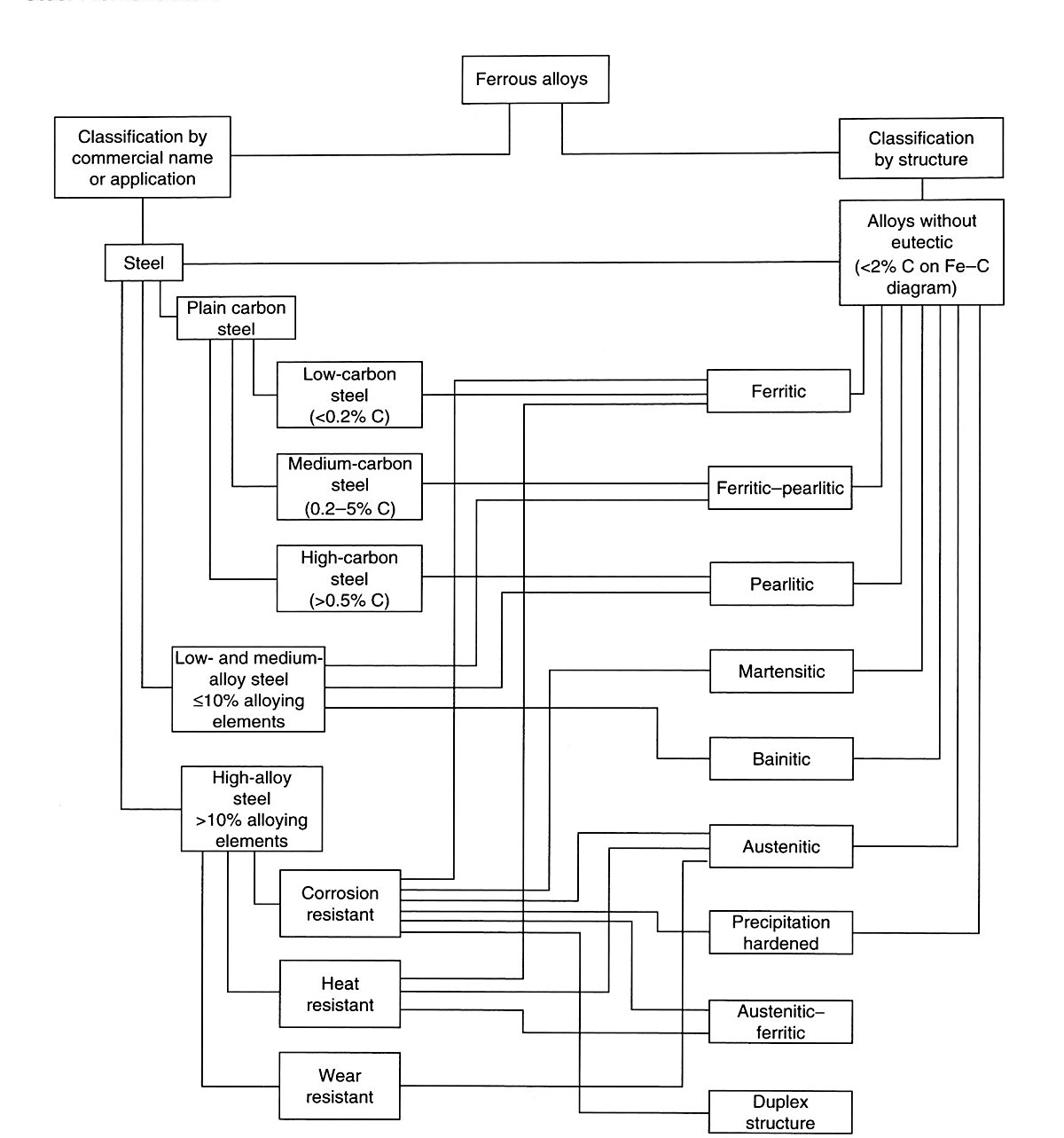
Steels are classified two ways at once, by commercial name or application and by structure, and the chart below puts the two side by side. The application column is what the selection pages on this page are indexed by; the structure column is what decides how a steel behaves once it is hardened.
Selection of Steels for Cold-Heading Dies
Selection of Steels for Coining Dies
Selection of Steels for Cold-Work Dies and Punches
Wear resistance and toughness of tool steels for cold-work dies and punches for blanking
Selection of Tool Steels for Cold Forming Hexagon Nuts
Selection of Steels for Cold Extrusion
Selection of Steels for Shears
Selection of Steels for Die-Forging and Press-Forging Tools
Tool steels for hot-forging
Tool steels for rolling-mill rolls
Tool steels for die-casting dies