
Aobo Steel · Tool Steel Supplier · Huangshi, China
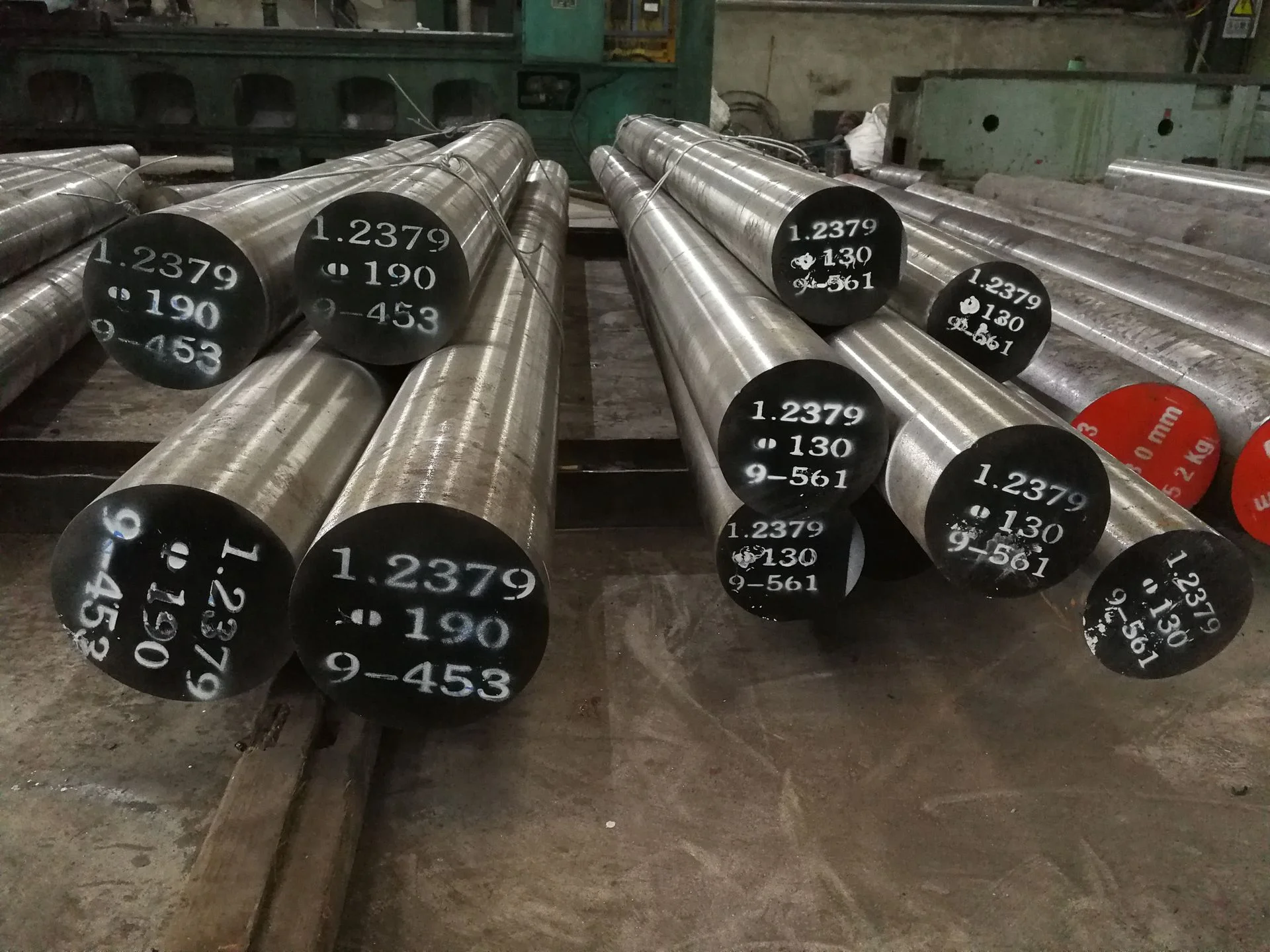
1.2379 Tool Steel (X153CrMoV12 / AISI D2)
EN 10027-2 material number · X153CrMoV12 · AISI D2 · JIS SKD11
1.2379 is the EN 10027-2 number for the high carbon, high chromium cold work steel sold internationally as AISI D2 and JIS SKD11. European drawings usually call it up by that number, and the mill certificate comes back under whichever designation the mill prints. This page sets out what the number means, which other designations the same bar carries, and what can be ordered against it.
Also supplied: 1.2379 round bar and D2 tool steel plate, plus AISI D2 tool steel for buyers who order by the American designation.
Request price & delivery
Send the sizes, quantity and destination port. We confirm price and delivery within one working day.
How the EN Material Number 1.2379 Is Built
EN 10027-2 gives every steel a number instead of a description, in the form 1.XXXX, where the leading 1 refers to steel and the next two digits give the steel group. Under EN 10027-1 the same steel is named X153CrMoV12, and ISO 4957 prints the name and the number in the same row, which is where 1.2379 and X153CrMoV12 are read against each other.
Source, Handbook of Comparative World Steel Standards, Third Edition, ASTM International, 2004, and ISO 4957:2018 Tool Steels.
The Designations One 1.2379 Bar Carries
Each standard prints its own row for the same steel, and the differences between those rows decide which one a purchase order quotes.
| Standard | Designation | Composition the standard prints |
|---|---|---|
| ISO 4957:2018 | X153CrMoV12 · steel number 1.2379 | C 1.45 to 1.60 · Cr 11.0 to 13.0 · Mo 0.70 to 1.00 · V 0.70 to 1.00 |
| ASTM A681 | D2 · UNS T30402 | C 1.40 to 1.60 · Cr 11.00 to 13.00 · Mo 0.70 to 1.20 · V 0.50 to 1.10 |
| JIS G4404 | SKD11 | Compared in the same row as D2 |
The vanadium range is where the ISO row and the ASTM row part company, 0.70 to 1.00 against 0.50 to 1.10, and the ISO table leaves its Japanese column blank for this grade. The alloy is the same steel, and a certificate written to one standard is not a certificate for the other. The Chinese grade is Cr12MoV1V1, set out with the other three on the D2 chemical composition page.
Composition data is for general reference only. Actual values vary by standard, mill, and heat number. Confirm against the material test certificate (MTC) or contact Aobo Steel.
Annealed Condition and Heat Treatment
ISO 4957 sets the delivery condition as +A, annealed, with a maximum hardness of 255 HBW, and machining ratings put this grade at about 45 against a 1 percent carbon steel rated at 100. Austenitising at 1020 °C and quenching in air gives 61 HRC, while the heat treating literature carries 1010 °C for 63 to 64 HRC as quenched, so the two sources disagree on what a full harden produces. Tempering decides what the tool ends up with. At 200 °C hardness stays near 61 HRC, at 300 °C it falls to 58 HRC, and at 500 °C a double temper brings it back to 59 HRC through secondary hardening. Retained austenite transforms in the 496 to 510 °C band, which is why the schedule calls for a double temper.
Air quenching moves the part by roughly 0.0005 in./in., so a die that has to stay concentric needs that allowance in the drawing. Achievable hardness also falls once the round section passes 5 in. (127 mm), so a heavy block does not harden through like a 50 mm bar. Aobo Steel ships the annealed condition and does not run hardening, tempering or cryogenic treatment. The D2 heat treatment guide carries the full sequence and the D2 hardness page maps tempering temperature against hardness.
Working Hardness by Tool
| Tool | Working hardness | What ends its life |
|---|---|---|
| Blanking dies | 58 to 60 HRC | Cracking from sharp corners at the edge of the punch opening |
| Piercing punches | 56 to 60 HRC | Cracking under repeated impact, with low toughness behind it |
| Cold forming tools | 58 to 60 HRC | Wear at the working face first, then cracking |
Shear blades and slitter knives fail by spalling and grinding cracks rather than steady wear, which makes grinding practice as important as the grade. The stamping, blanking and piercing die page and the shear blade page place it against the alternatives, and the cold work tool steel hub shows the rest of the family.
Where 1.2379 Is the Wrong Buy
Stamping stainless steel of 18 to 24 percent chromium is the case this grade handles badly, because the work galls against the die face, and the references move to M2 high speed steel or a low chrome grade. Heavy impact and shock move the other way, to the shock resisting S series such as S7 and S1, or to H11 where hot hardness matters. The DC53 versus D2 comparison covers the middle case, a tougher cold work grade that buys longer life for a little less wear resistance.
Surface Treatment and Repair
Nitriding at 540 °C for 12 hours raises wear resistance and costs surface toughness, so a nitrided edge can spall or chip. PVD coating pays where sliding wear dominates, and a surface ground after EDM, so the recast white layer is gone, fails far less often. Weld repair needs the crack removed completely and preheat and postheat, or a full re-anneal. The D2 machining guide covers the cutting speeds that keep the job economical.
Ordering 1.2379
The order line carries the EN number, the standard the mill works to and the delivery condition. European distributors sell the same steel under their own codes, Saarstahl GS2379, Thyssen GS-379, Hitachi SLD, Assab XW-42 and Dörrenberg RS2379, with the delivery hardness each mill states on the imported brand cross reference.
Round bar runs Ø20 to 600 mm, forged and turned, and plate from 20 to 400 mm thick by 200 to 610 mm wide. Remelted stock is covered on the 1.2379 ESR mill rolls page, and the quality verification page lists what we check on the certificate before a batch leaves.
Source, ISO 4957:2018 Tool Steels, Handbook of Comparative World Steel Standards (ASTM International), Tool Steels (Roberts and Krauss), Tool Steels Properties and Performance (Mesquita), Heat Treatment Selection and Application of Tool Steels (Bryson), Heat Treater’s Guide, and Tool and Die Making Troubleshooter (Leed).
FAQ
ISO 4957 prints the grade as X153CrMoV12 with steel number 1.2379, ASTM A681 prints it as D2, and the Japanese standard prints it as SKD11. The alloy is the same steel, the composition ranges printed by each standard are close rather than identical, and the vanadium range is where they differ most.
Annealed, designated +A in ISO 4957, with a maximum hardness of 255 HBW. Machinability is rated around 45 against a 1 percent carbon steel at 100, which is why cutting data and rough machining allowances matter more on this grade than on a lower alloy tool steel.
Blanking dies and cold forming tools normally run at 58 to 60 HRC and piercing punches at 56 to 60 HRC. Going harder than the top of those ranges buys wear resistance and costs edge toughness, and cracking at a sharp corner is the failure that follows.
Yes, at 540 °C for about 12 hours. The case raises wear resistance at the surface and lowers toughness behind it, so a nitrided edge can spall or chip, and the treatment suits forming faces better than sharp cutting edges.