
Home > Tool Steel Catalog > O2 Tool Steel
Aobo Steel | Global Tool Steel Supplier in China
AISI O2 Tool Steel | 1.2842 | SKS31 Oil-Hardening Cold Work Steel
✓100% UT Tested Quality Assurance
✓SEP 1921-82 Class D/d Guaranteed
✓Annealed State Delivery
✓Surface: Black Scale, Turned, Mill Finish, or Polished
O2 tool steel has high hardness and wear resistance. It experiences minimal distortion during quenching and has excellent hardenability. This steel is suitable for making various precision measuring tools and templates. It is also used for smaller-dimension dies, cold press molds, engraving molds, and blanking dies. Additionally, it can be used for machine tool screws and other structural components.
The designation is O2 in the U.S. ASTM A681 system. Similar designations under other national standards include ISO 90MnV2, USA/UNS T31502, Germany/DIN 90MnCrV8, and Germany/W-Nr. 1.2842.
Supply Overview
| Item | Details |
|---|---|
| Grade | AISI O2 / DIN 1.2842 / JIS SKS31 |
| Delivery Condition | Fully Annealed (Max. 215–230 HB, Suitable for Machining) |
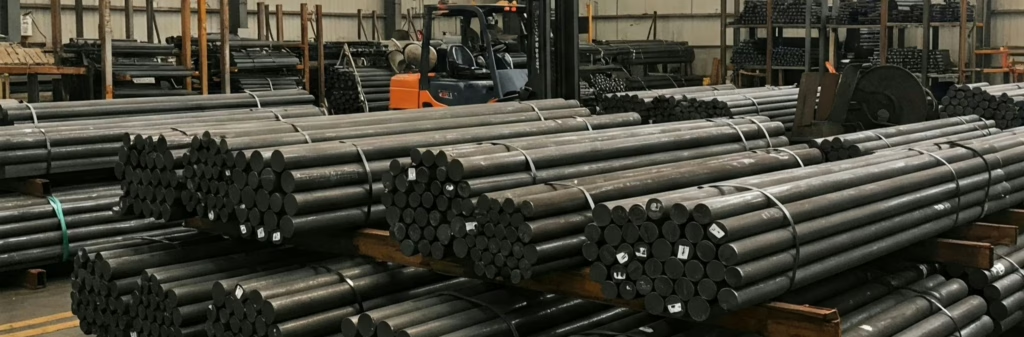
| Available Forms | Round Bar / Flat Bar / Plate / Forged Block |
| Monthly Supply Capacity | Stable monthly output with continuous inventory support |
| Recommended Export Quantity | Full 20GP container (~26 tons) |
| MOQ | 5 tons |
| Lead Time (Stock Ingot) | Approx. 20 days |
| Lead Time (Fresh Melt) | 30–45 days |
| Lead Time (ESR Option) | Approx. 60 days |
| Inspection | 100% UT tested to SEP 1921-82 Class D/d or E/e |
| Documentation | MTC (EN 10204 3.1) + UT Report per order |
Production Stability
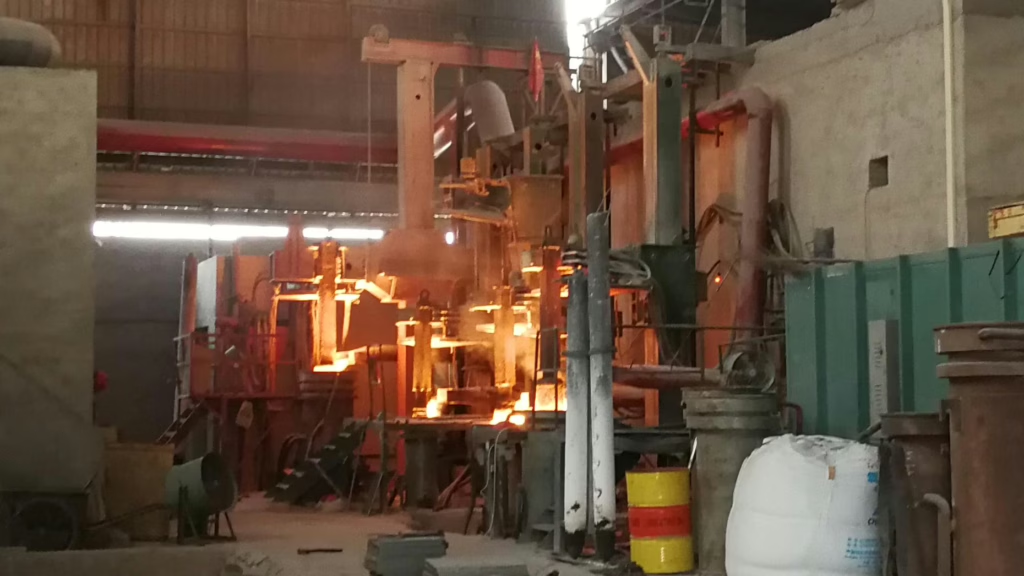
- Stable alloy sourcing for O2 oil-hardening grade
- Consistent annealed structure for predictable machining
- ESR (Electro-Slag Remelting) available upon request
- Batch traceability linked to original heat number
- Designed for distributor and stockist bulk replenishment
Packaging and Shipping
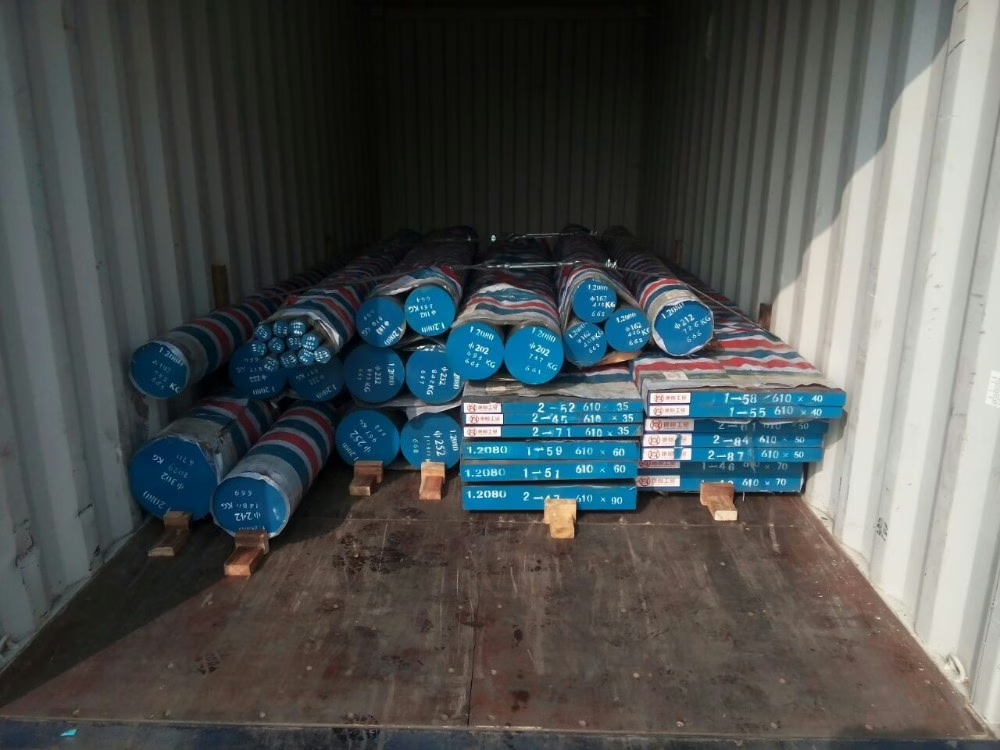
- Seaworthy export packing
- 20GP container optimized loading (up to ~26 tons)
- Mixed sizes and mixed specifications supported in one container
- Anti-rust protection for long sea transit
For international buyers, full container loading is strongly recommended for cost efficiency and smoother customs clearance.
Applications
To provide a clearer picture, here’s a breakdown of typical industrial uses for O2 tool steel, highlighting where its properties deliver maximum benefit:
| Application Category | Specific O2 Steel Uses | Key Advantages for Your Operations |
|---|---|---|
| Dies and Punches | Blanking dies, trimming tools, drawing dies, flanging tools, forming punches. Notably effective for blank holders in stamping tools (resisting pressure and friction) and as ejectors and blank holders in deep drawing dies (withstanding friction). | Excellent wear resistance, good toughness, maintains dimensional stability for consistent part production. |
| Gages | Precision measurement tools, master gages. | High dimensional stability after hardening, crucial for accuracy; good wear resistance for longevity. |
| Machinery Components | Items like cams, durable bushings, and wear-resistant guides. | Offers the necessary wear resistance and toughness for demanding mechanical parts. |
| Coining & Powder Pressing | Tooling for coining operations, punches, and dies for powder metal compacting. | Withstands high compressive forces and abrasive wear common in these processes. |
| Cold Rolling | Rolls used in cold rolling applications. | Delivers the high wear resistance and toughness required for shaping metals at ambient temperatures. |
O2 and Its Equivalent Grades’ Chemical Composition
| Grade | C | Si | Mn | Cr | V | W | P/S (Max) |
| O2 | 0.85–0.95 | 0.50 | 1.40–1.80 | 0.40–0.60 | 0.30 | 0.40–0.60 | 0.030 |
| 1.2842 | 0.85–0.95 | 0.10–0.40 | 1.80–2.20 | 0.20–0.50 | 0.05–0.15 | — | 0.030 |
| SKS31 | 0.90–1.05 | 0.35 | 0.90–1.20 | 0.50–1.00 | — | 0.50–1.00 | 0.030 |
O2 Tool Steel Properties
Here’s a breakdown of the key O2 steel properties and what they mean for your operations:
| Property Category | Description & Significance for Users |
|---|---|
| High Hardness | Achieves a notable surface hardness (60-62 HRC), critical for resisting indentation and maintaining a sharp cutting edge or durable forming surface in tooling. |
| Good Wear Resistance | The high carbon content and resultant hardness contribute to good resistance against abrasive wear, extending the service life of tools and dies. |
| Fair Toughness | Offers a balanced level of toughness suitable for many cold-work applications, helping to prevent premature chipping or fracture under operational stresses. |
| Good Non-Deforming Properties | Exhibits commendable dimensional stability with relatively low distortion after the oil-quenching heat treatment process. This is vital for precision tooling. |
| Good Safety in Hardening | The oil-quenching method used for O2 steel minimizes the risk of cracking and distortion compared to water quenching, especially beneficial for complex tool geometries. |
| Machinability | In its annealed (pre-hardened) state, O2 tool steel (similar to O1 in this regard) offers good machinability, facilitating easier tool fabrication. |
| Thermal Sensitivity | It’s important to note that O2 steel has poor resistance to softening at elevated temperatures. This characteristic firmly places it within the cold-work steel category, meaning it’s not intended for applications involving high heat. |
O2 Steel Heat Treatment Parameters
| Process Step | Temperature Range | Typical Duration/Key Notes | Primary Purpose |
| Preheating | ~650°C (1200°F) | Until uniform temperature | Minimize thermal shock, reduce distortion risk |
| Austenitizing | 790–815°C (1454–1472°F) | 30–45 min per 25mm (1 inch) of section | Form austenite, dissolve carbides |
| Quenching (Oil) | Cool to 66–93°C (150–200°F) | Rapid cooling in oil | Transform austenite to martensite |
| Tempering | 149–232°C (300–450°F) (e.g., 175°C / 350°F typical) | Min. 2 hrs per 25mm (1 inch) section. Temper ASAP once part reaches 52-65°C (125-150°F). | Improve toughness, reduce brittleness, relieve stress. Multiple tempers often best. |
For detailed heat treatment parameters for O2 tool steel, including hardening temperature, oil quenching process, and tempering range, please refer to our dedicated O2 heat treatment guide.