
H-Series Tool Steels
H-series tool steels are hot work tool steels used for dies and tooling exposed to heat, pressure, impact, hot wear, and repeated thermal cycling. They are commonly used in die casting, hot forging, hot extrusion, hot shearing, heading, and upsetting.
H-Series Tool Steels Available from Aobo Steel
Aobo Steel supplies common H-series hot work tool steel grades in bulk round bar and flat bar for die casting, hot forging, hot extrusion, hot shearing, heading, and upsetting applications.
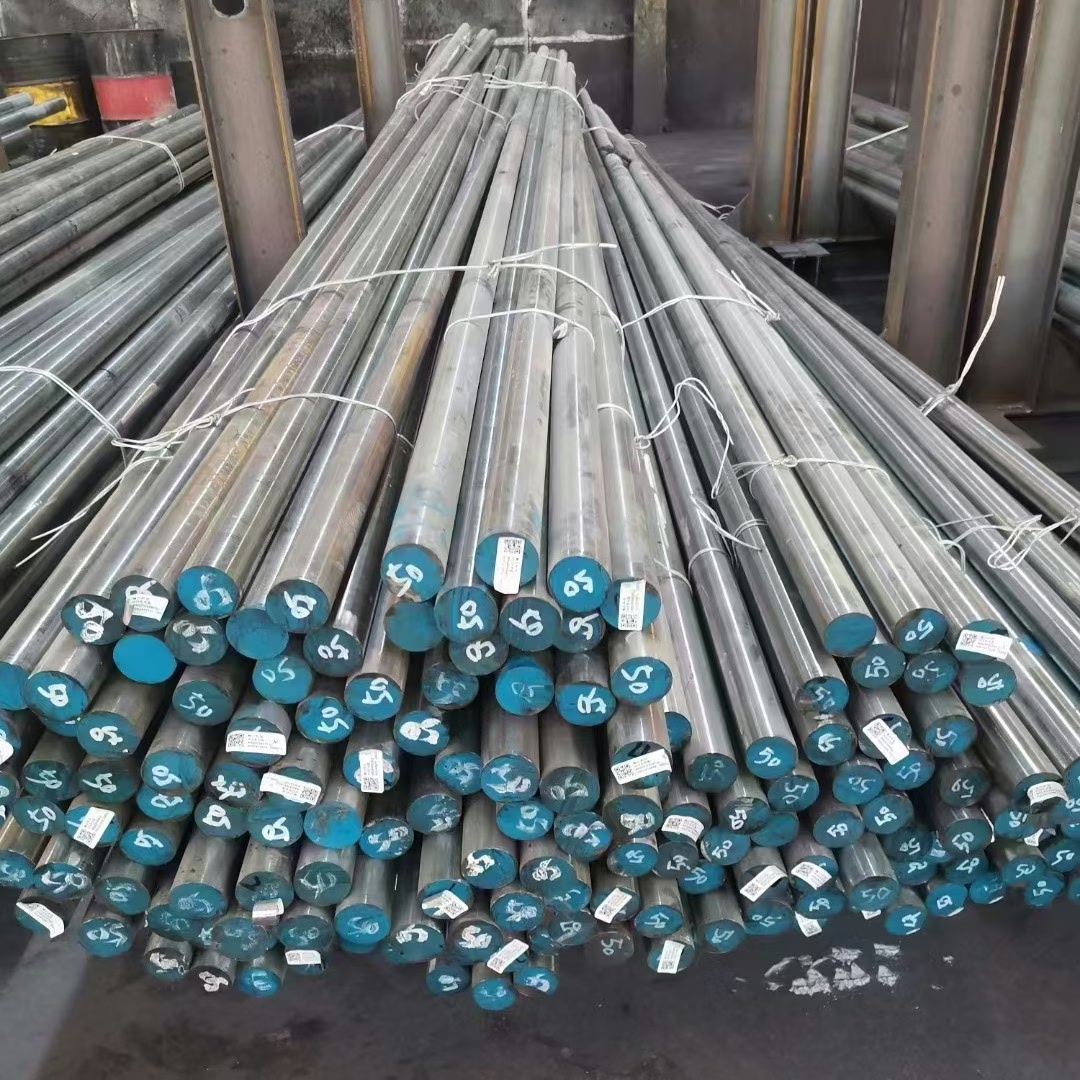
H10 | 1.2365 | SKD7
Hot work steel for high hot strength, thermal conductivity, and selected extrusion tooling.
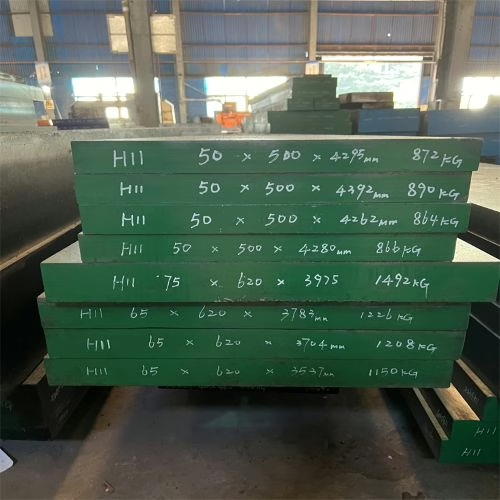
H11 | 1.2343 | SKD6
Chromium hot work steel with strong toughness and cracking resistance.
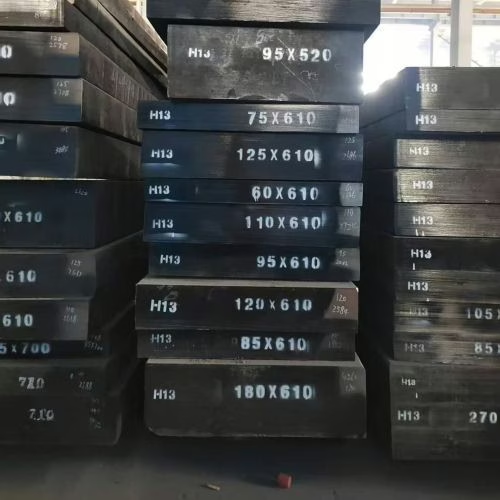
H13 | 1.2344 | SKD61
Balanced hot work tool steel for die casting, forging, extrusion, and thermal fatigue service.
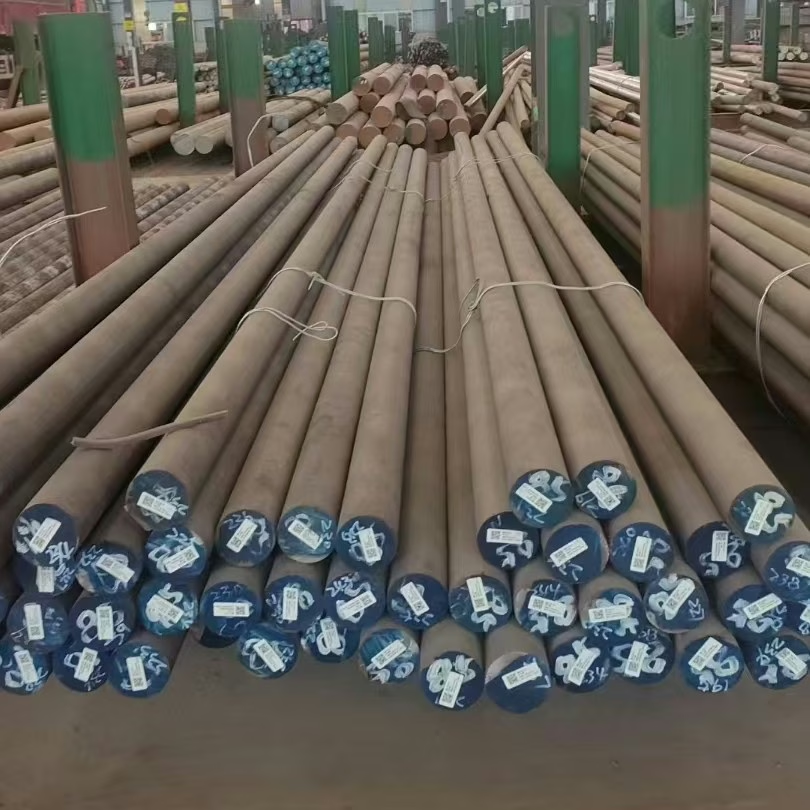
H21 | 1.2581 | SKD5
Tungsten hot work steel for hot hardness and high-temperature wear resistance.
In practical tool steel selection, the most commonly used grades are H10, H11, H13, and H21. These grades meet the main hot-work requirements: heat-checking resistance, hot hardness, toughness, thermal stability, and hot wear resistance.
What Are H-Series Tool Steels?
H-series tool steels are alloy tool steels designed for hot work service. The tool surface must maintain sufficient hardness and strength when it contacts hot metal or molten material. The tool body must also resist cracking under pressure, impact, and repeated heating and cooling.
Most H-series steels have medium carbon content and contain chromium, molybdenum, vanadium, tungsten, or a combination of these elements. Chromium hot work steels such as H11 and H13 provide toughness and resistance to heat checking. Tungsten hot-work steels such as H21 provide higher hot hardness and better resistance to high-temperature softening.
The main difference between H-series grades is not only hardness. Each grade has a different balance of toughness, thermal fatigue resistance, hot hardness, and wear resistance.
H-Series Tool Steel Equivalent Grades
| AISI Grade | DIN / EN | JIS | GB / Chinese Grade |
|---|---|---|---|
| H10 | 1.2365 / X32CrMoV3-3 | SKD7 | 4Cr3Mo3SiV |
| H11 | 1.2343 / X37CrMoV5-1 | SKD6 | 4Cr5MoSiV |
| H13 | 1.2344 / X40CrMoV5-1 | SKD61 | 4Cr5MoSiV1 |
| H21 | 1.2581 / X30WCrV9-3 | SKD5 | 3Cr2W8V |
H13 / 1.2344 / SKD61 is the most common grade in international hot-work tool steel supply. H11 / 1.2343 / SKD6 is close to H13 but places greater emphasis on toughness. H21 / 1.2581 / SKD5 follows a different alloy design because tungsten improves resistance to softening at elevated temperatures.
Chemical Composition and Alloying Elements of H-Series Tool Steels
The chemical composition of H-series tool steels governs their hardening response, hot hardness, toughness, temper resistance, and hot-wear resistance. The table below shows typical ranges of chemical composition. Exact values should follow the required standard, purchase specification, and mill test certificate.
Typical Chemical Composition
| Grade | C | Cr | Mo | V | W | Si | Mn |
|---|---|---|---|---|---|---|---|
| H10 / 1.2365 | 0.28-0.35 | 2.70-3.20 | 2.50-3.00 | 0.40-0.70 | Not primary | 0.10-0.40 | 0.15-0.45 |
| H11 / 1.2343 | 0.33-0.41 | 4.80-5.50 | 1.10-1.60 | 0.30-0.60 | Not primary | 0.80-1.20 | 0.20-0.50 |
| H13 / 1.2344 | 0.35-0.42 | 4.80-5.50 | 1.20-1.75 | 0.80-1.20 | Not primary | 0.80-1.20 | 0.20-0.50 |
| H21 / 1.2581 | 0.26-0.36 | 2.50-3.50 | Not primary | 0.30-0.60 | 8.50-10.00 | 0.15-0.50 | 0.15-0.45 |
H11 and H13 are chromium-molybdenum-vanadium hot work steels. H13 usually has more vanadium than H11, so it has stronger wear resistance and a stronger secondary hardening response. H11 maintains better toughness because of its lower vanadium content.
H21 uses tungsten as its main alloying element. This improves hot hardness and resistance to high-temperature softening but reduces toughness relative to chromium hot-work steels.
How Alloying Elements Affect Performance
| Element | Function in H-Series Tool Steels |
|---|---|
| Carbon | Supports hardening response and wear resistance. Medium carbon content helps retain toughness. |
| Chromium | Improves hardenability, oxidation resistance, and heat-softening resistance. |
| Molybdenum | Improves hot strength, temper resistance, and secondary hardening response. |
| Vanadium | Forms hard carbides and improves wear resistance under hot wear conditions. |
| Tungsten | Improves hot hardness and resistance to high-temperature softening. |
| Silicon | Supports oxidation resistance and contributes to hot strength in some grades. |
| Manganese | Supports hardenability and steelmaking control. |
Properties of H-Series Tool Steels
H-series tool steels are selected for hot work dies because they combine hot hardness, toughness, thermal fatigue resistance, hardenability, and temper resistance. These properties must work together. A die with high hardness but poor toughness may crack early. A die with good toughness but poor hot hardness may deform or soften during service.
Key Properties in Hot Work Tooling
| Property | Practical Meaning in Hot Work Tooling | Typical Grade Direction |
|---|---|---|
| Hot hardness | Helps the tool resist softening and deformation at elevated temperatures | H13, H21 |
| Thermal fatigue resistance | Reduces heat checking during repeated heating and cooling | H13, H11 |
| Toughness | Reduces cracking, chipping, and breakage under impact or pressure | H11, H13 |
| Temper resistance | Helps the steel maintain hardness after repeated heat exposure | H13, H21 |
| Hot wear resistance | Resists erosion, abrasion, and metal flow wear at high temperatures | H13, H21 |
| Hardenability | Helps large tools reach more uniform hardness after heat treatment | H11, H13 |
| Thermal conductivity | Helps the tool remove heat from the working surface | H10 |
Property Direction by Grade
| Grade | Hot Hardness | Toughness | Thermal Fatigue Resistance | Hot Wear Resistance | Best Property Direction |
|---|---|---|---|---|---|
| H10 / 1.2365 | Good | Good | Good | Medium | Heat transfer and hot strength |
| H11 / 1.2343 | Good | Very good | Good | Medium | Toughness and cracking resistance |
| H13 / 1.2344 | Good | Good | Very good | Good | Balanced hot work performance |
| H21 / 1.2581 | Very good | Medium | Medium | Very good | Hot hardness and high-temperature wear resistance |
Hot Hardness and Resistance to Softening
Hot hardness measures how well the steel maintains its hardness and strength at elevated temperatures. This property matters when the tool is in prolonged contact with hot metal or operates at high surface temperatures.
H11 and H13 can handle many common hot work conditions. H21 offers greater resistance to softening due to its high tungsten content. This makes H21 useful for hotter tooling conditions, especially where abrasion and erosion occur together.
Hot hardness should not be considered alone. In high-impact dies, a tougher chromium hot-work steel may perform better than a higher-alloy tungsten steel.
Toughness and Cracking Resistance
Toughness helps a tool resist cracking under impact, pressure, sharp corners, and uneven section thickness. Hot forging dies, mandrels, punches, and support tools often need this property.
H11 has a high level of toughness among common H-series grades. H13 also has good toughness, but it offers a more balanced combination of heat-checking resistance and wear resistance. H21 needs more careful use in impact-loaded tools because its alloy design favors hot hardness over toughness.
Thermal Fatigue Resistance and Heat Checking
Thermal fatigue occurs when the tool surface repeatedly heats and cools. Over time, this can produce fine surface cracks, known as heat checking. Die-casting dies, hot-forging dies, and extrusion tools often fail this way.
H13 is widely used because it combines heat-checking resistance with practical toughness and wear resistance. H11 can be useful when the risk of cracking is higher. Proper heat treatment, surface condition, cooling practices, and working hardness all affect heat-checking resistance.
A moderate working hardness often gives better die life than maximum hardness. Excessive hardness can increase the risk of cracking, especially in large dies or tools subjected to severe thermal cycling.
Hardenability and Dimensional Stability
Many H-series grades have good hardenability and can be hardened by air cooling or controlled cooling. This reduces distortion compared with more severe quenching methods.
H11 and H13 are widely used for large hot-work tools because they develop relatively uniform hardness after proper heat treatment. Stress relieving after rough machining can reduce distortion during final hardening, especially for tools with deep cavities or uneven sections.
Dimensional stability still depends on tool size, furnace control, preheating, quenching method, and tempering practice.
Heat Treatment of H-Series Tool Steels
Heat treatment controls the final hardness, toughness, thermal fatigue resistance, and die life of H-series tool steels. High-temperature heat treatment should be performed in a controlled environment, such as a vacuum furnace, a controlled-atmosphere furnace, or a neutral salt bath. Poor atmosphere control can cause oxidation, carburization, or decarburization.
Main Heat Treatment Processes
| Process | Purpose | Practical Note |
|---|---|---|
| Annealing | Softens the steel for machining | Common annealing range for chromium hot work steels is about 845-900 °C |
| Stress relieving | Reduces machining stress before hardening | Often used after rough machining |
| Preheating | Reduces thermal shock before austenitizing | Important for large or complex tools |
| Austenitizing | Forms the hardenable structure | Temperature depends on grade and section size |
| Quenching | Develops hardness | Air, air blast, oil, or salt bath may be used depending on size and grade |
| Tempering | Adjusts hardness and toughness | Double or triple tempering is commonly used |
| Nitriding | Improves surface wear resistance | Optional after final hardening and tempering |
Normalizing is generally not recommended for H-series tool steels. Many of these grades have deep hardenability and may partially harden during air cooling.
Typical Heat Treatment Ranges
The following values are typical reference ranges. The actual process should be adjusted by the heat treatment facility according to tool size, furnace type, quenching method, and required working hardness.
| Grade | Annealed Hardness | Typical Austenitizing Range | Quenching Direction | Tempering Direction | Typical Working Hardness |
|---|---|---|---|---|---|
| H10 / 1.2365 | Usually ≤229 HB | 1010-1050 °C | Air, oil, or controlled cooling | Multiple tempering recommended | 44-52 HRC |
| H11 / 1.2343 | Usually ≤229 HB | 995-1025 °C | Air, air blast, oil, or controlled cooling | Multiple tempering recommended | 44-52 HRC |
| H13 / 1.2344 | Usually ≤229 HB | 995-1025 °C | Air, air blast, oil, or controlled cooling | Multiple tempering recommended | 44-52 HRC |
| H21 / 1.2581 | Usually ≤255 HB | 1095-1150 °C | Air, oil, or salt bath | High-temperature tempering recommended | 45-55 HRC |
After hardening, tools should be tempered promptly. Double or triple tempering helps reduce retained austenite, internal stresses, and the risk of cracking. Many H-series tools are tempered at high temperature, often around 540-650 °C, depending on grade and required hardness.
Applications and Grade Selection
The best H-series grade depends on the work material, surface temperature, impact load, cooling practice, and main failure mode. The table below combines application and selection logic in one place to avoid repeating grade descriptions across separate sections.
| Application | Main Failure Risk | Suitable Grade Direction | Selection Note |
|---|---|---|---|
| Aluminum die casting dies | Heat checking, erosion, thermal fatigue | H13, H11 | H13 is the standard choice. H11 is useful when the cracking risk is more serious. |
| Magnesium and zinc die casting dies | Thermal cycling and surface wear | H13 | H13 offers a practical balance of toughness and heat-checking resistance. |
| Brass and copper alloy tooling | High-temperature softening, hot wear | H21 | H21 is suited to hotter conditions where tungsten-supported hot hardness is useful. |
| Aluminum extrusion dies | Pressure, hot wear, thermal fatigue | H13, H11, H10 | H13 and H11 cover most tooling needs. H10 may help where heat transfer matters. |
| Hot forging dies | Impact, cracking, deformation, heat checking | H13, H11 | H11 favors cracking resistance. H13 gives broader general performance. |
| Hot shearing blades | Edge softening, hot wear | H13, H21 | H13 fits general hot shearing. H21 fits hotter or more abrasive conditions. |
| Mandrels and support tooling | High stress, cracking | H11, H10 | H11 supports toughness. H10 may be used where heat removal is important. |
| Hot heading and upsetting tools | Surface pressure, hot wear | H13, H21 | H13 is the balanced choice. H21 is used when hot wear dominates. |
Need Bulk H-Series Tool Steel Supply?
Aobo Steel supplies H10, H11, H13, H21 and other hot work tool steel round bar and flat bar for bulk industrial orders. Send your required grade, size, quantity, and application.