
A2 Tool Steel Properties
A2 tool steel is an air-hardening cold work tool steel with good wear resistance, medium-to-good toughness, excellent dimensional stability, and common working hardness around 57–62 HRC after heat treatment.
A2 is widely used for punches, dies, forming tools, shear blades, thread-rolling dies, gages, precision tooling, and cold-work components that require a practical balance between wear resistance, toughness, machinability, and heat-treatment stability.
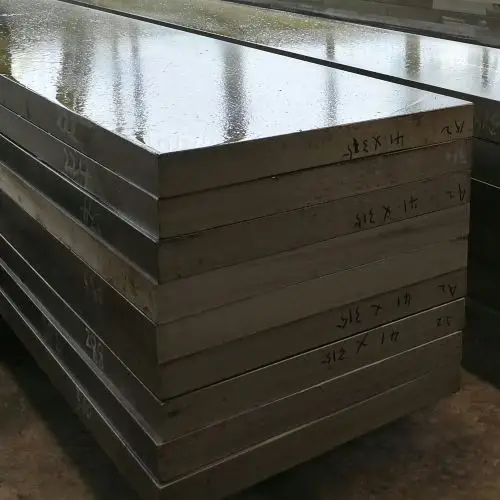
Aobo Steel supplies A2 air-hardening cold-work tool steel for dies, punches, blades, gages, forming tools, and precision tooling applications.
Confirmed A2 Is the Right Grade?
Aobo Steel supplies A2 in annealed condition, ready for machining and heat treatment. Send your sizes and quantity, or check full product specifications and stock condition.
A2 Tool Steel Properties Summary
| Property | Typical A2 Tool Steel Behavior | Practical Meaning |
|---|---|---|
| Steel type | Air-hardening cold work tool steel | Used for precision cold work tooling |
| Main equivalents | 1.2363, SKD12, Cr5Mo1V, UNS T30102 | Useful for international sourcing |
| Typical working hardness | About 57–62 HRC | Depends on tempering temperature and application |
| Annealed hardness | About 201–229 HB | Suitable for machining before hardening |
| Wear resistance | Good | Better than O1 and S-series steels, lower than D2 |
| Toughness | Medium to good | Better than D2, lower than S7 |
| Dimensional stability | Very good | Low movement during air hardening |
| Machinability | About 60% of 1% carbon tool steel baseline | Easier to machine than D2 |
| Heat treatment response | Air hardening, double tempering recommended | Helps reduce distortion and brittleness |
| Corrosion resistance | Not stainless | Requires rust protection |
| Main applications | Punches, dies, forming tools, shear blades, gages | Used for many cold work tooling applications |
| Main limitation | Not a hot work or high-speed steel | Not suitable for hot forging dies or high-speed cutting tools |
A2 Tool Steel Equivalent Grades
| Standard / System | Equivalent Grade |
|---|---|
| AISI / ASTM | A2 |
| UNS | T30102 |
| DIN / W-Nr. | 1.2363 |
| DIN / EN name | X100CrMoV5 |
| JIS | SKD12 |
| GB | Cr5Mo1V |
| BS | BA2 |
| AFNOR | Z100CDV5 |
| SS | 2260 |
Users should still confirm the chemical composition, delivery condition, hardness requirements, inspection standard, and heat-treatment route before ordering.
A2 Tool Steel Chemical Composition
A2 tool steel is a chromium-molybdenum-vanadium alloyed cold work tool steel. Its composition provides better hardenability and dimensional stability than simple oil-hardening grades, while maintaining better toughness and machinability than high-carbon, high-chromium grades such as D2.
| Element | Typical Range |
|---|---|
| Carbon, C | 0.95–1.05% |
| Chromium, Cr | 4.75–5.50% |
| Molybdenum, Mo | 0.90–1.40% |
| Vanadium, V | 0.15–0.50% |
| Manganese, Mn | Up to 1.00% |
| Silicon, Si | Up to 0.50% |
| Nickel, Ni | Up to 0.30% |
A2 tool steel is not stainless steel. Its chromium content supports hardenability and wear resistance, but it is not high enough to provide stainless corrosion resistance. A2 should be protected from rust during storage, machining, shipping, and service.
A2 Tool Steel Hardness
A2 tool steel is normally supplied in an annealed condition, then machined, hardened, and tempered to the required working hardness. The final hardness depends on the heat-treatment process, section size, tempering temperature, and tool application.
| Condition | Typical Hardness |
|---|---|
| Annealed condition | About 201–229 HB |
| Maximum annealed hardness | Often around 235 HB, depending on specification |
| As-quenched condition | About 63–65 HRC |
| Common working hardness | About 57–62 HRC |
| Common range for many cold work tools | About 58–60 HRC |
Higher hardness can improve wear resistance, but it also increases the risk of chipping. Lower hardness can improve toughness, but it may reduce edge life.
For many punches, forming tools, trimming dies, gages, and cold-work components, A2 is often used at 58–60 HRC. Cutting tools and thin-edge tools may require a different hardness range depending on the material being processed and the risk of edge chipping.
Wear Resistance, Toughness, and Dimensional Stability
A2 is usually chosen because it offers a balanced combination of wear resistance, toughness, and dimensional stability.
Good Wear Resistance
A2 usually provides better wear resistance, deeper hardening, and better dimensional stability than O1, but it does not match D2 in severe abrasive wear.
Useful Toughness
A2 has better toughness than D2 because it contains fewer large carbides, but it is not as tough as S7 under heavy impact or sudden breakage.
Low Distortion
Because A2 hardens in air, it cools more slowly than oil-quenched or water-quenched steels, helping reduce quenching stress and distortion.
A2 is often the better choice when the tool must resist both wear and chipping. This is common in punches, trimming tools, forming dies, shear blades, and precision cold work tooling.
A2 Tool Steel Mechanical Properties
The mechanical properties of A2 tool steel depend strongly on delivery condition and heat treatment. In the annealed condition, A2 is supplied soft enough for machining. After hardening and tempering, its strength, hardness, wear resistance, and tool performance increase significantly.
A2 tool steel’s tensile strength and yield strength are not fixed values. They depend on hardness level, tempering temperature, section size, test method, and heat-treatment condition.
| Condition | Mechanical Property Reference | Practical Note |
|---|---|---|
| Annealed A2 | Tensile strength about 100 ksi / 710 MPa | Reference for soft delivery condition |
| Annealed A2 | Yield strength about 50 ksi / 350 MPa | Not representative of hardened tool performance |
| Hardened and tempered A2 | Strength depends on final hardness and tempering condition | Confirm data under the required heat-treatment condition |
| Engineering calculation | Tensile, yield, impact, or compressive data should match the actual heat-treated state | Do not use generic values without condition |
For tool design, hardness, toughness, wear resistance, compressive strength, and dimensional stability are usually more important than a single tensile or yield strength value.
A2 Tool Steel Physical and Thermal Properties
Physical and thermal properties are useful for weight calculation, heat-treatment planning, precision tooling, and engineering reference. Values can vary slightly by data source, condition, temperature, and product form.
| Property | Typical Reference Value | Practical Meaning |
|---|---|---|
| Density | About 7.75–7.86 g/cm³ | Used for weight calculation |
| Specific gravity | About 7.87 | General reference for material density |
| Modulus of elasticity | About 190–207 GPa | Useful for engineering stiffness reference |
| Thermal conductivity | About 26 W/m·K near 95°C | Affects heat transfer during service and heat treatment |
| Coefficient of thermal expansion | About 10.6 µm/m·°C from 20–260°C | Important for dimensional change under temperature |
| Specific heat | About 460 J/kg·°C | Heat-treatment and thermal calculation reference |
| Magnetic behavior | Generally magnetic | A2 is an iron-based tool steel |
| Corrosion resistance | Not stainless | Requires rust protection |
A2 is usually considered dimensionally stable during heat treatment, but that does not mean it has no size change. Precision tools should still allow for grinding, lapping, or finishing after hardening when tight tolerances are required.
A2 Tool Steel Annealed Properties
A2 tool steel is usually supplied in an annealed condition for machining. In this state, it has lower hardness, better machinability, and lower internal stress than hardened material.
| Annealed Property | Typical Behavior |
|---|---|
| Hardness | About 201–229 HB |
| Machinability | Practical for milling, drilling, turning, and grinding before hardening |
| Strength | Lower than hardened and tempered A2 |
| Wear resistance | Not the final working performance |
| Main purpose | Machining before final heat treatment |
The final properties of A2 tool steel are obtained only after proper hardening and tempering, not in an annealed condition.
Heat-Treated A2 Tool Steel Properties
After hardening and tempering, A2 tool steel can reach high hardness, good wear resistance, useful toughness, and excellent dimensional stability.
| Heat-Treated Property | Typical Behavior |
|---|---|
| As-quenched hardness | About 63–65 HRC |
| Common working hardness | About 57–62 HRC |
| Wear resistance | Good for general cold work tooling |
| Toughness | Better than D2, lower than S7 |
| Dimensional stability | Very good compared with many oil-hardening grades |
| Final performance | Depends on hardening temperature, quenching control, tempering temperature, and section size |
A2 is normally double tempered after hardening. Double tempering helps reduce brittleness and stabilize the structure, especially when retained austenite may transform after the first temper.
A2 Tool Steel Heat Treatment Overview
A2 must be heat-treated correctly to reach its final working properties. The basic process includes annealing, stress relieving when needed, preheating, austenitizing, air quenching, and tempering.
| Step | Typical Practice | Purpose |
|---|---|---|
| Annealing | Heat slowly to about 845–899°C, then furnace cool | Soften the steel for machining |
| Stress relieving | Often around 649–677°C after rough machining | Reduce machining stress |
| Preheating | Around 650°C | Reduce thermal shock before hardening |
| Austenitizing | Around 950–970°C | Prepare the steel for hardening |
| Quenching | Cool in still air or controlled air | Harden with lower distortion risk |
| Tempering | Double tempering recommended | Reduce brittleness and stabilize the structure |
A2 should be protected from oxidation and decarburization during heat treatment. A vacuum furnace, controlled-atmosphere furnace, neutral salt bath, or stainless-foil wrapping may be used, depending on the heat-treatment facility.
This page only gives a property-level overview. A dedicated A2 heat-treatment guide should cover soaking time, furnace protection, tempering curves, size-change behavior, and hardness selection in greater detail.
A2 Tool Steel Machinability
A2 tool steel has relatively good machinability among air-hardening cold work tool steels. In the annealed condition, its machinability is commonly rated around 60% compared with a 1% carbon tool steel baseline of 100.
A2 is usually easier to machine than D2. A2 is often selected when the tool needs better machinability than D2 but more wear resistance and dimensional stability than O1.
| Process | Practical Point for A2 Tool Steel |
|---|---|
| Machining | A2 machines reasonably well in annealed condition |
| Rough machining | Usually done before hardening |
| Stress relief | Useful after heavy rough machining |
| Grinding | Must be controlled after hardening to avoid overheating and grinding cracks |
| EDM | Can be used on hardened A2, but recast layer and heat-affected zone should be removed for demanding tools |
| Welding | Possible, but crack-sensitive; preheating and post-weld stress relief may be required |
The safest manufacturing route is to machine A2 in annealed condition, control stress after heavy rough machining, and perform final hardening and tempering after most shaping work is complete.
If EDM, heavy grinding, or welding is required after hardening, the surface condition and residual stresses should be carefully controlled, as they can affect tool life.
Common Applications of A2 Tool Steel
A2 is used in cold-work tooling where the tool must resist wear, maintain its shape, and avoid brittle failure. It is especially useful when O1 lacks stability or wear resistance, while D2 may be too brittle or difficult to machine.
| Application | Why A2 Is Used |
|---|---|
| Blanking dies | Good wear resistance with lower chipping risk than D2 |
| Piercing and trimming dies | Useful toughness and edge stability |
| Forming and bending tools | Good dimensional stability after heat treatment |
| Drawing dies | Balanced wear resistance and toughness |
| Coining and embossing dies | Holds detail with controlled distortion |
| Punches | Suitable when both wear and chipping are concerns |
| Shear blades and slitter knives | Suitable for light to medium cutting duty |
| Thread rolling dies | Good compressive strength and wear resistance |
| Gages and measuring tools | Low movement supports precision |
| Plastic mold components | Can be machined in annealed condition and hardened later |
| Machine components | Used where wear resistance and durability are required |
Cold Work Tooling
A2 is commonly applied in forming, blanking, and cold extrusion operations. It is suitable for medium- to long-run production where tooling must withstand high compressive loads while maintaining dimensional integrity after heat treatment. Typical uses include forming dies, deep-drawing dies, coining dies, thread-rolling dies, and heavy-duty punches.
Cutting and Shearing Tools
A2 performs reliably in shear blades, slitters, and trimming tools, particularly when cutting thin to medium sections. It is often selected for larger tooling sections where distortion during heat treatment must be controlled.
Precision Tooling
For gauges, master tooling, and precision-machined components, A2 provides stable geometry after hardening. It is used where post-heat-treatment correction is limited or impractical.
When to Choose A2 Tool Steel
A2 should be selected based on the tool’s dominant failure mode, not simply on material properties.
It is the preferred choice when:
- Tool failure is driven by cracking, distortion, or dimensional instability rather than pure abrasive wear
- Heat treatment introduces risk due to complex geometry, varying section thickness, or tight tolerances
- Existing materials fail at the extremes, such as low-alloy steels wearing too quickly or high-alloy steels becoming too brittle
In these situations, A2 provides a stable operating range by balancing wear resistance and structural reliability, thereby reducing both fracture risk and heat-treatment variability.
For larger tooling sections, A2 offers more predictable hardening behavior without requiring aggressive quenching, reducing the risk of internal stresses and non-uniform properties.
It is also suitable when surface treatments are required, as it maintains a strong core while allowing surface performance to be enhanced for specific applications.
A2 Tool Steel Limitations and Unsuitable Applications
A2 is not suitable when the application exceeds the performance range of cold-work tool steels or when the dominant failure mechanism falls outside the balanced design of A2.
Thermal Limitations
A2 cannot maintain hardness under sustained elevated temperatures. It should not be used in hot work tooling or high-speed cutting environments where resistance to softening is critical.
Severe Impact Conditions
A2 is not designed for heavy shock loading. In applications dominated by repeated impacts or sudden fractures, its toughness is insufficient compared to shock-resistant grades.
Extreme Abrasive Wear
When tool life is governed primarily by abrasion, A2 becomes inefficient. Higher-alloy steels with greater carbide volume provide more stable wear resistance in these conditions.
Large Section Limitations
Although A2 is air-hardening, its hardenability is not unlimited. In very large cross-sections, cooling in still air may be insufficient to achieve uniform hardness through the core.
Retained Austenite Risk
If heat treatment is not properly controlled, retained austenite may remain in the structure. Under service stress, this can transform, leading to localized dimensional changes or microcracking.
Adhesive Wear Sensitivity
In applications prone to galling, A2 may suffer from material transfer and surface damage, limiting its effectiveness in certain forming or stamping operations.
A2 vs D2, O1, S7, and DC53 Tool Steel
A2 is often compared with D2, O1, S7, and DC53 because these grades are also used in cold work tooling.
| Comparison | Choose A2 When | Choose the Other Grade When |
|---|---|---|
| A2 vs D2 | You need better toughness and easier machining | Choose D2 when abrasive wear is the main problem |
| A2 vs O1 | You need better hardenability and dimensional stability | Choose O1 for simpler, lower-cost tools |
| A2 vs S7 | You need better wear resistance than shock steel | Choose S7 when heavy impact is the main problem |
| A2 vs DC53 | You need a standard, widely available air-hardening steel | Choose DC53 when improved D2-type performance is required |
A2 is tougher and easier to machine than D2, more dimensionally stable and wear-resistant than O1, and more wear-resistant but less shock-resistant than S7.
Compared with DC53, A2 remains a standard, widely available air-hardening cold-work steel, while DC53 may be selected when improved D2-type performance is required.
The role of A2 becomes clear when selection is based on failure mode rather than isolated material properties.
A2 vs D2 tool steel
A2 is selected when edge stability, resistance to chipping, and structural reliability are more important than maximum wear resistance. D2 performs better in highly abrasive environments but is more brittle under impact or uneven loading. See details D2 vs A2 Tool Steel – Comparison & Selection Guide.
A2 vs O1 tool steel
A2 is preferred when distortion during heat treatment must be minimized. Unlike O1, which requires oil quenching, A2 provides more predictable dimensional control. See details A2 vs O1 Tool Steel Selection Guide.
A2 vs S7 tool steel
A2 is used when wear resistance is still required under moderate loading. When failure is driven by heavy shock or repeated impacts, S7 is the more reliable choice due to its superior toughness. See details A2 vs S7 Tool Steel Selection Guide.
Need A2 tool steel for cold-work tooling?
Aobo Steel supplies A2 tool steel round bar and flat bar for dies, punches, forming tools, shear blades, gages, and precision tooling. Share your grade, size, quantity, hardness target, and application for a practical supply suggestion.
Email [email protected] · Tel and WhatsApp +86 180 6294 5370
Related pages
A2 pages: A2 hardness · A2 composition · A2 machining · A2 heat treatment
A2 comparisons: A2 vs H13 · A2 vs 4140
Reference pages: What is tool steel · Selection by application · How we verify tool steel quality
Grade families: Cold-work tool steels · Tool steel grades · Tool steel material finder
Values are typical published figures for A2 / 1.2363 / SKD12 for reference only. Confirm the exact composition, condition and inspection standard against the mill certificate for the delivered lot.